
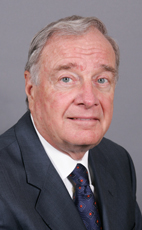
House of Commons photo

Crucial Fact

  • His favourite word was tax.

Last in Parliament September 2008, as Liberal MP for LaSalle—Émard (Québec)

Won his last election, in 2006, with 48% of the vote.

Statements in the House

Regional Development May 31st, 1995

Mr. Speaker, I must say that the question of the hon. member, whom I hold in high regard, is completely absurd.

Let me begin by saying that, when a question concerns the Federal Business Development Bank, it is directed to the minister, and this is why he responded. When a question concerns regional development, that is the federal development office, I am happy to reply.

First, I am pleased to say that we asked Quebec whether it wanted to align itself with our policies, and we are awaiting its reply. The ball is now in Quebec's court.

Second, we adjusted our operations to the requests of local authorities.

Third, at the annual conference held by the Université de Chicoutimi in Quebec City two weeks ago, the provincial government was asked to do exactly what we are now doing at the federal level. So the hon. member should listen to what his fellow Quebecers are saying.

Child Support May 30th, 1995

Mr. Speaker, the Minister of Justice indicated very clearly the government's intention to issue a statement before the House adjourns in June. We certainly intend to do just that. The hon. member must know that we raised the problem in our first budget, and we are studying it very seriously.

Monetary Policy May 29th, 1995

Mr. Speaker, first of all, 100,000 jobs were created in the private sector in the last quarter. That is nothing to sneeze at.

We must compare the Bank of Canada's current policy to that of four or five years ago. As we all know, interest rates were at their peak in 1989. Therefore, there is no comparison.

The hon. member was right to quote me and the solicitor general, who was finance critic when we were both in the opposition. We were opposed to the monetary policy of the Bank of Canada then. The government of the time, in which the Leader of the Opposition was a cabinet member, and many erstwhile Conservative members who are now Bloc members, defended the policy.

So, instead of putting his question regarding the McCallum report and the Bank of Canada's policy to the government, I would suggest that the hon. member talk to members of his own caucus and maybe even have a private conversation on the issue with his leader.

Monetary Policy May 29th, 1995

Mr. Speaker, I must say that I find it difficult to understand why the hon. member has chosen this time to raise this point, since over the past two months, interest rates have dropped a total of close to 100 basis points.

It is very clear that the Bank of Canada's policy, which is to anticipate inflation, has a big impact on job creation. We cannot compare today's monetary policy to the monetary policy of four or five years past. There is an enormous difference and that is why the hon. member's claims do not wash.

Regional Development May 29th, 1995

Mr. Speaker, I believe the question is related to ERDA, that is the agreement between the federal government and the provincial government. I should tell the hon. member that, unless I am mistaken, I already had one meeting with Mr. Chevrette. Two letters were written, and I told Mr. Chevrette that we are ready, right now, to sit down to renegotiate an agreement. The ball is definitely in the provincial government's court.

Finance May 17th, 1995

Mr. Speaker, I certainly would like my colleague to answer the question and my colleague would like to answer it.

We are delighted as a result of the reform of House of Commons committee rules that we have a very active, dynamic and incisive finance committee of the House.

As to the particular comments of the chairman of the committee, as the hon. member for Kamloops knows, we will be sitting down with the provinces, and quite clearly we do not want to do anything premature in terms of those discussions with the provinces. It is very important for us to hear from the provincial finance ministers on this issue.

Employment May 11th, 1995

Mr. Speaker, over the course of the last year the Canadian economy, thanks to the competitiveness of Canadians, has produced a large number of jobs. In the the last year it has produced a record number of jobs; over 433,000. In the last quarter the private sector has produced over 100,000 jobs.

As a result of the activities and the greater productivity of Canadians, as well as the investment climate in which the government has certainly played an important role, the job creation capacity of the economy is stronger than it has been for a long time.

That does not mean there are not major problems. The hon. member has identified them in terms of women's participation, in terms of the participation of youth, and the hangover from the terrible recession of 1990 to 1993.

As a result, the very strenuous activities, fundamental reforms and the vision of the Minister of Human Resources Development are so important to the building of the country.

International Markets May 10th, 1995

Mr. Speaker, the premise of the question is dead on.

It is very important for Canada to maintain a good climate for investment. That means a sound balance sheet. That is why we are so pleased the budget of last February was so well received by the international markets and by Canadians.

At the same time we have to recognize that as a low inflation country for which we paid a very dear penalty we must maintain the tremendous asset of low inflation and very high productivity of our workforce.

We must congratulate the Minister of Human Resources Development for this transition from passive to active support. The new industrial policy is trade policy with the trade mission of the Prime Minister. I would congratulate my colleague the Minister for International for International Trade.

Social Programs May 10th, 1995

Mr. Speaker, as has already happened a couple of times today, the premise of the question is absolutely wrong.

The fact is that the CHST enables the federal government along with the provincial governments to maintain in place a sustainable and highly progressive set of social programs.

The Canadian health and social transfer enables the federal government to keep its covenant with Canadians that there will be no residency requirement for welfare and its even greater covenant that the principles of the Canada Health Act will never be taken away from us.

Manpower Training May 10th, 1995

Mr. Speaker, if my answer seemed evasive, I will repeat it. It is the members of the business community in Canada, in Quebec, and in Montreal who asked us not to lower the premiums, but to create a surplus in the unemployment insurance fund, because they do not want to have to increase premiums during the next economic downturn, as such increases are a real hindrance to job creation.