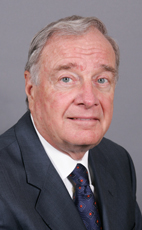
House of Commons photo

Crucial Fact

  • His favourite word was tax.

Last in Parliament September 2008, as Liberal MP for LaSalle—Émard (Québec)

Won his last election, in 2006, with 48% of the vote.

Statements in the House

Taxation May 3rd, 1995

Mr. Speaker, it is a shame that the member opposite is so selective in his reading. I made it very clear myself yesterday that this government's ultimate goal is to reduce taxes in Canada. In fact, that is one of the reasons why we are determined to put our fiscal house in order.

At the same time, I indicated that, if taxes were lowered, they would be lowered for the middle class and the poorest in the country because they are the ones who are paying the most.

Supply May 2nd, 1995

Mr. Speaker, the Leader of the Opposition has just accused me of being undemocratic, of accusing him of wasting the time of the House of Commons. Let us be perfectly clear: of course, the Bloc Quebecois has not only the right but also the obligation to enter the debate on the government budget.

They certainly have the right to present their views but when, instead of discussing the budget, they create a phoney issue and make up their own budget that has nothing to do with the one we presented, I certainly agree that they are wasting the time not only of this House but also of the Canadian people.

You see, Mr. Speaker, the Leader of the Opposition is starting to change his tune somewhat. Today's opposition motion reads in part as follows: "-by imposing on them new national standards for all social programs-" That is patently untrue. The motion goes on to say: "-through the introduction of the Canada Social Transfer, which will enable the federal government to interfere even more in such areas as health, post-secondary education and social assistance". That is patently untrue, Mr. Speaker. As I said in my budget speech and in the budget itself and as I reiterated again today, there is no intention of imposing anything on the provinces or to interfere in provincial matters.

To make things even clearer, this morning, I submitted to this House the amendments we intend to refer to the committee that will consider the budget.

Let us set the record straight. The Bloc Quebecois's motion is a sidestepping tactic and has nothing to do with the truth. When I say that you are wasting the time of the House, it is not because you do not have the right to discuss the budget but because you are making up your own budget to better attack it. I think that we have just received a compliment. You have just shown that it is impossible to attack our budget by making up your own budget so you could attack it.

Second, the Leader of the Opposition raised the issue of transfers to the provinces. Let me tell you that when I met with provincial finance ministers, they told me, "Give us notice. Do not take us by surprise like the previous government". So we gave them two years to adjust.

Third, they told us, "If you are going to hit us, make sure that you will be hit harder". That is what we did. We made deeper cuts at the federal level than at the provincial level.

Fourth, these cuts represent less than 3 per cent of provincial revenue and less than 20.5 per cent of Quebec revenue. It must be said that, at a time when all governments must put their fiscal houses in order, we simply fulfilled our obligations.

I hope that the Leader of the Opposition will talk to the head office, because he obviously exerts a great deal of influence there, and that the next time he talks to them he will suggest that they bring down a budget designed to put their fiscal house in order to create in Quebec a climate that would help the federal government create jobs.

Since the Leader of the Opposition has so much influence on the head office, perhaps he will talk to them about their own cuts, because he is blaming us for the cuts they are making in money areas.

I think that they should not say two different things. But perhaps it is possible for the leader of the Bloc Quebecois to say one thing and for the leader of the Parti Quebecois to say another thing. We face real economic and social problems. We know that. We know about the poverty problem and we see how painful it is. We know what is happening and we want to work together.

In closing, I ask the Leader of the Opposition and the Bloc Quebecois, instead of creating phoney issues and provoking empty debates, to help us tackle the real problems of Quebec and Canada.

Supply May 2nd, 1995

-to turn the development of a set of shared principles into a contrived issue. These hon. members would like the House, Quebecers and Canadians to believe that this whole process is nothing but a plot to underhandedly impose new conditions, methods or penalties. Mr. Speaker, I want to tell you that it is not so.

Just in case the Bloc members were daydreaming that day, although I do not believe so, let me remind you of what I said during the budget speech I delivered on February 27, 1995: "I will be inviting all provincial governments to work together on developing, through mutual consent, a set of shared principles and objectives that could underlie the Canada social transfer". This is exactly the commitment we are making in Bill C-76, without adding or deleting anything.

Of course, if there are problems, we will introduce amendments, but the goal of the government is clear: we do not want to impose anything on the provinces, we want to help the provinces and the federal government to put their financial houses in order and to give provinces a lot more flexibility. This is why I am so pleased to confirm today what the opposition leader has a little trouble with, which is our commitment to propose to the appropriate committee the following amendments.

To establish interim arrangements to finance social programs in a manner that will increase provincial flexibility. The amendment reads as follows:

Maintaining the national criteria and conditions in the Canada Health Act, including those respecting public administration, comprehensiveness, universality, portability and accessibility

and the provisions relating to extra-billing and user charges.

Also, to apply the national criterion stipulated in section 19 which requires or allows no minimum period of residence as a condition for eligibility for social assistance. The amendment reads as follows:

Promoting any shared principles and objectives that are developed, pursuant to subsection (3), with respect to the operation of social programs, other than a program for the purpose referred to in paragraph ( b ).

The Canada Health and Social Transfer shall consist of, (a) a federal income tax reduction in favour of the provinces that would enable the provinces to impose their own tax measures without a net increase in taxation; and

(b) a cash contribution not exceeding the amount computed in accordance with section 14.

The Minister of Human Resources Development shall invite representatives of all the provinces to consult and work together to develop, through mutual consent, a set of shared principles and objectives for the other social programs referred to in paragraph 1( d ) that could underlie the Canada Health and Social Transfer.

When I spoke on the budget I made it clear that the government's objectives were to clean up the nation's finances, to put the country once again on a sound financial footing and, at the same time, to give the provinces far greater flexibility in the elaboration and the design of a multitude of social programs.

We made it very clear we were imposing only two conditions on that transfer. The first was that the objectives of the Canada Health Act must be respected. It is a covenant of the government with the Canadian people. We will never allow that to be taken away.

Second, the only standard that would be imposed on other social transfers would be that no minimum residency requirement be necessary for CAP. We would not allow provinces to take welfare away from people because they had not had a long term residence within that province.

I said very clearly in this House that we had no intention of imposing anything else on the provinces, that we had no intention of imposing new national standards, that the minister simply wanted to sit down with his provincial counterparts to discuss freely with them issues such as Canadian values and the smooth running of both federal and provincial governments.

It is hard to understand that, with all the opportunities we have of working together to create jobs for our young people and to reduce poverty in Quebec, the members opposite have chosen to sidestep this issue. They come here with an artificial problem that has nothing to do with the truth and the reality of our country and of our budget.

The Bloc Quebecois is the official opposition. It has a responsibility to Canadians to speak for the nation. Members of the Bloc Quebecois talk about having an economic union. They talk about working with Canada. Let Canadians understand the way members of the Bloc Quebecois see working. Will they speak for the nation? No. Will they speak for national interest? No. Will they speak for Canadians' desire to have jobs? No. Will they speak for those who would take Canadians out of poverty and give our children a chance for a decent life? No.

What do they do? Day after day they come into the House and stand up with artificial questions that have nothing to do with the Canadian reality. Day after day they come in, as they have done today, and make up a problem. This country has problems.

We do have problems. We do not have to invent them. Why not work with us to solve the problems we have as a country? Why not join Canadians from all the provinces in saying that the real challenges lie beyond our borders? Competition comes from Japan, Germany and the United States. Competition is not between Quebecers and Albertans, but between Canadians and Japanese, between Canadians and Germans. That is where we have to look if we want to build a strong future for ourselves.

Instead of that, the Bloc Quebecois tried to create a problem because it had to find something to discuss on this opposition day. It decided that maybe it could mislead the people of Quebec by saying that the government wants to impose new national standards.

Mr. Speaker, I can assure you and I can assure the leader of the opposition that this is not true.

The Leader of the Opposition has been a member of the federal cabinet. He knows very well what kind of country Canada is, with an outstanding potential.

Let me be quite clear. This government is going to stand up for the Canada Health Act. There is no doubt about that. It will not deviate from that policy. It will also make sure no province imposes residency rules that would deprive Canadian citizens of social benefits.

We have also clearly stated that we do not intend in any way to impose national standards on any province through the budget or the Canadian social transfer legislation. The minister intends to have discussions with the provinces on whether there are other values or Canadian goals we should concentrate on.

The Leader of the Opposition is sidestepping the issue for political reasons that have nothing to do with the day-to-day life of our fellow citizens.

He and the Bloc Quebecois are once again looking for ways to create acrimony and uncertainty. Instead of fostering the well-being of Canadians, the Bloc Quebecois is trying to create a problem where there is none.

Let this country understand that the official opposition refuses not only to speak for the national interest but in this debate is refusing to speak for the interests of Quebecers.

There is no intention to impose anything on any province. There is one intention and that is to create jobs. There is one intention and that is to give our children a decent future. There is one intention and that is to protect the Canada Health Act. There is one intention and that is to make sure that residency is not a condition for welfare. There is one intention and that is for this country to realize every bit of its potential. It is to give this country and its citizens the opportunities that it has as a result of the tremendous talent that exists within the ground and the talent that walks upon it. That is what this country is all about.

The time has come for Bloc Quebecois members to join Quebecers who want to build our great country, Canada.

Supply May 2nd, 1995

Mr. Speaker, you know, when you are the finance minister, when you hold an economic portfolio in a government, and even when your portfolio is not an economic one as was the case for the Leader of the Official Opposition, you really care about people's priorities.

Obviously, the priorities of Quebecers, and Canadians as a whole, are job creation, and a meaningful future for their children and their fellow citizens. This is why it is so disappointing for Quebecers and Canadians to hear, day in and day out, the Leader of the Official Opposition and his acolytes talk about a political agenda which has nothing to do with the well-being of Quebecers.

This is why it is so disappointing not to hear them talk about deficit reduction, fiscal restraint, new technologies. They never talk about the environment. They never talk about what really matters to the Canadian people because they have a political agenda which creates uncertainty and has nothing to do with a country's true objectives in an increasingly interdependent world.

As a result, once again, we are presented today with an empty shell. The opposition really wants to waste the time of the House when it should be dealing with the real challenges facing our country and debate issues other than the fruit of the Bloc's imagination.

Let us be perfectly clear, the objective, the plan of the federal government was clearly laid out in the budget speech. In the budget speech, which can be read in both official languages, one can see that it does not intend to impose anything on the provinces, or deliver the goods in the manner unfortunately described by the Leader of the Opposition in the speech he just made.

Let us be clear, under the new system, there will be fewer conditions governing the use the provinces can make of transfers. The provinces will no longer have to abide by rules specifying which expenses are eligible for cost-sharing and which ones are not. They will be free-let us be clear about that-to adopt innovative mechanisms regarding social security reform according to their own priorities.

A more flexible needs test will allow the provinces to make income support and non-monetary benefits more universally available to low income earners or to people who were on welfare and are entering the labour market. It is for these people that we are here. It is for these people that we made these amendments. It is these people that each and every politician in this House should care about, instead of trying to deceive Quebecers with a political adventure creating constant uncertainty in a world in great need of more certainty.

Federal subsidies could be used to support, for example, the PWA program in Quebec and other types of income supplement programs for low income families and workers. That was not the case previously. Also, the Minister of Human Resources Development will invite all provincial governments to work together, through mutual consent. This means that absolutely no condition will be imposed to the provinces. Mutual consent means mutual consent. Both parties will have to be in agreement. They will meet to develop a set of shared principles and objectives that could underlie the Canada social transfer.

Through today's motion, the official opposition is trying to turn our project, which was so well received by the people in Quebec and in all of Canada-

Questions On The Order Paper April 6th, 1995

Contributions approved under the Federal Office of Regional Development-Quebec programming for the period October 25, 1993 to November 1, 1994 inclusively are listed on the following chart.

It does not include any contributions made under the federal-provincial-municipal infrastructure works program and the industrial and tourism agreements, which fall under the purview of other federal departments.

Canada Social Transfer April 5th, 1995

Mr. Speaker, the one thing that is clear to me is that we have given the provinces what they asked for: flexibility to reduce their costs. We have given them the flexibility that they need to improve the management of their programs. Therefore, we have met the expectations of the provinces and of Canadians.

Canada Social Transfer April 5th, 1995

Mr. Speaker, in the last budget, we gave the federal and provincial governments a mechanism to tailor their deficits to their financial means. It was very clear that this was a joint effort, and we gave the provinces the requisite prior notice.

The issue of national standards is very clear. We said in the budget that we were not going to abolish the Canada Health Act nor tamper with the issue of residency for social assistance. The Minister of Human Resources Development will negotiate all other issues with the provinces. He is going to sit down with them and discuss the issues.

The Budget April 4th, 1995

Mr. Speaker, I would like to congratulate the hon. member for having begun his question so well.

We engaged in an analysis of Canada's economic needs, the circumstances within which we found ourselves and the government's overwhelming commitment to see job creation made the priority focus of the country. I think that is the reason why the budget has been so well received. It is as a result of this budget that the economic recovery will continue and Canadians will begin to do in the context of the rest of the world what we as Liberals have always felt they could do, and that is to take on anybody.

Ways And Means March 31st, 1995

Mr. Speaker, pursuant to the provisions of Standing Order 83(1), I have the honour to lay upon the Table a Notice of Ways and Means motion to amend the Excise Tax Act.

I ask that you designate an Order of the Day for the consideration of the said motion.

Inflation March 31st, 1995

Mr. Speaker, the member opposite knows full well the independence of the Bank of Canada is a very important asset to the country. Our record in terms of low inflation, while very dearly bought, is also a major asset in terms of job creation and it is something we intend to maintain.

The hon. member knows the last budget is also a major asset to the country.