
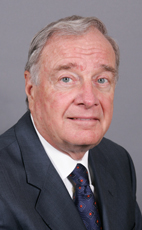
House of Commons photo

Crucial Fact

  • His favourite word was tax.

Last in Parliament September 2008, as Liberal MP for LaSalle—Émard (Québec)

Won his last election, in 2006, with 48% of the vote.

Statements in the House

Interest Rates February 6th, 1995

Once again, Mr. Speaker, the opposition is asking hypothetical questions and is inventing straw men. Why? I do not know.

Allow me to say that at our last meeting, my counterparts from G-7 countries and IMF officials had only praise for the progress that Canada has made over the past year. When we hear the figures that the Prime Minister quoted earlier, when we see the action taken since the last budget, we can conclude that, for the first time in a long while, the government not only intends attaining its goals, but also is credible in this pursuit. The hon. member should be very proud of our achievements since we formed the government a year ago.

Taxation February 6th, 1995

Mr. Speaker, one thing is don't ever be the Swedish finance minister.

We have made it very clear that in the next budget we intend to deal with the deficit primarily by cutting government spending. We have said that. The Prime Minister has said that on countless occasions. I can confirm it to the member opposite. We are going to deal with the deficit. We have demonstrated that clearly, and we are going to do it primarily by cutting government spending.

Taxation February 6th, 1995

Mr. Speaker, both of the third party's critics on financial matters are people I respect a great deal. I enjoy discussions with them and I enjoy this in Question Period.

Do they really think it serves the public purpose for them to consistently stand up in advance of the budget and ask the government, under our position which is not to respond on what the budget is, all kinds of questions, knowing that the answers are not going to be satisfactory and cannot be until such time as the budget has been presented?

Taxation February 6th, 1995

Mr. Speaker, first of all I know that the member did not mean his words to come forth as they did. He is not encouraging Canadians to revolt. I am sure that is not the case. I would not interpret it in that way. Revolting is not a word that one would use when applied to the Reform Party.

There is some time between now and when the budget will be brought down. The Prime Minister stated it very clearly. We know that Canadians do not want to see themselves burdened with further taxes. That has been made very clear. The Prime Minister stated it.

He also knows that until I bring down the budget, I am not really going to respond to individual questions.

I understand that the Reform Party is desperately trying to get ahead of the movement that is so far ahead of it. It should not take the time in this House to ask hypothetical questions that I cannot respond to until such time as I have brought down the budget.

Taxation February 6th, 1995

Mr. Speaker, I appreciate very much the hon. member's question. I know that he is a very sincere member and he is very sincere in the questions he asks.

One likes to check what other governments have done. It was very interesting that the Government of Alberta, when the member asking the question was a member of that cabinet, had a series of budgets that substantially increased the tax burden on Albertans.

The question I would like the member to explain to me is what is the difference between the taxes that were introduced by that government and the taxes that he is attempting to forestall now?

Social Program Reform February 6th, 1995

Mr. Speaker, it is quite interesting that the member opposite and I are engaged in a debate as to whether the job creation record of the government in its first year of operation is the best record in five years or the best record in 10 years. But it is the best record we have seen in one heck of a long time.

The Minister of Human Resources Development made it very clear when he embarked on the program of social security reform that we intended to bring it into the nineties, that we intended to make social security reform a very important part of the job creation capacity of the country and a very important part of the overall program of the government.

I support what the minister has done. He has had the courage to deal with fundamental and far reaching changes. I find it very difficult that a party opposite is so rooted in the status quo, in the 1940s, that it fails to understand what the Canada of the future means.

Social Program Reform February 6th, 1995

Mr. Speaker, not only are the figures I just quoted accurate, but I might add that 82,000 jobs were created in Quebec in 1994, the best performance since 1988.

Moreover, am I to understand from the question that the hon. member is in favour of the status quo? We, on the other hand, stand for change and for reform.

Social Program Reform February 6th, 1995

Following the last budget, Mr. Speaker, more than 438,000 jobs were created in Canada. This is the best performance in a decade. I am quite confident that we will see the same results after the next budget.

Tax Credits December 15th, 1994

Mr. Speaker, I fully endorse what the Minister of National Revenue just said. The purpose of these tax credits for research and development is certainly to create new technology. It is not for companies to do things that they should do anyway as good management.

I think that the Minister of National Revenue answered the question very well and I can tell you that he has just stated the finance minister's position too.

Taxation December 15th, 1994

Mr. Speaker, the Bloc Quebecois just said that it has given us suggestions in terms of deficit reduction of some $15 billion. I hate to contradict their mathematics, but the number is nowhere near that. In fact it is not even one third of that.

That being said, what really must be done in this House by the opposition, and indeed the Reform Party have done it in part and have said they are going to do it before the budget, is to give us a comprehensive plan. It is quite easy to make great speeches. It is quite easy to set out targets with no background. But what is very, very difficult is to do the line by line study that allows us to deal with the profound structural problems of our economy and the way that governments spend.

In the month and a half that the opposition is going to have off, I would invite them to sit down and really work up a proper plan so that when we come down with the budget we can have an intelligent debate.