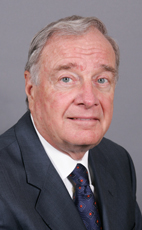
House of Commons photo

Crucial Fact

  • His favourite word was tax.

Last in Parliament September 2008, as Liberal MP for LaSalle—Émard (Québec)

Won his last election, in 2006, with 48% of the vote.

Statements in the House

Taxation December 15th, 1994

Mr. Speaker, first of all, yes, I did read the Bloc Quebecois's report. I can assure the hon. member that we intend to consider these recommendations carefully. It should, however, be pointed out to the hon. member that these recommendations would help us with only a tiny portion of the $42 billion deficit. I would ask the hon. member if he could make suggestions that will really help us solve the deficit problem and the structural problems facing us.

Taxation December 15th, 1994

Mr. Speaker, more to the point, we have to ask ourselves: is our tax system, here, in Canada, entirely fair? Or does it have loopholes, a point that some of the hon. member's colleagues have already raised? Are there loopholes that should not be looked at?

If, contrary to his colleagues, the hon. member is of the opinion that the system is perfectly fair, that no changes are required, fine, no changes will be made in the next budget, but we think that the system is not entirely fair and that changes will be required. We certainly intend to assume our responsibilities.

Taxation December 15th, 1994

Mr. Speaker, the member for Roberval knows very well that we will have to wait for the budget. The Minister of Finance is not really in a position to make budget announcements here, in the House, even if Christmas is approaching. We will have to wait until the end of February.

That being said, I am sure the member will admit that if we wish to meet our objectives, cuts will have to be made. It would be of great help if his party would make constructive suggestions on exactly where we should cut.

Interest Rates December 14th, 1994

Mr. Speaker, approximately one to two months after we first took office, the Government of Canada and the Bank of Canada entered into an agreement whereby we set the inflation targets which is very important in terms of monetary policy in the country and in terms of keeping inflation low.

As you know, Mr. Speaker, keeping inflation low is a major asset toward the economic recovery of the country. What is crucial, if we are going to get interest rates low, is that we get the fundamentals right and that is job creation, investment in productivity, low inflation and the kinds of things we are now seeing within the Canadian economy.

We live in an interdependent world. No country is isolated from the effects of that. Getting the fundamentals right and the economy strong and cleaning up the finances of the country are by far the best ways of keeping interest rates low.

Taxation December 14th, 1994

In fact we would much prefer to do it that way.

We understand the bulk of the actions that have to be taken must be taken on the spending side. We understand that Canadians have to live within their means and that they expect their governments to do the same. We are going to do that.

We also have had the benefit of a very well thought out report by the House of Commons finance committee in which members on all sides of the House participated. That is an important part of the consultation process. We intend to take that into account and we will give our answer when we bring down the budget.

Taxation December 14th, 1994

We are prepared to take the heat, through you, Mr. Speaker.

Taxation December 14th, 1994

Mr. Speaker, I have responded to this question on numerous occasions by simply saying that the government will make its position known in the budget. We are in the consultation process. We are waiting for constructive suggestions from Canadians and from the two opposition parties.

We are waiting for the Reform Party to complete its suggestions for areas in which we should make cuts. For instance, the person in the Reform Party who was concerned with social policy-that is an oxymoron-the member for Calgary North, said she would cut some $16 billion or $17 billion out of social policy spending.

We are waiting for the Reform Party to give us its constructive suggestions. We will make our position known in the budget.

Taxation December 14th, 1994

Mr. Speaker, it is a matter of public record and was set out in the House of Commons finance committee. Each one per cent increase in interest rates costs the nation $1.7 billion on an annual basis.

The Economy December 14th, 1994

Mr. Speaker, we are now enjoying the highest economic growth of any of the G-7 countries. We are enjoying the highest economic growth of almost any of the OECD countries. We are creating jobs. We are reinvesting in the economy. We have the best productivity record of almost any of the industrial countries. Our exports are up. I have been told about 10 times that our exports are up.

Let it be very clear that this has been a very good year for the Canadian economy.

Interest rates are up. They are up because of inflation in the United States. They are up for a number of reasons. The single most important reason for the increase in interest rates this week is the international financial community has said that one of the major provinces of the country, Quebec, refuses to face up to its deficit problems.

I call upon it to do its job.

The Economy December 14th, 1994

Mr. Speaker, the hon. member for Roberval asked us to make cuts. Now, I will ask the Bloc Quebecois finance critic for the fifteenth time, where does the Bloc suggest that we cut? We have yet to receive a single note or suggestion. Really! Family trusts? I am waiting for the finance committee report. I think that you submitted your opposition yesterday. But where, where really, should we cut? Make suggestions. Be constructive.

As for Goldman Sachs, the firm has made a favourable report because its people have said that the people of Quebec were obviously going to vote to remain within a united Canada.