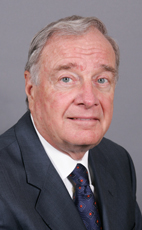
House of Commons photo

Crucial Fact

  • His favourite word was tax.

Last in Parliament September 2008, as Liberal MP for LaSalle—Émard (Québec)

Won his last election, in 2006, with 48% of the vote.

Statements in the House

Registered Retirement Savings Plans December 7th, 1994

Mr. Speaker, there is no question that the level of savings in Canada has to go up, if we are serious about promoting a growth-based economy. One of the best ways to achieve that is to have political certainty, and it is my hope that we will have such certainty before long.

Registered Retirement Savings Plans December 7th, 1994

Mr. Speaker, I did not make any comment regarding a tax such as the one described by the hon. member. As the hon. member knows, I have no intention of making any comment or taking any action before the budget. However, I am here to accept representations and I do accept the hon. member's.

Unemployment Insurance November 29th, 1994

Mr. Speaker, I welcome the member's conversion to the opinions expressed by the business community and the Chamber of Commerce.

I am sure that the other communities he represents will be delighted to hear of this conversion on the road to Damascus. I would suggest however that the member might want to listen to what the Minister of Human Resources Development and I have said. It is crucial once the unemployment insurance rates go down that they stay down. The business community and workers should not be subject to some kind of a yo-yo effect where every time there is a downturn in the economy we are forced counterproductively to raise those rates.

What we have said is that the rates are certainly going to come down. But when they come down under this government they are going to stay down.

Unemployment Insurance November 29th, 1994

Mr. Speaker, I find it somewhat ironical that the hon. member would ask me today to heed the advice of the business community when he usually asks me to do just the opposite.

That being said, the hon. member must realize that I, and certainly the Minister of Human Resources Development also, want to lower UI contributions. In fact, we lowered these contributions from $3.07 to $3.00. It is very important to ensure stability. This means that we do not want to find ourselves in a position where we would be forced to increase UI contributions during a recession and lower them in a period of growth. We want to avoid a yo-yo effect. We want stability. We will lower UI contributions when it is appropriate to do so.

The Economy November 29th, 1994

Mr. Speaker, this cabinet and this government are united behind our goal to achieve the 3 per cent deficit.

There are no splits on this side of the House contrary to the splits which existed in the Reform Party when the leader of the Reform Party's hand was forced when his own members said finally after a year maybe they should get constructive and start saying what that party would do in terms of the deficit.

The Economy November 29th, 1994

Mr. Speaker, the 3 per cent target is a very important target. It really does mark that point in the evolution of the nation's economy where once again the growth in the economy becomes superior to the growth in the debt.

The 3 per cent target as well is a very ambitious target. It means having the deficit as a percentage of GDP in under three years. It is a target that has not been hit by any government in over 20 years, and it is going to require a very ambitious program.

I would say that not only are we prepared to follow the IMF's advice but in conversations we have had in Madrid along with all the other countries in the IMF Canada was singled out for its economic performance.

The Budget November 28th, 1994

Mr. Speaker, not only do we recognize that controlling government expenditures and reducing government expenditures are an essential part of deficit reduction, but we also recognize the absolute importance of confidence in the Canadian population, the Canadian investment community. That is why as we see job creation continuing apace we are delighted to see the numbers that came out last week showing business confidence in this country is higher than it has been for a decade.

The Budget November 28th, 1994

Mr. Speaker, there is no doubt the government intends in terms of the next budget and in terms of our attack on the deficit obviously to concentrate on controlling government spending. There is no doubt that is where the priority lies.

Nobody should be under any doubt about that. The government did not float a trial balloon. I was asked a question in Toronto, a question that I have been asked in virtually every city I have gone to in the course of the last month, about the possibility of victory bonds following the very generous gesture by Mr. Carl McNeil who gave $37,000 in his last will and testament to the Canadian government.

What I find a little surprising is that the Reform Party would not understand the desire of Canadians to come together and solve this very difficult financial dilemma we have.

Social Program Reform November 28th, 1994

Mr. Speaker, the goal is clear. The Minister of Human Resources Development stated it repeatedly. The main goal of the reform of social programs is to update them, to deliver the goods in a more efficient way. We must recognize that the world has changed. The Minister of Human Resources Development has recognized it, and I regret that the Bloc Quebecois is still living in the 1960s.

Social Program Reform November 28th, 1994

Not at all, Mr. Speaker. What I said was that we must absolutely modernize the tools of government.

This is why we asked Ernst & Young for a report, which was handed to us when we came to office. This report is proving very helpful.

I am very surprised that the hon. member does not understand that any modern institution must evolve with new technologies as they develop. I can tell you that, as a government, we intend to use all the technologies available to better manage the country.