
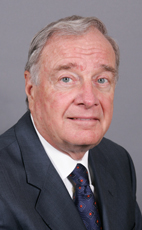
House of Commons photo

Crucial Fact

  • His favourite word was tax.

Last in Parliament September 2008, as Liberal MP for LaSalle—Émard (Québec)

Won his last election, in 2006, with 48% of the vote.

Statements in the House

Unemployment Insurance November 4th, 1994

Mr. Speaker, I repeat that despite this year's surplus, the cumulative UI account will show a deficit. Obviously, we will have to eliminate that deficit before we have a cumulative surplus.

That being said, the hon. member is quite right when he says that we want to reduce unemployment insurance premiums. We certainly do. In fact, that is the position I announced before, and it certainly is the position of the Minister of Human Resources Development.

What is even more important is, that when we lower unemployment insurance premiums, we will be able to keep them down. This means we must be able to give the business community the assurance that the account is in good enough shape to keep premiums down.

Unemployment Insurance November 4th, 1994

Mr. Speaker, at the beginning of the year, the Unemployment Insurance Fund had a deficit of around $5.9 or $6 billion, I believe.

This year, we expect a surplus for the current year. However, that will still leave us with a cumulative deficit in the account. I think it would be premature for me to give any figures, which will certainly be less than $6 billion, but I think we will have to wait until the end of the year. In any case, at that time we will still have a deficit.

The Economy November 1st, 1994

Mr. Speaker, I would like to congratulate the member for asking a question on the economy which is obviously of the greatest interest to Canadians, albeit clearly not of interest to the opposition.

Small and medium size businesses in the country are obviously very encouraged by the strong growth we enjoyed in the month of August, but it is also important to look at the details behind that growth.

The fact is that half the increase came in manufacturing. In fact manufacturing is up 8.7 per cent over the month of August last year. At the same time construction is up 7.7 per cent over a year ago. There is a clear revival as a result of the increase in the number of jobs and consumer confidence; retail sales are up.

One thing I am delighted to be able to say-and I congratulate the member for his question-is that we are clearly on the way to the strongest growth in the country since 1988.

Social Programs October 25th, 1994

Mr. Speaker, indeed, the provinces were very happy to be treated with some decency for the first time in more than ten years and to be given ample warning, contrary to the previous government which just made cuts without any warning.

I must add that we have been having extremely productive discussions with the provinces on the GST and that we will continue to do so, since, unlike the Bloc Quebecois, we want this country to work.

Social Programs October 25th, 1994

Mr. Speaker, I beg to differ. The member is very precise, but unfortunately inaccurate.

In the last budget, we cut government operating expenditures, we cut business subsidies, but we did not cut transfer payments to the provinces. We gave notice to the provinces that in 1996-97 we were going to freeze transfer payments at the 1993-94 level. I must say that the provinces were really thankful to be given ample warning.

Taxation October 25th, 1994

Mr. Speaker, I have said repeatedly that I want the consultation process referred to by the hon. member to be successful, and in that case, the Minister of Finance cannot afford to comment on specific suggestions.

The hon. member said that we were attacking the middle class. In fact, in the last Budget we eliminated flip flop deals by large corporations and multinationals. We eliminated the preferential tax rate for large corporations. We eliminated the $100,000 capital gains exemption. And we introduced new rules for foreign affiliates. We made promises and we acted on them.

Taxation October 25th, 1994

Mr. Speaker, the Prime Minister has said repeatedly, in no uncertain terms and as recently as yesterday, that we are firmly committed to bringing the deficit down to $25 billion in 1996-97.

The Prime Minister also said that we wanted to proceed mainly by cutting spending, but if we had to change this, we were prepared to do so because the main objective is to avoid the burden of higher interest rates.

The Prime Minister also made it very clear that he wanted to close tax loopholes, a process we started in the last budget.

The Economy October 24th, 1994

Mr. Speaker, the answer to the member's question is on page 10 of the grey book. I would suggest that he read it. It is only a paragraph and a half. If he reads the rest of the book I am sure he will find the answers to a number of other questions he raises.

I would like to say one thing. The questioner has said that the Reform Party has tabled its plans so that we might see them. We have given members of the Reform Party an opportunity here in the prebudget debate; they had absolutely nothing to say. They have had the summer and they are now sitting on the finance committee.

The Reform Party has not tabled any plans. It has not given us any suggestions. It has done nothing but engage in empty rhetoric.

The Economy October 24th, 1994

Mr. Speaker, it is quite obvious the hon. member opposite watched the presentations last week. He now seems to have demonstrated an understanding of compound interest for which I would congratulate him.

That being said, instead of planning for the next recession, perhaps the hon. member and his party might emulate the C. D. Howe Institute he cited in his preamble and begin to make constructive suggestions on how we might hit the target.

The Economy October 24th, 1994

Mr. Speaker, the C. D. Howe Institute has made a very constructive contribution to the debate. I would only hope the Reform Party might emulate the C. D. Howe Institute and attempt to make a constructive contribution to the debate.

Let me simply say that we are going to stay with our 3 per cent target because it is by far the best way to keep everybody's feet in the fire. As the hon. member knows, our ultimate goal is to eliminate the deficit.