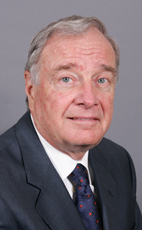
House of Commons photo

Crucial Fact

  • His favourite word was tax.

Last in Parliament September 2008, as Liberal MP for LaSalle—Émard (Québec)

Won his last election, in 2006, with 48% of the vote.

Statements in the House

Child Care March 21st, 1994

Mr. Speaker, the budget contains a projection for the expenditure on the day care spaces on the basis that we do expect growth will be 3 per cent or in excess thereof.

Although we have provided for it, the spending on day care spaces is of course dependent upon agreement with the provinces. The spending on day care fulfils a multitude of purposes. Not only is it in itself an important creator of jobs, but it also permits a substantial segment of our society desirous of working the opportunity to do so.

Job Creation March 21st, 1994

Mr. Speaker, members of the Reform Party cannot have it both ways. They cannot stand up at one time and talk to the Minister of National Defence when certain base closures are occurring and then ask what is going to be done for that particular area, whether there is going to be regional development. Then they turn around and say we cannot do it generally.

The fact is that this political party in opposition and now in government has said that we think a lot of regional development in this country has been applied to pork barrel grants to industry, grants to companies that do not need it, which simply makes no sense.

That is why, and any one of the ministers can tell you that, the minister responsible for ACOA, the minister responsible for the western diversification fund, and the minister responsible for FORD-Q have completed a thorough re-evaluation of the way regional development was taking place, and we are not going to repeat the mistakes of the past.

Job Creation March 21st, 1994

Mr. Speaker, there is no doubt that getting public sector spending under control is a very important objec-

tive of any government. It certainly is of this government and our budget demonstrates that.

In terms of subsidies to business, we undertook in the budget a very large reduction in subsidies to business that we deem to be counter-productive. It is in the budget. We have also said that we are continuing to look at the wide range of other ways in which government and business interact to make sure that there are no obstacles placed in the way of business.

On the one issue that the member raised, all members in the House and certainly the members opposite feel very badly and are very disappointed by the decision of Hyundai to delay the reopening of its plant.

The minister of human resources has already begun discussions with the laid-off workers at that plant to see what can be done. We as a government have begun discussions with Hyundai to see if there are other alternatives for the plant.

When I was in a meeting with the APEC members, I had the opportunity to discuss that subject with the Minister of Finance of Korea. We are going to continue to watch it very closely.

Job Creation March 21st, 1994

Mr. Speaker, as was indicated in the earlier question, I have just returned from a meeting of the G-7 on jobs in Detroit and over the weekend a meeting of APEC, the fastest growing segment of the world's economy at the present time, dealing with many of the same issues.

It was fascinating. The measures those fast growing countries are taking are exactly the ones that we outlined in our budget.

What are they? They are a reduction of the cancer killing taxes on jobs such as unemployment insurance premiums. They are an encouragement to small and medium sized business, the major creator of jobs not only in this country but in all other countries. They are an encouragement of the newer technologies, networks for small businesses, access to new technologies, matching grants between universities and the private sector.

We have set out a very clear jobs plan and that jobs plan is going to make this a much stronger country for Canadians.

Employment March 21st, 1994

Mr. Speaker, in the budget, we took what is perhaps the most important step, namely the lowering of payroll taxes. Not only was the unemployment insurance premium rate reduced to $3 but we also showed that we intend to continue in the same direction when the minister's reform is completed.

At the same time, we said that we will really look at our whole taxation system to see if there are obstacles to job creation or, better yet, to see what could be done to encourage employment. We clearly intend to do that. It is not hot air but very specific action.

Employment March 21st, 1994

Mr. Speaker, yes, when we were in Detroit, the issue of a tax credit for hiring workers was raised. A suggestion was made by Mr. Reich, the U.S. Secretary of Labour. It was also a suggestion made in Canada at hearings held by the human resources minister. We are prepared to consider this suggestion along with many others.

But one thing is very clear, and I was delighted to see that the measures we took in our budget-that is, our approach to job creation, lower payroll taxes, unemployment insurance reform-are exactly the same as those recommended by the OECD. That is also the conclusion that was reached at the meeting. We must say that even the G-7 supported us.

Employment March 11th, 1994

Mr. Speaker, I congratulate the member on his question. I must say that I am delighted to respond.

I am very, very much encouraged by February's strong jump in employment, particularly so since it has occurred in all regions of the country. Nationally, there is a net gain of 66,000 jobs; 11,000 jobs in the member's home province.

What is also very important to understand, Mr. Speaker-and I know that you are hanging on every word-is that there are particularly strong gains in manufacturing in the retailing sector. Some may have noticed that was something that was very worrisome in the month of January.

Public Finances March 11th, 1994

Mr. Speaker, if by comparison with other countries, there is a premium on our interest rates, it must be pointed out that rates are the lowest they have been in the last decade, and this has been the case ever since we took office.

Public Finances March 11th, 1994

Mr. Speaker, I find it somewhat ironic that the hon. member would ask me a question about deficit reduction when his leader, deputy leader and colleagues keep telling us not to cut back and deal with the deficit.

With respect to the deficit, we are clearly on the way to reducing it to 3 per cent of the gross domestic product within three years. And once this target is achieved, Canada will be in this good a position for the first time in 15 years. This should be applauded, and you are right to do so, Prime Minister.

I am not done, Mr. Speaker.

Having said this, as for our revenue projections, the vast majority of economists agree that for once, Canada has a realistic budget in terms of revenue, inflation and interest rates.

Taxation March 10th, 1994

Mr. Speaker, the hon. member has made both a comment and a question. I want to congratulate him on his comment which has certainly elevated the debate in this House.

The answer to his question is very clear. He indicates the degree of interest we have in building fairness into the system.

As he knows there are some people who did not pay taxes because they had business losses or interest on loans. The single biggest reason would appear to be the $100,000 capital gains tax exemption which we eliminated in the budget.