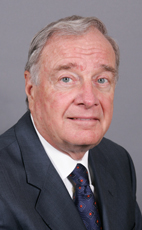
House of Commons photo

Crucial Fact

  • His favourite word was tax.

Last in Parliament September 2008, as Liberal MP for LaSalle—Émard (Québec)

Won his last election, in 2006, with 48% of the vote.

Statements in the House

Goods And Services Tax March 10th, 1994

Mr. Speaker, we are talking about a committee which includes several colleagues of the hon. member. This committee has a very important role to play before the end of June, when it will table its report. It is not the government's intention to stifle debate. We want this committee to sit and listen to Canadians, and I am surprised to see the hon. member afraid of letting Canadians express themselves.

Goods And Services Tax March 10th, 1994

Mr. Speaker, I am asked to answer a question which is already being reviewed by a parliamentary committee. As you know, the mandate of that committee is really to listen to Canadians and get their opinion.

It is certainly not the role of the government to tell Canadians that they have no right to express their views. This is one of the fundamental freedoms in our country. I think the committee is doing an excellent job and we support it.

Employment March 10th, 1994

Mr. Speaker, the Deputy Minister of Finance spoke well at the meeting yesterday. In fact, there is no doubt about the tremendous burden of taxation which Canadians are forced to bear at the federal, provincial and municipal levels. It is certainly a major inhibition to job creation.

It is exactly for that reason that in the last budget for every $1 in revenue that is raised this government imposed $5 in expenditure cuts.

It is also for that reason that the Minister of Human Resources Development was able to announce through the budget that we were reducing unemployment insurance premiums which are in fact a tax on jobs. We have begun to attack this cancer on job creation in this country.

Federal-Provincial Fiscal Arrangements And Federal Post-Secondary Education And Health Contributions Act March 9th, 1994

moved that the bill be read the third time and passed.

The Budget March 9th, 1994

Mr. Speaker, first of all I am delighted to welcome the leader of the Reform Party to the debate. As the Prime Minister, myself and other ministers went across the country we missed his presence in the debate over the last couple of weeks and we are delighted to see him back.

Let me simply make a couple of points because I know the time is very short. The leader of the Reform Party talks about the necessity for jobs and in the same breath he talks about the requirements for tremendous cuts. I am sure he would recognize that even the Alberta treasurer said that as a result of his cuts the growth in Alberta was going to be cut by almost a full percentage point. I am sure he would not recommend to us as a country that wants to create jobs that we begin on the kinds of cuts that are simply going to bring the economy to its knees which is indeed the result of the kinds of recommendations that he has made.

What we have done is follow what the OECD has done, which is a far more balanced approach, one which will lead to deficit reduction at the same time as job creation.

The member opposite talks about eliminating the deficit. He talks about doing it by the end of this mandate, which is indeed his party's program, but the fact is that the deficit is now $13 billion higher than when he originally prepared that program. I would ask where would he make those cuts or what kind of growth would he get.

In his own projections he talked about growth of $16.5 billion in revenues over three years. That is based on assumptions which are simply Alice in Wonderland. I look forward to sitting down to understand how this country which was not able to grow faster than 2.4 per cent last year is going to triple its growth over the course of the years to come.

I go on. He talks about cuts in OAS. He says he would do it at a level of $54,000. An objective assessment of what the member opposite has said would in fact talk about having made those levels of cuts to people who are making lower than $20,000 to $25,000. He would cut subsidies to business by $800 million. That is $200 million more than in fact is given to business through the regional agencies and basic subsidies. His arithmetic is fundamentally wrong or his understanding of the public accounts is wrong.

He called for a 25 per cent reduction is subsidies to crown corporations. I simply ask him: What would he cut? VIA? Would he cut the CBC, eliminate it? Tell us. Do not simply give us these numbers in the air.

I go on. He says taxes. He says we should not have done on the tax side what we did. Does that mean he would keep the $100,000 capital gains tax exemption of which the previous government, according to its own studies, said there was no proper evaluation? It was not able to make one iota, one scintilla of relationship between that capital gains tax exemption and job

creation or benefit to the country. Would he keep that? We eliminated it and we are very proud that we did.

He talks about a carbon tax. He was the first person to raise the carbon tax. It is part of an ongoing study set up by the previous government which we are continuing, but he is the person who raised the carbon tax.

I must say to talk about a tax revolt in the House, a revolution against the tax of his own imagination, is somewhat specious to say the least.

Mr. Speaker, I know the time is precious, but let me simply summarize it by this. The essence of the position of the Reform Party is that what we should do at the present time is have a full review of the defence policy before any cuts are made, but that we should immediately embark upon a savage cut of all those government support programs which go to single mothers, single parents, senior citizens, widows, and children.

I simply do not understand. I do not understand a political party which says that the cold war is not over and therefore we should continue defence spending, going ahead as we have in the past, but on the other hand that we have won the war on poverty. That is simply unrealistic.

Unemployment Insurance Reform March 9th, 1994

Mr. Speaker, we raised unemployment insurance premiums in January with, as the minister himself said, a great deal of reluctance. The government faced an enormous deficit a month and a half or two months after it came to power. We admitted it did not make sense, but we were stuck with the deficit.

We still are. Until we introduce the structural reforms mentioned by the minister, which will provide the funding we need, we cannot reduce unemployment insurance premiums, and unfortunately, that will not be until next January.

National Debt March 9th, 1994

Mr. Speaker, in terms of the first question, I can understand the confusion over the numbers. The member opposite is not the first person to have that difficulty. It is a perfectly understandable problem.

In the second question the hon. member is asking me to muse again on the issue of interest rates. The Prime Minister pointed out to me that it was not really a very good idea for finance ministers to muse on interest rates. The only thing I can say to him is that I wish he had given me this advice before I did it last time.

National Debt March 9th, 1994

Mr. Speaker, the assumptions upon which the member based his question are incorrect. We did not assume an 8 per cent increase in revenues on a normal basis. As has been described there were a number of one shot or unique items which in fact depressed this year's revenues which will not be present. Our revenues are projected to be approximately 17 per cent of GDP which is of course the historical norm in this country.

As well, the interest rate assumptions in our budget are interest rates which at the present time are higher than those in existence or those which are projected.

Status Of Women March 8th, 1994

On the contrary, Madam Speaker. First of all, many women do find work in so-called conventional infrastructure. And within the broader definition given by the President of Treasury Board, if you think of the much broader definition of

infrastructure used with regard to Atlantic Canada for example, there are many jobs open to women, in tourism for instance.

On the other hand, we must not forget that the majority of businesses starting up, the small and medium-sized businesses, are run by women and that they are more successful. So, basically, in our budget, the emphasis is on small business creating jobs for women.