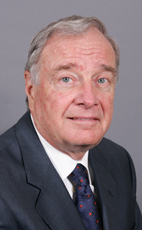
House of Commons photo

Crucial Fact

  • His favourite word was tax.

Last in Parliament September 2008, as Liberal MP for LaSalle—Émard (Québec)

Won his last election, in 2006, with 48% of the vote.

Statements in the House

Status Of Women March 8th, 1994

I want to take this opportunity, on International Women's Day, to congratulate you, Madam Speaker.

First of all, this budget does foresee job creation, and women are certainly included. When you look at all the funds going to training, the pilot projects often referred to by the minister and the rollback of UI premium rate, which will foster job creation, you can really see this budget truly creating employment, and employment for women, Madam Speaker.

The Budget March 7th, 1994

I am on a roll, Mr. Speaker. All I would simply say is that we are going to continue. We are going to review the problems of an aging population and of health. We are going to review the way in which our labour markets work. We are going to review defence and our industrial policy because we are going to build a better country.

The Budget March 7th, 1994

Mr. Speaker, we are very conscious of the seriousness of the financial situation in which Canada finds itself with the debt and the deficit.

There is no doubt that in the budget we have embarked upon cuts that are necessary for us to bring our deficit within an acceptable range in the next three years, certainly the target we have set out.

At the same time it is very important to understand-and the Minister of Human Resources Development has been explicit and very articulate on this matter as have the Minister of National Defence and a number of other ministers in the House-that we are Liberals. We understand the absolute necessity of public policy evolving along with the needs of the country.

The purposes of those studies are not simply cuts to bring the deficit into line. They are in fact fundamental reforms in those programs so that Canada can measure up to the very serious challenges that lie outside our borders.

The Budget March 7th, 1994

Mr. Speaker, again, as I told this House very clearly, and the Prime Minister and I myself said in New York City and the Canadian cities I visited last week: "Actions contained in the budget will reduce the deficit to 3 per cent of the GDP within three years".

Also, we are presently reviewing a number of programs with the Minister responsible for Public Service Renewal. We are reviewing all committees, public affairs, all kinds of government policies and programs, and we are confident that this will promote a better than forecast economic situation.

The Budget March 7th, 1994

Mr. Speaker, if I may quote from the speech I made to this House, the decisions we are making today are clearly putting us on a path leading to the government goal of reducing the deficit to 3 per cent of the GDP within three years. That is the position I stated here in this House and the Prime Minister took the very same position last week in Western Canada.

Employment February 25th, 1994

Mr. Speaker, when Reform members asked me practically the same question, I offered to sit down with them and, of course, with Bloc members to share all our analyses and all our information, so that we can work together on solving our financial problems.

I would be pleased to share with the hon. member our information on the impact of our measures on employment because we are very proud of them; they will really have a significant impact on employment, in comparison with the previous government's record.

I would like to say one thing in closing. All members of the House must be very happy to finally see the Conservative caucus united.

The Budget February 25th, 1994

Mr. Speaker, all I can do is acknowledge the fact that we will have a record deficit of $45.7 billion this year, thanks to the previous government so well represented by my colleague. As I just said, between the expertise of the Globe and Mail and that of the Auditor General, we will choose the expertise of the Auditor General.

The Budget February 25th, 1994

Mr. Speaker, I think the President of the Treasury Board answered this question yesterday when he said that the spending increase this year results from the debt increase left to us unfortunately by the previous government.

Now, let me answer the first question which is identical to a previous one, but I understand how these things work. I just want to add that the editorial in the Globe and Mail also talks about the $2.4 billion stabilization claims received from the provinces. Unfortunately, in accordance with accounting principles, we are required to pay those liabilities once they are known. The same thing goes for the $250 million provision for the cancellation of the helicopter contract, which we dealt with in accordance with private sector accounting principles. With regard to the significant savings arising from the defence cuts, which amount to $450 million, we now know that we have to include them in this year's figures.

On the issue of accelerating income tax refunds, the truth is that we have to include that money in this year's budget since we are in the process of accelerating the refunds. We have followed to the letter the measures recommended by the Auditor General. I know full well that the critic for the Bloc Quebecois wants us to follow the dictates of the Auditor General, because he is always quoting him, and that is exactly what we have done.

The Deficit February 25th, 1994

Mr. Speaker, there are really two answers for the member.

First, as a partial answer to the hon. member, at the request of the deputy minister and senior members of the Department of Finance an outside accounting firm is essentially looking at the forecasting methods of the department.

However, there is something else. It really is not fair to blame the existing forecasters within the department. The department essentially takes a consensus of the economic forecasts within the country. What the previous government did was take the median line optimistic forecast to do its forecasting. In this budget we chose to take the median line pessimistic forecast of the consensus of economic forecasters.

The Deficit February 25th, 1994

Mr. Speaker, I am a little surprised at the question. I can understand perhaps why the Globe and Mail showed such a lamentable lack of understanding of the accounting principles by which the Government of Canada operates, but I would have thought that perhaps the hon. member opposite would have.

Let me just go through this. That editorial talks about destabilization claims: "$2.4 billion stabilization claims already received from the provinces". We are required to provide for those liabilities once they are known, which we have done. A $250 million provision for the helicopter cancellation is entirely in accordance with public sector accounting principles. The reductions in the defence budget will save $7 billion, thanks to the actions of the Minister of National Defence. The voluntary departure incentives are known, and when one knows of a liability one must record it. On the acceleration of the income tax refunds, surely the hon. member would not say that we should delay those refunds and give the money back to Canadians simply to not have that money come into this year's effort.

What we have done is exactly in accordance with the recommendations of the public accounts committee and exactly in accordance with the Auditor General's recommendations. I am sure the hon. member opposite would rather have us follow the dictates of the Auditor General than the dictates of the Globe and Mail .