
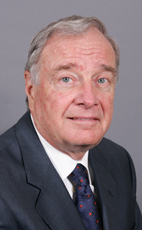
House of Commons photo

Crucial Fact

  • His favourite word was tax.

Last in Parliament September 2008, as Liberal MP for LaSalle—Émard (Québec)

Won his last election, in 2006, with 48% of the vote.

Statements in the House

The Budget February 24th, 1994

Mr. Speaker, the answer is, of course, yes.

According to statements by the vast majority of union and business leaders, because we made it very clear that we are going to freeze spending- that is how we can do this roll-back-we are creating the kind of optimism that will create jobs. And here again, I could quote, if you do not interrupt me, Mr. Speaker, "This is the right way to go, because it is essentially a social cost, and if we can reduce the tax on jobs, this will have a positive impact on employment growth". That is one quote, but there are thousands, Mr. Speaker.

The Budget February 24th, 1994

Mr. Speaker, I am glad to hear the hon. member agrees with the number of jobs we will create by lowering unemployment insurance premiums, after the increase we had to introduce as soon as we came to power because of the deficit inherited from the previous government. If you look at the number of jobs we will create, our roll-back is in line with our infrastructure program and our job creation program which was welcomed by everyone. It is really excellent.

Let me quote the following: "The unemployment insurance premium roll-back is a major incentive for small business. By cutting social costs you get more jobs"; this was said by John Bulloch, President of the Canadian Federation of Independent Business. "It should provide the conditions that will help the private sector create jobs. And I think that is the tenor of this budget"; this from Anne-Marie Hubert, accountant, participant at the conference in Montreal. "I think the minister has brought down a budget that goes as far as the government can go towards-"

The Estimates February 23rd, 1994

Mr. Speaker, the answer to the question is absolutely not. First of all, we should say that when we signed our equalization project with the provinces a month and a half ago, we were very generous with the provinces and certainly with Quebec.

Second, what we did this time around is that, instead of cutting, we decided to freeze for two years. We will declare a moratorium, a period during which the Minister of Human Resources can work with the provinces to really save money on both sides. We hope that, with the social security reform led by the minister, this will not cost the provinces or the provincial governments anything. I had discussions with the provincial finance ministers, including the Quebec finance minister, and this approach was quite popular.

The Estimates February 23rd, 1994

Mr. Speaker, I think it is perhaps the same question and therefore I would give exactly the same answer. The answer is yes.

The Estimates February 23rd, 1994

Mr. Speaker, there is no government that is more desirous of having Parliament participate in the righting of the financial problems of this country.

The answer to the member is an unequivocal yes. If parliamentary committees come up with suggestions that enable us to improve the financial conditions or the financial administration of this country, you can rest assured that the government will respond very favourably to any such recommendations.

The Budget February 23rd, 1994

Mr. Speaker, as I have already indicated we are quite prepared-in fact we plan to meet with the finance committee with a full set of projections in terms of next year and all our proposals-to spend as much time and go into as much detail as members opposite want on each and every spending item and on each and every item contained within those sets of projections.

In terms of the question as to whether we are going to bring in a minibudget this fall, the answer is no because we are going to hit the targets set in the budget laid before the House.

The Budget February 23rd, 1994

Mr. Speaker, the Spending Control Act put in place by the previous government is a reasonably ineffective piece of legislation in that it permitted borrowing from one year to the other year, going back and going forward. It allowed governments to engage in a fair amount of accounting tomfoolery.

When we take a look at the deficit projections we have made and at the spending projections we have made which by the third year, to respond to the member, will have us spending lower than this year, from our point of view it is very clear our spending targets are substantially lower than anything that would be contained in the Spending Control Act. That is why we are not going to extend it.

As the Deputy Prime Minister has said, why do we need a benchmark; we are in the process of hitting home runs.

The Budget February 23rd, 1994

Mr. Speaker, there is already a minimum tax on the income of major companies. We are levying it on banks, insurance companies, all major companies. It already exists. I wish I could say it did not exist, so that I could then levy the tax, but what can I say, it already exists.

Second, in our budget, we have changed the private corporations taxation system for the exact reasons cited by the hon. member. I am sorry, but perhaps we could pursue this discussion tomorrow, after the hon. member has had the chance to read through the budget.

The Budget February 23rd, 1994

Not at all, Mr. Speaker. All we did was do what his party's finance critic had suggested when he said that, given the complexity of the issue, it should be referred to the finance committee. That is on the record, by the way, Mr. Speaker.

The Budget February 23rd, 1994

Mr. Speaker, if the member opposite would take a look at the document underneath the charts, he would see there is a very clear statement after tracing the decisions taken in this particular budget through to the third year that a level of growth

in the third year similar to that which is occurring in the second year will give us the 3 per cent of GDP.

The answer to his question is quite the opposite. Absolutely, with that level of growth we will attain the 3 per cent of GDP.