
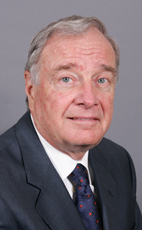
House of Commons photo

Crucial Fact

  • His favourite word was tax.

Last in Parliament September 2008, as Liberal MP for LaSalle—Émard (Québec)

Won his last election, in 2006, with 48% of the vote.

Statements in the House

The Budget February 23rd, 1994

Mr. Speaker, we made it very clear that this was a two-stage budget and that we were providing financial projections for each of those two years.

On the other hand we did provide full financial information for the third year, tracing the effect of the expenditure cuts that were taken in this year. That tracing demonstrates that we will arrive at the $25 billion figure or the 3 per cent of GDP.

All the information the member requires is in there. The only thing that is not in there is the projection of economic growth. The reason we did not do that is that we did not want to fall into the same mistake the previous government did, that is projecting so far out and making promises on the basis of illusory growth that we are not able to keep.

The fact is that we provided full information in terms of tracing the cuts we have made in this budget, cuts which are to bring the deficit down to 3 per cent of GDP in three years.

The Budget February 23rd, 1994

Mr. Speaker, when we looked at the problem we had with the deficit and we conducted much needed consultations across this country, senior citizens we met told us that everyone should share the burden. So if we look at what we did in this case, seniors must have an income of $49,000 or $50,000 to lose the age credit. This age measure affects a mere 5 per cent of senior Canadians. It does not affect 75 per cent of them, and the remaining 20 per cent are hardly affected at all. Only 5 per cent will be affected.

The Budget February 23rd, 1994

Mr. Speaker, if we look at what we did about unemployment insurance, first, we raised the level for the neediest in our society from 57 per cent to 60 per cent, which applies, for instance, to mothers who are heads of single parent families and families who have their elderly parents living with them. I think it is clear that this measure is targeted to those who need it most. We are freeing up money for training because we really want people to be able to work and not go on unemployment insurance. Furthermore, because of these measures, we were able to reduce unemployment insurance premiums from $3.07 to $3.00, which will create a lot of employment in this country.

The Budget February 23rd, 1994

Mr. Speaker, if the member looks at the deficit projections we have made he will see they are substantially below the limits that would have been established by the current spending control limits. In fact we have gone far beyond them. It really demonstrates a government that has political will and conviction can do a great deal more than some kind of an artificial standard which in fact the previous government sought to get around.

In terms of the role of Parliament the member had an opportunity to read what I said yesterday in the budget speech. We are opening up the process completely. The finance committee of the House is to play a very important role.

We said that we were going to lay before the finance committee our projections for the next budget, the proposals that we would consider within the next budget, our spending plans, and that they would be subject to more detailed investigation by a committee of the House than has ever been done in the history of the Parliament of Canada.

We were prepared in the House to have a unique debate on the budget before we brought it down and sought from the members of the House their comments. In terms of estimates, the controlling of spending and the examination of the budget, we are not only prepared to co-operate with members of the House but we are most desirous of doing so.

The Budget February 23rd, 1994

Mr. Speaker, first of all a substantial portion of that spending is the infrastructure program which has been signed by all of the provinces. That program has been tremendously welcomed by all of the provinces and the municipalities. Along with our other measures it is going to lead to a substantial amount of job creation.

I am sure the member opposite understands the absolute importance of job creation at this stage of the fragile nature of our economy. That is what we are committed to do. That is what our budget is going to deliver. That is why those spending proposals, which are all a bit modest, are going to lead to substantial job creation.

The Budget February 23rd, 1994

Mr. Speaker, at a recent meeting of the finance committee in response to an invitation from the member's seatmate, I said very clearly that we would be delighted to sit down with them and look at whatever constructive suggestions members opposite have.

I also said they should be based on current financial numbers. They should not be based on the financial numbers presently used by members of the party opposite which through no fault of their own are some six months out of date. They should also be based on responsible economic forecasts, not inflated forecasts such as was the case with the economic platform of the party opposite in the election campaign.

The Budget February 23rd, 1994

Mr. Speaker, we are fully cognizant of the problems associated with the deficits we inherited. That is why our targets are very clear: $39.7 billion, $32.7 billion and $25 billion. And we will reach these targets, Mr. Speaker.

The Budget February 23rd, 1994

Mr. Speaker, I know that the critic for the Bloc Quebecois did not have a chance to read the document because he was in too much of a hurry to ask his questions. However, if he were to look on page 53, he would find a very clear explanation of some of the special factors which combined to dampen budgetary revenues this year. When we exclude these factors from our calculation, it becomes very clear that we can forecast a real increase of 3 per. cent or a nominal increase of 4

per cent. This is in line with the forecasts of the vast majority of the country's economists.

The Budget February 23rd, 1994

Mr. Speaker, at least we are entitled to some consistency. His finance critic suggested referring the question of family trusts to the Auditor General. Since we believe that members of this House should assume their responsibilities, we referred it to the finance committee for study. We will look into it. We took his advice. So instead of asking me this question, he sould ask his friend.

The Budget February 23rd, 1994

So we have done nothing for the unemployed? The infrastructure program, which should create between 50,000 and 60,000 jobs in Canada; the residential rehabilitation assistance program, which was abolished by his former government; the home ownership program, which was to end on March 1, has been extended again; a youth service corps to help our young people; new apprenticeship programs. And he still has the effrontery to tell us that we are doing nothing. We are creating jobs, we are getting the economy on track, and we will do it, Mr. Speaker.