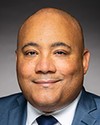
Evidence of meeting #32 for Agriculture and Agri-Food in the 45th Parliament, 1st session. (The original version is on Parliament’s site, as are the minutes.) The winning word was program.

A video is available from Parliament.

On the agenda

Members speaking

Before the committee

Huber  President, Saskatchewan Association of Rural Municipalities
Ross  Executive Director, Canadian Federation of Agriculture
Hornby  General Manager, Keystone Agricultural Producers
Berrigan  Senior Director, Government Relations and Farm Policy, Canadian Federation of Agriculture
Fagan  Farmer and Butcher, Beothuk Land & Cattle Company, As an Individual
Lafontaine  Farmer, Ferme Lafontaine-Noël, As an Individual
Hebert  President, The Hebert Group of Companies Ltd., As an Individual

11:40 a.m.

Conservative

Dave Epp Conservative Chatham-Kent—Leamington, ON

Basically, we're not necessarily looking at tweaks to try to fix AgriStability. We're looking at a major rewrite. I heard that in your opening testimony.

11:40 a.m.

Executive Director, Canadian Federation of Agriculture

Scott Ross

Yes, there's no question. In our view, the landscape has shifted dramatically, and we have a lot of inertia behind the existing framework, which has carried through largely unevolved for almost 20 years now. From our perspective, now is the moment. It's a pivotal time for our sector to really seize our growth potential, and it requires a transformative approach to how we change these programs.

11:40 a.m.

Conservative

Dave Epp Conservative Chatham-Kent—Leamington, ON

A structure that has worked over time—over the decades—since its inception with AgriInsurance and that remains well supported has been the insurance model. With the stabilization approach, from a margin perspective, be it either margin or gross revenue, both areas that are being looked at, why not take a look at an insurance model as a broad framework? Is that a possibility or is that out the window for a complete overhaul of AgriStability?

11:45 a.m.

Executive Director, Canadian Federation of Agriculture

Scott Ross

Our premise, starting where we are today, is that we need to be looking down those paths of whole-farm revenue insurance and these tools that could work very well for some farmers who feel underserved currently by the existing AgriStability program. I will say that, at the current moment, we would advise against throwing AgriStability out and replacing it, but certainly there's a need to explore these programs, pilot them and test them out in real time so that we can see where they work, where they don't and where there may be gaps that persist in that regard.

11:45 a.m.

Conservative

Dave Epp Conservative Chatham-Kent—Leamington, ON

I heard the call for diversified programming because of our very diverse agriculture scene across the country. Could you envision an AgriStability program that is an insurance-based model where there is plug and play to feed into that broad framework from the different regions and different sectors that work in those specific sectors?

11:45 a.m.

Executive Director, Canadian Federation of Agriculture

Scott Ross

It's certainly possible. I think the devil is in the details for all these programs. The question at the end of the day is this: Do we have the right mix of programming? If you move to an insurance-based model, what new exposures and concerns does it create?

I think that's at the heart of why we see the need for transformation, as you asked about earlier. When these programs were initially designed, they were integrated. There was a sense of how AgriInvest supported AgriStability. Over time, as those programs have been cut and have evolved, that integration has been lost. I think it's that fundamental integration we need to see at the heart of all these conversations.

11:45 a.m.

Conservative

Dave Epp Conservative Chatham-Kent—Leamington, ON

In your testimony, you called for greater involvement of the private sector, potentially. Again, in the one program in the suite that works, AgriInsurance, the private sector is involved. Many people don't realize it, but it's involved in the background, with the reinsurance industry providing stability to the producers and premium rates over time and also to government so that there aren't unexpected hits to their budgets due to the catastrophes we're hearing about.

Again, going back to an insurance-based model with plug and play, is there the potential for the reinsurance industry to benefit both producers and governments in setting up a broad framework?

April 28th, 2026 / 11:45 a.m.

Executive Director, Canadian Federation of Agriculture

Scott Ross

Unquestionably, given the extremity of climate volatility, coupled with the geopolitical instability we see right now, we do need to be looking at every tool on the table. That includes what role the private sector can play in building predictability and resilience in the system. There's no question.

11:45 a.m.

Conservative

Dave Epp Conservative Chatham-Kent—Leamington, ON

One of the big knocks against AgriStability has been the lack of acknowledgement of diversification on the farm for diversified risk. There are models in the U.S. that have actuarially mapped that out from a discount matrix for that. Again, could you see that as a possibility?

11:45 a.m.

Executive Director, Canadian Federation of Agriculture

Scott Ross

Yes. I think it's one of the areas we hear about most frequently from our members as a point of concern with AgriStability. Highly diversified operations feel underserved by the program. I think you can look at models like the whole-farm revenue insurance pilot adopted in the United States. It actually had a sliding scale of higher coverage rates if you could demonstrate a higher level of diversification.

I think measures like that can really see those gaps addressed with more attractive programming that will actually bring people in so that we have programming in place when issues arise, instead of requiring that whole reliance on ad hoc programming in those spaces.

The Chair Liberal Michael Coteau

Thank you very much.

MP Connors, you have five minutes.

Paul Connors Liberal Avalon, NL

Thank you.

Thank you to all the witnesses for coming out.

It's nice to see you again, Mr. Ross.

You mentioned in your opening statement that the BRM tools were designed for a different risk profile, and there is “growing misalignment”. Can you elaborate on that a bit for me?

11:45 a.m.

Executive Director, Canadian Federation of Agriculture

Scott Ross

Yes. I would say that we have seen in recent years, and very acutely in the last five years or so, this mounting increase in geopolitical instability, creating a new set of risks for farmers, whether it's due to market closures, lost market access or non-tariff barriers to trade that create a new set of dynamics that were not there at the time. When these programs were designed, trade compliance at the WTO and countervail risk loomed very large. I think we have seen, in some respects, a move away from rules-based trade, which creates increased risk but also increased opportunity to potentially explore programs that can respond to that in a way that wasn't the case 20 years ago.

Similarly, the extremity and frequency of climate events have fundamentally changed. The idea that we now have 100-year events happening subsequently, year after year, is the new norm. I think programs like AgriStability, where you see a reference margin erode over that period and lose the ability to get support, highlight some of the reasons we need to take a closer look at the current risk landscape.

Paul Connors Liberal Avalon, NL

Thanks.

Mr. Huber, you mentioned Saskatchewan Crop Insurance. Is that whole-farm or is it based on an individual crop?

11:45 a.m.

President, Saskatchewan Association of Rural Municipalities

William Huber

That's based on an individual crop. You may have a suite of different crops that you seed, such as oilseeds, pulses and cereal grains. Those are all insured separately under the one program. The problem with that is that the premiums have increased over the years. The coverage has gone up also, but not in line with the actual cost of production. We're getting our fixed costs kind of covered, but when you put the fixed and variable costs together, the payouts generally aren't enough to really sustain that operation to make it profitable. It's sort of like long-term pain for short-term gain.

I think a gentleman over here talked a little bit about some of the programs and maybe self-insurance on things. There are some programs out there. There's Global Ag Risk Solutions, and some of those things. They work very well, but to get that funding in your pocket soon, it's based on an accrual system in your accounting. It takes 16 to 18 months until that finalized return is evaluated and you get any funding.

Some of those things have their problems too.

Paul Connors Liberal Avalon, NL

For confirmation, under the BRM suite of programs, it's whole-farm insurance, not individual crops. Is that right?

11:50 a.m.

President, Saskatchewan Association of Rural Municipalities

William Huber

Yes, certainly it is.

When you diversify it into, say, a grain and a livestock operation, that's where it puts it off balance. I think Scott mentioned a little bit about that. You try to diversify to make your farm more viable and adaptable to some of these severe...whether it's trade, tariffs, drought or certain things like that. They're still not responsive enough.

Paul Connors Liberal Avalon, NL

Scott, do you want to elaborate on that?

11:50 a.m.

Executive Director, Canadian Federation of Agriculture

Scott Ross

I think he covered the issue quite well.

This speaks to that question around diversification again. There's certainly a concern out there that when you adopt solely whole-farm programming, there is an underappreciation of some of the costs involved in self-insuring, as you might say, through diversification and the reality of very tight margins not being reflected adequately.

This is why we want to see more focus on some of those areas where there are sectors that feel underserved and do not have access to equitable levels of support. In some instances, we may need to move away from that whole-farm modality for certain programming needs. There's no question.

Paul Connors Liberal Avalon, NL

Mr. Hornby, in your opening remarks you mentioned that one of your recommendations was about AgriInvest, and you said you could discuss it in more detail. Do you want to elaborate on that a bit for me?

11:50 a.m.

General Manager, Keystone Agricultural Producers

Colin Hornby

What I was referring to was the cross-compliance with AgriInvest if you have over $1 million in net sales.

We administer the environmental farm plan in Manitoba, which is one of the qualifying environmental risk programs that you can use in order to get that contribution from the government to qualify for the program. We're very strong supporters of the EFP program; however, we do believe that the cross-compliance component is a bit misguided. We're trying to achieve two separate policy outcomes in requiring farms to opt into a program that perhaps doesn't fit their operation or it's not something they have the capacity to do at this time.

While we do encourage farmers to adopt and use the EFP program, we don't believe it should necessarily be tied to the financial components and the AgriInvest program.

The Chair Liberal Michael Coteau

Thank you very much.

Mr. Lemire, go ahead for two and a half minutes.

Sébastien Lemire Bloc Abitibi—Témiscamingue, QC

Thank you, Mr. Chair.

Mr. Huber, I come from a rural region with many municipalities. In these small communities, producers are often the village's largest businesses.

In your opinion, how important is it to support producers in regions farther from major urban centres?

11:50 a.m.

President, Saskatchewan Association of Rural Municipalities

William Huber

That's a tough question. I'm certainly not familiar with your area of the country. Your agriculture community is probably a little different from ours.

One big thing we really have to recognize is that we have a product in Canada, no matter whether it's produced in western Canada or eastern Canada, that's valued all over the world. We're proud to say that we have the safest, most reliable exports, but we have to make sure that our customers get those exports and their sales in a timely manner.

Infrastructure is very important. Labour disruption is a huge thing we have to be seriously taking a look at, whether it's port facility workers, postal workers or some of the rail services. Those are so essential.

Even in eastern Canada, you have commodities that need to get to tidewater, get on a ship and be exported. The happier you can keep your customers, the better off it's going to be.

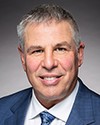
Sébastien Lemire Bloc Abitibi—Témiscamingue, QC

On that note, I’d like to hear you speak about the importance of shorter supply routes. I believe we need to ensure that products—both from Saskatchewan and Quebec—end up in our grocery stores, convenience stores and restaurants; in short, local consumers must have real access to our products.

Are those aspects sufficiently supported in current agricultural programs? I see a great deal of energy devoted to international marketing or sales, but not enough is being done to help our local producers develop their brands and their relationship with consumers.

Is it the same in your region? Should programs focus even more on local markets?