Unfortunately, we've run out of time. I'm sorry. Maybe there will be time in the next round.
MP Chatel, you have five minutes.

Evidence of meeting #36 for Agriculture and Agri-Food in the 45th Parliament, 1st session. (The original version is on Parliament’s site, as are the minutes.) The winning word was risks.
A video is available from Parliament.
Liberal
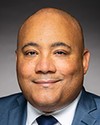
The Chair Liberal Michael Coteau
Unfortunately, we've run out of time. I'm sorry. Maybe there will be time in the next round.
MP Chatel, you have five minutes.
Liberal

Sophie Chatel Liberal Pontiac—Kitigan Zibi, QC
Thank you very much, Mr. Chair.
I have two questions. The first will be for Ms. Delisle and the second will be for Mr. Lefort. If I have any time left, I'll share it with Mr. MacDonald.
Ms. Delisle, you were just talking about prevention. You're not the only witness who's told us that we need to protect and help farmers in times of crisis as well as focus on prevention. In your opinion, how can we plan programs that will encourage farms to adopt adaptation practices?
General Director, Conseil pour le développement de l'agriculture du Québec
There was a discussion about research earlier, so I won't repeat what was said. Having said that, obviously there has to be research, and it can't be confined to the laboratory. Applied research must also be done on the farm.
In Quebec, there are a lot of projects that get something started, but at this point, only a very small number of farmers have the opportunity to take part in such projects and test these practices.
Quebec's Agrisolutions climat initiative is funded by the federal government. It has huge impacts and absorbs some of the risk associated with adopting a new practice and everything that may entail. Sometimes things fail. It takes a few years to become proficient in a new practice. These programs are essential. Otherwise, producers will have to incur the risk and may suffer losses when they try to adapt or try new practices, such as changing crops or rotations, without support.
We rely heavily on knowledge and research, but also on producers' knowledge, knowledge transfer between producers and advisers, participation in initiatives or trials and financial support to adopt these practices. So much happens upstream before programs are launched, and I think that's essential.
Liberal
Sophie Chatel Liberal Pontiac—Kitigan Zibi, QC
Excellent. Thank you very much.
Mr. Lefort, you and other witnesses have said the agri-food sector needs review and support in the next policy framework. The current policy framework focuses largely on primary agriculture.
How do you see the programs functioning in the sector?
The goal is to avoid red tape. One of the measures announced in last year's federal budget is an investment credit, a superdeduction to modernize both the equipment and the buildings in our processing plants.
Personally, I prefer tax credits because they involve less red tape and there are no programs to manage and no conditions to meet. All people have to do is go to their accountant, who figures out whether they're entitled to it or not.
How do you think the provinces and the federal government should support the agri-food sector in the policy framework?
Senior Economist, Ontario Federation of Agriculture
Certainly, there is the core program we have through the NPF itself. That has other strategic initiative programs, as well as the core risk management programs, which we're discussing here today.
Part of my testimony earlier touched on how, given the significance of the agri-food sector as a whole, we feel there needs to be an increased emphasis on it beyond further reinvestments in those programs within the NPF to also that whole-of-government approach.
You mentioned things like the superdeduction tax piece for capital deduction, which we were very happy to see. It would apply to food manufacturers when they're building a new factory. We are also encouraged to see a reintroduction of the accelerated deductions across the board. That's an area, as you mentioned, where we feel a whole-of-government approach makes sense, and that can be expanded even beyond the processing and manufacturing sector to primary agriculture as well.
Farming is an incredibly capital-intensive business. If those same superdeduction rules were to apply to farm buildings and particularly farm machinery—the majority of farm capital expenses are in farm machinery—that would make a tremendous difference in farmers' confidence to invest.
Another piece that I hinted at was that in our farm business confidence survey of our membership that we run each year, we do see a decline in confidence and investment in those capital purchases over the past few years, given all of the uncertainties. Those types of tax policies can help regalvanize that confidence in farmers to make $100,000 or $1-million investments in machinery that has—
Liberal
The Chair Liberal Michael Coteau
I'm sorry. I'm going to have to stop you there. Thank you so much.
Mr. Lemire, you have two and a half minutes.
Bloc

Sébastien Lemire Bloc Abitibi—Témiscamingue, QC
Thank you, Mr. Chair.
Ms. Delisle, Quebec agricultural producers have access to your services, which are often subsidized. Can Canada make a bigger contribution?
I'm asking you this because your expertise makes it possible to implement concrete solutions on the ground right now.
Are you satisfied with the federal government's support? How could it be expanded or customized so that it can be applied on the ground and farms in Quebec and Canada can reap the benefits of your expertise?
General Director, Conseil pour le développement de l'agriculture du Québec
Thank you for your question.
It's important to remember that the two living laboratories in Quebec that we participate in and the Agrisolutions climat program are two major initiatives for Quebec. However, we obviously don't know what the future holds. The living labs program is already slated to end, but we don't know about the rest.
I get the impression that the expertise we've developed could be built upon. I would note that some 500,000 farms are part of the research program. About 15,000 of them are in Quebec and should benefit from that knowledge. The agronomic expertise, the tool and the training programs we've developed could very well be adapted for the rest of Canada if they could be disseminated more broadly. I believe it would save a lot of time and money for other provinces.
Bloc
Sébastien Lemire Bloc Abitibi—Témiscamingue, QC
Several federal programs designed to support improvements aimed at reducing the carbon footprint of agricultural production will have their funding reduced or be cut altogether. As you noted, this committee has had a lot of conversations about cuts to science and research programs.
At this very moment, major investments are being made in the oil industry and pipelines, which will have an impact on agricultural production. As such, do you think the federal government is making wise decisions? Do you think it's heading in the right direction?
General Director, Conseil pour le développement de l'agriculture du Québec
Agricultural producers are actually examining their own impact and showing an interest in reducing it as best they can because they themselves are suffering the consequences of climate change. The agriculture sector has opportunities to reduce emissions. This is well documented and well known.
Sometimes, just developing a climate plan enables most of the producers we work with to reduce their emissions by about 10% without investing a penny. Knowledge and understanding of reduction practices is all it takes.
However, if they want to take emissions reduction to the next level, to 20% or more, that typically requires support that costs money, research or major changes within the business, meaning specific and technical investments on the farm.
Conservative
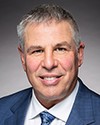
Dave Epp Conservative Chatham-Kent—Leamington, ON
Thank you, Mr. Chair.
I'll return to Mr. LeFort, please.
You stated that over time the AgriStability program has morphed from a stabilization program to far more of a disaster program. We've seen the participation rates fall because of that. I think we've heard witnesses across the study identify three factors. One is that if growers are diversified at the farm level—that is, if they're self-insuring—they don't see as much value in the program. You mentioned the coverage levels dropping, which again has added to that program's morphing and timeliness.
I'm wondering if you could comment on this. I know there are U.S. programs that have developed actuarially sound formulas for pro-rating or discounting—whatever term you want to use—program premium rates on the basis of farm-level diversification. Are you aware of that?
Do you think it could be incorporated and would drive increased participation rates in AgriStability, if there were some sort of recognition of on-farm diversification for program participants?
Senior Economist, Ontario Federation of Agriculture
Thank you. That's an excellent question. It is something we've looked at.
I'll say what we at OFA have looked at. I'm not quite sure of the specific study for the U.S.
There are ways that AgriStability could be amended, without requiring a major overhaul of the program, to recognize diversified farms. You are right to mention this as an issue. We have heard from our members on it. Ontario has some of the most diversified farm operations in the country. Ontario agriculture at the macro level has an extremely diversified split of livestock, crop production and specialized greenhouses. It is extremely diversified at the macro level, but even at the individual farm level, we have producers who have multiple commodities.
As you rightly mentioned, when you are in that situation, it can blunt the possibility of a payment from AgriStability compared with a more specialized farm. If you have 1,000 acres growing corn, it's much more likely, possibly, if the price of corn drops, to trigger a payment than if you have some crops, some livestock and some other different commodities that may offset each other.
We have looked at this and put forward a position in the past that the AgriStability program can be amended to recognize those diversified operations and to treat each commodity grown by an operation as eligible for its own separate payment, if you will, under the program. If you're growing three different commodities and one commodity would trigger a payment but the other two would not, you could still get a smaller payment when looking just at that specific commodity that would have triggered it, compared with the situation now where the other two might offset it and you're very unlikely to get a payment.
To sum that up, we have looked at this. There are ways we can amend the program, and we would very much like to see that idea pursued as we move to the next policy framework.
Conservative
Dave Epp Conservative Chatham-Kent—Leamington, ON
I have a follow-up question.
For over 20 years already, we've collected margin data for the vast majority of the farms in existence. Obviously, we need to create something for new farms or new entrants. Do you think that would be enough data to actually create and have an actuarially sound basis for making some of those differentiations by enterprise or by commodity, as you would say?
Let me add one other layer to that.
You've advocated for 85% coverage levels. Some larger, more established farms might not need quite the 85% if there were a discounted premium. Would that 20 years of data be enough to be actuarially sound and create a matrix of premiums that would take into account both diversification and individually selected producer coverage levels?
Senior Economist, Ontario Federation of Agriculture
Yes, I do believe that we have enough data to pursue this. Again, the devil is always in the details when we get to the final straws of such a program amendment, but I believe that we do.
Conservative
Dave Epp Conservative Chatham-Kent—Leamington, ON
Thank you.
I have a question for MNP. Would you support simplification of the AgriStability program, incorporating that matrix of premiums?
Senior Vice-President, Agriculture, MNP LLP
There are definitely ways to simplify the program and ways to streamline getting money to producers quicker. We definitely would be in support of anything to make it simple, with the understanding that there is a basic level of information needed to file for any application for any program in this country, which would likely not change.
Conservative
Dave Epp Conservative Chatham-Kent—Leamington, ON
As a quick follow-up on tax filing because you're also a tax accounting firm, it's been alleged that there could be improvements made, particularly in corporate farm filing, that would categorize revenue streams more specifically, which would actually add to the timeliness of the program response, particularly for AgriStability. Would you agree?
Liberal
The Chair Liberal Michael Coteau
We're out of time. I apologize.
We're going to go to the Liberals now for the last five minutes.
Liberal

Emma Harrison Liberal Peterborough, ON
Thank you, Mr. Chair.
Thank you to the witnesses for being here.
To MNP, you mentioned in your opening statement about needing better communication and, I think, better education for the producers who would like to access these programs. Would you like to further elaborate on what that might look like?
Senior Vice-President, Agriculture, MNP LLP
We're a big believer that there is a gap in financial fluency among producers in this country. Where we see producers taking an interest in understanding basic business risk management and basic business fundamentals, they become stronger producers and are more business sound, and they reduce their reliance on the programs because they address risk before the year starts. They'll sit down, like some of the other witnesses who testified, and look at ways to mitigate any risk that's coming at them, whether it's price or whether it's climate. They'll use programs that look at those risks, and that actually reduces reliance on these programs.
Liberal
Emma Harrison Liberal Peterborough, ON
Thank you for that.
At this table, we have a few farmers, with farms of varying sizes. I have a small farm, and we have some pretty big landowners.
I don't know if we touched on this. We've had a lot of witnesses and a lot of questions around how we can do this better. We've heard the same thing over and over again about how the programs need to be adjusted.
To OFA and MNP, do you believe the programs and how they're currently designed are equitable to small, medium and larger producers.
Director, Agriculture Risk Management Resources, MNP LLP
Yes, we do believe that. The way the current programs are designed is very equitable. The basis of the programs is whether you're a viable farm or a profitable farm. They cover that. It's not whether your size is small, large or whatever. They respond accordingly.
The current programs are designed in such a manner that they would protect the viability of the farm. If you're not a viable farm to begin with, then it doesn't protect it. That is the beauty of these programs. They do not mask the market signals. They do not keep you profitable if you're not a profitable business. They look at any size of any profitable business, and they protect them accordingly.
Liberal