Evidence of meeting #2 for Bill C-39 in the 45th Parliament, 1st session. (The original version is on Parliament’s site, as are the minutes.) The winning word was work.

A video is available from Parliament.

On the agenda

Members speaking

Before the committee

Dominic LeBlanc  Minister responsible for Canada-U.S. Trade, Intergovernmental Affairs and One Canadian Economy
Steven MacKinnon  Minister of Transport
Feldberg  Vice-President, Regulatory Affairs, Major Projects Office
Vandergrift  Deputy Minister, Department of Transport
Julie Dabrusin  Minister of the Environment, Climate Change and Nature
Patty Hajdu  Minister of Jobs and Families and Minister responsible for the Federal Economic Development Agency for Northern Ontario
Hubbard  President, Impact Assessment Agency of Canada
Gooch  President and Chief Executive Officer, Association of Canadian Port Authorities
Bird  President and Chief Executive Officer, Montreal Port Authority
Legge  President, Business Council of Alberta
Baudry  Vice-President, Strategic Affairs and Communications, Montreal Port Authority

Steven MacKinnon Liberal Gatineau, QC

Mr. Gourde, we can't claim, as your colleague Mr. Lawrence did, that major projects—such as nuclear projects and the project at Contrecoeur—were already under way and that we therefore didn't contribute to them, and simultaneously say that nothing was done. However—

4:30 p.m.

Conservative

Jacques Gourde Conservative Lévis—Lotbinière, QC

Thank you, Minister.

Steven MacKinnon Liberal Gatineau, QC

—I will take that again in a positive way. Canada has what the world is looking for: a skilled workforce, resources and cutting-edge technological expertise. We're capable of leveraging that. Yes, over the decades, regulatory processes and exceptions have piled up—

4:35 p.m.

Conservative

Jacques Gourde Conservative Lévis—Lotbinière, QC

I understand that, Minister. We heard it in your—

Steven MacKinnon Liberal Gatineau, QC

All I'm saying is that the message we're getting from people who want to develop opportunities in Canada is precisely that they want us to make the system give them greater predictability. They're not looking for a yes or no, they're looking for an answer—

4:35 p.m.

Conservative

Jacques Gourde Conservative Lévis—Lotbinière, QC

Minister, you like to talk, so I'm going to ask you a question.

Does Bill C‑39 complement Bill C‑15?

Steven MacKinnon Liberal Gatineau, QC

Bill C‑15 is a budget implementation bill.

4:35 p.m.

Conservative

Jacques Gourde Conservative Lévis—Lotbinière, QC

Sorry, I'm talking about Bill C‑5.

Steven MacKinnon Liberal Gatineau, QC

It's certainly complementary. Regarding Bill C‑5, as my colleague just said, there are already 27 projects or strategies under consideration, and there's a lot of good news to come in relation to this bill. Bill C‑39 complements that in many other areas. The Canada Labour Code—

4:35 p.m.

Conservative

Jacques Gourde Conservative Lévis—Lotbinière, QC

Does Bill C‑39 speed up environmental approvals for the Alto high-speed rail project? I think there was a gap in that regard and that you wanted to find a way to move even faster.

Does Bill C‑39 enable you to move forward even faster?

Steven MacKinnon Liberal Gatineau, QC

The high-speed rail project is a national strategy that has already been submitted to the Major Projects Office. Obviously, there's a project in Alberta that the office and the Department of Transport are interested in, and there is a project in Ontario and Quebec that's being developed by a Crown corporation—

4:35 p.m.

Conservative

Jacques Gourde Conservative Lévis—Lotbinière, QC

We're going to come back to the issue of Quebec, Minister—

Steven MacKinnon Liberal Gatineau, QC

I can't assure you that Bill C‑39 has no impact on the development of this project, but I would say that it has a fairly minimal impact.

4:35 p.m.

Conservative

Jacques Gourde Conservative Lévis—Lotbinière, QC

We want to work in partnership with the Government of Quebec—

The Chair Liberal James Maloney

Thank you, Mr. Gourde.

We will go to Ms. Martin for five minutes.

Danielle Martin Liberal University—Rosedale, ON

Thank you.

Thank you, Ministers, for coming today.

I believe that Canadians fully understand that these are extraordinary times and that we must take action to stimulate our economy, build one Canadian economy and diversify our partnerships around the world.

I think everyone understands that we're in a moment that requires exceptional work. Canadians want to see us building, and they want to see us moving quickly. They understand that we don't have much of a choice in this moment.

Also, of course, whenever we move quickly, there are risks inherent in doing so. The goal of this legislation, as we all understand it, is to move quickly without lowering our standards. In a sense, that's what we're trying to do on this committee: We're trying to be thorough and thoughtful and also move quickly, because we understand the importance of this legislation.

In light of that, I think it's particularly important for Canadians and the committee to understand the work that led us to this moment. I'm wondering if each of you, or either of you, could speak to the engagement work that took place in the months leading up to this legislation. I understand it was quite extensive. We had a chance to read these “What We Heard” reports.

Also, could you talk a little about the feedback that you heard and how that feedback was incorporated—particularly in the areas of risk that have been identified around indigenous rights, environmental risks and labour rights—so that Canadians can understand that the work of this committee is only one part of a broader process?

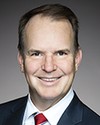
Steven MacKinnon Liberal Gatineau, QC

That's a great question. I'll talk for a minute and then let Mr. LeBlanc build on the discussion papers that were released this summer and the extended period of consultation that ensued.

I would like to go back a little further. As we were coming out of the pandemic, I think it was generally pretty clear to everyone that a number of things had been fragilized in the supply chains, and we saw that we could no longer reassure Canadians or provide certainty on things like ocean traffic or costs. Work began back then.

Under my predecessors, we had a national supply chain summit in 2022. This would have included, of course, organized labour, transportation companies, investors, first nations and others. The supply chain task force was established in 2022, and there was the supply chain regulatory review in 2023-2024. There were multiple studies by the transport committee, which includes Mr. Albas and Mr. Kelloway, who also is a prominent member of that committee, and there were studies in the transport committee at the Senate. There were 78 engagement sessions and over 26,000 responses to the consultation papers that were put out this summer.

This is not only the product of widespread, extended and deep conversations; it is also based on observations. I think Canadians who are watching can easily identify the obstacles, regulatory burdens and other things that we have to overcome if we are going to continue to build the country and diversify our trading partners.

Dominic LeBlanc Liberal Beauséjour, NB

Steven answered a significant part of Dr. Martin's question, but Dr. Martin also properly raised the understandable concern that people have expressed in the consultations this summer and to members of Parliament and senators in conversations about legislation. Their concern is that speeding up the review processes and getting to decisions faster somehow has a direct line to lowering of standards.

It's important, Dr. Martin, in answer to your question, to make it clear that Bill C-39 in no way proposes a change to standards; it is only to processes. The scope of environmental assessments remains the same and will continue to consider the broad set of factors, including, for example, environmental health effects and social effects, which are things you've written about and worked on for a long time, as well as indigenous and traditional knowledge.

These measures have been designed to eliminate unnecessary duplication, the idea that you do these reviews sequentially instead of doing them concurrently. With provinces, territories and other partners, there are a lot of ways that we can ensure the same rigour in review in a more coherent and expedited way. It's important to remove any confusion around that.

The Chair Liberal James Maloney

Thank you, Minister, and thank you, Dr. Martin.

Mr. Ste-Marie, it's over to you for two and a half minutes.

Gabriel Ste-Marie Bloc Joliette—Manawan, QC

Thank you, Mr. Chair.

The government is suspending environmental laws, but it's still going to take care of the environment as well. I have my doubts, Ministers. This is a brief comment related to your discussion with Mr. Gourde.

Personally, I'm concerned when I see the Conservative Party supporting the Liberal Party on a bill that rolls back workers' rights, suspends environmental laws and circumvents real consultation with first nations. That really worries me. To me, this is a hyper-conservative bill. I don't even think Stephen Harper or the Conservative government would have ever managed to go as far as what you're doing right now.

I'm going to ask you two questions back to back. The first is a technical question.

Could a region designated as being of national interest represent an entire province?

My second question is related to what Mr. LeBlanc just said to Dr. Martin.

You say that speeding up the process has no impact on the outcome, except that Bill C‑39 pre-approves projects before environmental assessments are even carried out. Do you intend to go back to rigorous assessments where the outcome is not predetermined?

Steven MacKinnon Liberal Gatineau, QC

Again, we have to revisit the premise of the questions. There is no suspension of environmental standards or laws under Bill C‑39. There is guidance and things that have been made clearer. For example, regarding the Canada Labour Code, the bill frames the discretionary power of the Minister of Labour in a dispute.

However, I think that Mr. LeBlanc and I owe it to ourselves to challenge you to tell us where standards or laws are being suspended, Mr. Ste‑Marie. We see nothing of the sort.

Gabriel Ste-Marie Bloc Joliette—Manawan, QC

I had a series of questions for you, but I can mention your interpretation of section 107 of the Canada Labour Code, for example, which gives the minister the power to end a labour dispute before it even begins. That's an interpretation that sets back workers' rights.

I'm running out of time, so I'll ask you again: Can you designate a province as a region of national interest?

Dominic LeBlanc Liberal Beauséjour, NB

Honestly, I understand the question. In any of our conversations about the need to designate regions of national interest, I can't imagine a scenario where it would be an entire province. On the contrary, we're going to work with the provinces. It's specifically about being a reliable development partner in a region. I can't picture a scenario where the designation would apply to an entire province. It's really a matter of designating a region within a province or a region that crosses through several of them.

I'm from the maritime provinces. It's a small area. I can picture a scenario where a project in Newfoundland and Labrador would aim to bring clean energy to Quebec. That's a great example. It wouldn't be a province that would benefit, but a region. It would be my region, Atlantic Canada, that would benefit greatly, as well as the people of Quebec, I imagine. I'll let you speak for Quebec, it's not up to me to do so—

The Chair Liberal James Maloney

Thank you, Minister. I'm going to have to cut you off there. I'm sorry.

Mr. Lawrence, it's over to you for five minutes.

4:45 p.m.

Conservative

Philip Lawrence Conservative Northumberland—Clarke, ON

Thank you.

I'm hoping, Minister MacKinnon, that we can walk through a bit of how Bill C-39 will affect the Alto project.

How many years more quickly will Alto be completed because of Bill C-39?