Evidence of meeting #11 for Access to Information, Privacy and Ethics in the 45th Parliament, 1st session. (The original version is on Parliament’s site, as are the minutes.) The winning word was cooper.

A video is available from Parliament.

On the agenda

Members speaking

Before the committee

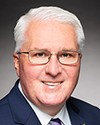
Wernick  Jarislowsky Chair in Public Sector Management, University of Ottawa, As an Individual
Cooper  Journalist, The Bureau, As an Individual

11:45 a.m.

Conservative

Michael Barrett Conservative Leeds—Grenville—Thousand Islands—Rideau Lakes, ON

To follow up on that line of questioning, if there's a potential conflict that's flagged, what's the evaluation process? What does that look like?

11:45 a.m.

Jarislowsky Chair in Public Sector Management, University of Ottawa, As an Individual

Michael Wernick

I'm not sure about the details. I think what happens is that items that come in are referred to specific secretariats—it might be economic, social, foreign policy, indigenous affairs or whatever—and you have an assistant secretary, sort of an ADM-level person—sorry for the jargon—and they will be looking at items coming in. Most items arrive after several rounds of interdepartmental meetings and people from the sponsoring department coming to PCO, so you don't get very many cabinet items that arrive without prior notice, and there is some time for people to take a look at the screens and see if something needs to be actioned.

11:50 a.m.

Conservative

Michael Barrett Conservative Leeds—Grenville—Thousand Islands—Rideau Lakes, ON

Who recommends the decision that something not...? Let me rephrase it. Who makes the recommendation, and to whom would they make the recommendation, that the screen be invoked, so that something that was going to go before cabinet is not presented without the affected public office holder being absented from the room?

11:50 a.m.

Jarislowsky Chair in Public Sector Management, University of Ottawa, As an Individual

Michael Wernick

I can't tell you for sure how it's actioned now. I left several years ago. Most cabinet business is done at committees, chaired by other ministers. My recollection—and I stand to be corrected by people from the Privy Council Office—is that it would have been the assistant secretary, who's basically the secretary to each cabinet committee, and in the case of full cabinet it's the clerk.

11:50 a.m.

Conservative

Michael Barrett Conservative Leeds—Grenville—Thousand Islands—Rideau Lakes, ON

At the end of my last round, we talked about the effectiveness of having the chief of staff or having the Clerk of the Privy Council, who both serve at the pleasure of the Prime Minister, responsible for ensuring that the act isn't violated. They're the ones who are advising or protecting against this happening.

In the case of Mr. Trudeau, it didn't work, and in the case of Mr. Carney, he has 103 potential conflicts that are flagged. We're left with the same system, and it's left in the hands of these individuals. They both can be long-serving and well regarded, but the problem is who their boss is and what their function is to prevent the conflict. In this case, the risk of a decision being made by the Prime Minister that could further his own financial interests goes to the heart of the erosion of confidence that Canadians have in their public institutions. Do you recognize that there is a weakness in this system?

11:50 a.m.

Jarislowsky Chair in Public Sector Management, University of Ottawa, As an Individual

Michael Wernick

The story you could tell of the last Parliament is that all of those issues were detected and made public and became a subject of parliamentary discussion or investigations by the commissioner. At some level, the system is drawing out those issues.

I don't think you can describe potential issues of perceived conflict in the future in a way that can really be legislated with a lot of clarity. There's just too much subjectivity.

11:50 a.m.

Conservative

Michael Barrett Conservative Leeds—Grenville—Thousand Islands—Rideau Lakes, ON

You mentioned that there's a process in place that prevents the items from ending up on the agenda or flags them for cabinet committees, so the record-keeping and the note-taking exist.

Should the law require public reporting of when the screen is invoked? It wouldn't require a great lift of those involved to report it, if that were what the law required.

11:50 a.m.

Jarislowsky Chair in Public Sector Management, University of Ottawa, As an Individual

Michael Wernick

Yes. First of all, the remedy is rarely to take the item off the agenda; it's recusal. If there's a minister in the room who may have a perceived conflict, they'll step out for that item. For the Prime Minister—

11:50 a.m.

Conservative

Michael Barrett Conservative Leeds—Grenville—Thousand Islands—Rideau Lakes, ON

Pardon the interruption. I have a very short time.

Is there a practicality issue when the minister in question is the first minister and these are massive issues that are being considered?

11:50 a.m.

Jarislowsky Chair in Public Sector Management, University of Ottawa, As an Individual

Michael Wernick

Yes. As I said in answer to a previous question, I have no objection or problem with you writing specific rules for the Prime Minister's office, given that the Prime Minister plays a particular role in cabinet. I have no problem with your suggestion, but what I would suggest is that those invocations of the screen be disclosed to the commissioner. The commissioner can come to a view on what they want to do about it.

11:50 a.m.

Conservative

The Chair Conservative John Brassard

Thank you, Mr. Wernick.

Mr. Sari, you have the floor for five minutes.

Abdelhaq Sari Liberal Bourassa, QC

Thank you very much, Mr. Chair.

I'd like to thank Mr. Wernick for being here virtually.

Mr. Wernick, let me say that your experience as clerk of the privy council and a senior official of the Government of Canada places you among the most credible observers of public governance and ethics. I also thank you for expressing your opinion. I look forward to reading the OECD report on that.

You mentioned that we're already in the top quartile. That's good, but we aren't the best. One of our goals, especially when it comes to ethics, is to be among the best.

You know that the public's trust in institutions depends on the perception of integrity and transparency in the management of government affairs. You yourself have led teams at the highest level of the public service, where those principles are translated into concrete practices.

My first question could enlighten us in our work. Do you agree with me that it would be appropriate to harmonize the Conflict of Interest Code for Members of the House of Commons with the Conflict of Interest and Post-Employment Code for Public Office Holders, which is provided for under the Conflict of Interest Act?

11:55 a.m.

Jarislowsky Chair in Public Sector Management, University of Ottawa, As an Individual

Michael Wernick

I honestly don't know.

We just discussed the distinction between the categories of decision-makers: the Prime Minister, ministers and public servants. I think it's important to maintain a degree of proportionality. Yes, the government can harmonize the codes, but by noting the distinctions between categories of decision-makers, for example.

It would be more appropriate to ask lawyers what the specific wording of that would be.

Abdelhaq Sari Liberal Bourassa, QC

What do you think are the key elements to ensuring that a screening mechanism is effective when it comes to managing conflicts of interest?

11:55 a.m.

Jarislowsky Chair in Public Sector Management, University of Ottawa, As an Individual

Michael Wernick

I think it's important to enhance or strengthen the Commissioner's role in terms of their powers and penalties. That said, the principle of proportionality has to be taken into account. If the goal is a very strict regime that imposes penalties for criminal offences, it would be best to drop the notion of the appearance of a conflict of interest and target conflicts of interest objectively.

When it comes to Canadians' trust, I recommend that committee members take advantage of caucus meetings and those of other committees to suggest to their colleagues that other means of protection could be enhanced or strengthened when pressure is put on decision-makers.

A foreign agent registry needs to be put in place, and the Access to Information Act needs to include political advisers.

As I mentioned, the registry of lobbyists needs to include the contacts of all members of Parliament and senators. I find it really sad that the last government didn't modernize the Canada Elections Act. As members of Parliament, you can ask your leader to backtrack and pass the legislation that will strengthen the powers of the Commissioner of Canada Elections.

As I said earlier, the Conflict of Interest Act is very important. It can be improved. It's important not to forget that it's one of the tools we have to defend our democracy.

Abdelhaq Sari Liberal Bourassa, QC

I'll come back to the issue of trust again. The goal is to gain the trust of the public, of Canadians. As you know, people's trust generally depends on their perception. It can sometimes be stronger or weaker.

Do you feel that the perception or the appearance of a conflict of interest can damage public trust as much as a real conflict of interest can?

How should institutions, the government, opposition parties, the House of Commons and decision-makers best manage this issue of perception?

11:55 a.m.

Conservative

The Chair Conservative John Brassard

Please give a brief answer, Mr. Wernick. There isn't much time left.

Go ahead, please.

11:55 a.m.

Jarislowsky Chair in Public Sector Management, University of Ottawa, As an Individual

Michael Wernick

I think to establish confidence, it's not the absence of cases coming up that would make them confident. They would always be wondering what else is happening. Because the deciders and the people putting pressure on them are human beings, there are going to be cases. There are going to be cases of conflict of interest and perceived conflict of interest. The fact that cases are detected and sanctioned is what Canadians should be looking for.

Noon

Conservative

The Chair Conservative John Brassard

Thank you, Mr. Wernick.

Thank you, Mr. Sari.

That concludes our first hour for today.

Mr. Wernick, I want to thank you on behalf of the committee for appearing today.

We'll suspend briefly. I understand that Mr. Cooper is already online, so this shouldn't take too long.

Noon

Conservative

The Chair Conservative John Brassard

Welcome back for our second hour.

Our next witness is Mr. Sam Cooper, a journalist with The Bureau news.

Mr. Cooper, welcome to the committee. I know that you've had your sound tested, but I want to make sure you're prepared for the French interpretation. Some questions will be asked in French. I was at your recent appearance at the justice meeting. I was in the back row, and I know that you speak very quickly. I would just remind you to please make sure that you speak clearly in order for the interpretation to work.

I understand also, Mr. Cooper, that you don't have an opening statement and would just like to go to questions. We'll start with that, then, if you're okay. If you do want to say something to the committee, I would invite you to do that now. If not, I will go to Mr. Barrett for six minutes.

Samuel Cooper Journalist, The Bureau, As an Individual

That works for me. Thank you.

12:05 p.m.

Conservative

The Chair Conservative John Brassard

Thank you, Mr. Cooper.

Mr. Barrett, go ahead, please.

12:05 p.m.

Conservative

Michael Barrett Conservative Leeds—Grenville—Thousand Islands—Rideau Lakes, ON

Your reporting notes that Brookfield maintained over $3 billion in politically sensitive investments connected to China and its state-linked real estate and energy companies. Can you explain how Prime Minister Carney's role in Brookfield ties to the regime in China?

October 27th, 2025 / 12:05 p.m.

Journalist, The Bureau, As an Individual

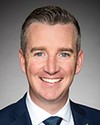
Samuel Cooper

Sure. I'll go off the memory of my own reporting.

Thinking of that story, which I wrote in the lead-up to the federal election, I researched Brookfield's investments in China, and on the real estate file I noted that, after 2015, Brookfield had made very substantial China-based real estate investments. Due to my knowledge of Beijing's United Front networks, I noted that one of the key Hong Kong investors who was connected to the projects that Brookfield was investing in was part of the Chinese People's Political Consultative Conference. That was important to me because the Central Intelligence Agency notes that people on that high-level Chinese Communist entity are involved in Beijing's global United Front networks. That's how the Chinese Communist Party brings influential people together.

Therefore, I noted in my reporting that for Brookfield to get access to that same type of investment project on a major real estate deal in China, together with a very elite Hong Kong real estate tycoon.... Certainly, in my learned opinion, it would take a special kind of access to get that kind of deal. Then, tracking forward through when Prime Minister Carney joined Brookfield, in the surrounding years, I noted that the real estate market in China had plummeted. At some point, Brookfield needed to secure a sort of “reinjection” of capital, let's say, and it emerged that the Bank of China—as others have reported—was involved in bridging some capital to reinfuse that deal into China's troubled real estate market.

Stepping back from that, I noted that, with people in Mr. Carney's position in Brookfield and with Mr. Carney also travelling to China to meet with senior Communist Party officials around the time of the Bank of China assisting Brookfield with their real estate investment.... It would certainly, in my mind, raise questions around access and influence.

12:05 p.m.

Conservative

Michael Barrett Conservative Leeds—Grenville—Thousand Islands—Rideau Lakes, ON

Prime Minister Carney was the chair at Brookfield during that time, and then he entered public office. You talked about his ties, his relationships, with the regime in China. Is there any evidence to suggest that those ties have been maintained since he entered elected office?