Thank you for your comments, Mr. Lavoie.
Mr. Thériault, you have the floor regarding the subamendment.

Evidence of meeting #37 for Access to Information, Privacy and Ethics in the 45th Parliament, 1st session. (The original version is on Parliament’s site, as are the minutes.) The winning word was subamendment.
A recording is available from Parliament.
Conservative
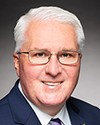
The Chair Conservative John Brassard
Thank you for your comments, Mr. Lavoie.
Mr. Thériault, you have the floor regarding the subamendment.
Bloc
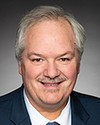
Luc Thériault Bloc Montcalm, QC
Thank you, Mr. Chair.
This has been going on for nearly 16 hours now, if not a little longer. This is not a criticism, but you and I have followed this debate from start to finish, without being replaced.
I understand that new speakers may provide further details to help clarify where we stand, but, since the start of my contributions, I have avoided mentioning the questions I wish to put to the Ethics Commissioner, Mr. Imbleau and the minister. These questions will be asked during the scheduled meetings; the six hours of meetings will be spread over two or three sessions, if the motion is adopted.
I repeat, for those who have just joined us and are wondering why we have been debating for 16 hours: the government's argument is that the opposition is trying to go fishing, to discredit democratic institutions and to erode public confidence, given that the Ethics Commissioner has already given his opinion.
The fact that the commissioner has examined the situation does not prevent us from summoning him to ask him questions, particularly given that we are currently reviewing the Conflict of Interest Act.
In the matter before us, there are three parties. Firstly, there is the commissioner, as an independent resource, who, I repeat, suggested to us, as part of the review of the act, that we introduce the concept of the appearance of a conflict of interest. This is the source of the motion, amongst other things.
In fact, my understanding is that, from the moment Alto offered a job to the partner of the Minister of Finance, while the latter was spearheading Bill C‑15, which would grant Alto significant powers regarding expropriation and reduce those of the expropriated parties, we are entitled to ask questions of Alto's CEO.
Conservative
The Chair Conservative John Brassard
Mr. Thériault, the oral question period and members' statements will begin in three minutes. Members need time to make their way to the chamber.
I am going to suspend this meeting to the call of the chair.
Mr. Thériault, you will have the floor when we return.
[The meeting was suspended at 10:57 a.m., Friday, April 17]
[The meeting resumed at 3:33 p.m., Monday, April 20]
Conservative
The Chair Conservative John Brassard
I welcome you to the House of Commons Standing Committee on Access to Information, Privacy and Ethics.
We are resuming meeting number 37—
Bloc
Luc Thériault Bloc Montcalm, QC
Mr. Chair, please excuse me for interrupting, but there is a problem with the interpretation; I can hear the English interpretation.
Bloc
Conservative
The Chair Conservative John Brassard
All right.
We are resuming meeting number 37 and the debate suspended on Friday, April 17.
Today's meeting is being held in a hybrid format. In accordance with the Standing Orders, members may participate in person or via the Zoom application.
When we last left our superheros, we were on committee business and we are resuming debate on a motion moved by Mr. Barrett on Monday, April 13, 2026:
That the committee undertake a study into the connection between the Minister of Finance and National Revenue and Alto, and the Minister's claims that he has recused himself from decisions his government made related to Alto; that, for the purpose of this study, the committee invite the following witnesses to appear by May 8, 2026:
1. Konrad von Finckenstein, Conflict of Interest and Ethics Commissioner, for two hours;
2. Executives from Alto, including CEO Martin Imbleau, for two hours; and
3. the Minister of Finance and National Revenue, for two hours.
An amendment was moved by Mr. Saini that the motion as amended be further amended by deleting the words “Executives from Alto, including CEO Martin Imbleau, for two hours”. The subamendment moved by Mr. Hardy was that the amendment be amended by deleting the words “including CEO Martin Imbleau, for two hours”.
The subamendment by Mr. Hardy would have the effect of confirming that the executives from Alto would not be invited to appear, but that the CEO, Martin Imbleau, would be invited to appear. That is where we are today, and that is what we are resuming debate on this evening.
We are on the subamendment moved by Mr. Hardy.
Mr. Thériault, at the end of the last meeting, you had the floor regarding the subamendment. You therefore have the floor.
Luc Thériault Bloc Montcalm, QC
Thank you, Mr. Chair. Thank you for that clarification and summary.
We are beginning hour number 17 of the debate. In fact, I hardly dare call it a debate, as it resembles more of a monologue on the part of the government representatives.
Firstly, all these amendments and all these attempts to water down the original motion are based on an accusation of ulterior motives. When Mr. Hardy tabled his subamendment, which modified Mr. Saini's amendment, we heard on several occasions that what we were doing through this motion and this subamendment amounted to a fishing expedition, or even a witch hunt. This was repeated ad nauseam for 17 hours.
We are clearly not on the same wavelength. To suggest that the ethics committee is engaging in a witch hunt by wishing to hear from the Ethics Commissioner, the CEO of Alto, Mr. Martin Imbleau, and the minister concerned, is rather disappointing. Essentially, this amounts to saying that we must not do this and that it is better to drag out the debate until we are all exhausted, on the pretext that the opposition's intentions are malicious. It is therefore assumed that opposition MPs have malicious intentions, for example by proposing a subamendment to Mr. Saini's amendment.
Mr. Saini's amendment simply sought to remove an element from the second point of the motion, namely the part concerning the witnesses we wished to hear. I would remind you that, prior to Mr. Hardy's subamendment—which sought to retain at least the appearance of Alto's CEO—the Liberals were already asking us to withdraw the part concerning Alto's executives.
This is what the Liberals do: they take the floor, but once they have finished their speech, they ask the chair to put their name back on the list of speakers. This amounts to filibustering. The result is that it is difficult to add one's name to the list of speakers, to join the discussion and put forward counterproposals.
Mr. Chair, let us recall that, during those 17 hours, you even suspended the sitting to allow for discussions aimed at finding compromises. We did reach a few compromises. Before Mr. Hardy tabled his subamendment, we had already reached a third compromise. Initially, Mr. Fergus told us that the final sentence of the motion, which sought to have the committee report to the House that it was undertaking this study, would waste the House's time. To that, I replied that it is the legislative branch and the elected representatives who must debate in the House. A debate on ethics is never a waste of time. We agreed to remove the final sentence, agreeing to limit the study to the committee. We were then told that we should not invite Alto's executives to testify, for fear that our intention was to invite the minister's partner to testify. We agreed to remove this element.
When we agreed to remove this element, Mr. Saini proposed deleting point 2 entirely. We then responded with a subamendment. Mr. Hardy proposed maintaining a balance, noting that there are three parties involved and that it is impossible to shed light on the situation if one of the parties is excluded.
In this case, this subamendment is important. We are told that the Ethics Commissioner has already ruled on part of the matter, stating that human resources issues fall under the jurisdiction of the Minister of Transport, not the Minister of Finance. However, this does not address the broader issue of the appearance of a conflict of interest. When a company receives $3.9 billion and offers a position to the partner of the Minister of Finance, who is spearheading Bill C‑15, which will amend the Expropriation Act and reduce the rights of those being expropriated, it is legitimate to want to understand Alto's role in this situation.
Is this a brilliant idea on the minister's part, or not? What is the rationale behind this decision, given the public statements made by Mr. Imbleau? He says he wants to do things right and respect people. So why, then, was this provision introduced into Bill C‑15? It effectively waters down the Expropriation Act, which was passed following the events related to the Mirabel expropriations that many still remember.
We are therefore faced with an attempt to remove one of the parties. In other words, we should not be hearing from Alto to explain this apparent conflict of interest. Furthermore, we were told that the matter had been settled, that the case was closed, and that the committee would not have to rule on it or hear witnesses, since the commissioner had resolved the issue.
However, it would be useful to hear from the commissioner on how he interprets the concept of the appearance of a conflict of interest. He had, in fact, suggested that we incorporate this concept into the next version of the Conflict of Interest Act, which we are currently revising.
I am somewhat disappointed to see that a government which is still in a minority position—for the next few weeks, days, or even hours—is acting as if it were in the majority. Let there be no mistake: there would not have been a 17‑hour debate. The Liberal members of the committee would have called for a vote, and we would have moved on.
I am absolutely committed to this subamendment. It aims to prevent one of the parties from being sidelined without a clear understanding of what happened. Inviting the Minister of Finance to testify is essential. I wouldn't want to find myself asking him questions only to be told that it's Alto's responsibility or for the commissioner to respond that it's not his place to answer the question. That is precisely why it is important to hear from all three parties. We need to be able to shed full light on the situation.
Citizens have a right to this transparency and to a minimum level of trust in democratic institutions. If they do not trust the democratic institution represented by the ethics committee in Parliament—whose primary function is precisely to analyze what is against what should be—and if the truth cannot be brought to light regarding a situation that may involve a lack of judgment or the appearance of a conflict of interest, then I wonder what purpose this committee serves. I sincerely hope to convince the members on the other side. I hope to hear today something other than an argument based on a trial of intent, suggesting that the opposition is acting maliciously or seeking to grandstand.
I am not conducting a witch hunt. I am not trying to launch a fishing expedition. I am simply trying to shed light on a situation that, at the very least, raises questions about a lack of judgment and the appearance of a conflict of interest. To determine whether this is more than a conflict of interest, we must establish, among other things, whether the minister actually recused himself. There are many who doubt this.
It is not certain that, following the vote on the subamendment, other amendments will not be introduced to further narrow the scope of the motion, which would already have been significantly reduced had this subamendment not been proposed.
What I want is to shed light on the situation. I want to be able to question all the stakeholders in this matter. We will do so with decorum and with all the rigour and respect that such a situation demands. The manner in which we proceed will also be judged by those listening to us.
It is true that, given the limited time we have to question witnesses, we may sometimes have to intervene, or even interrupt witnesses, when their answers do not directly address the question asked. However, I make a commitment to my colleagues across the floor: If they accept this subamendment, we will conduct ourselves impeccably toward the witnesses. If they answer the questions directly, without beating around the bush, we will let them answer.
It is very important that we at least be able to hear from the Ethics Commissioner. At one point, I had the impression that hearing from him was considered less relevant. Mr. Imbleau must also come and explain to us how his organization operates. I don't quite understand why Alto offered a position to the minister's partner. Not that she isn't entitled to it per se, but the minister steered Bill C‑15 through to its passage, participated in the debate, and voted. When one recuses oneself, one must at least abstain from voting if one truly wishes to avoid any doubt, whether it involves an actual or apparent conflict of interest.
With that, I invite all my colleagues to consider the merits of this motion as subamended, and, as much as possible, to avoid filibustering, or at the very least to acknowledge that some wish to get to the bottom of this unfortunate situation in which the minister has placed himself.
Some will say that he has set higher standards for himself than those required by the Ethics Commissioner. However, these additional standards were not strictly adhered to, since he voted on Bill C‑15.
I therefore call for co-operation today. We are in hour number 17 of the debate. Some may feel that my remarks are long, but they remain modest compared to the speaking time used by the Liberals over the course of these 17 hours.
In closing, I would like to point out that if, from the very first hour of debate, we had agreed to adopt this motion, after removing the part relating to the report to the House, we would have saved a great deal of time. This is a six-hour study. Six hours is not much. We have now reached 17 hours of discussion. We could have conducted this study three times over; we would have had the full picture after those six hours. People could have formed an opinion on the validity of the concerns raised, rather than seeing my colleagues across the way acting as judges and concluding, from their position of being able to obstruct, that this process is unnecessary, that it is a bad motion, a fishing expedition, or a witch hunt.
I urge everyone to resolve the subamendment quickly. I hope we can proceed to a vote promptly and hear from the three parties we wish to hear from, as they are necessary to shed full light on this situation.
Conservative
The Chair Conservative John Brassard
Mr. Thériault, thank you for your comments on the subamendment.
I have a list on the subamendment.
Monsieur Sari.
Conservative
The Chair Conservative John Brassard
Sir, I have a list, and you're on it, on the subamendment. If you want to speak to it, I invite you to do that now.
Conservative
The Chair Conservative John Brassard
Okay.
The next I have on the list is Ms. Church on the subamendment.
Liberal

Leslie Church Liberal Toronto—St. Paul's, ON
Thank you, Mr. Chair.
Reflecting on Mr. Thériault's comments and the duration of the debate we've had over the past week, I hope, if you seek it, we may have unanimous consent for the following motion:
That the committee undertake a study into the connection between the Minister of Finance and National Revenue and Alto, and the Minister’s claims that he has recused himself from decisions his government made related to Alto; that for the purpose of this study, the committee invite the following witnesses to appear:
1. Konrad von Finckenstein, Conflict of Interest and Ethics Commissioner for one hour;
2. The Minister of Finance and National Revenue for one hour
We are aiming for the week of May 25.
Conservative
The Chair Conservative John Brassard
Okay.
That was going to be my comment, actually, because the previous motion that was proposed by Mr. Barrett talked about by May 8. You want to do this in the week of May 25. Is that correct?
Conservative
The Chair Conservative John Brassard
Okay. It's not indicated in the motion, but I'm going to accept that as a reasonable proposal in the week of May 25.
Ms. Church is seeking unanimous consent on this motion. I am seeking it.
Conservative
The Chair Conservative John Brassard
The clerk can send you the motion, Mr. Thériault.
I will suspend the meeting for a few minutes to give you a chance to read it.
Conservative
The Chair Conservative John Brassard
I'm going to call the meeting back to order.
We are dealing with a unanimous consent motion that's been proposed by Ms. Church:
That the committee undertake a study into the connection between the Minister of Finance and National Revenue and Alto, and the Minister's claims that he has recused himself from decisions his government made related to Alto; that, for the purpose of this study, the committee invite the following witnesses to appear in the week of May 25, 2026:
1. Konrad von Finckenstein, Conflict of Interest and Ethics Commissioner, for one hour;
2. The Minister of Finance and National Revenue for one hour.
I do understand as well that there is an issue with the French language version of this that the clerk will correct if it is the intention of the committee to adopt this unanimous consent motion.
There's no debate on this. Do I have the consent of the committee to adopt the motion presented by Ms. Church?
I see yes on this side.
Monsieur Thériault? No?
Unanimous consent has not been granted.
We are still on the subamendment. I don't have any more speakers on the subamendment, so if there is an intention to get on the list, tell me now.
I see that Mr. Thériault wishes to speak.
You have the floor regarding the subamendment, Mr. Thériault.

