Evidence of meeting #54 for Access to Information, Privacy and Ethics in the 45th Parliament, 1st session. (The original version is on Parliament’s site, as are the minutes.) The winning word was threshold.

A video is available from Parliament.

On the agenda

Members speaking

Before the committee

Bélanger  Commissioner of Lobbying, Office of the Commissioner of Lobbying

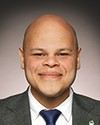
Gabriel Hardy Conservative Montmorency—Charlevoix, QC

Excellent.

I have another quick question. For example, let's say I own a large company that would benefit from working with the government; however I'm simultaneously working for a political association—regardless of which party. If I attend big annual conventions and have access to decision-makers, is it a conflict of interest for me when it comes to discussions I may have or the interests I represent? These are ultimately my friends. We chat. I tell them that Canada would be so much better off if it did this instead of that, or if it moved into sector x or y. I could tell them I know it's an up-and-coming sector because I work in it.

Are those discussions registered? Do you have access to that information? Are you able to say we need to be careful because lobbying took place? Or do you only realize afterward that some key projects happen to align remarkably well with some companies?
11:40 a.m.

Conservative

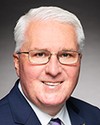
The Chair Conservative John Brassard

Go ahead quickly, Ms. Bélanger.

11:40 a.m.

Commissioner of Lobbying, Office of the Commissioner of Lobbying

Nancy Bélanger

What I would say is that lobbyists must first register. Once they're registered as a lobbyist, they're subject to the lobbyists' code of conduct. Therefore, they wouldn't be allowed to lobby their friends or people with whom they have a close relationship. Consequently, this matter should be reviewed.

11:40 a.m.

Conservative

The Chair Conservative John Brassard

Okay, thank you.

11:40 a.m.

Commissioner of Lobbying, Office of the Commissioner of Lobbying

Nancy Bélanger

It's their responsibility, but we also conduct monitoring.

11:40 a.m.

Conservative

The Chair Conservative John Brassard

Thank you, Ms. Bélanger and Mr. Hardy.

Ms. Tesser Derksen, you have five minutes. Go ahead.

Kristina Tesser Derksen Liberal Milton East—Halton Hills South, ON

Thanks so much, Mr. Chair.

Thank you very much for being here today. This is actually my first time engaging with a witness at this committee, as I just joined a few weeks ago, and we've been busy reviewing other matters.

I want to start with a question about compliance in general. You may recall that one of our witnesses, Brian Gear from the Treasury Board, indicated that there was some doubt about non-compliance.

We go through these exercises because we want to be current. We want to make sure we're serving Canadians and making sure that legislation is updated, but at the same time, if I could play devil's advocate, some people might say, “Are we creating work where there isn't actually a problem to address?” I think that's what Mr. Gear was getting at in his testimony.

In your opinion—and I could probably guess what your answer will be—as far as non-compliance goes, what would you say about Mr. Gear's comments? Are those fair comments, that non-compliance is not necessarily an issue?

11:40 a.m.

Commissioner of Lobbying, Office of the Commissioner of Lobbying

Nancy Bélanger

First of all, when it comes to registration, I think consultant lobbyists know their obligations. They're professionals. They know.

The issue is with employers. There's now a threshold, and they do not know if they meet the threshold or not. There's a lack of clarity as to whether they should. Maybe some of them are not registered and should be. There might be a compliance issue. One of the reasons why I reduced 32 hours to eight hours was that people were having lobby days and were not registered. There was an issue of a lack of transparency.

With respect to compliance—and that's exactly what Mr. Thériault's question was about—there are a lot of people who are late. They're late in registering.

My submission has some statistics, but people are late. In the registrations last year, 1,148 people were late. Actually, 860 people were late for 1,148 late registrations. That's a lot of tardiness. In the monthly communication reports, out of the 40,000, 2,000 were late. There are some compliance issues with respect to meeting the deadlines, because I don't send those to the RCMP, and I shouldn't have to send those to the RCMP. My annual reports every year talk about tardiness in reporting. That's where the compliance lies as well.

Kristina Tesser Derksen Liberal Milton East—Halton Hills South, ON

I take your point that there may be minimal problems that we're not actually identifying because the legislation is not permitting us to.

Have I encapsulated it?

11:40 a.m.

Commissioner of Lobbying, Office of the Commissioner of Lobbying

Nancy Bélanger

I can tell you that there are many people who are late. It's in our registry that people are late, but I will not be sending those to the RCMP. First of all, I don't have the manpower to do a report to the RCMP every time someone is late, so we accept it for transparency. I monitor them. I write them letters. I meet with them and say, “Hey, these are offences under the act”, but I can't do anything about it.

Kristina Tesser Derksen Liberal Milton East—Halton Hills South, ON

I guess that goes to your point about having more power to identify what you want to be able to investigate in-house and to impose more administrative penalties.

11:40 a.m.

Commissioner of Lobbying, Office of the Commissioner of Lobbying

Kristina Tesser Derksen Liberal Milton East—Halton Hills South, ON

I have a question about that. If you can't get terribly specific, I understand.

I'm curious as to how that process would sort itself out within your office. If you have a matter that could potentially be something you'd refer to the RCMP, you'd propose doing a file on your own and then referring it to the RCMP if it ends up being something you deem criminal.

Take me through that process. What are the check marks you're looking for?

11:40 a.m.

Commissioner of Lobbying, Office of the Commissioner of Lobbying

Nancy Bélanger

First of all, we monitor what's going on in the news. We get letters from members of Parliament. We get a lot of letters from Canadians saying, “Look, here's a picture of this person with that person, and they're clearly not registered.” We look into it. We look at what's publicly available. We write to federal officials all the time to get information. Then we evaluate whether the communication is a lobbying communication. Is it actually a volunteer association? If so, they're not subject to the Lobbying Act.

We do our preliminary work. If we have reason to believe an investigation is necessary to ensure compliance, I open one. We do more investigative work, and then I write a full-blown report to the RCMP with the evidence I've obtained. They have testified that our reports are quite thorough and well done. That's what I do.

With respect to tardiness, people call us. They volunteer. They admit, “I should have registered six months ago or a year ago. I'm sorry.” They're 15 days late. They were missing information. That happens all the time, and we accept those. I'm not going to say that I will investigate them. It's on a volunteer basis. We accept that for transparency purposes. However, when people are constantly late, at some point, there would be a process in place. In the legislation that has administrative or monetary processes, there are things to look at. How often are they late? Have they been late before?

11:45 a.m.

Conservative

The Chair Conservative John Brassard

Thank you, Ms. Tesser Derksen and Madame Bélanger.

Mr. Thériault, you have only two and a half minutes left in this hour, but in the next hour, I'll give you five minutes during the second round.

Please begin.

Luc Thériault Bloc Montcalm, QC

My comments still pertain to your recommendation 17. In his brief, Mr. Thurlow questions the effectiveness of administrative monetary penalties. He claims that they are not a decisive factor.

What's your response to the claim that the effectiveness of administrative monetary penalties is not a decisive factor?

11:45 a.m.

Commissioner of Lobbying, Office of the Commissioner of Lobbying

Nancy Bélanger

In some cases, it may not be necessary.

Personally, I'd still like to start with mandatory training. Then, if someone registers late again, we could impose an administrative penalty. I agree the penalty itself may not be the deterrent; rather, it's the fact that it's made public. It becomes a way for the person to remember that, next time, they'll respect the deadline.

I would say that these regimes exist elsewhere and they should be part of our tool kit. We can assess whether it's actually the most effective approach for the situation.

Mr. Thurlow is entitled to his opinion. Personally, I'd prefer administrative penalties to having to refer everything to the RCMP.

Luc Thériault Bloc Montcalm, QC

He also testified that granting you the authority to impose administrative penalties could put you in a position of being both judge and jury.

Could the power to impose administrative penalties affect procedural fairness? What's your take on this?

11:45 a.m.

Commissioner of Lobbying, Office of the Commissioner of Lobbying

Nancy Bélanger

This situation exists in other regulatory regimes where such a procedure is in place. Then there are appeal processes within the organization itself. Next there's the judicial review at Federal Court. This process—in which a regulatory body can impose an administrative penalty—is therefore not new.

Luc Thériault Bloc Montcalm, QC

How would you guarantee this?

11:45 a.m.

Commissioner of Lobbying, Office of the Commissioner of Lobbying

Nancy Bélanger

We would establish a process and make it public. I worked on the Conflict of Interest Act process when I worked in that sector. When someone is late, they receive a notification and are asked to provide the reasons for the delay. If the explanation is accepted, that's the end of it. If it continues, a penalty is imposed. The individual can then submit comments. If they don't accept the penalty, they can choose the internal appeal process. I'd likely have an administrative team handle it; the individual could then appeal to me and subsequently apply to the Federal Court for a judicial review.

Luc Thériault Bloc Montcalm, QC

However, right from the start, it would mean making that information public.

11:45 a.m.

Commissioner of Lobbying, Office of the Commissioner of Lobbying

Nancy Bélanger

Yes, whenever a penalty is imposed, that would be the case.

11:45 a.m.

Conservative

The Chair Conservative John Brassard

Thank you, Mr. Thériault.

Mr. Jivani, you have five minutes. Go ahead.

11:45 a.m.

Conservative

Jamil Jivani Conservative Bowmanville—Oshawa North, ON

Thank you, Mr. Chair.

Thank you for being here. I think your office is very important for making sure there's a fair playing ground for Canadians to have a say in their government.

I have a question to follow up on one Mr. Gunn asked about volunteer roles. Let's take an example. The federal government has a volunteer-based AI strategy task force that has a lot of corporate executives sitting on it. What rules are there to shape how those corporate executives may influence or communicate with the federal government?