Evidence of meeting #7 for Finance in the 45th Parliament, 1st session. (The original version is on Parliament’s site, as are the minutes.) The winning word was quebec.

A video is available from Parliament.

On the agenda

Members speaking

Before the committee

Gregor Robertson  Minister of Housing and Infrastructure
Julie Dabrusin  Minister of Environment and Climate Change

The Chair Liberal Karina Gould

I'm sorry, Minister, but Mr. Turnbull has a point of order.

Ryan Turnbull Liberal Whitby, ON

The minister is doing a great job of answering or trying to answer, but Mr. Hallan will not let her get her words out. It would be really nice if we could hear the answer, Chair.

The Chair Liberal Karina Gould

Thank you, Mr. Turnbull.

Mr. Hallan, please continue.

12:40 p.m.

Conservative

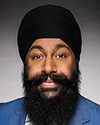
Jasraj Singh Hallan Conservative Calgary East, AB

I haven't heard a single answer today, so I'll answer.

According to the PBO, it will add—

The Chair Liberal Karina Gould

I'm sorry, Mr. Hallan, but your time is up. Thank you.

We're going to Mr. Sawatzky.

Jake Sawatzky Liberal New Westminster—Burnaby—Maillardville, BC

Thank you, Chair.

Thank you, Minister, for joining us today and for all of your action on the climate. It was great to tour UBC with you, including the futures lab and the UBC botanical garden.

Climate change is one of the most significant economic challenges of our generation. Extreme weather events are already costing Canadians billions each year by damaging homes and critical infrastructure and disrupting local economies. Communities across the country are facing wildfires, floods, heat domes and storms, which hit hardest those who are least able to afford the recovery. These really strain public finances, increase insurance costs and affect everything from food prices to supply chains.

I certainly agree with you that addressing climate change protects our economic future and ensures that Canada remains competitive in this rapidly changing global economy.

We often talk about the costs associated with the regulations on climate, but could you please speak about the economic costs of inaction when it comes to climate change?

Julie Dabrusin Liberal Toronto—Danforth, ON

Thank you.

When I talk about what we need to do as a country to move towards a low-carbon economy and reduce our emissions, to your points, there are three major reasons.

The first is just moral. What do we need to do for future generations to protect our country? When we talk about building Canada and building it strong, it's about making sure we have a future that we can give to our children and our children's children that is low carbon and protects the planet in that way.

The second is existential. I think this goes to the part you were talking about, the costs to individuals and to communities when we're not fighting climate change. We need to continue to help protect communities from the natural disasters that we're facing. As we've seen in British Columbia and right across our country, there are more and more of these natural disasters that are creating personal costs and economic costs to individuals and to industry.

The third piece goes to what part of your question was touching on, which is the economics. The world is moving towards a low-carbon economy. As you mentioned, when we were touring around British Columbia and Burnaby in particular, we were meeting with industry and companies that saw opportunities for the future if we actually kept working to fight climate change. They saw the business opportunities. If we fall behind, they would lose those opportunities.

These are the major reasons why we need to fight climate change but also build economic opportunities. These are good-paying jobs. We saw that in Burnaby when we were touring around.


Jake Sawatzky Liberal New Westminster—Burnaby—Maillardville, BC

Thank you, Minister.

Recently, I'm hearing a lot of discussion from the opposition about pipelines, sometimes through B.C. I just want to get your take on this. What are some of the risks of pushing through these projects without proper consultation?

Julie Dabrusin Liberal Toronto—Danforth, ON

When we look at how we want to build our country for the future, it has to be through this wonderful unifying moment that we're in as a country, where Canadians are envisioning what the possibilities are for the future. It is a moment in which I've seen, perhaps more than I've seen in my lifetime, premiers from across this country getting together and trying to envision how we can work together to build a strong country. It's a moment in which I've seen and heard a lot of Canadians propose their ideas for that.

We need to continue to work together. In order for projects to go forward, we need to make sure that those conversations are happening across jurisdictions. We also need to ensure that indigenous peoples are properly and fully consulted on the projects that are being proposed.

Jake Sawatzky Liberal New Westminster—Burnaby—Maillardville, BC

I definitely agree with you there.

When it comes to investment in renewable energy, I wonder if you could perhaps comment on what some of the most promising technologies available are and any plans to invest in such technologies.

Julie Dabrusin Liberal Toronto—Danforth, ON

There are a lot of different promising opportunities. I was in Manitoba last week, and one of the things I thought was really exciting was to hear the individual ideas and projects that were coming forward. We announced, with the province, funding to help support fuel switching for different industries.

We had 11 agricultural projects where farmers put up their hands and said that they wanted to look at different ways to make their processes more energy efficient or to switch fuels in their grain-drying operations. Those are the opportunities we can see where we're going to help them save on their energy bills and, at the same time, produce agriculture in a way that's lower in carbon. There are really good news stories right across—

The Chair Liberal Karina Gould

Thank you, Madam Minister.

Thank you, Mr. Sawatzky.

Mr. Garon, you have the floor for two and a half minutes.

Jean-Denis Garon Bloc Mirabel, QC

Thank you, Madam Chair.

Minister, your government appointed Dawn Farrell as head of the Major Projects Office quickly. This person, with the help of your government, contributed to taxpayers losing at least $25 billion when she was at Trans Mountain. She will have a salary of up to $680,000 a year.

Do you think it's fair to do that with public funds?

Julie Dabrusin Liberal Toronto—Danforth, ON

It's not for me to discuss the salaries of public servants.

Jean-Denis Garon Bloc Mirabel, QC

Whose job is it to do that?

Julie Dabrusin Liberal Toronto—Danforth, ON

I would say that's a question for the minister responsible for the Major Projects Office.

Jean-Denis Garon Bloc Mirabel, QC

That's great; you don't want to answer. We'll move on to the next question.

Minister, in response to questions in the House on April 20, 2023, the government claimed that it had the lowest carbon footprint in the G7 and had significantly reduced its emissions since 2019. On November 7, 2024, you added that the Canada carbon rebate, including the carbon tax, contributed to meeting those targets. I remember that I was in the House, and you were there, as well. You were one of the people who kept repeating in the House of Commons that the carbon tax rebate increased the income of 80% of households that received more than they paid in carbon tax in the provinces where the tax applied. Now you're introducing Bill C‑4, which eliminates that system.

As Minister of Environment and Climate Change, how do you feel about announcing a policy that, based on what your government used to say, will impoverish 80% of Canadians? It must be nice.

Julie Dabrusin Liberal Toronto—Danforth, ON

I'm very proud that our country continues to reduce emissions at a pretty important time. We now see that our emissions have dropped by 8.5% since 2005. Before our government, under the Conservative government, it was as high as—

Jean-Denis Garon Bloc Mirabel, QC

We're no longer under the previous government.

In 2023, the Auditor General relied on your own government's data to say that you were light years away from meeting your targets, that you wouldn't be able to meet them, and that the carbon tax was one of the few solutions you had found. However, you're eliminating one of those solutions and announcing that you're going to impoverish 80% of households in the affected provinces.

Is this the Canada of the future that you're building?

The Chair Liberal Karina Gould

Thank you, Mr. Garon.

Mr. Lefebvre, you have the floor for five minutes.

12:45 p.m.

Conservative

Éric Lefebvre Conservative Richmond—Arthabaska, QC

Good afternoon, Minister. Thank you for joining us.

I did some research. You were born in Montreal and you represent the riding of Toronto—Danforth.

Have you had a chance to visit Saguenay—Lac-Saint-Jean? That's an easy question.

Julie Dabrusin Liberal Toronto—Danforth, ON

Yes, often.

12:45 p.m.

Conservative

Éric Lefebvre Conservative Richmond—Arthabaska, QC

Have you had a chance to visit Abitibi?

Julie Dabrusin Liberal Toronto—Danforth, ON

This is interesting. We're going to talk about all the places I've visited in Quebec. I was born in Montreal, where I lived for a long time. I also lived a long time in Quebec, which is a beautiful province.

Éric Lefebvre Conservative Richmond—Arthabaska, QC

You had an opportunity to visit the regions of Quebec. Have you ever visited people who work in the forestry industry in Quebec's regions?