Evidence of meeting #14 for Foreign Affairs and International Development in the 45th Parliament, 1st session. (The original version is on Parliament’s site, as are the minutes.) The winning word was diaspora.

A recording is available from Parliament.

On the agenda

Members speaking

Before the committee

Urban  Assistant Deputy Minister, Africa Branch, Department of Foreign Affairs, Trade and Development
Smith  Director General, Pan-African Affairs Bureau, Department of Foreign Affairs, Trade and Development
Nicholls  Director, Central and Southern Africa Bilateral Relations Division, Department of Foreign Affairs, Trade and Development
Steffen  Director General, West Africa and Maghreb Bureau, Department of Foreign Affairs, Trade and Development

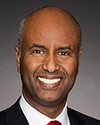
The Chair Liberal Ahmed Hussen

Ladies and gentlemen, I call this meeting to order.

Welcome to meeting number 14 of the House of Commons Standing Committee on Foreign Affairs and International Development.

Today's meeting is taking place in a hybrid format, pursuant to the Standing Orders. Members are attending in person in the room and remotely using the Zoom application.

Pursuant to Standing Order 108(2) and the motion adopted by the committee on Tuesday, September 23, the committee is now meeting to study Canada's Africa strategy.

I'd like to welcome our witnesses today.

From the Department of Foreign Affairs, Trade and Development, we have Cheryl Urban, assistant deputy minister, Africa branch; Andrew Smith, director general, pan-African affairs bureau; Susan Steffen, director general, west Africa and Maghreb bureau; and Sara Nicholls, director, central and southern Africa bilateral relations division.

Up to five minutes will be given for opening remarks, after which we will proceed with rounds of questions.

I now invite Ms. Cheryl Urban to make an opening statement of up to five minutes.

Cheryl Urban Assistant Deputy Minister, Africa Branch, Department of Foreign Affairs, Trade and Development

Thank you very much, Chair.

Mr. Chair, honourable members, as assistant deputy minister of the Africa branch at Global Affairs Canada, I am pleased to address you this afternoon to discuss Canada's engagement in Africa and the progress made in implementing Canada's Africa strategy.

On April 10, 2024, we had the honour of presenting the committee with an update of the government's approach with regard to the African continent as part of the study on Canada's approach to Africa.

Global Affairs Canada was then preparing for the second high-level dialogue with the African Union Commission, which took place in November of that year.

At the same time, the department mobilized stakeholders in Canada and Africa to develop an engagement framework, which led to the launch of Canada's Africa strategy last March. The committee's report was an important reference in guiding this process.

Much has changed since we last appeared before the committee and since the strategy's launch in March 2025. We are seeing a rise in global economic turbulence and widening global fault lines. The Government of Canada, in response, is focused on Canadian productivity and economic prosperity and protecting Canadian sovereignty and security. Our government has committed to increase exports with non-U.S. markets and to diversify trade. More than ever, there is a need to build strong economic partnerships with countries around the world.

The Africa strategy underlines the need to focus on mutually beneficial partnerships and provides a framework to advance the priorities of the government today. The strategy aims to strengthen Canada's engagement with Africa towards greater economic co-operation, strengthened peace and security partnerships, enhanced engagement of African diaspora communities in Canada, and international assistance that supports poverty reduction and economic development.

Canada's Africa strategy presents the continent as a key partner and a region of opportunity for achieving Canada's international priorities. Africa stands out due to fast-growing economies, a growing middle class and a dynamic youth population that is driving innovation and entrepreneurship.

It is essential for Canada to partner with the African continent to promote security and stability.

In the course of our ongoing implementation of the Africa strategy, Global Affairs Canada continues to respond to this committee's recommendations put forward in your November 2024 report.

We are making progress on a number of fronts in implementing the strategy. First, the government has appointed two special envoys to strengthen our presence and exchanges with African decision-makers, Ben Marc Diendéré, special envoy for Africa, and Marcel Lebleu, special envoy for the Sahel.

Second, we are working to deepen our diplomatic and commercial presence in Africa, as recommended by this committee, including the creation of a full high commission in Zambia and a full embassy in Benin.

We also rely on the interpersonal ties that unite Canada and Africa, particularly our membership in the group of francophone nations. This comparative advantage allows us to leverage partnerships with francophone African countries in terms of both trade exchanges and political alliances, including in multilateral organizations such as the International Organisation of La Francophonie.

We set up the Africa trade hub, which coordinates Canada's economic diplomacy and trading investment engagement across Africa. This hub has been instrumental in coordinating with Canada's missions in Africa to support Canada's private sector on the continent and trade policy priorities such as ongoing foreign investment promotion and protection agreement negotiations with Zambia and Tanzania.

Recognizing the need to shift from traditional aid relationships towards deeper economic partnerships, we have launched a new Africa trade and development program. A concrete example of this work is the development trade marketplace organized by Canada's high commission in Kenya, which took place at the end of October in Ottawa and helped link development partners and Canadian companies looking to do business in Africa and other developing country markets.

Trade and development investments build on Canada's long-standing support for the African Continental Free Trade Area, which has involved the African Trade Policy Centre at the UN Economic Commission for Africa and Canadian partners such as the Trade Facilitation Office Canada and a consortium led by Carleton University's Centre for Trade Policy and Law in providing technical and strategic expertise for the implementation of the African Continental Free Trade Area.

Canada continues to invest in poverty reduction, building on decades of meaningful investment in areas such as health systems and education, including for girls and women. Meanwhile, Canada continues to provide humanitarian assistance and to undertake political advocacy in conflict and crisis situations as part of our engagement in fragile contexts.

We have also continued to strengthen collaboration with the African Union since the signing of the Canada-AUC memorandum of understanding at the second high-level dialogue with the commission last November. Our officials have been working together to advance joint priorities, and a third dialogue is scheduled to take place in the fall of 2026.

Our engagement with the African diaspora in Canada has intensified, particularly in support of economic partnerships and trade diversification efforts. Since the beginning of this year, Global Affairs Canada's Africa branch has participated in over 20 diaspora-led initiatives in Canada, including through our network of missions. In June, for example, Canada's high commission in Ghana co-hosted the Ghanaian diaspora investment forum with financial institutions and the Ghanaian government.

We have also been working closely with South Africa, increasing high-level exchanges over the past year as part of our respective presidencies of the G7 and G20. These interactions have strengthened our strategic relationship to advance our shared bilateral interests and to support our respective summits, in Kananaskis and later this week in Johannesburg.

Finally, it is important to remember that African voices are essential to building inclusive multilateral systems. Canada has actively supported the integration of the African Union into the G20. We invited South Africa to the G7 summit and are working with it to support its presidency of the G20. Together, we are making progress on shared priorities, including critical minerals, disaster risk reduction and artificial intelligence.

As you can see, we are focusing our efforts on the government's new priorities for shared prosperity and security by deepening our relationships with key and emerging African partners. The implementation of Canada's Africa strategy will continue to adapt to the evolving global context and domestic priorities.

Amid geopolitical tensions and growing global uncertainty, guided by the Africa strategy, Canada is committed to being a reliable partner, in a spirit of equal and mutually beneficial relations.

Thank you.

The Chair Liberal Ahmed Hussen

Thank you very much for your remarks.

We now open the floor to questions, beginning with MP Rood.

You have six minutes.

3:40 p.m.

Conservative

Lianne Rood Conservative Middlesex—London, ON

Thank you very much, Chair.

Thanks to all of you for being here today.

My first question is, does this strategy conflict with the budget's stated decrease of $2.7 billion in aid spending? What problems will a decrease in funding create for a strategy such as this, and how is the department planning to adjust for that?

3:40 p.m.

Assistant Deputy Minister, Africa Branch, Department of Foreign Affairs, Trade and Development

Cheryl Urban

The strategy in itself, at the time of its release, was a strategy that was implementable with existing resources. It's all about prioritization and using existing resources to their greatest effect. Even in today's context, when the Government of Canada is focused on consolidating government operations and reducing its expenditures, we can achieve the aims of the Africa strategy.

This is a question of having very clear, concrete strategies of where we are going to prioritize and where we move our resources. It's also a matter of doing even more coordination among different government bodies. That would be, for example, among Global Affairs Canada, Export Development Canada, FinDev Canada, etc., so that we can multiply our effect.

Finally, it's about streamlining our processes, leveraging artificial intelligence and leveraging technology, so that we have processes that are more effective and that this is doable with the resources we have in today's government agenda.

3:40 p.m.

Conservative

Lianne Rood Conservative Middlesex—London, ON

Thank you very much for that answer.

You mentioned streamlining and moving money around in different places. I'm curious how much new money over and above the existing aid and departmental baselines the strategy requires over the next five years. How will you report return on investment and exports, Canadian jobs supported and private sector dollars mobilized?

3:40 p.m.

Assistant Deputy Minister, Africa Branch, Department of Foreign Affairs, Trade and Development

Cheryl Urban

As I said, it's written in the Africa strategy itself that over the past five years the amount that Canada has contributed bilaterally to Africa for the five-year period is $4.5 billion. With that amount, that can be used to achieve the aims of the Africa strategy as it is currently articulated. Even if there are further government reductions, this is something that is achievable by using the resources we have, moving them, for example, to those priority markets.

I'll give you an example. On the African continent, our trade and investment relationships are predominantly with eight to 10 countries on the continent. We know where there are places where we can focus our efforts.

In terms of reporting on the results from that, we have the estimates process, where we will always commit to reporting on the achievements of all of our activities, including whether those are diplomatic and whether they are trade or international assistance.

We also have an international assistance report, which reports on the details of how we are spending our international assistance dollars.

3:45 p.m.

Conservative

Lianne Rood Conservative Middlesex—London, ON

Is there an actual mechanism that reports on a return on investment for Canadian tax dollars and how many Canadian jobs would be supported by that funding?

3:45 p.m.

Assistant Deputy Minister, Africa Branch, Department of Foreign Affairs, Trade and Development

Cheryl Urban

The Government of Canada and Global Affairs Canada will be reporting on all aspects of its economic co-operation and trade opportunities. It's going to be developing a trade diversification strategy. As part of that, our engagement and our economic co-operation on the African continent will be a part of how we report on what have been the results from the activities. We are committed to reporting on results and how they impact Canadians.

3:45 p.m.

Conservative

Lianne Rood Conservative Middlesex—London, ON

Thank you.

Canada signed a memorandum of understanding with the African Union in 2024. What concrete deliverables, deadlines and joint work plans will flow from that MOU this year and next? How will progress be reported transparently so that Parliament can hold the government to account on its commitments?

3:45 p.m.

Assistant Deputy Minister, Africa Branch, Department of Foreign Affairs, Trade and Development

Cheryl Urban

I'll begin answering this question, and then I'll turn to my colleague, Drew Smith.

The memorandum of understanding that we signed had several components. Some of them were about development; some of them were working together on peace and security, and some were on economic co-operation.

We have had engagement with the African Union since. We had, for example, our sherpa for the G20 and G7, who travelled to Addis Ababa and had meetings with the African Union. As I mentioned in my opening remarks, we are scheduled to have another high-level dialogue in the fall of this coming year, in 2026. There will be public reporting on that meeting and on the lead-up and what the deliverables are.

Drew, would you like to share?

Andrew Smith Director General, Pan-African Affairs Bureau, Department of Foreign Affairs, Trade and Development

I would just say that within the African Union Commission, there has been a transition in the last several months. In February of this year, there was a new chair of the commission. There were eight new commissioners put in place. It's those commissioners who are key to our establishing the priorities and work plan that are linked to the MOU.

In terms of process, we're in the process of establishing those relationships with the commissioners and setting the course for the action plan and concrete work that we'll do through the MOU.

I would just note that one of the key deliverables of “Agenda 2063”, which is the central planning document for the African Union Commission, is the continental free trade agreement. We continue to maintain engagement on that through a number of different development assistance investments.

3:45 p.m.

Conservative

Lianne Rood Conservative Middlesex—London, ON

This strategy was pitched as a landmark approach. Specifically, what is new or different versus past strategies? What previous measures did the department consider failures that will not be repeated?

3:45 p.m.

Assistant Deputy Minister, Africa Branch, Department of Foreign Affairs, Trade and Development

Cheryl Urban

I think the point of the strategy is to invoke a real change. It is meant to be a pivot. Predominantly, it's a pivot towards more economic co-operation and mutually beneficial partnerships between Canada and African countries.

Canada has had a presence, and a meaningful presence, for many decades in Africa and is generally welcomed. We did two years of consultations in the development of the Africa strategy. What we heard from African interlocutors and others was that that was positive, but it was also missing an opportunity to make those partnerships more multi-faceted in order to make them more about trade and investment and to engage our private sector.

That's what we'll be doing differently. We'll be having less of a focus on a one-sector approach to those relationships.

The Chair Liberal Ahmed Hussen

Thank you very much, MP Rood.

Next, we go to MP Vandenbeld. You have six minutes.

Anita Vandenbeld Liberal Ottawa West—Nepean, ON

Thank you very much for your briefing.

I'd like to talk a bit about the work we're doing on conflict prevention and post-conflict reconstruction, particularly for women, peace and security. We know that right now there could be as many as 50 active conflicts on the continent. Canada's commitment to women, peace and security has been long-standing. We're on our third national action plan for WPS. We know that when we have women at the table all the way through the process, we have a greater chance of sustainability of peace agreements.

Could you talk a bit about our ongoing commitment to women's peace and security and how it is integrating into some of our conflict prevention on the continent?

3:50 p.m.

Assistant Deputy Minister, Africa Branch, Department of Foreign Affairs, Trade and Development

Cheryl Urban

Thank you very much. I'll start, and then I'll turn to my colleagues to provide more concrete examples.

I've spoken a lot so far about economic co-operation being a pillar of the Africa strategy, but another very important pillar is peace and security. If we're looking at mutually beneficial relationships and a strategy that benefits Canadians, it's not only about economic benefit; it's also about security benefits. That goes back to Canadians.

Canada does have a long-standing history in engaging on the African continent in peace and security. We have multiple programs, such as weapons threat reduction, counterterrorism, and peace and security programming. We have partnerships on the Elsie initiative and the Vancouver principles. Women, peace and security is an area in which Canada has demonstrated leadership. It goes to show that a focus on women can help us achieve our aims in peace and security in the region.

I can turn to one of my colleagues to provide a concrete example of how we do that.

Sara Nicholls Director, Central and Southern Africa Bilateral Relations Division, Department of Foreign Affairs, Trade and Development

I'd be happy to offer an example from Ethiopia. This is a place where there's been impressive Canadian leadership following the Pretoria agreement in 2022. There was a deep need for disarmament, demobilization and reintegration programming, or DDR programming.

Canada led the creation of the multi-stakeholder alliance, which is now the multi-stakeholder DDR fund for Ethiopia. Canada has put in $14 million and is seeing impressive results, including 80,000 people who have been demobilized in this first phase.

That's a place you can point to as Canadian leadership.

Anita Vandenbeld Liberal Ottawa West—Nepean, ON

I noted that you mentioned in your remarks the Equality Fund and the women's voice and leadership program, which are providing funding directly to women and feminist organizations on the front lines. They are small grants that really have, dollar for dollar, a lot more impact.

I know that Canada has also committed, in its 10-year commitment for health, to SRHR, or sexual and reproductive health and rights. Of course, all of that is in accordance with the Maputo protocol and nation-states.

Could you give us an overview of where we are in terms of our support for SRHR and also some examples of where this has had impact?

3:50 p.m.

Assistant Deputy Minister, Africa Branch, Department of Foreign Affairs, Trade and Development

Cheryl Urban

I might take the same approach I did last time, where I can provide a little bit of a general response to that and then turn to some concrete examples.

I would say that programs like the women's voice and leadership program are real examples of how Canada is creating transformational change by leveraging local approaches and localization in how we do programming. Also, while we're looking to achieve economic growth and major changes, we know that investing in women is a very important way in which we can achieve those economic and security aims.

As I mentioned, we have a long history of investing in health. It's something that forms a lot of the partnerships we currently have on the continent.

I'll turn to Sue.

Susan Steffen Director General, West Africa and Maghreb Bureau, Department of Foreign Affairs, Trade and Development

I can speak to at least one example that supports our commitment to promoting sexual and reproductive health and rights as well as economic development. It's a project we have in Ghana called “generating revenues for improved nutrition”. It's with the International Potato Center from P.E.I. and CARE International. That's $10 million.

It improves the nutritional and financial security of women, youth and young children in the districts of northern Ghana, which are particularly affected by insecurity. The project is training women and men in equitable nutrient availability and child-feeding practices. It promotes households to participate in farming as a business club and provides technical and logistical support to small and medium-scaled agro-processing. It focuses very much on women's role in nutrition and health. This allows them to be healthier when it comes to giving birth, which is a key component of their sexual and reproductive health and rights.

Anita Vandenbeld Liberal Ottawa West—Nepean, ON

Thank you.

I note that you talked about localization. Of course, we know that for development, certainly international development projects, if you are involving women, our feminist international assistance policy is predicated on the idea that rather than seeing women as just beneficiaries, we need to have them as part of the design and development of all projects. Whether or not they benefit women specifically, those projects are more likely to be successful when they have local input from women and girls.

I wonder if you could talk a little about the progress of our feminist international assistance policy.

3:55 p.m.

Assistant Deputy Minister, Africa Branch, Department of Foreign Affairs, Trade and Development

Cheryl Urban

One thing I would say in general is that, as you mentioned, we know that human rights is an important component of how Canada engages around the world. That involves taking a human rights-based approach to undertaking international assistance, which means that those we are helping to benefit are agents of change for their own beneficiation. We've achieved many results through our investments in these areas.

I'll turn to my colleague Sara on that.

3:55 p.m.

Director, Central and Southern Africa Bilateral Relations Division, Department of Foreign Affairs, Trade and Development

Sara Nicholls

Thank you.

If I may, I'd like to offer an example from Mozambique, where the women's voice and leadership program, which is focused on building the capacity of very small-scale women's organizations that wouldn't necessarily be able to access grant funding in different ways, offers more support so that they can be strong and stand where they are. In Mozambique we work with a local partner. It has its challenges, with the local language being Portuguese, but we work heavily with that local organization to build the capacity of hundreds of women's groups throughout the country.

That became even more prominent as Mozambique came through the post-electoral violence and needed to have a strong civil society as part of the reconciliation and peace process. The chair, the head of AMUDEIA, is sitting in that central peace process. She credits the work that has been done with Canada to make sure that women's organizations are strong in her country and to make sure that she had the visibility to be invited to that table.

The Chair Liberal Ahmed Hussen

Thank you very much.

Mr. Simard, you have the floor for six minutes.