Thank you.
To complete the round, we'll go to MP Fortier for five minutes.

Evidence of meeting #23 for Foreign Affairs and International Development in the 45th Parliament, 1st session. (The original version is on Parliament’s site, as are the minutes.) The winning word was crisis.
A recording is available from Parliament.
Liberal
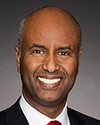
The Chair Liberal Ahmed Hussen
Thank you.
To complete the round, we'll go to MP Fortier for five minutes.
Liberal

Mona Fortier Liberal Ottawa—Vanier—Gloucester, ON
Thank you, Mr. Chair.
I would also like to thank the team of witnesses for joining us.
Mr. Richardson, I know that you have been asked many questions and that you have repeated yourself a number of times. You may need to repeat yourself when answering my questions. I just want to make sure that I understand.
Could you talk about the importance of our diplomatic efforts to support Canadians in Cuba? I'm thinking specifically of the repatriation of around 28,000 Canadians two weeks ago. In addition to consular services, how important are Canada's diplomatic efforts?
February 24th, 2026 / 4:25 p.m.
Director General, Central America and Caribbean Bureau, Department of Foreign Affairs, Trade and Development
As I said earlier, our diplomatic efforts paid off for Canadians, who received advice on how to leave the island. We gave them information about airline plans and recommendations in our travel advisory. We also sent notices to trade commissioner service clients, who are facing a rather complex situation in Cuba. They will receive help from our officers on the ground to pursue their business interests in Cuba with Cuban partners and clients.
Liberal
Mona Fortier Liberal Ottawa—Vanier—Gloucester, ON
Obviously, you spoke about the support measures available to Canadians who chose to remain in Cuba. You gave a few examples, but I would be happy to hear more.
Can you also explain how you keep in touch with the 5,000 or so Canadians still registered with the registration of Canadians abroad service that you manage? How do you keep in contact with the 5,000 Canadians currently on the ground?
Director General, Central America and Caribbean Bureau, Department of Foreign Affairs, Trade and Development
I'll give the floor to my colleague, Sébastien Beaulieu.
Director General, International Emergency and Travel Advice Bureau, Department of Foreign Affairs, Trade and Development
When it comes to support for registered Canadians, we're in touch with them. They know how to find us if they ever need any consular assistance or support on a proactive basis.
The registration of Canadians abroad service is supplemented by social media campaigns and our websites, including travel.gc.ca. This is one of the Government of Canada's most popular sites, with over 30 million visits per year. All these resources ensure that Canadians abroad, including Canadians in Cuba, know how to find us and how to contact us if they ever need help.
Liberal
Mona Fortier Liberal Ottawa—Vanier—Gloucester, ON
I would like to take this opportunity to encourage the residents of Ottawa—Vanier—Gloucester, for example, to register for the service when they travel anywhere in the world. It's important. It helps to keep people informed of any unfortunate situations that may arise in Mexico, Cuba or other places. I became aware of this service recently, when I received the mandate, along with Minister Anand, to look after consular services. As a person who travels, I would like to encourage our colleagues to register as well when they go abroad.
I guess that I have about two minutes left, Mr. Chair.
Liberal
Mona Fortier Liberal Ottawa—Vanier—Gloucester, ON
Okay.
Mr. Richardson, quickly, what are the most significant risks facing Canadian companies, missions or citizens in Cuba today, and how is Global Affairs Canada adapting its engagement strategy accordingly?
Director General, Central America and Caribbean Bureau, Department of Foreign Affairs, Trade and Development
With your permission, I'll respond in English to be a bit more specific.
I'll focus on the business environment. It is complex. It has been since the 1960s, when the U.S. put the first embargo in place.
Our companies face financial constraints, in particular, in getting access to foreign currency, as well as dealing with measures like the Helms-Burton Act and what those implications may be. It is a very complex business environment.
You have made a call-out for citizens to register with the registration of Canadians online. They should take advantage of our consular advice and keep themselves informed about what is happening in Cuba and other countries around the world.
I would make a pitch for Canadian companies to take advantage of the Canadian trade commissioner service, which is paid for by their taxes. They can receive excellent advice and connections as a result of the network that we have in Cuba, and abroad as well.
Liberal
The Chair Liberal Ahmed Hussen
Thank you very much.
That concludes this part of the meeting.
Thank you to the officials for your appearance and testimony before the committee.
We will now briefly suspend the meeting to prepare for the second panel.
Liberal
The Chair Liberal Ahmed Hussen
Colleagues, I call this meeting to order.
I'd like to welcome our witness from the Embassy of the Republic of Cuba, His Excellency Rodrigo Malmierca Díaz, ambassador of the Republic of Cuba in Canada.
Sir, you have up to five minutes to give opening remarks, after which we will proceed with rounds of questions from members of this committee.
Mr. Ambassador, I now invite you to make an opening statement.
His Excellency Rodrigo Malmierca Díaz Ambassador, Embassy of the Republic of Cuba in Canada
Thank you, Chair.
The Cuban people are currently going through a very difficult economic situation. The United States government maintains an economic, commercial and financial blockade that has lasted for more than six decades. Recently, President Donald Trump signed executive order 14380, which declares Cuba as “an unusual and extraordinary threat” to U.S. national security and foreign policy.
The U.S. government has declared a so-called emergency in order to impose additional tariffs on third countries that supply oil or petroleum products to Cuba. Although the United States Supreme Court declared the extraordinary tariffs illegal and said that they must be revoked, the executive order against Cuba remains in effect.
Through pressure, coercion and threats to third parties, the U.S. government seeks to prevent fuel from reaching Cuba. Without openly saying so, it also intends to exercise military control over the traffic of vessels arriving in Cuba. Not having energy affects every aspect of life in a country. Food distribution, public health, transportation and education depend on fuel. Cuba produces only 40% of its oil needs.
The objective of this oil blockade is clear: to create a humanitarian crisis and to try to force regime change through it. This policy is not new. In 1960, then U.S. undersecretary of state Lester Mallory, whose secret memorandum was declassified, spoke frankly about this. He said, “The majority of Cubans support Castro”, and “The only foreseeable means of alienating internal support is through disenchantment and...economic dissatisfaction and hardship.” He said that every conceivable means must be used “promptly to weaken the economic life of Cuba”.
The fact that the United States accuses Cuba of being a threat to its national security is ridiculous. Our government has categorically rejected that it is a danger to the security of the United States or any other country. The United States authorities are well aware that Cuba systematically co-operates on regional security issues and in the fight against terrorism and drug trafficking. The accusations that Cuba harbours foreign intelligence bases or terrorist groups are false. This entire aggressive escalation against Cuba is based on a campaign of lies.
Moreover, we must ask if the United States is acting in accordance with international law and the UN charter. Does anybody have the right to impose its will by force against another nation? Cuba is not only threatened but also attacked by a great power—and not just today. There is a long history of aggressions that are not only economic. It is worth remembering the Bay of Pigs invasion; the terrorist attacks, including the bombing of a Cubana de Aviación plane that killed over 200 passengers mid-flight; and the numerous assassination attempts against Fidel Castro.
We have informed Canadian authorities of the difficult circumstances the Cuban people are facing. Our countries maintain a strong and multi-faceted relationship of over 80 years, characterized by respectful political dialogue, fluid trade, Canadian capital investments and exchanges in all areas, including a strong people-to-people relationship. The energy blockade affects more than the daily lives of nearly 10 million Cubans. For example, the lack of jet fuel prevents us from providing refuelling service to international airlines. As a result, Canadian airlines have suspended their flights to Cuba, and thousands of tourists have been affected.
The collective punishment of a whole nation is an unjustifiable crime. One may disagree with the country's political project, but there is no right whatsoever that justifies a great power, based on its economic and military might, interfering in that country's internal affairs and violating its independence. Much less acceptable is a superpower attempting to achieve its objectives by suffocating an entire people.
President Trump says that Cuba must negotiate. Cuba's traditional position has been one of willingness to engage in dialogue and maintain a normal relationship with the United States. We have nothing against the American people. We are open to discussing any topic, even with this aggressive administration—but as equals, without pressure or threats, with full respect for our independence.
The Cuban people will resist. We have a history of patriotic defence of our right to self-determination. Moreover, we believe that our cause is just and deserves the support of the international community and of countries like Canada, which have defence of international law among the pillars of their foreign policies.
I thank you for your attention.
Liberal
The Chair Liberal Ahmed Hussen
Thank you very much, Ambassador, for your opening remarks.
I will now open the floor to questions, beginning with MP Rood.
You have six minutes.
Conservative

Lianne Rood Conservative Middlesex—London, ON
Thank you very much, Chair.
Thank you for appearing here today, Ambassador. It's great to have you here.
Ambassador, Human Rights Watch, Amnesty International and independent Cuban dissidents report hundreds of political prisoners, systemic arbitrary arrests, torture and the complete absence of free speech and independent media.
Could you tell us how many political prisoners your government currently holds, and when every one of them will be released?
Liberal
Liberal

Steven Guilbeault Liberal Laurier—Sainte-Marie, QC
Mr. Chair, as I said earlier, today's meeting is about the humanitarian crisis and consular services in Cuba. You made this clear when my colleague, Ms. Kronis, asked a question. I think that, in this case, we're really straying from the issue of the humanitarian crisis and consular services.
Liberal
The Chair Liberal Ahmed Hussen
The focus, as I stated earlier, is on the humanitarian situation on the ground in Cuba and on consular services for Canadians. I strongly urge members to try, as much as they can, to stay within those parameters. I'm happy to allow some room for discussion connected to that, but the further we go away from it, the more difficult it will be for me, as chair, to allow it.
Please proceed.
Conservative
Lianne Rood Conservative Middlesex—London, ON
Thank you very much, Mr. Chair, but I would respectfully say that this does fall under the humanitarian crisis. We're talking about political prisoners.
It would be appreciated if the witness could answer the question.
H.E. Rodrigo Malmierca Diaz
Thank you for the question, Chair.
The issue of human rights has traditionally been manipulated against Cuba. In Cuba, no one is in prison for their beliefs; rather, it is for breaking the law. No one is in jail without having been tried following due process. Many of these so-called political prisoners have confessed to being paid agents in the service of a superpower that seeks to destroy the Cuban order.
The revolution has a long history of human rights achievements—fundamental rights such as universal education, free public health care and the end of discrimination based on race, sex or sexual orientation. Cuba is also a founding member of the United Nations Human Rights Council and co-operates with periodic reviews of the human rights situation in our country.
I have to say that the true and massive threat to human rights in Cuba is the economic blockade by the U.S. Nowadays, we have a lot of problems in the hospitals, such as children having no possibility of receiving proper treatment for cancer, hemodialysis or things like that simply because the U.S. is trying to asphyxiate our society.
We could talk about human rights for a long time. I don't think we are perfect, but I don't think it should be pointed out like this, either.
Thank you.
Conservative
Lianne Rood Conservative Middlesex—London, ON
Ambassador, it's interesting that you say this about the United States, because your government claims to be willing to talk to the United States as “equals”. That's a quote from your own government.
I'm wondering if that same willingness extends to allowing the Cuban people to speak freely, form opposition parties and vote in free and fair elections. Is dialogue only acceptable when it helps preserve the current monopoly on power?
Bloc
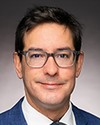
Alexis Brunelle-Duceppe Bloc Lac-Saint-Jean, QC
I have a point of order, Mr. Chair.
The motion adopted by the committee seeks to shed light on the situation in Cuba and how we can help the people facing an unprecedented humanitarian crisis. I don't think that we should go down this road. This isn't the purpose of today's meeting. Everyone is here for a specific reason. This committee passed a motion and we should stick to it. Otherwise, at future meetings, we'll be free to go all over the map and to disregard the wording of a motion. That doesn't appeal to me.