Evidence of meeting #24 for Foreign Affairs and International Development in the 45th Parliament, 1st session. (The original version is on Parliament’s site, as are the minutes.) The winning word was cubans.

A recording is available from Parliament.

On the agenda

Members speaking

Before the committee

Carbonell  Public Relations Director, Cuban Canadians Coalition
Barrero Ferrer  President and Chief Executive Officer, Citizens and Freedom
Cires  Director of Strategy, Cuban Observatory of Human Rights
Suarez  Executive Director, Center for a Free Cuba

5:15 p.m.

Executive Director, Center for a Free Cuba

John Suarez

Tragically, when the United States abandoned the Democrats during the Obama thaw and went from democracy promotion to economic engagement with what they would term “los emprendedores”, the rest of the world followed. The Europeans disengaged the human rights component from their PDCA with Cuba, and apparently—I just heard about this recently—Canada did as well. They were following the lead of Washington. It was tragic.

5:15 p.m.

Conservative

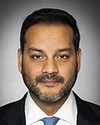
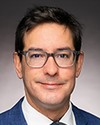
Shuv Majumdar Conservative Calgary Heritage, AB

At the time, you had the Google CEO arriving in Havana alongside entreaties by America. You saw the switch happen, and the pressure came off the regime, and all of a sudden, for a decade, you saw the regime take the welfare benefits of international multilateral efforts to strengthen itself and spawn even more instability across the region.

I thank you for your testimony. I think my time is up.

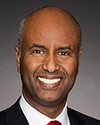
The Chair Liberal Ahmed Hussen

Thank you very much.

We go next to MP Vandenbeld.

You have five minutes.

Anita Vandenbeld Liberal Ottawa West—Nepean, ON

Thank you, Mr. Chair.

Thank you to our witnesses. I'd like to direct my first question to Mr. Cires.

I think all of us agree that we want to see a Cuba where the humanitarian disaster that is happening right now is alleviated for the people and there is self-determination and democracy and respect for human rights and rule of law. I don't think anyone here disagrees with that.

I'd like to go through some of the things you suggested. I'm very interested to hear more, first of all, about the humanitarian corridors and how we can get the aid directly to those civil society groups you mentioned. I would note that Canada does support Caritas and a number of civil society groups in Cuba, and has done so for a long time.

You also mentioned having diplomats on the ground to do those verifications, for that accountability and of course the accountability that exists through UN systems.

I'll ask both of you a question, but I'll start with Mr. Cires.

I know there's a tremendous desire by Canadians to support the Cuban people, and there are a lot of people-to-people ties with Canada. We have, in the past, had matching funds. For certain trusted civil society organizations in Canada that were raising funds with those partnerships, any dollar raised by them would be matched by the Canadian government, effectively doubling it, encouraging public participation.

Do you think that would be a suitable option in this case as well?

We'll go to Mr. Cires and then to Mr. Suarez.

5:15 p.m.

Director of Strategy, Cuban Observatory of Human Rights

Yaxys Cires

[Witness spoke in Spanish, interpreted as follows:]

Yes, I think it would be good to have that mechanism. We can't criminalize international co-operation. In the UN itself, there are resolutions on that. That's why it's shocking when there are accusations against an organization for receiving international funding. I think it would be a good mechanism.

It's not just that. We also want independent civil society to be recognized, including in exile, as a valid stakeholder, an interlocutor. That's what's happened at this committee. It's very positive, because in many places it has been claimed that the democratic opposition and civil society have been set aside.

5:15 p.m.

Executive Director, Center for a Free Cuba

John Suarez

I would like to first say something that got by me, which is that I think it's also critical that Canada and other democracies around the world—the middle powers, as Prime Minister Carney mentioned in his recent speech—push the Cubans on the issue of allowing the International Committee of the Red Cross to enter Cuba's prisons.

The last time they were able to visit Cuba's prisons was in 1989. Let us contrast this with the prison at the U.S. base in Guantanamo. They have had over 100 visits of the International Committee of the Red Cross since 2002.

We know of cases of Cuban prisoners.... There was a protest due to the horrible conditions in the prisons in Canaleta. We've heard that between eight and 10 have been killed in the last few days, but there's no independent monitoring by the International Committee of the Red Cross, and that's an outrage. It's been normalized, and I don't think it should be.

On the issue of the matching funds, I think that's a great idea. However, as with any other funds, we need to see the end result. There has to be some sort of accountability, some transparency, to see if it's actually getting to Cubans in need on the ground. That's where, I think, a very active Canadian embassy presence there could monitor to make sure that what these NGOs are doing in Canada to get assistance with matching taxpayer funds into Cuba actually reaches the people who need it and is doing what it's supposed to be doing.

Thank you.

Anita Vandenbeld Liberal Ottawa West—Nepean, ON

Thank you very much.

Canada has had long-standing diplomatic relations with Cuba, so that relationship is something that we could certainly use. I don't want to use the word “leverage”, but we can use some of the relationship and the aid to be able to assist Cuban people who are looking for reforms.

I would like to go back to Mr. Suarez on the idea of the humanitarian corridors. You mentioned some of that and the role of diplomats. Could you expand a bit on exactly how that would work? I'm not entirely clear what you mean by those corridors. Is that a physical thing? How exactly would that work?

5:20 p.m.

Executive Director, Center for a Free Cuba

John Suarez

I believe I was the one who brought up the humanitarian corridor.

What I've understood through UN mechanisms is that you can set up a humanitarian corridor and an arrangement with the host country and get that assistance directly in. It would be a vote that would be taken at the UN, or you could do it de facto, which is what we've seen with the United States over the last couple of months.

The Chair Liberal Ahmed Hussen

Mr. Brunelle‑Duceppe, you have the floor for two and a half minutes.

Alexis Brunelle-Duceppe Bloc Lac-Saint-Jean, QC

Thank you, Mr. Chair.

I appreciate the recommendation to exert pressure so that the Red Cross can have access to prisoners and prisons in Cuba. I think this is something we will all examine together as part of this study.

Earlier, we talked about Mao Zedong and Che Guevara, but we could also have talked about all the South American dictatorships that were supported by the Americans from 1950 to 1990, in Brazil, Chile, Argentina, Uruguay and Paraguay. There was Operation Condor. It was the Cold War, and unfortunately, populations were caught in the crossfire between the superpowers.

I find it difficult to understand the answers I have received today from the various witnesses who have come to see us and who tell me specifically that the current American embargo has no impact on the population and that the oil blockade imposed by the Americans on January 29 has no impact on the population.

Are the people who came here today saying that the embargo and the energy blockade are good things with regard to the suffering of the people of Cuba?

5:20 p.m.

Director of Strategy, Cuban Observatory of Human Rights

Yaxys Cires

[Witness spoke in Spanish, translated as follows:]

What I say is that the grave situation in Cuba is not explained based on that phenomenon, the embargo. There are some structural causes that predate it.

I have the view that we're now talking more about the crisis, but it's because of the latest measures from the American government. Before that, it was denied, because what was convenient to the Cuban regime and to different international perspectives was to sell Cuba as paradise on earth.

Not long ago, President Petro proposed the Cuban model for health care and education. It's crazy. It's not about denying or not. The current situation is not explained just by the embargo. There are structural causes that have been explained and the priorities of the Cuban elite.

The Chair Liberal Ahmed Hussen

Thank you very much. We're out of time.

We're going next to MP Cobena.

You have five minutes.

5:20 p.m.

Conservative

Sandra Cobena Conservative Newmarket—Aurora, ON

Thank you, Chair.

Mr. Suarez, we had the Cuban ambassador as a witness at this committee. I'd like to share a quote from him and get your thoughts on it:

The issue of human rights has traditionally been manipulated against Cuba. In Cuba, no one is in prison for their beliefs; rather, it is for breaking the law. No one is in jail without having been tried following due process. Many of these so-called political prisoners have confessed to being paid agents in the service of a superpower that seeks to destroy the Cuban order.

February 26th, 2026 / 5:25 p.m.

Executive Director, Center for a Free Cuba

John Suarez

I would ask you to refer to Amnesty International's recent reports describing Cuba's new penal code, which was imposed in 2022, as draconian and totalitarian. It criminalizes dissent. Technically, yes, you could say that people have broken the law, but there are laws that bar people from being able to express themselves freely. Therefore, the penal code criminalizes dissent and, to a certain degree, it criminalizes thought, because they have the term “peligrosidad social predelictiva”—now they've changed it to a new term—which basically means that potentially in the future, based on your social class or your ideas, you may be a problem, so they can lock you up in prison for four years.

There was a judge who defected a few years ago, and he provided some documentation indicating that there are thousands of people a year being processed under that law, but these aren't even people who are dissidents. These are people who are potential dissidents who are jailed.

I'm sure that Yaxys would like to say something about that as well.

5:25 p.m.

Director of Strategy, Cuban Observatory of Human Rights

Yaxys Cires

[Witness spoke in Spanish, interpreted as follows:]

In recent years, the Cuban regime has adopted repressive norms and a new penal code that makes repression even more sophisticated. There are a number of evocative examples.

Recently, it was announced that a young person was sentenced for criticizing the regime on Facebook. Another, a friend of his, was sentenced to five years just for sharing that critique.

It's a difficult situation. There are over 800 political prisoners. These are violations of human rights. If they're not, what are they?

5:25 p.m.

Executive Director, Center for a Free Cuba

John Suarez

I'd also like to highlight a father and daughter case of Félix Navarro and Sayli Navarro. Félix Navarro was a university professor. He was locked up in 2003 for engaging in the Varela Project petition drive. His daughter joined the Damas de Blanco, or women in white, which was an initiative by mothers, sisters and daughters to free their loved ones, so she became politically active.

In 2021, when the protests occurred in Cuba, father and daughter went to the local prison to check on activists who had been detained. Because of that, they're currently in prison today. Both are Amnesty International prisoners of conscience. Félix is over 70 years old and in poor health, and we're very concerned about what may happen to him.

5:25 p.m.

Conservative

Sandra Cobena Conservative Newmarket—Aurora, ON

Thank you for that.

In 2021, thousands of Cubans took to the streets under the banner of Patria y Vida, calling for dignity, economic opportunity and basic freedoms. The response was mass arrests, reports of police violence and lengthy prison sentences.

As we sit here today, could you speak to how many Cubans remain in prison for participating in those protests?

The Chair Liberal Ahmed Hussen

I want to ask the member to help me understand how this connects to the humanitarian situation and the consular issues.

5:25 p.m.

Conservative

Sandra Cobena Conservative Newmarket—Aurora, ON

Of course. This is human rights. We're talking about human rights.

The Chair Liberal Ahmed Hussen

No, we're talking about the humanitarian situation. As long as you can connect it to the topic, I'm happy to entertain the question, but the more we veer away from the topic, the harder it becomes.

5:25 p.m.

Conservative

Sandra Cobena Conservative Newmarket—Aurora, ON

That's right, so I'm talking about as we sit today—

The Chair Liberal Ahmed Hussen

I'm happy to be understanding, but just make a connection to the humanitarian situation or consular issues.

Thank you.

5:25 p.m.

Conservative

Sandra Cobena Conservative Newmarket—Aurora, ON

Some of the political prisoners are in the worst humanitarian crisis.

The Chair Liberal Ahmed Hussen

Make that connection. That's all I'm asking.

5:25 p.m.

Conservative

Sandra Cobena Conservative Newmarket—Aurora, ON

Thank you.

As we sit here today, how many Cubans remain in prison for participating in those protests or for expressing dissent?