Evidence of meeting #24 for Foreign Affairs and International Development in the 45th Parliament, 1st session. (The original version is on Parliament’s site, as are the minutes.) The winning word was cubans.

A recording is available from Parliament.

On the agenda

Members speaking

Before the committee

Carbonell  Public Relations Director, Cuban Canadians Coalition
Barrero Ferrer  President and Chief Executive Officer, Citizens and Freedom
Cires  Director of Strategy, Cuban Observatory of Human Rights
Suarez  Executive Director, Center for a Free Cuba

4:50 p.m.

Conservative

Lianne Rood Conservative Middlesex—London, ON

Thank you, Chair.

Thank you very much, gentlemen, for being here with us today.

I'm interested in some of the things you said, Mr. Suarez. I've seen some of those things in this country at one point, and some of those things lifted off farmers in this country.

While the Canadian government provides humanitarian aid to Cubans, it continues to allow the Cuban regime state propaganda channel, the Cubavisión Internacional, which rebroadcasts Russian state media, to operate on Canadian airwaves, even after formal complaints to the CRTC went unanswered.

I'm wondering, in your view, how does permitting this propaganda help the Cuban regime hide the true causes of the humanitarian crisis from Canadians and the world?

4:50 p.m.

Executive Director, Center for a Free Cuba

John Suarez

The Cuban government is a failure in practically everything except in two areas: first, its capacity to repress, through its secret police and espionage, not only in Cuba but outside of Cuba and western nations; and second, its propaganda. Those propaganda channels are very effective in portraying the Cuban regime as a victim. Obviously, having those channels here in Canada is something that benefits their efforts to shape public opinion.

4:50 p.m.

Conservative

Lianne Rood Conservative Middlesex—London, ON

Thank you very much.

With GAESA's massive hidden reserves exposed, the regime can no longer credibly claim that it lacks the resources to fix blackouts or buy medicine. How can Canada use this evidence to demand real democratic reforms—including fair, free and multi-party elections, releasing all political prisoners, and legalizing independent civil society—before providing any further assistance?

4:50 p.m.

Executive Director, Center for a Free Cuba

John Suarez

What Canada can do is call for accountability and transparency in terms of the aid getting on the ground. We have access to networks of Cubans who have provided feedback to us following hurricane Melissa in October. We know that Europe and Canada sent millions in aid, but the only aid that those folks in the east of Cuba received—those who had been heavily impacted—was in January and February, from aid provided by the United States.

I do think that having diplomats on the ground helps in pushing to make sure that the aid gets to the people in need—the people whose homes have been destroyed or people who are living without roofs—and that they're seeing that basic aid, food and other basic necessities arrive when Canadian assistance goes there.

The problem is that these UN agencies, as was said earlier, collaborate with Cuban GONGOs, not NGOs. GONGOs are “governmental non-governmental organizations”, an Orwellian term, like the Federación de Mujeres Cubanas and the Union of Young Communists. They're tied to the Cuban government. They follow orders from the Council of State and from the Castro family. They're not independent operators operating in good faith on the ground.

I think that providing aid to Caritas, which is a church-connected charity that has demonstrated the ability to get aid across the island to people in need, is one way to do it. The other one, as Democratic Spaces has requested, is to push for civil society to also provide that aid across the island—actual civil society, not the GONGOs.

4:55 p.m.

Conservative

Lianne Rood Conservative Middlesex—London, ON

Thank you.

Canada has imposed targeted sanctions on officials in Venezuela, Nicaragua, Russia and China for far less than Cuba's documented record of torture, arbitrary detention and export of repression across the Americas. Why has Canada given the Cuban dictatorship a free pass, and what targeted, Magnitsky-style sanctions should Canada impose right now on regime officials responsible for the humanitarian crises and suffering?

4:55 p.m.

Executive Director, Center for a Free Cuba

John Suarez

I'd like to first say that I'm grateful to Canada. At the UN Human Rights Council, it has taken a strong position in defence of human rights in Cuba.

In terms of Magnitsky sanctions, I think that individuals like Raúl Castro, who directly participated in the extrajudicial killings of Cuban Americans with the shooting down of the Brothers to the Rescue, which was 30 years ago this past week.... Oswaldo Payá Sardiñas—a human rights defender who organized a petition drive called the Varela Project, which tens of thousands of Cubans signed, and who was recognized by the European Union with the Sakharov Prize—was murdered. The Inter-American Commission on Human Rights confirmed, in a report that came out in June 2023, that he was murdered by agents of the Cuban government. Those actions alone justify placing Magnitsky sanctions on Raúl Castro and on people in the hierarchy of the chain of command who executed those types of criminal actions.

4:55 p.m.

Conservative

Lianne Rood Conservative Middlesex—London, ON

If Canada is serious about alleviating the humanitarian crisis in Cuba, should it shift from quiet humanitarian gestures to a principled policy that includes public condemnation of repression, targeted sanctions on officials responsible for abuses, and direct, consistent engagement with independent civil society, the same approach we use with other authoritarian regimes?

4:55 p.m.

Executive Director, Center for a Free Cuba

John Suarez

Absolutely. We have seen it in the past when, from 1996 to approximately 2016, the European Union, with its common agreement, had a much more robust human rights-focused policy.

Unfortunately, when the U.S. did its thaw with Havana, that policy was shifted to one focused more on dealing with economic development, but not with a human rights focus. I think that was harmful for the pro-democracy movement on the island and also encouraged the dictatorship to be more repressive since then.

4:55 p.m.

Conservative

Lianne Rood Conservative Middlesex—London, ON

Thank you very much.

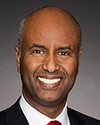
The Chair Liberal Ahmed Hussen

Thank you.

We'll next go to MP Guilbeault. You have six minutes.

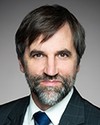
Steven Guilbeault Liberal Laurier—Sainte-Marie, QC

Thank you very much to our witnesses who have travelled here to appear in front of us. It's greatly appreciated.

Coming back to something you said earlier, Mr. Suarez, I think most of us would agree that what we're seeing in Cuba is the result of a number of factors, certainly including a regime that has failed to provide what it should have provided to its population. That has been exacerbated by U.S. sanctions that have been in place for decades, and more specifically by those that have been in place over the last few weeks.

Here is what I think some of us are trying to understand. We've heard at great lengths from different witnesses today the recommendation in terms of regime change and what should be done in relation to the government of Cuba. I'm wondering if the witnesses who are here can provide us with some understanding or recommendation in terms of whether there is anything they feel should be done about the U.S. sanctions themselves.

4:55 p.m.

Executive Director, Center for a Free Cuba

John Suarez

One of the things I mentioned in my presentation was that, to a large degree, two concrete things have occurred.

With the sanctions, especially post 1961, the agenda has not been regime change. It has been a policy of containment. What we've seen, paradoxically, is that the sanctions policy has not been static. There have been times....

The Carter administration, for example, actually lifted the travel embargo completely and loosened economic sanctions, and there was an attempt to normalize relations. Those increased resources resulted in Cuba's adventurism in Central America and the creation of Daniel Ortega's Sandinista regime, which is now butchering large numbers of students and repressing religious figures as a direct result of the actions of the Cuban government.

During the Clinton administration in the nineties, there was another effort to loosen sanctions and improve relations. Under Bill Clinton, the United States began joint military exercises at the Guantanamo naval base between Cuba and the United States. The result of that was the massacres of Cuban families in the 13 de Marzo tugboat sinking of July 13, 1994, and the shooting down of the Brothers to the Rescue planes on February 24, 1996. This was a humanitarian organization that saved the lives of approximately 4,200 Cuban refugees in the Florida straits between 1991 and 1996. The Cuban dictatorship could not tolerate it, because in addition to that, it was also doing outreach with the Martin Luther King centre out of Atlanta, encouraging and teaching people about civil disobedience and nonviolence, and also having relations with dissidents inside the island. That led to the codification of the embargo in 1996.

The embargo now is a much more difficult thing to get lifted because of the act of state terrorism committed by Cuba on February 24, 1996. Despite that, with the collapse of the Soviet Union, the U.S. opened up cash and carry trade with Cuba in 2000. That's why, this past year, the United States sold over $800 million in agricultural goods to Cuba.

What the sanctions have done is deny resources to Cuba's repressive apparatus inside the island but also prevent them from engaging in their adventurism abroad in places like Venezuela and Nicaragua. We've seen that loosening sanctions has actually provided them with more resources and more legitimacy to be more aggressive internationally. While sanctions have been tightened, they've been more on the defensive, as they are now, and more willing to negotiate, including negotiating openings on the economic front internally.


5 p.m.

Director of Strategy, Cuban Observatory of Human Rights

Yaxys Cires

[Witness spoke in Spanish, interpreted as follows:]

I think the international responsibility to protect human rights cannot be set aside under the pretext of the U.S. sanctions or the relationship between the United States and Cuba. There's an international responsibility, and Canada should feel part of that responsibility.

There is also a responsibility on the part of the Cuban regime when it comes to finding solutions to the Cuban people's problems, including in the context of its relationship with the United States government. There are people in other regions, such as Taiwan, who are under an incredible threat, and they still ensure a certain standard of living for the people.

Really, it is quite an anomaly to take the view that everything is due to a relationship with a major power.

5 p.m.

Liberal

Steven Guilbeault Liberal Laurier—Sainte-Marie, QC

I understand and share your perspective on the issue of human rights violations in Cuba by the regime. As my colleagues Rob and Alexis said earlier, for some of us, we cannot overlook the human rights violations that are a result of the U.S. sanctions, like violations of international laws and the UN charter. I think for many of us, these two things are linked together and are difficult to separate.

Thank you, Mr. Chair.

5 p.m.

Liberal

The Chair Liberal Ahmed Hussen

Thank you very much.

We will go next to Monsieur Brunelle-Duceppe.

You have the floor for six minutes.

Alexis Brunelle-Duceppe Bloc Lac-Saint-Jean, QC

Thank you, Mr. Chair.

I want to reassure the witnesses: You should know that China and Russia have imposed sanctions on me. I am, thus, not the biggest fan of authoritarian regimes, and they are not my biggest fans either. My position on human rights is therefore very easy to verify.

That said, what I believe, and what some people are telling us, is that the current crisis is directly linked to the decision taken by Trump on January 29. According to many people and many reports, this decision is what has led to the humanitarian crisis we are currently seeing.

Whether it is being amplified exponentially by the decisions of the regime in power is one thing. What interests me most, my only goal, is that we succeed in helping the population. That is why you are here today. How can we ensure that this humanitarian crisis is resolved as quickly as possible?

Disagreeing with the ideals of a regime in power is one thing politically, but allowing a population to suffer is another.

5:05 p.m.

Executive Director, Center for a Free Cuba

John Suarez

The thing we've been calling for since 2022 is an international humanitarian corridor. It can be something de facto or something pursued through the United Nations, which would basically call on the Cuban government to allow for it, because they have legislation on the books that says they have to have a role in whatever aid is distributed.

I think, as we've seen with the case of the United States in January, the diplomatic pressure from the U.S. on Havana has allowed U.S. aid to go directly to the Cubans on the ground.

If the United States, which is the enemy of Cuba and has all these policies that are so incredibly hostile, is able to provide humanitarian assistance directly to the average Cuban on the ground, why can't Canada do that? Why won't Havana permit Canada to provide humanitarian assistance to those Cubans who have had their homes damaged and haven't had assistance coming, not only after hurricane Melissa but also after the previous hurricanes? They're still without a roof and without housing, and they haven't seen assistance from either the European Union or Canada.

We've heard that what these people in the east of Cuba have seen in terms of assistance for the first time was from the United States in January and February. I think it would accelerate assistance to the average Cuban if Europeans, Canadians and other people of good will were to pressure the Cuban government to permit them, and perhaps European and Canadian NGOs, if they don't want to use actual independent Cuban NGOs, to go in and provide assistance to Cuban people on the ground immediately.

Alexis Brunelle-Duceppe Bloc Lac-Saint-Jean, QC

Two things strike me in what you are saying.

First, I believed that working with the World Food Programme and the United Nations Children's Fund would ensure a certain level of accountability on the part of these two organizations, which, it must be said, have global expertise in the delivery of humanitarian aid. What we are hearing from some witnesses is that this is a good thing. Others are telling us that it is a bad thing. We will have to come to a consensus as a committee.

The first question I asked was: Did Trump's decision on January 29 have an impact on the crisis people are currently experiencing? It seems that today, no one wants to answer this question, which seems quite simple to me.

5:05 p.m.

Executive Director, Center for a Free Cuba

John Suarez

Obviously, I believe the situation of cutting off fuel entering the country has to have had a negative impact. However, what has been featured in the press—the piles of garbage and the humanitarian catastrophe—did not start in January. That has been going on for years. In 2015 Moscow offered Havana $1.5 billion to help rebuild Cuba's electrical power grid; they had to come up with 10%. The response of the Cuban government to Moscow was that they had other priorities. Their other priorities, as we heard earlier, were to build high-rise luxury hotels with their own generators. You can see the photographs, if you search the Internet, of entire towns that are dark from the lack of electricity, except for the luxury hotels built by the military. They have their own generators. That is the reality.

In July 2021, there were mass protests in Cuba. One thing was people's desire for freedom. The other was that you had a propaganda apparatus claiming that they were going to develop their own sovereign vaccines. At the same time, there were no vaccines being distributed in Cuba, even while Russian and Chinese vaccines, in addition to those of Moderna and Pfizer, were being distributed through the rest of Latin America. The Cubans were losing family members, who were being buried in mass graves. The propaganda, the happy talk, was how they were going to have, in a short while, these sovereign vaccines. That was one of the factors that frustrated the Cubans enough that they took to the streets.

In August 2021, the regime responded by allowing the Chinese COVID vaccine into the island, but that took hundreds of thousands of Cubans taking to the streets. They were fired upon. There are still over 1,200 political prisoners in Cuba. Many of them were engaged in those protests. Others were farmers who were trying to provide their produce to Cubans on the ground. The Cubans would rather import it from the United States than allow Cuban farmers to generate food for the Cuban people.

The Chair Liberal Ahmed Hussen

Thank you very much.

We go next to MP Majumdar for five minutes.

5:10 p.m.

Conservative

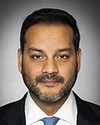
Shuv Majumdar Conservative Calgary Heritage, AB

Thank you very much.

Thank you for your citation of the Human Rights Action Group and the Democratic Spaces report. I used to be a board member of the Human Rights Action Group. It was an impeccable report written by some great Canadians, with some strong recommendations calling for policy coherence, among other things.

Let me pick up a little bit from where my colleague from the Bloc started, because I think it's an important thread to pull on. What do you make of the power grid crisis? There's decaying infrastructure, deferred maintenance, fuel shortages and economic mismanagement in which—to your point, Mr. Suarez—you see the regime prioritizing tourism and military installations over its people, which has resulted in blackouts...and water and fraud. It's the regime that's responsible for this collapse of the power grid, is it not?

5:10 p.m.

Executive Director, Center for a Free Cuba

John Suarez

It is. The other priority they have is spreading the revolution to other countries, like Venezuela and like Nicaragua, because what happens when they take over is that they set up a neo-colonial structure. Then they're able to suck the resources out of those countries and enrich their elites.

The regime is a kleptocracy. There were reports by Nora Gámez Torres, a Miami Herald reporter who had some documents leaked from within the regime. The reports indicated, as was mentioned earlier, that GAESA, the Cuban military conglomerate, is sitting on $18 billion in cash reserves. This is at a time when Cubans are dying of diseases that would be easily treatable if the Cuban government would invest $400 million in the purchase of medicines that would help Cubans today. They're sitting on $18 billion. It's an outrage.

5:10 p.m.

Conservative

Shuv Majumdar Conservative Calgary Heritage, AB

It's an outrage not only that they've picked up $18 billion in reserves that should be servicing the Cuban people but also that Cuba has become a locus for authoritarians. As you said, it's a hub of trafficking for the Russian military to continue its invasion of Ukraine. They've partnered with China in surveillance technology and are a declared partner of the belt and road initiative. They've partnered with Venezuelan repression, as you've described here.

Would you say that Havana was responsible for spreading the ideology in the Americas, as opposed to the narco-trafficking regime of Venezuela?

5:10 p.m.

Executive Director, Center for a Free Cuba

John Suarez

Yes. If you go back to October 1960, there's a documented transcription of a meeting between Ernesto Che Guevara and Mao Zedong, where they outline the weaknesses in the Americas and what countries were targets of opportunity. As I also mentioned in my comments, what's interesting is that in that period of time, when the U.S. still had normal relations with Cuba, they were already plotting out the communist takeover in different countries in the Americas.

I mean, it's shocking to me. You had tens of millions of Chinese going hungry because of the Great Leap Forward, and for propaganda purposes they were shipping food to Cuba, at a time when Cuba did not need it, to compete with the Soviets as to who would be more helpful to the Cuban communist model. It was incredible.

5:10 p.m.

Conservative

Shuv Majumdar Conservative Calgary Heritage, AB

You described how the U.S. government, ostensibly the greatest rival to Havana, has been able to provide aid on the ground through USAID and other partners. You've recommended Caritas, the church network, the legalization of more civil society. These are all important things.

According to some accounts, including that of the Patriotic Union of Cuba, the last time this organization in Cuba had any engagement with the embassy of Canada was during the Harper government, over 12 years ago. Not since then has there been any systematic approach to engage Cuban civil society by the government.

What's your assessment of that?