Evidence of meeting #27 for Foreign Affairs and International Development in the 45th Parliament, 1st session. (The original version is on Parliament’s site, as are the minutes.) The winning word was syrian.

A recording is available from Parliament.

On the agenda

Members speaking

Before the committee

Galligan  Ambassador of Canada to Lebanon and Syria, Department of Foreign Affairs, Trade and Development
McCollum  Director General, Middle East, Department of Foreign Affairs, Trade and Development
Tepper  Distinguished Senior Fellow, Norman Paterson School of International Affairs, Carleton University, As an Individual
Deschamps-Laporte  Professor of Political Sciences and Scientific Director, The Montreal Center for International Studies, Université de Montréal, As an Individual
Abou Diab  Political Analyst and Director, Conseil Géopolitique Perspectives, As an Individual

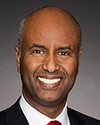
The Chair Liberal Ahmed Hussen

Welcome to meeting number 27 of the House of Commons Standing Committee on Foreign Affairs and International Development.

Pursuant to Standing Order 108(2) and the motion adopted by the committee on Thursday, February 12, 2026, the committee is meeting on Syria's political transition.

Today's meeting is taking place in a hybrid format pursuant to the Standing Orders.

Please wait until I recognize you by name before speaking. For those participating by video conference, click on the microphone icon to activate your mic, and please mute yourself when you are not speaking. For those on Zoom, at the bottom of your screen, you can make a selection for the appropriate channel for interpretation, floor, English or French. For those in the room, you can use the earpiece and select the desired channel.

All comments should be addressed through the chair.

I would now like to welcome our witnesses for the first hour.

From the Department of Foreign Affairs, Trade and Development, we have Gregory Galligan, ambassador of Canada to Lebanon and Syria, who is joining us today by video conference, and Stefanie McCollum, director general of the Middle East, who is appearing in person.

Welcome to you both.

I would like to thank Ambassador Galligan. We understand that your diplomatic mission is among the most in demand at present, and we really appreciate your participation in today's meeting.

Up to five minutes will be given for opening remarks, after which we will proceed with rounds of questions from members of the committee.

I now invite Ambassador Galligan to make an opening statement.

Gregory Galligan Ambassador of Canada to Lebanon and Syria, Department of Foreign Affairs, Trade and Development

Thank you, Chair and honourable members of the committee.

First of all, thank you for the opportunity to provide my views on the transition in Syria.

The study that the committee is conducting is timely, in that Syria has just celebrated the 15th anniversary of the uprising against the repressive Assad regime. With a new transitional government in place, Syria is now in a position to rebuild.

Canada has consistently backed the Syrian people. We have welcomed more than 100,000 refugees who are now part of our social fabric. We remain a top humanitarian donor, and we continue to pursue accountability for human rights abuses, including in partnership with the Netherlands before the International Court of Justice for violations of the Convention Against Torture.

Syrians are working to build a more peaceful and stable future. President Ahmed al-Sharaa has begun a political and economic transition, including a temporary constitutional framework and transitional government with a more representative legislative body.

Syria has also established a national commission on transitional justice and on missing persons, which are both important steps towards accountability and national reconciliation. Syria's fragility remains of deep concern, however. Sectarian tensions continue to manifest in violence and intimidation affecting minority communities, particularly Alawites, Kurds, Druze and Christians.

Nevertheless, much remains to be done in establishing a more inclusive society and political system. We are encouraging the transitional Syrian government to continue and broaden its efforts. Syria is also looking for support from the international community to deal with the disastrous legacy of chemical weapons and explosive remnants of war, as well as to close displacement camps.

Syria has largely avoided the current regional conflict, though it has not been untouched. Missiles and drones intercepted over Syrian airspace have resulted in debris falling in multiple areas. The country is also seeing the return of Syrian refugees fleeing Lebanon, with 140,000 returning in the first few weeks of war between Israel and Hezbollah.

The continued conflict poses a risk to Syria's already fragile stability and could worsen an already severe humanitarian situation. Today, 90% of Syrians live in poverty, and 70% require humanitarian assistance.

Syria has been a voice of de-escalation in this conflict, including condemning Iranian attacks and calling for restraint. The Syrian president has publicly supported the Government of Lebanon's decision to disarm Hezbollah, offered Syria's ports and borders to bypass risky trade routes and called for a joint security coordination cell between Levant and Gulf states. In recent months, Syria has also joined the Global Coalition against Daesh, of which Canada is a member.

Syrians are determined to rebuild their country. Those efforts must be led and conducted by Syrians, despite the fact that, according to the World Bank, the reconstruction will require up to $345 billion.

In order to contribute to the success of the transition, Canada is continuing to work with Syrian authorities, leaders in the diaspora and civil society. As Canada's first ambassador to Syria since 2012, I travel there regularly.

Canada has recently removed several legislative barriers to engagement with Syria, opening new opportunities for Canadian investors and businesses.

In December 2025, Canada removed Syria from the list of state supporters of terrorism and amended the Criminal Code list of terrorist entities to remove Hayat Tahrir al-Sham, or HTS.

These decisions were not taken lightly and were guided by Canada's assessment of evolving conditions on the ground in Syria. They also follow efforts by the Syrian transitional government to advance stability, build a more secure future for its citizens and work alongside international partners to reinforce regional stability and counterterrorism.

On February 18, Canada amended the Syria sanctions regulations to facilitate lawful trade and investment while adding new mechanisms to address human rights violations and destabilization.

As a result, Canada has imposed sanctions on six individuals who took part in the sectarian violence in March 2025 and who financed the Assad regime's programs of chemical weapons and ballistic missiles.

Allow me to conclude by emphasizing that Syria is at a turning point. The transition remains fragile, but the stable progress made this past year means that Canada has an opportunity to support a more peaceful and prosperous future.

Canada has been among the strongest supporters of the Syrian people and is well positioned to support and to participate in Syria's economic recovery and political transition.

Thank you, Chairman.

The Chair Liberal Ahmed Hussen

Thank you very much, Ambassador.

I will now open the floor for questions from members, beginning with MP Ziad Aboultaif.

You have six minutes.

3:35 p.m.

Conservative

Ziad Aboultaif Conservative Edmonton Manning, AB

Thank you, Chair.

Your Excellency, thanks for appearing before the committee.

I hope you're staying safe in Lebanon, along with our members of the embassy in Beirut. We're thinking of you. Our thoughts are with you and everyone there.

Ambassador, Canada has lifted some broad sanctions on Syria, which were placed during the Assad regime. We know that ethnic and religious minorities are under attack by some of the fighters or groups from the government forces. Have you raised that with the regime?

Why would we lift sanctions the way we did after learning that ethnic minorities, religious minorities.... They're not minorities. They refuse to call themselves minorities. We're talking about millions of people, including Alawites, Druze, Kurds and Christians. They are still under attack, and they don't feel safe at all. They are very vulnerable at the moment, and the regime will not assure them of anything.

Why did we lift those sanctions knowing that the regime is still not protecting its own citizens?

3:40 p.m.

Ambassador of Canada to Lebanon and Syria, Department of Foreign Affairs, Trade and Development

Gregory Galligan

Thank you, Member Aboultaif.

First, I'd like to say that, yes, we definitely bring up the government's interactions and the government's approach to minority issues. We've also discussed with the Syrian Minister of Foreign Affairs, the Syrian Minister of Interior and others the events that happened in March 2025 with the coastal massacres and again in July in Sweida. We have made it very clear that these conducts were not acceptable—more than unacceptable. They have to be fully investigated, and people have to be held accountable for these activities.

In terms of the lifting of sanctions, we did it in two ways. The first was to try to provide economic opportunity to Syrians. As I noted in my opening remarks, 90% of Syrians require some sort of humanitarian support, 70% direct humanitarian support, but 90% are around the poverty line, so it's important to provide economic relief and opportunities for the recovery of the country.

At the same time we did that, we also removed it from the list of state supporters of terrorism, which was also in connection to what was in place in terms of the Syrian regime's connection to Iran and Hezbollah, neither of which is there anymore. We also made decisions to add certain.... We updated the regulations to include human rights abuses and persons who are involved in destabilizing activity. As a condition of those additions, six new persons were sanctioned.

I think the government's approach is best characterized as trying to create space for economic recovery, while also recognizing that the government has further to go in creating tools that will allow us to take steps...or to sanction individuals who violate human rights abuses or conduct themselves in a way that undermines the transition.

3:40 p.m.

Conservative

Ziad Aboultaif Conservative Edmonton Manning, AB

Ambassador, I assume from your answer that you've raised this issue with the current government there several times. Is that correct?

3:40 p.m.

Ambassador of Canada to Lebanon and Syria, Department of Foreign Affairs, Trade and Development

Gregory Galligan

That's correct.

3:40 p.m.

Conservative

Ziad Aboultaif Conservative Edmonton Manning, AB

What was the answer of the current government to that?

There were multiple attacks on multiple groups. For example, the Alawites are about two-and-a-half million to three million people. It's the same with the Kurds. The Druze are almost a million people. The Christians are also a large community of over two million people. These are not minorities at all. They were under attack, and the government was part of it.

What would they say to you when you raised this issue? What was the government's excuse for being part of attacking these minorities? What would they say?

3:40 p.m.

Ambassador of Canada to Lebanon and Syria, Department of Foreign Affairs, Trade and Development

Gregory Galligan

The first thing the government has said is that there is no excuse for abuses, for human rights atrocities, for vigilante justice. They have said this.

The other thing the government has commented on is the coastal massacre in March. What they have said is that, at this time.... This was very early in the transition and before command and control procedures were in place. Of course, that doesn't excuse Sweida. I think, by all accounts, Sweida was deeply unacceptable in terms of the conduct of the government and, of course, the casualties.

On Sweida, what I think is different from the coastal massacres is that the government has taken a more robust stance in terms of investigating and trying to hold some of those people to account. I think it was only yesterday or maybe the day before that the government's own findings on the Sweida massacres were released. I can't remember the exact numbers, so you'll have to excuse me, but I think they identified close to 1,000 people who had been killed, the majority being Druze. I think there were 150 Bedouins and also government forces. What they've committed to is naming, taking action and holding those people to account. Again, I think more needs to be done, but I think there are improvements in process from what we saw in March versus July.

In the recent conflict, what we saw in the northeast, diplomats like me, I think, took a lot of time going in, speaking to the government and talking about how the way they proceeded would be determinative in terms of the relationship that could be formed or enhanced between the international community and the Syrian transition government. I don't, by any stretch, think that the conduct and every step in the northeast was perfect, but it was certainly a measured improvement from what we saw in July.

I think also just to close—

The Chair Liberal Ahmed Hussen

Thank you. We're way over the time. I have to go to the next member.

3:45 p.m.

Ambassador of Canada to Lebanon and Syria, Department of Foreign Affairs, Trade and Development

Gregory Galligan

I'm sorry about that.

The Chair Liberal Ahmed Hussen

No problem.

MP Rob Oliphant, you have six minutes.

Rob Oliphant Liberal Don Valley West, ON

Thank you, Mr. Chair.

I want to thank Mr. Aboultaif for his really fine questions. I don't think you'll see much daylight between our questioning and Mr. Aboultaif's.

I want to mention four areas. The first is minority rights, following up on on his questions. The second is targeted sanctions and the change in the sanctions regulations. The third is the regional conflict and the effect that could have on stability in Syria. The last is on mobility of people.

On minority rights, I think it would be important for this committee to say that we have zero tolerance for the infringement of minority rights in any country, including Canada and Syria. We have grave concerns. Improvement is good, but I think zero tolerance is better. That's just a statement.

What are we as a Canadian government doing to ensure the rights of the Druze, the rights of Alawite, and the rights of the Kurdish people, who have fought and given their lives for us in their fight against terrorism in the region, as well as Christians? Could you elaborate a little bit more on that, please?

3:45 p.m.

Ambassador of Canada to Lebanon and Syria, Department of Foreign Affairs, Trade and Development

Gregory Galligan

In terms of the guarantee around minority rights, I think where we have come in as a government is our direct engagement and advocacy on these issues. We also try to support programs that will make a long-term difference in how the government interacts with its citizens and how minority communities and others, or Syrians, live together.

One area we have been engaged in is through the transitional justice space. We have a working group with Germany, which Canada is leading. We're trying to support some positive interventions there. We also do a lot of work through the Canada fund for local initiatives, which allows us to support small civil society organizations in Syria, some of which are focused on minority issues, human rights, freedom of the press and so on. We're pushing on that. We continue to try to focus on those efforts so that, at this very early stage, we can try to cement some of those protections for minority communities so that they can also find pathways within their government and can more effectively represent and lead in their communities.

Rob Oliphant Liberal Don Valley West, ON

I'm just hoping that you will hear from Parliament to the government that this is a concern to parliamentarians.

With respect to sanctions, I'm confused, because we have targeted sanctions that are not meant to hurt populations, but we lifted sanctions to allow for economic recovery. We have shifted to two new categories around human rights and instability. Can you explain how the previous sanctions and the new sanctions will contribute to keeping pressure on the regime?

3:45 p.m.

Ambassador of Canada to Lebanon and Syria, Department of Foreign Affairs, Trade and Development

Gregory Galligan

Sure. Under the Assad regime, we had more than almost 15 years of broad-based economic sanctions applied over a period of time. That really impacted all aspects of government activity. The best example of that is the Central Bank of Syria. The Central Bank of Syria had been sanctioned. Realistically, for Canadians to engage in economic activity in Syria, that sanction had to be lifted. That's what was done. What we also say on sanctions is that they shouldn't affect the general population. That's true, which is why we have the humanitarian carve-outs. Remittances were still allowed to be transferred. Humanitarian funding was moving very freely.

Where we couldn't engage, really, was on the economic recovery side of that equation. We didn't have Canadian businesses engaging in the Assad regime to support economic activity at the time. To support the government, we're now trying to change the dimensions of our sanctions policies so that we continue to apply sanctions on individuals, particularly those who were directly related to the Assad regime—chemical weapons, ballistics and human rights abuses—and add new measures that would also allow us to do that in terms of some of the human rights abuses that we still see, and also with destabilizing activities.

Rob Oliphant Liberal Don Valley West, ON

I want to get to my last question on sanctions. I would also point out that Bashar al-Assad's family fortune may be anywhere from $2 billion to $100 billion. Those are the estimates. I would hope that we would be looking at a recovery of those assets as well. It's unknown what his assets are.

With respect to the regional conflict right now with the U.S. and Israel bombing Lebanon, and even in a minor way Syria, what do you think is the effect on Syria of this recent conflict?

3:50 p.m.

Ambassador of Canada to Lebanon and Syria, Department of Foreign Affairs, Trade and Development

Gregory Galligan

The effects on Syria are similar to the effects that are facing many other countries globally. The huge increase in fuel prices has an effect on Syria. It's not really a self-sufficient producer of petroleum products and oil, so that has a large impact.

It's also, I think, what I mentioned in my opening remarks. Some 140,000 Syrians in Lebanon have returned to Syria since the beginning of the conflict. That means 600,000, almost 700,000, Syrians in one year have returned to Syria from Lebanon. It will be challenging for the Syrian government to accommodate and facilitate their transition in an easy way. They're doing their best. They are very focused on trying to make returns as easy as they can be, but obviously it puts greater pressure on the humanitarian response system in Syria at a time when humanitarian funding globally is on the decline.

The Chair Liberal Ahmed Hussen

Thank you very much.

Mr. Ste‑Marie, the floor is yours for six minutes.

Gabriel Ste-Marie Bloc Joliette—Manawan, QC

Thank you, Mr. Chair.

First, I want to offer my regards to my colleagues. I am replacing Alexis Brunelle-Duceppe, who should be joining us shortly.

Ambassador and Director General, thank you for joining us. I very much appreciate the discussions that have taken place so far.

Ambassador, thank you for your presentation.

I would like to explore the matter of the organizations designated as terrorist entities. In December, Canada removed Syria, as well as certain groups associated with the transitional government, from the list of such entities.

Ambassador, which factors led the government to conclude that the designation was no longer appropriate?

3:50 p.m.

Ambassador of Canada to Lebanon and Syria, Department of Foreign Affairs, Trade and Development

Gregory Galligan

Was that question for me or for Ms. McCollum?

Gabriel Ste-Marie Bloc Joliette—Manawan, QC

It was for you, but if Ms. McCollum feels in a position to answer, it would be most welcome too.

3:50 p.m.

Ambassador of Canada to Lebanon and Syria, Department of Foreign Affairs, Trade and Development

Gregory Galligan

Perhaps I'll try first.

On the decision to delist, as part of the government's review, there has to be a broad-based agreement on this, so Public Safety, RCMP and Global Affairs Canada undertook a review. Based on that review and the changing situation on the ground in Syria, there was a decision taken, very much aligned with some of what our partners did also, to delist HTS.

Also, in the past several years, HTS has made a commitment to continue as the.... The new transitional government has made a real effort in terms of the anti-Daesh elements and has recently joined the coalition.

Based on the totality of the information and after a careful review, the decision of the government was to delist.

Gabriel Ste-Marie Bloc Joliette—Manawan, QC

Thank you.

Ms. McCollum, did you have anything to add?

Stefanie McCollum Director General, Middle East, Department of Foreign Affairs, Trade and Development

I just want to say that, after the transitional government was established, it was announced that the HTS group had been disbanded, meaning that it no longer exists.

I would just say that removing that group from the Criminal Code of Canada does not change history or the past, but it does show that there has been a change between December 2024 and now. Our legislation must reflect that.