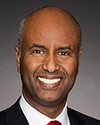
Thank you, Mr. Chair and members of the committee. It is truly an honour to be here and to spend this time together.
You have my formal credentials. Basically, I'm a lifetime professor of international relations at Carleton University, where I've studied a lot of things, including following the Middle East for a very long time. It's a great honour, indeed, to be here.
I've prepared some opening remarks, but I'd like to give you a one-sentence executive summary, and then I'll try to expand on it a bit. You may not even need much more.
I think that Canada has been handed an extraordinary, totally unexpected opportunity regarding the shifting geopolitics of the region. Nobody saw this coming. I think we have an opportunity to help change and shape the direction of the Middle East, and we should seize upon it in as positive and effective a way as possible. That's my overall view.
You've heard a lot of details already from the distinguished ambassador and the director general. My perspective on this is a bit broader. Whenever I can, I like to quote my favourite philosopher, Yankee catcher Yogi Berra, who said, “The future ain't what it used to be.” That is certainly true when it comes to the region we're talking about now.
As I said, something extraordinary has happened, and we have an opportunity to play a role, and I think we should seize it. That's my central message of the day.
A lot of the specific developments in regard to Syria have already been discussed by the ambassador and the director general.
Syria sits at the heart of a very tumultuous region. It is undergoing an enormous change in a very short time, but I think we have an opportunity to test our own commitment and our own abilities, not only in regard to the Syrian national government but also ourselves. How quickly can we move? How nimble are we? How much can we bring to the table in a very short time when the circumstances are so different?
Why does Syria matter to Canada?
I think the unexpected fall of the Assad regime, as I suggested, provides a genuine geopolitical opportunity, and it's one that we should be pursuing with energy and purpose. For over 50 years, Syria was an Iranian client state. It's a transit corridor for Tehran to arm its proxies in the region, particularly Hezbollah in Lebanon. It was a brutal oppressor of its own people, and it was also a prop for Russian interests. It was a chronic destabilizing force for the whole region, and now it's suddenly gone.
The new government is overtly anti-Iranian. It does seek accommodation with all of its neighbouring states. It has very quickly tried to reintegrate an isolated Syria into the broader international arena. The main thing here is that the Iranian axis of resistance has been broken. It opens things up that weren't available before, and we should take advantage of it.
Canada is already invested, as I suggested. Canada doesn't start from zero when it comes to Syria. We've already heard some of the figures on this, like over $1 billion in humanitarian aid and steadfast support for the White Helmets. This is something in which some of you may have played a role in the past when the White Helmets representatives came here. Now one of those White Helmets is a member of the transitional cabinet in Syria. We, as you know, have taken in over 100,000 refugees, so we have earned goodwill in Syria and we should spend that goodwill effectively.
We also have considerable expertise to offer a transitional Syria. The demand of the hour, humanitarian relief, remains, but nation-building is now on the agenda, and that's an area in which we have considerable expertise. Constitution building, security sector reform, demining and removing noxious materials, we have a whole range of things that Syria needs right now.
By the way, the mention of trade was made earlier. There's a lot of money that's going to be pouring into Syria now, and perhaps we should take advantage of that by opening up trade in a constructive way to help build the country.
What should we expect in return? This engagement is going to come with expectations. When we invest, as we do around the world, we think we should get something that's important to us. Accountability clearly is on the agenda, but the main thing I think to emphasize here is that we have always around the world emphasized our democratic values and our capacity for multilateralism. That combination can be put to use in regard to assessing our impact, looking at what we get out of our engagement with Syria.
However, I think it's important to suggest that we don't have to impose our own standards on the issue of human rights. What we need to do, I think, is to hold Syria to and assist them in achieving what they have said they wish to do in regard to setting up a pluralistic society and a constitution with separate—