In the few seconds I have left, I would love to hear from the colonel.
Is it the Canadian Armed Forces' position that Canada remains an “increasingly disruptive” force in the region?

Evidence of meeting #30 for Foreign Affairs and International Development in the 45th Parliament, 1st session. (The original version is on Parliament’s site, as are the minutes.) The winning word was agreement.
A recording is available from Parliament.
Conservative

Tamara Kronis Conservative Nanaimo—Ladysmith, BC
In the few seconds I have left, I would love to hear from the colonel.
Is it the Canadian Armed Forces' position that Canada remains an “increasingly disruptive” force in the region?
Conservative
Tamara Kronis Conservative Nanaimo—Ladysmith, BC
I apologize. I mean China. I'm thinking about Canada. That is where my heart always is.
Deputy Director General, International Security Policy, Department of National Defence
I'll jump in for the defence team and echo that our focus is on the Canadian Armed Forces and our work emphasizing predictability, transparency and respect for international law in the region.
Liberal
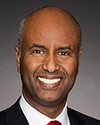
The Chair Liberal Ahmed Hussen
Thank you very much.
We'll next go to MP Vandenbeld.
You have five minutes.
Liberal

Anita Vandenbeld Liberal Ottawa West—Nepean, ON
Thank you very much.
I'd like to switch gears a bit and talk about the development and humanitarian support that Canada provides in the region.
We know this is a region with a wide variety. We have a number of countries emerging out of “least developed country” status, like Bangladesh, and countries that are ODA-eligible yet starting to become donor countries themselves, especially in the south. Look at Indonesia, Philippines and others.
I wonder if you could talk a bit about how Canada is engaging with these countries in terms of humanitarian needs. There are tremendous needs, for instance, in the situation with the Rohingya. More importantly, how are we moving toward support and partnership in development?
Assistant Deputy Minister, Indo-Pacific, Department of Foreign Affairs, Trade and Development
It's an excellent question because it does indeed point to one of the areas we see evolving and getting updated in terms of Canada's approach in the region.
Canada has been a long-time donor in the Indo-Pacific. We can think all the way back to the Colombo plan. Canada has a strong brand and has been seen as a strong partner in the region for a long time. It is the case today that many countries we've been a development partner with for decades are economies that are very much in transition. Some of them are now lower-middle-income economies. Their need to continue to develop requires us to be nimble and to look at the approaches and the partnership Canada can bring to the table.
The thing I will say, quite concretely, is that this provides an excellent opportunity for something Secretary of State Sarai has spoken about: bringing in the Canadian private sector. There needs to be a continuum for our development assistance partnerships with economies that are lower middle income—Indonesia, Vietnam, etc.—where Canada has been a strong development partner. We now have an FTA in the case of Indonesia. It was just negotiated. The tool kit can't just be two separate worlds. It really needs to come together. The secretary of state has spoken about this being one of his top three priorities for the region.
I can talk about other aspects.
There will continue to be a lot of work done to address the needs identified by our partners in the region, be it inclusive economies—that is, working with communities on better inclusion of women and girls in their economies—humanitarian issues or disaster risk and resilience. Those will continue. Watch this space in terms of how we work more closely with FinDev Canada, the trade commissioner service and others to bring blended financing solutions, etc.
The last example I'll give in that regard is with respect to free trade agreements. We committed to providing support to the Indonesian government to make sure they get their game up so we can see strong utilization by companies from both sides with respect to high standards, be they for the environment or labour.
Liberal
Anita Vandenbeld Liberal Ottawa West—Nepean, ON
Thank you, and thank you for mentioning the environment, because I know that Canada has also taken a leadership role when it comes to small island states, particularly when it comes to climate.
Could you tell us a little bit about Canada's leadership in terms of helping with climate mitigation and adaptation in some of the countries in the region?
Assistant Deputy Minister, Indo-Pacific, Department of Foreign Affairs, Trade and Development
Perhaps I can give a couple of illustrations of areas of work already under way by terrific Canadian partners, Canadian NGOs and others. This speaks to climate adaptation in terms of economic capacity. We have projects in both the Philippines and Indonesia that work with small business owners, mostly women-led businesses, to adjust to climate mitigation in climates that are increasingly at the front line of seeing traditional livelihoods being affected, be those farming, fishing, etc.
Another area, and this points to the capacity we now have, as a previous member of the committee mentioned, there is a new mission in Suva, Fiji. We have the capacity to work in a much more productive and responsive way with Pacific Island countries. The Kiwa initiative is an example where we are working together with other donors because we're a newer, smaller player, I would say, in the development space in the Pacific. We are working with France, among other partners, to support climate mitigation across small island states in the Pacific. The Kiwa initiative would be another example of that work.
Liberal
Anita Vandenbeld Liberal Ottawa West—Nepean, ON
You mentioned women and women as economic drivers in their communities. Our feminist international assistance policy, of course, means that women are not just beneficiaries of aid but are drivers and part of the design and the delivery of programs.
Could you tell us a little bit about that?
Liberal
The Chair Liberal Ahmed Hussen
Again, give a very brief response, because we're a little bit over time.
Assistant Deputy Minister, Indo-Pacific, Department of Foreign Affairs, Trade and Development
Very briefly, I've had the privilege of being able to travel with our ministers to the region and see a number of incredibly important projects that demonstrate the value of bringing that lens not only to the what but to how we develop our systems. How we develop and work with countries to develop their economies is as important as the what. It brings in inclusivity. It brings in women and girls, and that will continue to be a priority.
Liberal
The Chair Liberal Ahmed Hussen
Thank you very much.
We'll go next to MP Brunelle-Duceppe for two and a half minutes.
Bloc
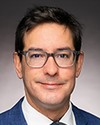
Alexis Brunelle-Duceppe Bloc Lac-Saint-Jean, QC
Thank you, Mr. Chair.
Mr. Epp, we recently did a study on Canadian sovereignty in the Arctic. Officials from the Canadian Security Intelligence Service gave us a presentation, during a public meeting, of course, and they said that the two biggest threats to Canada's Arctic sovereignty were Russia and China.
That information was shared during a public meeting, so it's in the public domain. Does your assessment of what we are now doing take that information into account, when it comes to Canada’s Indo-Pacific Strategy?
Assistant Deputy Minister, Indo-Pacific, Department of Foreign Affairs, Trade and Development
That's a great question.
I'll talk about a few aspects of our work that tie in with that.
We stepped up our conversations with democratic partners that have a legitimate interest in the region, Japan and South Korea, for instance.
When it comes to approaches in Canada's Arctic, we still have that Indo-Pacific relationship. We and our partners, so the U.S., South Korea and Japan, need to be more confident and to be more active in managing maritime activity intelligence. We have made investments that will help us do more on the front.
We also have partnerships with Japan and South Korea involving the Canadian Coast Guard. That will be very important.
In addition, the government has made investments, which the committee members are very familiar with, in our capacity to have a greater presence on the ground in Canada's north, across all domains.
Bloc
Alexis Brunelle-Duceppe Bloc Lac-Saint-Jean, QC
As we've seen, budget spending on defence and recruitment is rising in Canada.
Conversely, international aid and development spending was cut considerably in the last budget. We're talking about $2.5 million.
What impact will those cuts to international aid have on the Indo-Pacific region, do you think? Are they also taken into account, as far as Canada's Indo-Pacific strategy goes?
Assistant Deputy Minister, Indo-Pacific, Department of Foreign Affairs, Trade and Development
We are well aware that one of the government's priorities is to cut spending. Those cuts are real and will have an impact.
Assistant Deputy Minister, Indo-Pacific, Department of Foreign Affairs, Trade and Development
Choices have to be made, and it's up to the government to make them. It's not my—
Bloc
Alexis Brunelle-Duceppe Bloc Lac-Saint-Jean, QC
No, but I'd like to know what impact the cuts will have.
Assistant Deputy Minister, Indo-Pacific, Department of Foreign Affairs, Trade and Development
As far as the development budget and its impact on the Pacific region is concerned, I just described an approach I think is very important. We have more opportunity to work in partnership with developing countries. The tools we have are more than just development dollars; increasingly, the private sector is able to leverage our technology and contribute to development goals, such as in the energy arena in the Philippines.