Evidence of meeting #30 for Foreign Affairs and International Development in the 45th Parliament, 1st session. (The original version is on Parliament’s site, as are the minutes.) The winning word was agreement.

A recording is available from Parliament.

On the agenda

Members speaking

Before the committee

Epp  Assistant Deputy Minister, Indo-Pacific, Department of Foreign Affairs, Trade and Development
Nijjar  Deputy Director General, International Security Policy, Department of National Defence
Smith  Executive Director, Indo-Pacific Trade Policy Division, Department of Foreign Affairs, Trade and Development
Jerome Patry  J35 Expeditionary, Future Operations, Canadian Joint Operations Command, Canadian Armed Forces
Samaan  Director General, Indo-Pacific Strategy Planning, Policy and Operations, Department of Foreign Affairs, Trade and Development

4:50 p.m.

Conservative

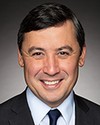
Michael Chong Conservative Wellington—Halton Hills North, ON

I want to continue my questioning on Petronas.

The Prime Minister indicated that Canada could double its LNG exports from 50 million tonnes a year, which is expected by 2030, to 100 million tonnes a year by 2040. That would be a fairly sizable increase in Canadian LNG exports, if it were to happen. I want to understand a bit more about what is actually going on in terms of the machinery of making this all happen. Phase two has been referred to the Major Projects Office.

How is this all being coordinated with GAC? Is the ambassador in Kuala Lumpur talking to the Major Projects Office? How is this all working?

4:50 p.m.

Assistant Deputy Minister, Indo-Pacific, Department of Foreign Affairs, Trade and Development

Weldon Epp

That's an excellent question. I may fall short in providing entire clarity on it, but I can speak to the GAC role.

Clearly, part of the challenge, but also what we're seeing moving and taking hold, is that this is about making sure we have a clear value proposition and clarity on process and expectations. That gets to things like permitting, timelines, etc. Some of the policy changes that the government has announced in terms of how we go about major projects, as well as identifying a key centre of accountability for delivery, which is the Major Projects Office, are part of the equation.

The other part is then making sure that potential proponents or participants understand the opportunity. That's where GAC steps in. Our high commissioner in KL is super active and knows the C-suite of Petronas very well. She introduced them to me, to Minister Anand and to the Prime Minister.

We're going to continue to keep those lines open. I can say that company in particular, without getting into something commercially confidential, is incredibly sophisticated, having been, as you pointed out, very active in leading the consortium of LNG Canada phase one. It has spent incredible amounts of time getting to know in detail the various indigenous and first nations communities that are impacted and are partners in the region.

I have full confidence in the discussions Petronas is having now about whether it will play into not only LNG Canada phase two but also other major projects. Those are not major projects in our sense of the 11 but other significant energy opportunities on the west coast of Canada. They're quite significant discussions.

That's where GAC plays a role, and then we hand it off. Petronas is a special case because they're already very much on the ground, but for new companies, there's a hand-off with Invest in Canada. In the hand-off to the Major Projects Office, their role is to drive delivery. As the resources, funding and investment funds are committed or available, it's up to them to coordinate on the delivery. We're on the front end of client acquisition, if you will.

4:55 p.m.

Conservative

Michael Chong Conservative Wellington—Halton Hills North, ON

Is it safe to say, coming out of the letter of intent signed between Canada and Malaysia, that phase two is a live issue in relations between Canada and Malaysia?

4:55 p.m.

Assistant Deputy Minister, Indo-Pacific, Department of Foreign Affairs, Trade and Development

Weldon Epp

I would say it's a commercial decision at this point for Petronas principally. In the case of Malaysia, it's Petronas. That commercial decision is very much a live discussion with Minister Hodgson's team and on the ground with GAC's trade commissioner service and our head of mission there.

4:55 p.m.

Conservative

Michael Chong Conservative Wellington—Halton Hills North, ON

That's helpful. Thank you.

I want to touch on the issue of parliamentary exchanges, which I think you and I are going to talk about a bit later. The Prime Minister, in the readout between him and the chair of the standing committee of the National People's Congress, emphasized the importance of parliamentary exchanges.

I hope it's the department's position that there can be no parliamentary exchanges until there's full reciprocity between our Parliament and the National People's Congress, seeing that sanctions are still being imposed on members of Parliament and on committees of this Parliament while there are no sanctions being imposed on the National People's Congress's members or its committee. Is that a fair assumption to make?

4:55 p.m.

Assistant Deputy Minister, Indo-Pacific, Department of Foreign Affairs, Trade and Development

Weldon Epp

I entirely understand the premise, and it would be a government decision to take. Since my first post in Beijing in the 1990s, I've seen the value, but the value of these exchanges has to be calibrated to the risk-reward ratio. I understand—

4:55 p.m.

Conservative

Michael Chong Conservative Wellington—Halton Hills North, ON

I'll finish by saying that it's a question of national honour, national dignity and national self-respect that there be full reciprocity before any of these exchanges can take place.

4:55 p.m.

Assistant Deputy Minister, Indo-Pacific, Department of Foreign Affairs, Trade and Development

Weldon Epp

It's entirely understood, and I'll take that back.

4:55 p.m.

Conservative

Michael Chong Conservative Wellington—Halton Hills North, ON

Yes, there should be full reciprocity.

Thank you.

The Chair Liberal Ahmed Hussen

Thank you very much.

We go next to MP Lauzon.

You have five minutes.

Stéphane Lauzon Liberal Argenteuil—La Petite-Nation, QC

Thank you, Mr. Chair.

Thank you to all the witnesses for being with us today.

Mr. Epp, you referred to the Prime Minister's high-profile visit in your opening remarks. It was an important step in improving trade missions. You also talked about economic partnerships, highlighting supply chains as a way to help all that.

Let's look ahead. The Indo-Pacific region will account for 50% of global GDP by 2040. In terms of the progress Canada has made in the marketplace, what makes you think we will meet those targets in 2040? What markets have we developed? Can you talk more about that?

4:55 p.m.

Assistant Deputy Minister, Indo-Pacific, Department of Foreign Affairs, Trade and Development

Weldon Epp

I'll answer first, but then I'd like to turn the floor over to my colleague Mr. Smith. I think the most important thing I can say is simply how important negotiations are in concluding more agreements, more free trade agreements. Yes, the region is growing quickly and will be increasingly important to our economy.

As we've seen, the Prime Minister's vision is to further strengthen our relationships with reliable economies and governments, and to establish reliable relationships. That's much easier when we have a free trade agreement. A wide range of negotiations are under way, and Mr. Smith can perhaps give you more information—

5 p.m.

Liberal

Stéphane Lauzon Liberal Argenteuil—La Petite-Nation, QC

Can you give us examples of the types of negotiations you're referring to?

5 p.m.

Executive Director, Indo-Pacific Trade Policy Division, Department of Foreign Affairs, Trade and Development

Darren Smith

Very quickly, the CPTPP is an excellent example. It's an anchor of our trade investment activities in the region. Of course, we've launched and completed negotiations with Indonesia. We have launched negotiations with the Philippines, and soon we'll be starting our negotiations with Thailand. We have an existing trade agreement in place with Korea.

All in all, what we're seeing is that we're creating the environment for traders and investors to succeed in this region and to help, perhaps, realign supply chains in new ways to deal with some of the challenges that have beset the international trading system. The results won't be immediate. It's going to take time. It's going to be a big shift for Canadian companies, and especially for SMEs, to reorient in terms of diversifying their economic activity.

We are seeing some early indications—we're seeing higher utilization of these trade agreements, and we're seeing more and more interest through trade missions and through other interactions—that Canadian traders and investors are taking the steps necessary to realize those objectives.

5 p.m.

Liberal

Stéphane Lauzon Liberal Argenteuil—La Petite-Nation, QC

That's very helpful information for the committee.

Now I want to ask you a more specific question, since I'm only filling in today. I'm not a standing member of the committee.

I want to talk a bit about Quebec. As you know, Quebec has natural resources, AI, robotics, aerospace, wood, forests, diversity and the list goes on. How can Quebec benefit from the international relationships you're helping to cultivate through your negotiations?

5 p.m.

Assistant Deputy Minister, Indo-Pacific, Department of Foreign Affairs, Trade and Development

Weldon Epp

Once again, I'm going to ask my colleague to jump in shortly. However, in terms of promoting that capacity in our negotiations, we've talked about a number of sectors where Quebec plays a very strong role, areas where Quebec's capacity is highly sought after in the region. I'll give you an example. In India—

5 p.m.

Liberal

Stéphane Lauzon Liberal Argenteuil—La Petite-Nation, QC

Are you referring to agriculture?

5 p.m.

Assistant Deputy Minister, Indo-Pacific, Department of Foreign Affairs, Trade and Development

Weldon Epp

No, I'm referring to the growth of its aerospace sector, airports and the like. That gives us an indication of the demand that's coming and how our businesses in the sector can contribute. It's very important to be present now to get the most out of those relationships and the opportunities for greater contribution in the sector.

As far as what Quebec can add to the negotiation process, we have a mechanism for provincial consultation, which Mr. Smith can talk about.

5 p.m.

Executive Director, Indo-Pacific Trade Policy Division, Department of Foreign Affairs, Trade and Development

Darren Smith

Certainly.

Very quickly, Quebec, like all other provinces and territories, is very much engaged in our activities on the free trade agenda. We utilize their input all the time, on an ongoing basis, for all of our trade negotiation activities. In fact, we get very clear and concise information from both the Quebec government and its stakeholders about some of the very specific opportunities—those issues that we need to concentrate on and prioritize with our negotiating partners.

Quebec has a very diversified export-oriented profile and also has some very strong companies that are involved in international activities from an investment perspective as well.

We are hopeful that, as we continue to expand, especially in the Asia-Pacific region, we can provide additional opportunities for Quebec-based companies and Canadian companies overall to succeed and find new market opportunities that have an equal playing field with others.

5 p.m.

Liberal

Stéphane Lauzon Liberal Argenteuil—La Petite-Nation, QC

Thank you.

5 p.m.

Liberal

The Chair Liberal Ahmed Hussen

Thank you very much.

We go next to MP Alexis Brunelle-Duceppe for two and a half minutes.

Alexis Brunelle-Duceppe Bloc Lac-Saint-Jean, QC

Thank you, Mr. Chair.

Mr. Epp, when a bill is introduced in the House and it involves your department, or at least affects your work, I imagine that before the bill comes into force, you do an analysis and examine its potential impact on your work.

If not, do you wait until the bill becomes law to do an impact analysis?

5 p.m.

Assistant Deputy Minister, Indo-Pacific, Department of Foreign Affairs, Trade and Development

Weldon Epp

That work is usually done beforehand.

Alexis Brunelle-Duceppe Bloc Lac-Saint-Jean, QC

Can you tell me whether you've analyzed the impact Bill C‑251 could have on forced labour? My colleague Simon‑Pierre Savard‑Tremblay sponsored the bill. Have you analyzed what the implications would be if Parliament were to pass the bill?

5:05 p.m.

Assistant Deputy Minister, Indo-Pacific, Department of Foreign Affairs, Trade and Development

Weldon Epp

Personally, no, I haven't seen that analysis.