Thank you very much, MP Aboultaif.
We'll go to MP Stéphane Lauzon.
Welcome to the committee. You have five minutes for questions and comments.

Evidence of meeting #30 for Foreign Affairs and International Development in the 45th Parliament, 1st session. (The original version is on Parliament’s site, as are the minutes.) The winning word was agreement.
A recording is available from Parliament.
Liberal
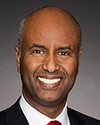
The Chair Liberal Ahmed Hussen
Thank you very much, MP Aboultaif.
We'll go to MP Stéphane Lauzon.
Welcome to the committee. You have five minutes for questions and comments.
Liberal

Stéphane Lauzon Liberal Argenteuil—La Petite-Nation, QC
Thanks, Mr. Chair. I will ask my questions in French.
I would like to start with Colonel Jerome Patry.
Since the adoption of its Indo‑Pacific strategy in 2022, Canada has clearly strengthened its presence and engagement in this region. My question is meant to reassure Canadians. I think that we have a role to play in this.
How has Canada's military posture in the Indo‑Pacific region changed since 2022? What position have we taken since 2022? Can we talk about capabilities? Have there been additional deployments to meet these needs, or are they meant to protect Canadian sovereignty and contribute to regional stability?
Col Jerome Patry J35 Expeditionary, Future Operations, Canadian Joint Operations Command, Canadian Armed Forces
Thank you for that excellent question, Mr. Lauzon.
I'll start by referring to what my colleague from foreign affairs said at the beginning of the meeting. He mentioned Operation Horizon, which was launched to implement the defence elements of the strategy. The purpose of the mission is to promote peace, resilience and security in the Indo-Pacific region, and to increase respect for international law.
Operation Horizon replaced what we used to do. We now have episodic deployments in support of a persistent and predictable presence in the region through land, air, cyber, space and special operations forces activities.
Under Operation Horizon, we have increased our regional and multinational involvement through a series of exercises in the region, each with a specific goal, from enhancing interoperability with other countries to supporting capacity building.
Liberal
Stéphane Lauzon Liberal Argenteuil—La Petite-Nation, QC
That's a great answer for the committee's information, but you didn't mention respect for human rights or our commitments to democratic governance and the rules-based international order.
Are those rules respected? Can you talk about that a bit?
J35 Expeditionary, Future Operations, Canadian Joint Operations Command, Canadian Armed Forces
Of course.
When we talk about capacity building in the region, we're talking about participating in exercises that build trust, both our trust in our allies and their trust in us. It helps to strengthen those ties. We do that in a number of ways, including through land and maritime operations.
Liberal
Stéphane Lauzon Liberal Argenteuil—La Petite-Nation, QC
Since 2022, have you felt that other countries and India have more trust in Canada?
J35 Expeditionary, Future Operations, Canadian Joint Operations Command, Canadian Armed Forces
That's hard to say at this time.
Liberal
Stéphane Lauzon Liberal Argenteuil—La Petite-Nation, QC
I'm asking more about the feeling you get on the ground. Do you feel the relationship is better today than it was at the beginning of your mandate?
J35 Expeditionary, Future Operations, Canadian Joint Operations Command, Canadian Armed Forces
I would say that our participation in each of the major multinational exercises in the region has increased significantly. Previously, we were mainly observers during the exercises, and now, we are main contributors.
Exercise BALIKATAN comes to mind. It's coming up soon, and we will be the third international contributor in terms of number of forces deployed.
The size, intensity and impact of our involvement in the region has definitely increased under Operation Horizon.
Liberal
Stéphane Lauzon Liberal Argenteuil—La Petite-Nation, QC
All right. I'm almost out of time, with just 20 seconds left, so I'm going to ask you to send us a recommendation relating to your area of expertise that we could include in our final report, something that would help you in your decision-making. The committee would be delighted to have that information and to discuss it when we draft our report.
Thank you.
Liberal
The Chair Liberal Ahmed Hussen
Thank you very much. You were right on time.
We'll go next to MP Kronis for five minutes.
Conservative

Tamara Kronis Conservative Nanaimo—Ladysmith, BC
Thank you very much, Mr. Chair.
Mr. Epp, has Canada's rapprochement with China created any changes to Canada's approach to Taiwan?
Assistant Deputy Minister, Indo-Pacific, Department of Foreign Affairs, Trade and Development
None that I am aware of.
Conservative
Tamara Kronis Conservative Nanaimo—Ladysmith, BC
The Indo-Pacific strategy actually commits to “push back against any unilateral actions that threaten the status quo in the Taiwan Strait”. It also identifies China as an “increasingly disruptive” power. Has anything in that assessment changed?
Assistant Deputy Minister, Indo-Pacific, Department of Foreign Affairs, Trade and Development
The base assessment of China's foreign policy intent, its national security enterprise and what it sets out as its own goals—none of that has changed. None of our partners see a change in that. What we do see is a change in the international environment. We should expect, tactically, China to do things differently from time to time. For example, there was a period when wolf warrior diplomacy was the best idea. This has changed to a charm offensive.
They're very clear on their national objectives. Those include, from their point of view, national reunification with Taiwan, so everybody is on the same baseline. That baseline hasn't changed. What is the case is that the government continues to support.... We've had a broad range of business delegations. Our Canadian trade office in Taipei has had a banner year. It's been very busy. We've seen trade grow. We signed a FIPA since the Indo-Pacific strategy was passed. Again—
Conservative
Tamara Kronis Conservative Nanaimo—Ladysmith, BC
Absolutely. I mean, we totally understand that you've been very busy. I'm trying to understand this, though: The world has changed, yet on some level what's being said here is that we're waiting for what seems to be—or is being pitched as—an incremental update to the Pacific strategy. If not much has changed, then why don't we have it? If a lot has changed, then what is actually changing?
Assistant Deputy Minister, Indo-Pacific, Department of Foreign Affairs, Trade and Development
Again, the exam question answer, or the project to get to, is that Canada was always.... It's not one of before or after. It wasn't that Canada wasn't in the Indo-Pacific until the strategy and now we are. The idea was always to take a very significant step up in terms of our capacity to pursue our economic and security goals in the region.
That is the continuity piece. Any version for any government or engagement in the Indo-Pacific will be about that. What has changed, though, is the international environment since it was launched. We've had the deepening of the conflict in Ukraine. We've had conflict in the Middle East. We've had a different government come to office in the United States. Whether for Canada or for China and other actors, the balance of priorities and operational commitments will evolve with that.
Canada has continued, though, to deepen, as the colonel just spoke to, our security presence in the region. It continues to increase. We signed, again, just last year, the Minister of National Defence—
Conservative
Tamara Kronis Conservative Nanaimo—Ladysmith, BC
I understand all that, but I'm actually asking a directional question.
In the existing policy, Canada is seen as an “increasingly disruptive” force.
Assistant Deputy Minister, Indo-Pacific, Department of Foreign Affairs, Trade and Development
It's China.
Conservative
Tamara Kronis Conservative Nanaimo—Ladysmith, BC
I'm sorry. China is seen as an “increasingly disruptive” force.
Does Canada still see China as an “increasingly disruptive” force in the region?
Assistant Deputy Minister, Indo-Pacific, Department of Foreign Affairs, Trade and Development
What I would say is that this assessment.... By the way, and not because members of the committee don't know this—it's for any Canadians listening—the strategy had quite a bit of text about China. I've spent a lot of time in the last few years talking about one word. That word is not a pejorative word. It's a descriptive word. China is disruptive in economic terms, in innovation terms and, potentially, in security terms.
This description used at the time continues to be the case. When the Prime Minister was asked this in Beijing, he said that there are multiple superpowers in the world that are disruptive. This was a term from a previous government—
Assistant Deputy Minister, Indo-Pacific, Department of Foreign Affairs, Trade and Development
I didn't hear him say that. I don't—
Conservative
Tamara Kronis Conservative Nanaimo—Ladysmith, BC
It's in our current strategy. Can we expect to see the word “increasingly” removed?
Assistant Deputy Minister, Indo-Pacific, Department of Foreign Affairs, Trade and Development
Again, I'm in a position only to say that we're in the process of giving advice to government. I can't speak to advice that is privileged for government.
What I can expect to see is this: For a baseline assessment of a region that's increasingly important, we need to be there in both security terms and economic terms. I don't see that baseline changing, and the activity the colonel just spoke to is the proof point.