Evidence of meeting #35 for Foreign Affairs and International Development in the 45th Parliament, 1st session. (The original version is on Parliament’s site, as are the minutes.) The winning word was china.

A recording is available from Parliament.

On the agenda

Members speaking

Before the committee

Simon  Full Professor, School of Sociological and Anthropological Studies, Faculty of Social Sciences, University Of Ottawa, As an Individual
Berkshire Miller  Senior Fellow, Macdonald-Laurier Institute, As an Individual
Nadjibulla  Vice-President, Research and Strategy, Asia Pacific Foundation of Canada

4:30 p.m.

Vice-President, Research and Strategy, Asia Pacific Foundation of Canada

Vina Nadjibulla

My understanding of this visit, Mr. Chair, is that it's about building trust and deepening the new strategic partnership. What will be important, especially in how the Canadian government speaks about it publicly, is not to fall into China's rhetoric, the PRC's rhetoric. We need to stay strong and clear on what Canada wishes to achieve through this new strategic partnership, what's in it and what's not in it. I think the atmosphere and the mood that the PRC would like to project is that we have completely turned the page and that there is absolutely nothing that is an issue, that there are no tensions or disagreements and that there is alignment. I don't think that is accurate.

The challenge for our government, in my view, will be to advance the interests that Canada would like to advance while also maintaining strategic clarity on the limits and the guardrails that we have—and not to fall into the paradigms and the rhetoric that China will be presenting.

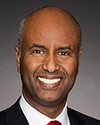
4:30 p.m.

Full Professor, School of Sociological and Anthropological Studies, Faculty of Social Sciences, University Of Ottawa, As an Individual

Scott Simon

It's clear that there's a difference between a strategic partnership and a comprehensive strategic partnership. I hope that the meeting goes smoothly and is cordial on both sides, but it is important for Canada—perhaps outside of the meeting and after the meeting—to make it clear to the Canadian public that we want to have a peaceful and continuing relationship with the People's Republic of China but are aware of ongoing problems, including its aggression towards neighbouring states and human rights issues. These are things we can't bring up, realistically, with the foreign minister, but they do need to be communicated to the Canadian public.

4:35 p.m.

Conservative

Michael Chong Conservative Wellington—Halton Hills North, ON

Thank you, Mr. Chair.

The Chair Liberal Ahmed Hussen

We go next to MP Anita Vandenbeld.

I understand that you're sharing your time with MP Sari.

Anita Vandenbeld Liberal Ottawa West—Nepean, ON

Thank you very much, Mr. Chair.

Thank you to all of our witnesses.

I have a quick question for you, Ms. Nadjibulla. You mentioned that there were universities and that this kind of university academic cultural diplomacy is very useful. I have a constituent, Varavadi Monaghan, who translated the Anne of Green Gables series into the Thai language. Now, because of her efforts, Thai universities are using it as part of their world literature curriculum.

Can you tell us why it would be important for us to support those kinds of efforts?

4:35 p.m.

Vice-President, Research and Strategy, Asia Pacific Foundation of Canada

Vina Nadjibulla

That's a great question, and it allows me to share that there are many such examples. Our universities and the fact that so many people have come and studied in Canada.... That's a huge asset for Canadian soft power in the region. We need to do a lot more to properly utilize that and to be much more strategic about that.

So much of the discussion has been focused on foreign students. That's only one piece of it. The region is really dynamic, and we can be doing a lot more in joint research partnerships. India is an area in which this comes out, but it's also in Southeast Asia. I think there needs to be a much more concerted effort to have a public conversation with Canada about the importance of universities and of the services sector, the dynamic partnerships that now exist for us in the region, and the enormous asset that we have through this alumni network of people who have studied in Canada and who are now all over the region in positions of influence, including in business.

This could advance people-to-people ties, as well as commercial interests. We can go a long way in attracting investment and business opportunities by utilizing that network as well.

Thank you.

The Chair Liberal Ahmed Hussen

Mr. Sari, you have the floor.

Abdelhaq Sari Liberal Bourassa, QC

I will continue along the same lines with my question, Mr. Chair.

My colleague spoke of academic diplomacy. I find that very relevant, and we could really strengthen it.

I could also mention diaspora diplomacy, because you spoke about people coming to settle here. Could you offer us advice on how to work with the diaspora here, in order to strengthen this knowledge, this co-operation, and ties with the Indo-Pacific region?

4:35 p.m.

Vice-President, Research and Strategy, Asia Pacific Foundation of Canada

Vina Nadjibulla

You're absolutely right. We have a tremendous resource. When I speak about Asia competence, a key part of that is cultural and language abilities. We do have a rich diaspora community—for instance, a one-million-strong Filipino Canadian community—that can play an active role as we deepen relations.

Oftentimes, members of the diaspora are also part of the chambers of commerce and business associations, and they're some of the first ones to go into new markets. For instance, we just signed a CEPA with Indonesia, and we're hoping that the chamber of commerce and the Indonesian Canadians can be part of that effort as well.

I would also like to note that it needs to be a whole-of-Canada approach. Obviously, we need to draw on the talents of our diaspora community, but we cannot exercise foreign policy through diaspora only. We need to make sure that our universities and Canadians travel to the region much more and take advantage of the scholarships that are available through the Indo-Pacific strategy. This becomes a whole-of-nation, whole-of-society effort.

Abdelhaq Sari Liberal Bourassa, QC

I think that those who follow our work find that there's a certain challenge in the Indo-Pacific region, where countries have to choose between China and the United States. We can understand this polarization in that way, but people who follow our work are wondering what the choice would be or which of these two countries is more important.

How can Canada position itself as a fairly significant player, as a stakeholder that should be taken into consideration, that would demonstrate a certain neutrality and that could hold a fairly solid position?

Anyone can answer the question.

4:35 p.m.

Vice-President, Research and Strategy, Asia Pacific Foundation of Canada

Vina Nadjibulla

If you want to come in, I'm happy to....

4:35 p.m.

Full Professor, School of Sociological and Anthropological Studies, Faculty of Social Sciences, University Of Ottawa, As an Individual

Scott Simon

I'll answer that.

In fact, it's very dangerous to frame the issue in terms of competition between the United States and China, because there are many other players in the world, including Canada, Japan and others.

I think it's more a matter of choosing between two societies, one of which is open and demonstrates respect for human rights, international law and the international and universal values that align with this spirit. We need to support like-minded partners, such as Japan or Taiwan, among others. It's not just China and the United States. There are also the Philippines and other countries.

Abdelhaq Sari Liberal Bourassa, QC

If I understand correctly, this would be a coalition or a group.

4:40 p.m.

Full Professor, School of Sociological and Anthropological Studies, Faculty of Social Sciences, University Of Ottawa, As an Individual

Scott Simon

Yes, it would be a group. However, it would not be an alliance with the United States, but rather support for democratic values and human rights everywhere, which could also include China. So it excludes no one.

The Chair Liberal Ahmed Hussen

Thank you very much.

Thank you so much to all the witnesses for appearing before the committee today, for your flexibility and for your help in making this discussion possible. We really appreciate it. Thank you very much, once again.

We will now proceed in camera for the second portion of the meeting. We are suspended.

[Proceedings continue in camera]