Evidence of meeting #9 for Foreign Affairs and International Development in the 45th Parliament, 1st session. (The original version is on Parliament’s site, as are the minutes.) The winning word was help.

A video is available from Parliament.

On the agenda

Members speaking

Before the committee

MacLennan  Deputy Minister of International Development, Department of Foreign Affairs, Trade and Development
Anthony Dessources  Ambassador of the Republic of Haiti to Canada, Embassy of the Republic of Haiti

11 a.m.

Liberal

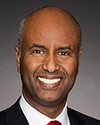
The Chair Liberal Ahmed Hussen

Good morning, everyone.

I call this meeting to order.

Welcome to meeting number nine of the House of Commons Standing Committee on Foreign Affairs and International Development.

Today's meeting is taking place in a hybrid format, pursuant to the Standing Orders. Members are attending in person in the room and remotely using the Zoom application.

Before we continue, I'd like to ask all in-person participants to consult the guidelines written on the cards on the table. These measures are in place to help prevent audio feedback incidents and to protect the health and safety of all participants, including our interpreters. You'll also notice a QR code on the card that links to a short awareness video.

I would like to make a few comments for the benefit of the witnesses and the members.

Please wait until I recognize you by name before speaking. For those participating by video conference, click on the microphone icon to activate your mic, and please mute yourself when you are not speaking. For those on Zoom, at the bottom of your screen you can select the appropriate channel for interpretation: floor, English or French. For those in the room, you can use the earpiece and select the desired channel.

I remind you that all comments should be addressed through the chair. For members in the room, if you wish to speak, please raise your hand. For members on Zoom, please use the “raise hand” function. The clerk and I will manage the speaking order to the best of our abilities, and we appreciate your patience and understanding in this regard.

Members, the clerk distributed yesterday a draft budget for our meeting today with the Secretary of State for International Development. Do I have the members’ approval for this budget?

Some hon. members

Agreed.

11 a.m.

Liberal

The Chair Liberal Ahmed Hussen

Thank you.

Pursuant to Standing Order 108(2), the committee is meeting on the study of the mandate and priorities of the Secretary of State for International Development.

I would like to officially welcome our witnesses for the first hour. We have the Honourable Randeep Sarai, Secretary of State for International Development.

From the Department of Foreign Affairs, Trade and Development, we welcome Christopher MacLennan, deputy minister of international development; Leslie Norton, assistant deputy minister, international assistance partnerships and programming branch; and Alexandre Lévêque, assistant deputy minister, Europe, Middle East and Arctic branch.

Up to five minutes will be given for opening remarks, after which we will proceed to rounds of questions. I now invite Mr. Sarai to make an opening statement of up to five minutes.

Please proceed.

11 a.m.

Surrey Centre B.C.

Liberal

Randeep Sarai LiberalSecretary of State (International Development)

Thank you, Chair.

Thank you, members. It's an honour to be here. I served on this committee before, so it's good to be back. I am pleased to join you to discuss my mandate and how our government's priorities for international development are evolving.

As you all know, we are operating in a challenging geopolitical landscape that is affecting every aspect of our work on the international stage. Multilateral organizations are under tremendous strain. Over the past five years, we have seen important development gains stalled or even reversed. Globally, progress in alleviating extreme poverty has been nearly stagnant. The global food crisis is worsening, and humanitarian needs remain worryingly high, particularly in Gaza, Haiti, Sudan and Ukraine.

Major aid donors are cutting their budgets and shifting their approaches to development assistance. At the same time, new donors are competing for influence, following approaches that may not be in line with Canada's values. Global south countries are calling for reforms to multilateral organizations to allow for more equitable representation systems, and Canada is supporting the ongoing reforms of the UN and the humanitarian system to make them more agile, efficient and effective.

I took on my new duties as the Secretary of State for International Development this spring. My mandate is to act on behalf of Canada to foster sustainable international development and poverty reduction in developing countries and provide humanitarian assistance during crises, but the conditions under which I must fulfill this mandate have changed dramatically over the year, and it is clear that Canada's development work and that of traditional international assistance donors need to adapt to meet this new reality.

In discussing these issues at the meeting of G7 development ministers I chaired this month, my counterparts and I agreed that this moment calls for urgent reforms. We agreed that it's imperative to rethink our approaches to tackling extreme poverty, promoting economic growth in developing countries and responding to humanitarian crises. For Canada, this will mean working to maximize the impact of our dollars, ensuring tangible results and better connecting what we do to strengthen Canada's economic security.

International development assistance can be an investment in shared prosperity and stability. Canada has a strong and proud history of doing just that. We are a leader in putting gender equality at the core of our work, because evidence shows this is not just the right thing to do; it's the smart thing to do. Canadians expect that their taxpayer dollars advance sustainable results they can relate to, and I am making it my priority to achieve this.

As I work through what we need to change in our existing approaches to meet the new era, I will be particularly focused on the following elements.

First, I will work to better articulate how our international assistance concretely supports Canada's need to diversify its trade relationships. This will mean placing greater emphasis on supporting economic growth, trade readiness and private sector engagement to build prosperity and resilience in developing countries. It will mean continuing to build and strengthen enabling environments for growth while ensuring that the most vulnerable are not left behind.

My goal is ultimately to contribute to Canada's long-term, mutually beneficial relationships in developing countries and emerging markets. To achieve this, we will embrace new financing models, digital solutions and locally driven approaches that make good use of our development resources, increase our impact and deliver sustainable outcomes. This includes expanding our use of innovative finance tools such as blended finance to increase private sector investment to ensure that every taxpayer dollar goes even further.

Our government will ensure that FinDev Canada, our development finance institution, works to scale up more private sector investment in developing countries.

In short, we will establish a more integrated approach that connects our trade diversification and international development imperatives, so that we can strengthen enabling environments for trade, reduce private sector barriers, help create jobs and enhance supply chain resilience.

Second, I am acutely aware of my role in helping address risks such as climate change, infectious diseases and food insecurity. By addressing these, we help create the conditions for global stability and resilience, which is in Canada's benefit.

We will continue to work with partners to advance gender equality, respond to humanitarian crises, and protect the environment.

This is a tremendous opportunity to inject a new sense of focus and purpose into what we do and how we do it. It is an opportunity to use Canada's international assistance as a valuable resource that helps tackle global challenges, build strong partnerships and drive meaningful progress, all while ensuring that Canadians stay at the core of our work.

Thank you for your time.

The Chair Liberal Ahmed Hussen

Thank you, honourable Secretary of State Sarai, for your remarks.

I will now open the floor to questions, beginning with MP Rood.

You have six minutes.

11:05 a.m.

Conservative

Lianne Rood Conservative Middlesex—London, ON

Thank you very much, Secretary, for being here today.

For my first question, I think everybody is paying attention to the news right now with the hurricane that is hitting Jamaica and is about to devastate that island.

What relief is Canada planning, and what humanitarian efforts is the Canadian government preparing to provide?

Randeep Sarai Liberal Surrey Centre, BC

Thank you. That is a great question.

We have been on alert regarding hurricane Melissa. In terms of the preparation work and other things, my deputy and ADM have both been apprised of that.

We have a centre in Mississauga that is ready with goods to be shipped out as we need them. There are some funds that have already been deployed. We've been working with CDEMA, and we're waiting for their requests; whatever is needed in the region, we will be supporting them with that.

11:10 a.m.

Conservative

Lianne Rood Conservative Middlesex—London, ON

Thank you very much, Secretary. I think all Canadians' thoughts and prayers are with Jamaica right now for the safety of the people there.

Changing channels, Secretary, we see 8.4 billion Canadian tax dollars being spent within the foreign aid envelope. Much of it is going to projects with names like Beans for Women for Empowerment or Gender-Just, Low-Carbon, Rice Value Chains in Vietnam, or it is being funnelled through organizations like the UN or the World Bank.

What returns on investment or outcomes can Canadians see coming from this that improves their lives?

Randeep Sarai Liberal Surrey Centre, BC

There are over 2,000 programs that the ministry administers, and they are great programs. Some you may have issues with their names, but their intent is great. In the context of greening our rice, it's a project through which Oxfam aims to promote low-carbon rice value chains in Vietnam. It increases women's participation. It has been developed through broad consultations with government donors and civil society. It increases the production of more sustainable rice, and it increases the livelihood of small rice producers, particularly women.

On that note, Vietnam is one of our top trading partners in the ASEAN, and it's a major supplier of our affordable rice.

These are mutually beneficial programs, and if we can improve the lives of local farmers, increase women's participation and increase their yields using less water for more climate-resilient crops, we also, as Canadians, get a more affordable base for our rice, which is an affordable starch and a much-needed supplement or food source for many Canadians.

Similarly, I think you mentioned international development banks and others. We support them, and now we're doing it more innovatively by giving them capital, using blended finance means and other things so we can attract private capital to help build some of the infrastructure needs in those countries, from ports to storage facilities for food supplies and others. These are the types of things we're doing that are mutually beneficial but also help support a resilient economy for the recipient states.

11:10 a.m.

Conservative

Lianne Rood Conservative Middlesex—London, ON

Minister, I did mention organizations like the UN and the World Bank. Again, Canadians are asking about programs where we're giving, for instance, $22 million—or however much the amount is—to this project on Gender-Just, Low-Carbon, Rice Value Chains, and it's going through organizations like the UN or the World Bank. What kinds of returns or outcomes can Canadians expect from those that will improve Canadians' lives? Are there any?

Randeep Sarai Liberal Surrey Centre, BC

The example would be, in that case, that you get more affordable rice shipments to Canada. You get an increased yield in the rice in that land.

Our goal, when it's international development, is not a dollar-for-dollar return to Canadians. It's to maintain a more financially secure world where there is less poverty and that helps result in less migration from those places. It allows for more peace and security and a more stable world.

Right now, you see that Prime Minister Carney is in the region and is making more trade agreements. This is a soft power that helps us work with nations like Vietnam, in this case, where they see the effect of Canada having been there for them and their development in bringing up the needs of women in their regions and increasing their farming yields, and that results in better trade agreements for us. As we're looking for new trading partners, this is the type of program that we'll be working on even further.

11:10 a.m.

Conservative

Lianne Rood Conservative Middlesex—London, ON

Thank you.

Minister, I hear this a lot from stakeholders, so my question is, will Canada renew its commitment to the Global Fund to Fight Malaria, Tuberculosis and AIDS during the upcoming replenishment period? How much does the department have earmarked for this?

Randeep Sarai Liberal Surrey Centre, BC

The Global Fund does a lot of great work in saving thousands, if not millions, of lives. It's bringing people out of poverty. It's worked immensely well at reducing HIV, as well as tuberculosis, malaria and other diseases. It's a great fund.

As the budget is coming out very shortly, we'll see...and the Prime Minister will make that commitment shortly, so I don't want to foreshadow anything. We have a lot of great appreciation for the work that the Global Fund has been doing in the past, and we'll continue to work with them in the future.

11:15 a.m.

Conservative

Lianne Rood Conservative Middlesex—London, ON

Thank you very much.

My time is just about up, so I'll cede the rest.

The Chair Liberal Ahmed Hussen

Next, we will go to MP Anita Vandenbeld, who is joining us virtually.

Go ahead. You have six minutes.

Anita Vandenbeld Liberal Ottawa West—Nepean, ON

Thank you very much.

I want to welcome you back to this committee. Thank you so much for the leadership you've shown in the past months, especially for Canada to lead in working toward a more peaceful, more secure and more equitable world.

On that, I'll pick up on something you said in your opening remarks about Canadian values and how there is now more competition in terms of the narrative. There are illiberal values being backed by certain nation states. The battle between authoritarianism and democracy is really what underpins our geopolitical reality right now. Canada has a very strong history of supporting democracy, supporting human rights defenders and making sure that rule of law and stability are all over the world.

I would just like to ask you at this very crucial moment what Canada is doing in terms of promoting democracy. We've seen cuts from a number of countries, in particular to the National Endowment for Democracy in the United States, which has caused the end of the World Movement for Democracy.

We've also seen other areas where they're stepping up. At a recent all-party democracy caucus meeting last week, where we had the European commissioner for democracy, they said that Europe is creating a centre for democratic resilience and would love to have Canada be a partner in those kinds of things.

Could you give us an overview about inclusive democratic governance and how we're promoting the values of democracy and freedom globally?

Randeep Sarai Liberal Surrey Centre, BC

Thank you. I really commend you on your passion in this regard.

You are very right. There is a rising authoritarianism and a misuse of technology to undermine democratic systems. This is something we have spoken about many times in ministerial meetings around the globe. We have to do more on that.

We are working with partners to advance media freedom, civil society and human rights, and to address the threats against democratic governance. In the budgets of 2023-24, I think $376 million was funded for inclusive governance programs. That's about 7% of our international assistance budget.

Overall, I think there are about 650 projects yearly, supporting civil society groups to advance inclusive governance, human rights, equality and peace. These include Journalists for Human Rights, Equitas and many others. We'll continue doing that.

I can say that when we met with the G7 developmental ministers, the commitment from most of our counterparts was very strong in this regard. We'll continue to do that work. It's very imperative.

Some governments, in my tours, have actually asked for assistance in strengthening their governance systems, particularly in terms of oversight and how to build those structures. We continue to do much of that work bilaterally as well as multilaterally, and we'll continue to do so.

Anita Vandenbeld Liberal Ottawa West—Nepean, ON

Thank you very much, Minister. We know this is a significant priority.

The other question I wanted to ask you is about the FIAP, or the feminist international assistance policy. We know that when women are included—not just as beneficiaries of aid but in the design and implementation from the very beginning of development programs—we see better outcomes.

I know that Canada has been a leader in the world. In fact, other countries are following us on feminist foreign policies and feminist assistance policies. I just wonder what the current commitment is and what the state is of the feminist international assistance policy.

Randeep Sarai Liberal Surrey Centre, BC

Great. Thank you.

We all know, and I said it in my speech as well, that when women and girls do better, then we all do better. It's not just the right thing to do; it's the smart thing to do. We discussed this as well at our G7 development ministerial, that we need to strengthen those. It makes economic sense. It makes sense for a lot of other programs, and to have that participation of women in the agenda itself, in the way we fund our programming and the way we implement that programming, makes it even better. I think we've done that as a government here in Canada, and we're doing that in the programs that we're funding globally.

The world is changing. We have to push hard to maintain that. We're seeing a lot of drawing back. We're seeing a lot of push-back from many. Some are okay with some words and not others. We're being creative and doing whatever we can to make sure we fund to help young women and girls, whether it's for sexual reproductive health, participation in the workforce or sustained development in the regions. We're doing whatever we can, and we'll continue to do that going forward.

Anita Vandenbeld Liberal Ottawa West—Nepean, ON

I'm very pleased to hear you talk about the sexual and reproductive health rights. We know that around the world this is something we're losing. Women are losing those rights.

With your 10 seconds, I want to reaffirm that commitment to SRHR.

Randeep Sarai Liberal Surrey Centre, BC

Yes, there's a very firm commitment and a very strong commitment. I've seen first-hand the benefits for a lot of these marginalized women and very young girls, and how a little bit can make a big difference in their lives. We'll continue to do that.

The Chair Liberal Ahmed Hussen

Thank you very much.

We'll next go to MP Duceppe.

Mr. Brunelle‑Duceppe, you have the floor for six minutes.

Alexis Brunelle-Duceppe Bloc Lac-Saint-Jean, QC

Thank you, Mr. Chair.

Thank you to the Secretary of State and the other witnesses for joining us today.

Mr. Sarai, since Mr. Carney took office, we've witnessed a clear intention to link international aid and economic issues. You touched on this in your opening statement. We agree that an international aid project that has mutual economic benefits is a good thing. It helps justify international aid to our fellow citizens. However, many people—including myself—fear that international aid will be exploited for economic gain.

How can your department ensure that this doesn't happen?

Randeep Sarai Liberal Surrey Centre, BC

Thank you. It's a great question.

The goal is to make sure it's never weaponized. The point is that the landscape of the development world is changing. There's almost a 24% to 30% reduction in aid development in Germany and France, and massive amounts in the U.S. This is a large void that Canada and other countries cannot fill on their own.

Two things are probably happening. One is that we're trying to get more private capital. There are trillions of dollars around the world that might be hesitant, but we need to get them and get the right vehicles and tools through our international financial institutions—the development banks, FinDev and others—to help contribute.

The other thing is how we focus as Canada. Traditionally, we were able to sprinkle a little in a lot of buckets to help a lot of programs, because we had the support of a lot of these large countries that were contributing to the international development world. When we don't have them, then I think we have to focus more on how we can concentrate.... One of the ways we concentrate on areas where we are doing trade and have synergies is that we can get private capital to contribute more. We can concentrate and create a great brand and reputation for that region.

Alexis Brunelle-Duceppe Bloc Lac-Saint-Jean, QC

Indeed, all over the world, we are seeing a sharp decline in international aid investments by developed countries.

Nevertheless, in 1970, the UN asked developed countries, including Canada, to devote 0.7% of their GDP to international aid, a goal they had committed to achieving. We are still a long way from that goal, given the reduction in investment by developed countries in this area. The U.S. in particular comes to mind, having abolished USAID.

Does Canada have a plan to meet that 0.7% target?

If so, how will it do so? If not, why is there no such plan?