Thank you.
We've just gone 25 seconds over, and now I'm going to go to the Liberals.
Ms. Sidhu, you have three minutes.

Evidence of meeting #23 for Health in the 45th Parliament, 1st session. (The original version is on Parliament’s site, as are the minutes.) The winning word was medal.
A video is available from Parliament.
Liberal
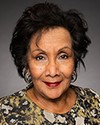
The Chair Liberal Hedy Fry
Thank you.
We've just gone 25 seconds over, and now I'm going to go to the Liberals.
Ms. Sidhu, you have three minutes.
Liberal

Sonia Sidhu Liberal Brampton South, ON
Thank you, Madam Chair.
First of all, I would like to thank my friend Ziad for his leadership and dedication in bringing forward this important legislation.
I know how hard it is for you. Thank you for sharing Tyler's story. You have my best wishes for his health.
When someone is becoming a donor, they make a deeply personal sacrifice to give someone else a second chance at life. I believe this bill highlights significant barriers that many Canadians experience. Can you talk about those barriers and how you can raise awareness around them?
Thank you so much for doing this.
Conservative
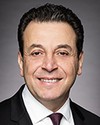
Ziad Aboultaif Conservative Edmonton Manning, AB
Thank you, MP Sidhu. Thank you for your support as well.
Awareness—being able to talk around a table, at a coffee shop, at events or anywhere, and being able to discuss and make people aware of how important it is—is a big deal. When we see someone who was ill and they received a kidney, liver or heart, and, when we see the life of that person—we see him or her walking on the street, talking, going back to work, engaging with the community and all of that—this is what we need to do: We need to bring this in front of as many Canadians as we can, across the whole large country that we have.
I think the core element of this bill is to provide that opportunity and have it available on a daily basis, if possible. Especially when the award is there, people will learn more. More communities, more members, more work colleagues and more friends...everybody will be able to learn, and that further encourages the ability and intention, among Canadians, to come forward and donate.
I mean, people can live with one kidney. You don't need two kidneys. If you have that will to donate, save someone's life and improve life—as I said, not just for the individual and his or her own family but the whole community and, further, the whole country—that is a worthy goal. That's the intention of what we're doing here.
Liberal
Liberal
The Chair Liberal Hedy Fry
Yes, I will call on them. Thank you.
Mr. Eyolfson, you have three minutes, please.
Liberal

Doug Eyolfson Liberal Winnipeg West, MB
Thank you, Chair.
Ziad, thank you for doing this. I was quite honoured to support this.
In my medical career, I looked after patients who were organ recipients. I looked after patients who ultimately died because they didn't live long enough to receive their transplants.
I was also very honoured, during my first term in Parliament, to work with Len Webber. If you remember, his bill, which simply put a box you could check on your tax form, was passed. It has been credited with registering an additional 2.5 million organ donors. You're following in some very good footsteps.
I know an objection came up to the post-nominals, because that's supposed to recognize sacrifice or, perhaps, injury.
You donated a portion of your liver. That involved surgery. Is that correct?
Liberal
Doug Eyolfson Liberal Winnipeg West, MB
It was major surgery—exactly. I've worked on several surgical services. I know that there are risks to surgery. There's the risk of complication. There's risk [Technical difficulty—Editor]. There's the pain of recovery.
Would you not agree that doing this does represent a very significant sacrifice?
Conservative
Ziad Aboultaif Conservative Edmonton Manning, AB
As a father, the hardest decision I ever made was to do what I did, because, at the time, in 2003, the success rate of those surgeries was about 65%, maybe 70%. Nowadays we're looking at maybe 90%. It was a tough decision. Even after all the examinations that were done on me and my son, and the doctors being convinced that this was 100% a good decision, they spent three or four hours before they proceeded with cutting my liver, because they had some difficulties when they went through.
It was a very long surgery. It was a very tough decision, but I'll tell you that, if you can do it, saving anybody's life, not just your own, is worth all the pain and sacrifice. It's a big decision. That's why whoever comes forward to do that deserves more than a medal and recognition.
Liberal
Doug Eyolfson Liberal Winnipeg West, MB
Thank you.
I would agree, just from your statement, that what you did represented very real physical and, I would say, mental sacrifices, so thank you for doing that. I do support the use of the addition of a post-nominal to recognize exactly the sacrifice that you went through for this, so thank you.
Conservative
Liberal
The Chair Liberal Hedy Fry
Thank you, Mr. Eyolfson.
I now go to Monsieur Garon for six minutes, please.
Bloc
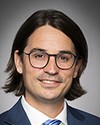
Jean-Denis Garon Bloc Mirabel, QC
Thank you, Madam Chair.
Good afternoon to my fellow members. This is a return of sorts for me. I've been on the committee before, with Ms. Sidhu, among others.
Mr. Aboultaif, Mr. Blanchette‑Joncas sends his regards. He couldn't be here today.
I'm very moved by your bill. We could feel the emotion in your presentation. It was both very personal and very human. You've shown how this bill extends beyond your personal experience and serves the greater good, helping to raise awareness. That's very moving.
Mr. LeBlanc, too, had his own experience, and his story affected people all across the country. We saw him come back healthy. We saw not only how organ donation saves lives, but also how afterwards, recipients return to their productive, happy selves, contributing to society and their families—so much so that it's impossible to tell they were ever sick.
In short, you are to be commended for introducing this bill.
Obviously, we have a few questions about how this will take shape. In Quebec, the kidney foundation has a program to honour living donors, also by awarding medals. I believe you know about that. The organization charged by the department of health and social services to administer the program is Transplant Québec. It holds ceremonies and awards medals to donors, including posthumously.
I would like you to confirm that you plan to rely on those organizations to continue recognizing living donors. I would also like you to tell me how this new distinction adds value.
Conservative
Ziad Aboultaif Conservative Edmonton Manning, AB
Thank you very much, my friend. That's a very good question.
That question came during the second reading speech in the House from one of your colleagues in the Bloc Québécois.
Yes, obviously this is a collective effort, and after this it's going to take a lot of continuing work across the country from all the stakeholders and all the people and organizations involved.
I know Quebec is doing better than some other provinces. On a personal note, I've already mentioned that I'm very grateful to Quebec for the liver that my son got at the last minute.
Let's put it this way: All of us are going to have a major responsibility to improve the system we have. There's a lot of work ahead for me and the minister and the team, to make sure that we get this through in a proper way to get the best result out of it.
Bloc
Jean-Denis Garon Bloc Mirabel, QC
I'm curious as to how the bill will be implemented. In a case like Dominic LeBlanc's, where a citizen of another country who does not live in Canada donates an organ to a Canadian, could the donor qualify for this distinction?
Conservative
Ziad Aboultaif Conservative Edmonton Manning, AB
This whole process has to be within the current provincial health care system, whether in Quebec or in Ontario or in Alberta. In those parameters, we know that this will be the safest way to make sure that if a medal might be awarded to a non-Canadian, it will be examined throughout the health care systems of the provinces. That's the safeguard we have, and that's why we will continue working within those parameters.
Bloc
Jean-Denis Garon Bloc Mirabel, QC
According to the comments we heard initially, awarding a medal could be seen as an act of partisanship or, at least, the appearance of an act of partisanship. The King Charles III’s Coronation Medal comes to mind. At one point, the number of recipients had hit a million, and nearly everyone had one lying around in their office or bag.
I have trouble seeing how that could happen in this case. I understand that the requirements for awarding a medal to someone are very serious and standardized, that a specific process has to be followed. I'd like to hear your thoughts on that.
Conservative
Ziad Aboultaif Conservative Edmonton Manning, AB
Yes, I heard that comment in the speech that was delivered before this committee.
There's no comparison, not by any stretch. That's not to deny the argument. It's just to make sure that we....
This is a completely different thing. The process is going to be completely different. The nomination process is going to be completely different. Imagine someone donated, and a friend or family member pointed at that person for the nomination. Then the records will be coming from the hospital. The whole thing is completely different from just nominating someone.
Conservative
Ziad Aboultaif Conservative Edmonton Manning, AB
The collective effort of all and the support I got from all sides of the House showed that this is a non-partisan issue. It will never be a partisan issue.
Bloc
Bloc
Jean-Denis Garon Bloc Mirabel, QC
Mr. Aboultaif, what do you say to people who argue that awarding this distinction could be likened to a compensation of sorts for donating an organ?
Conservative
Ziad Aboultaif Conservative Edmonton Manning, AB
The purpose of the bill is to encourage people to donate. People act from a good heart and sometimes they feel.... I remember that when my son needed the second liver, hours before the Quebec one arrived we had a visitor who said, “I'm willing to do it now if I can.” You can imagine. This is beyond.... We need to encourage people, of course. We need to. The whole process is to make sure we have more donors lining up to save Canadians' lives. This way, we know that we can achieve that needed goal.
Liberal
The Chair Liberal Hedy Fry
Thank you.
I'm going to ask the committee if there's unanimous consent to go for one more round.
Yes? All right. That's good. As the chair, I had to ask that question.