Evidence of meeting #7 for Human Resources, Skills and Social Development and the Status of Persons with Disabilities in the 45th Parliament, 1st session. (The original version is on Parliament’s site, as are the minutes.) The winning word was young.

A recording is available from Parliament.

On the agenda

Members speaking

Before the committee

Exner-Pirot  Director, Energy, Natural Resources and Environment, Macdonald-Laurier Institute
Bernard  Co-spokesperson, National Council of Unemployed Workers
Salter  Executive Director, Provincial Employment Roundtable
Gagnon  Director of Policy and Research, Provincial Employment Roundtable
Nauta  Program Director, Work and Economics, Cardus
Swift  President, Coalition of Concerned Manufacturers and Businesses of Canada
Watts-Rynard  Chief Executive Officer, Polytechnics Canada

11:50 a.m.

Co-spokesperson, National Council of Unemployed Workers

Milan Bernard

There was an opening at the end of the health crisis, and consultations were held. We actually believed in it at the time. In a non-partisan way, several people from different levels of government thought that we'd move forward and implement a reform, which might not be exactly what workers' groups and we wanted, but which would truly improve things. However, at some point, they put the brakes on, for no real reason. Excuses were made, blaming the computer system or I don't know what else.

It's important to remember certain crises. I really like what the Secretary of Labor under former President Franklin Delano Roosevelt said when she stated that the goal of social programs is not simply to alleviate an ill, but to prevent future ills. It's about putting structures in place to ensure that, in the event of crises, problems, or economic shocks, we have a robust system that protects workers. Conversely, over the past 30 years, with the exception of a few improvements made over the last five years, we have seen a shrinking, unravelling and dismantling of the social welfare system that was created at the federal level for employment insurance.

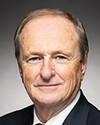
Marilène Gill Bloc Côte-Nord—Kawawachikamach—Nitassinan, QC

Does that mean we're ready and that all that's left to do is implement the reform?

11:55 a.m.

Co-spokesperson, National Council of Unemployed Workers

Milan Bernard

That's quite interesting. My predecessor, Pierre Céré, gave a number of testimonies before various House of Commons committees. At one of them, he said that it was like Nike's slogan:

“Just do it”.

At the end of the day, the only thing left is to just do it.

Political will is necessary. However, even in the context of a minority government, a majority of parliamentarians in the House have already spoken out in favour of such a reform. Based on the various parties' platforms, a majority of parliamentarians are still in favour of reforming employment insurance or, at least, improving it.

The Chair Liberal Bobby Morrissey

Thank you, Mr. Bernard and Mrs. Gill.

Mr. Genuis, please go ahead for five minutes.

11:55 a.m.

Conservative

Garnett Genuis Conservative Sherwood Park—Fort Saskatchewan, AB

Thank you, Chair.

In reflecting on this really interesting discussion, it seems to me that we talk a lot in Parliament about those who are disproportionately affected by problems—and I certainly think that discussion has an important place—but the fundamental problem with youth unemployment isn't disproportionate impact; it's severe economic problems caused by policies that are hurting the job market overall. In that context, there are some things we can't control, but there are also some things we can control. A lot of those things that are controlled by policy-makers are just not going well.

If the economy was better off then everyone would be better off. If the economy was surging and employers were hiring, then many of the problems that we see would be solved by employers who would have the resources to attract and train the workers they need.

In my view and our view, it's not a wealth distribution problem; it's a wealth creation problem facing our country. I think Ms. Exner-Pirot articulated that, in particular.

I wonder if you have additional suggestions you want to share with the committee in the time we have here about what changes the government needs to make to catalyze wealth creation that will address the unemployment crisis?

11:55 a.m.

Director, Energy, Natural Resources and Environment, Macdonald-Laurier Institute

Heather Exner-Pirot

It's a good question.

I am privileged in that I also serve as an adviser to the Business Council of Canada. That represents a couple of hundred of Canada's largest employers. I get some insight into the things that bother them. Obviously there's tax competitiveness.

We can point out all of the terrible things the Trump administration is doing and the way that weighs down on them. But some of the things they've introduced...for example, there's no taxation on all their expenses if they build something for the first year. That is a huge....

We've seen $17 billion in announcements from seven members in the last seven weeks go to the United States. Some are by our own pension plan, by the way. The Canada Pension Plan announced billions of dollars. What could that $17 billion do here in Canada for our employment rate and for youth unemployment?

Some of it is purely tax competitiveness. Obviously some of it is regulatory competitiveness. It's the certainty.... Especially in commodities, business needs 10, 15 or 20 years of certainty to decide to invest here. They simply don't have that in Canada. They do member surveys asking about top concerns. Tariffs are not number one. Regulation is Canadian employers' top concern.

It's having a line of sight and some bipartisan collaboration, so that business investors know it doesn't matter what will happen in four years or eight years and that Canada's going to be a safe jurisdiction to put their money.

I just don't think we look at competitiveness and how Canada competes on the global stage nearly enough. We want to diversify our customer base instead of using the easy hook of going down south. We need to start being competitive with all countries and all commodity producers. It's not just about getting that easy access to the American market anymore.

11:55 a.m.

Conservative

Garnett Genuis Conservative Sherwood Park—Fort Saskatchewan, AB

Thank you.

Let's talk a bit more about former prime minister Justin Trudeau and Prime Minister Carney. Clearly there's a difference of aesthetic. The two prime ministers have a difference of style, a different way of presenting and the tone is different.

I'm interested in probing what the substantive difference is when it comes to policy that is impacting decisions that investors are making, particularly around energy. Have you seen changes, not of style or aesthetic but of substance, that would shift the calculation that an investor makes from former prime minister Justin Trudeau's time in office to Prime Minister Carney's time in office now?

11:55 a.m.

Director, Energy, Natural Resources and Environment, Macdonald-Laurier Institute

Heather Exner-Pirot

We haven't. It is true.

I think it's fair to say that people have noticed something. Maybe Canada's going to do things differently. They're starting to kick tires. There is interest that maybe Canada is going to become a better jurisdiction for investment.

However, when you get into the nuts and bolts of particular projects.... Again, I'm hearing from these people. They can't go to their boards with new projects with better certainty—absolutely not in the resource sector and absolutely not in oil and gas with the emissions cap and clean electricity regulations overhanging. Obviously with the tanker ban you're not going to build another pipeline.

It is still not at a level where we get to indicators of more foreign investment and therefore more employment growth. We're all hopeful and crossing our fingers.

I think the current strategy of the Major Projects Office and choosing four or five projects now and again is missing the point. If we had a good regulatory and policy environment, you would have hundreds of projects come forward. This country, the second-largest country in the world, can sustain hundreds of resource projects. Just choosing four or five at a time is not going to get us where we need to go.

11:55 a.m.

Conservative

Garnett Genuis Conservative Sherwood Park—Fort Saskatchewan, AB

Thank you.

The Chair Liberal Bobby Morrissey

Thank you, Mr. Genuis. You're right on time.

We'll conclude this round with Ms. Fancy, for five minutes.

Jessica Fancy-Landry Liberal South Shore—St. Margarets, NS

Thank you very much, Chair.

Thank you to all the witnesses here today. Sometimes you aren't given a lot of notice, so I really appreciate that.

I'm a former educator, a high school principal, and I dealt with a lot of vulnerable youth from various backgrounds. I have questions for two groups today, but a lot of my questions are surrounding value-added systems and how we could scale some of these programs, which you mentioned in your intros, that are really working well.

My first question is for Ms. Exner-Pirot. I'm also a new MP, so when we're talking a lot about the old government versus the new government, all I know here, in my role as a parliamentarian, is the new. I do want to highlight that, since Prime Minister Carney has taken the chair, he has developed our Major Projects Office and Build Canada Homes initiatives. We have been looking at investment within Canada, east to west. We also have to remember that this is a new government.

That being said, we are left with what the numbers are saying about the vulnerability of our youth and the skills mismatches, which we have discussed today. With all of that, we have to look ahead. In looking ahead, what elements do you think that our current federal supports have that you would recommend preserving and/or expanding upon in order to empower youth? You can look at that in terms of youth in general or in terms of your expertise with indigenous youth.

11:55 a.m.

Director, Energy, Natural Resources and Environment, Macdonald-Laurier Institute

Heather Exner-Pirot

Canada is still considered a safe and reliable country. I do lament the things that we could have done better, but there are not a lot of other great places where you would want to put your international capital these days. This should be an exceptional time for us to be competitive in global markets. Again, there's still a missing link, and I've heard it from some of our members.

There is not a growth premium for Canada. That means that investors don't look at Canada and say, “Well, in 10 years I also expect there will be some GDP growth.” In fact, it's a negative. That means foreign investors looking at Canada are saying, “I don't see a path that it's actually going to be a fast-growing economy, and so that means my investment in Canada is not going to get as much return as, say, in countries X, Y and Z in Latin America or Southeast Asia.” Actually demonstrating that we are a growth economy and doing the things to make it into a growth economy, and again, what I hear—

Jessica Fancy-Landry Liberal South Shore—St. Margarets, NS

I'm sorry to cut you off there, but the question was regarding youth, not in terms of foreign economies. I'm looking for things that we can do for youth.

11:55 a.m.

Director, Energy, Natural Resources and Environment, Macdonald-Laurier Institute

Heather Exner-Pirot

I guess that is just my philosophical approach: A hot economy with lots of foreign investment and jobs growth is the one thing that will trickle down to help youth. In particular, when we're talking about the resource sector, energy and critical minerals, as Minister Hodgson and Prime Minister Carney often talk about, those are often construction jobs, and those do tend to prefer youth workers. Whether it's labour or skilled labour, those tend to be easier to enter, whereas you might need four to six years for a professional degree to become a teacher or lawyer. You can enter the trades or construction with, maybe, just a few months of education. That's still my answer, I guess.

Jessica Fancy-Landry Liberal South Shore—St. Margarets, NS

Thank you very much, Ms. Exner-Pirot.

My other questions are for Nicholas and Morgan. You mentioned resilience in your introduction. Resilience has been the name of the game for me, as an educator, in dealing with youth from many very vulnerable populations.

What mechanisms within federal programs have contributed to youth resilience and skill building?

11:55 a.m.

Executive Director, Provincial Employment Roundtable

Nicholas Salter

First, congratulations on your election. My mother is from the Maritimes. I spent my summers around Mahone Bay. It's an area I know well.

Jessica Fancy-Landry Liberal South Shore—St. Margarets, NS

That's in my riding.

11:55 a.m.

Executive Director, Provincial Employment Roundtable

Nicholas Salter

I know it is. I was just there this summer.

The reason I mention it is that I think a lot of the realities of Quebec's English-speaking youth speak to some of the realities of the youth in your riding as well. We recently did a study on place-based community revitalization. Morgan can speak to how that is a powerful approach the federal government could leverage to build resilience for youth in particular.

11:55 a.m.

Director of Policy and Research, Provincial Employment Roundtable

Morgan Gagnon

We see strong out-migration from rural and remote regions, in particular in Quebec, either into Montreal or urban centres, and then, oftentimes, on to Ottawa or Calgary, Alberta, to provinces that might not have language areas...or that might be seen to have a different labour market context.

What we are interested in seeing for our youth are programs like vocational training, bridging programs, partnerships or internships with employers that help them get their foot in the door and develop the employment skills and language skills they need, not only to get that first taste of employment but also to be able to stay in that line of work or in their community.

In terms of what federal investments are able to support that, for our community in particular, as Nick mentioned, we did a survey of our network members of employment organizations serving English-speaking communities—

Noon

Liberal

The Chair Liberal Bobby Morrissey

Thank you.

Sorry, we have gone over our time. You can provide comments directly to the committee clerk if any of you have something to add after this.

With that, I want to thank the panellists for appearing in the first hour.

We'll suspend for two minutes while we transition to the next panel.

The Chair Liberal Bobby Morrissey

Committee members, welcome back to the second hour.

Before we begin, I would just like to remind our panellists of a couple of points. You can participate in this meeting in the official language of your choice. Those of you in the room will use interpretation services through the headset. For those appearing virtually, you can choose the language at the bottom of your screen. If there's in issue with interpretation, please get my attention. If you are in the room, raise your hand. If you are participating virtually, please use the “raise hand” icon. If there's an issue with interpretation, I will suspend while it's being resolved.

Please go ahead, Mr. Genuis.

12:15 p.m.

Conservative

Garnett Genuis Conservative Sherwood Park—Fort Saskatchewan, AB

I have a point of order, Chair. There has been discussion among colleagues, and I think you'll find unanimous consent for the following:

That the committee direct the analysts to prepare a draft travel proposal based on informal feedback from committee members, following consultation with the parliamentary secretary and the vice-chairs, and that the travel proposal be distributed to committee members for consideration as soon as possible.

The Chair Liberal Bobby Morrissey

Thank you, Mr. Genuis. Do you have a location?

12:15 p.m.

Conservative

Garnett Genuis Conservative Sherwood Park—Fort Saskatchewan, AB

I'd like to leave as much time as we can for the witnesses. I think that motion opens the door to informal consultation.

The Chair Liberal Bobby Morrissey

I'll speak to you after. Thank you.