You agree, Mr. Anson.
Mr. Anson, if anyone in your department ever had a founded harassment complaint, would you feel comfortable keeping them on?

Evidence of meeting #30 for Public Safety and National Security in the 45th Parliament, 1st session. (The original version is on Parliament’s site, as are the minutes.) The winning word was cbsa.
A video is available from Parliament.
Conservative

Rhonda Kirkland Conservative Oshawa, ON
You agree, Mr. Anson.
Mr. Anson, if anyone in your department ever had a founded harassment complaint, would you feel comfortable keeping them on?
Director General, Intelligence and Investigations, Canada Border Services Agency
It's very difficult to comment on an example without the conditions, so—
Conservative
Rhonda Kirkland Conservative Oshawa, ON
It has been founded. It has been determined that the harassment complaint has been founded. Would you keep them on?
Director General, Intelligence and Investigations, Canada Border Services Agency
Again, it's very difficult to make a comment on a hypothetical—
Conservative
Rhonda Kirkland Conservative Oshawa, ON
I'm going to change tack. How's that? I'll change my thoughts here. I'll talk a bit about ATIPs.
Mr. Anson, at our last committee meeting my colleague raised an issue about ATIPs and how Correctional Service of Canada employees use pseudonyms to avoid ATIP responses and accountability. I have heard that there are similar issues at the CBSA. Do you know of any cases at the CBSA in which employees have used pseudonyms or nicknames to avoid ATIP responses?
Director General, Intelligence and Investigations, Canada Border Services Agency
I am definitely not aware of any circumstances such as that. I have not been privy to, nor am I indirectly aware of, any situations in which people have used pseudonyms to obfuscate the names they are referencing—not at all.
Conservative
Rhonda Kirkland Conservative Oshawa, ON
Whether or not you're personally aware, does the CBSA have any policies currently in place to prevent employees from using pseudonyms to evade ATIP accountability? If not, can you tell me why not?
Director General, Intelligence and Investigations, Canada Border Services Agency
I cannot speak with great authority on the full suite of policies within the agency, specifically whether there's one that applies to that in particular. What I will say is that I'm sure that my senior leadership, as well as all the staff within the agency, would see that as something that is perceived as unethical—and, really, an unfair, if not unethical, practice. We absolutely aspire to represent the fullest of integrity in all the actions we do day-to-day, and that includes our communications and correspondence with each other. I think it is an institutional expectation that we would not employ such a tactic in order to obfuscate the names that are being referenced.
Directly or indirectly, I'm not aware of this occurring. However, again, were any of us in a leadership position—and, certainly, I'm sure the president would echo these views, as well as the officers on the front line—exposed to such circumstances, I'm sure they would be addressed and rectified as soon as we could.
Conservative
Liberal
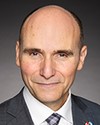
The Chair Liberal Jean-Yves Duclos
I'm sorry, Madame Kirkland, but the time is over.
Madame Acan, go ahead for six minutes, please.
Liberal

Sima Acan Liberal Oakville West, ON
Thank you very much, Mr. Chair.
Mr. Anson and Ms. Toxopeus, thank you very much for joining us today. I hope that my questions will bring us back to the subject of the study for today.
I'm going to ask a few technical questions.
The detection tools section on the CBSA website mentions the use of virtual X-ray and pre-screening systems. How is the data from these pre-arrival scans integrated with real-time field operations, and are these images being used to train machine-learning algorithms to assist officers in automated threat detection?
Director General, Commercial Programs Directorate, Canada Border Services Agency
In terms of scanning, the majority of our scanning is done at the port. There's currently no border technology network to share all of those images across scanning. That is something that the agency is working for, so that we could leverage that for image analytics for future AI.
Director General, Intelligence and Investigations, Canada Border Services Agency
If I may add to that, something we do in some circumstances—it is a bit manual, but we do our best to systematize or automate to the extent possible—is that where there are unique concealment methods or new methods of detection of unique components, dimensions or concealment methods, we develop intelligence products or information products, and then we ensure the widest dissemination within the agency of what it looks like, what we're looking for. In particular, firearms components are a good example. We also share that with partners internationally, as well as our Five Eyes partners, ensuring that we have the greatest profusion of situational awareness of the types of things we can detect so that we can be more efficient identifying threats in all commercial modes.
Liberal
Sima Acan Liberal Oakville West, ON
Thank you very much, Mr. Anson.
Regarding the technology performance between X-ray and gamma versus backscatter systems, my question will be about the newer Smiths Detection HCVM series, which can penetrate approximately 12 inches of steel. Compared to the legacy X-ray and gamma ray systems, what is the specific operational advantage in image resolution when scanning high-density freight? How do the new backscatter imaging units complement high-energy X-ray for detecting organic materials like narcotics or explosives?
Director General, Commercial Programs Directorate, Canada Border Services Agency
First, I will preface my answer by saying that I'm not an engineer. Therefore, I will not have specific answers, but I can kind of give you an overall.... In general, when we do use the HCVM—also known as mobile large-scale imaging—it does penetrate a lot more, so it gives us a better image of what's inside the container, including identifying any areas within the container itself where things may be hidden. When we're looking at intercepting contraband in our marine ports, it's not just about the contents of the container, but also the container itself. As organized crime advances its smuggling methods, we know that we have to keep up with that, so we have various scanners at the marine ports.
Now, with the backscatter van, what's interesting and different about it is that it is able to have lower X-ray emittance. What that really means is that it can be used in much smaller quarters, which is super important in terms of marine operations. In marine operations, when you're using the HCVM, you have to have a very wide clearance zone, because we don't want to expose our employees or other people at the port to any of those X-rays. However, with backscatter, because it's much lower, it doesn't penetrate as much as the HCVM, but it can identify things. It can still look within the containers but in a much smaller space, so we can find things like stolen vehicles. That's what we used in the intermodal rail yards during the stolen vehicle crisis to identify if there were any stolen vehicles within those.
The difference is that backscatters are less powerful, but a lot more operationally viable, especially when you're looking at rail yards and marine ports.
Liberal
Sima Acan Liberal Oakville West, ON
That's amazing. You actually did answer perfectly. Thank you so much.
With 1.5 million containers and 4.5 million trucks crossing annually, the CBSA emphasizes an intelligence-driven approach over universal scanning. How does the agency technically validate that the current risk-based selection is capturing a statistically significant sample of non-flagged, low-risk cargo to ensure that the intelligence models aren't missing any emerging concealment trends?
Director General, Intelligence and Investigations, Canada Border Services Agency
These are excellent questions.
What I would explain is that we apply something of an.... It's intelligence-driven, for sure, but it's a model that is iterative in nature. Intelligence will inform this, and seizures will inform this, and it is also informed by targeting. The national targeting centre is a big part of this, but so are the discretion, expertise and awareness of our border service officers at the front line, who are also teaching the targeting centre how to be more efficient.
Starting with that approach, we use advanced data analytics to identify anomalous patterns and trends, things that would surface as irregular within the commercial stream. When we are looking at two million marine containers per year, it is important that we are very efficient in applying targeting referrals for commercial officers to action, so that we are ensuring that we're achieving national security and public safety interests, but also ensuring the fluidity of trade at the same time.
As we set targets or containers for examination, we learn from those. We learn from our resultant rates—where we've opened a container, where we've done a tail-end examination, whether we've sent something to a container examination facility or used the LSI, a scanner. Whether or not we are successful is really important for us because when we're looking at thousands of potential examinations and thousands of potential resultant examinations, every one of those will teach more of them. If we've identified something based on certain indicators—for example, we've received advance commercial information—how we identify that will inform the next five seizures, and those five will, in turn, inform more.
I'll go back to the point that I mentioned about identifying—
Liberal
Director General, Intelligence and Investigations, Canada Border Services Agency
Thanks, Mr. Chair.
It's a fascinating topic. It's something that we have a lot of expertise on, and it's a really important process for us.
Thank you.
Liberal
The Chair Liberal Jean-Yves Duclos
It does feel fascinating, and you're also fascinated, quite obviously.
That allows us to turn to the next person.
It will be Mr. Barsalou‑Duval or Mrs. DeBellefeuille.
Liberal
The Chair Liberal Jean-Yves Duclos
Thank you, Mrs. DeBellefeuille. Please take a few moments to settle in while I pretend to say something useful.
Liberal
The Chair Liberal Jean-Yves Duclos
I would like to take this opportunity to thank your colleague, Mr. Barsalou‑Duval, for stepping in for you.
I'll now give you the floor for six minutes, Mrs. DeBellefeuille.
Bloc

Claude DeBellefeuille Bloc Vallée-du-Haut-Saint-Laurent, QC
Mr. Chair, I would just like to start by saying that I'm happy to ask questions regarding the topic and the motion at hand. I heard that some of my colleagues may be using the witnesses' appearance to resolve another non‑priority issue. I just want to warn my colleagues that I won't be playing that game.
With that out of the way, can you confirm, Ms. Toxopeus, that the portable radiation portal used by customs officers complies with the agreement with the United States?