Evidence of meeting #10 for Transport, Infrastructure and Communities in the 45th Parliament, 1st session. (The original version is on Parliament’s site, as are the minutes.) The winning word was companies.

A recording is available from Parliament.

On the agenda

Members speaking

Before the committee

McKee  Executive Director, Atlantic Provinces Trucking Association
Bylsma  President, Spring Creek Carriers Inc.
Gagnon  Vice-President, Transport St-Pamphile Inc.
Daignault  President, Fraternité des constables du contrôle routier du Québec
Moyer  Inspector, Traffic Services, Toronto Police Service
Abou-Dib  Executive Director, Government Affairs, Teamsters Canada

Mariam Abou-Dib Executive Director, Government Affairs, Teamsters Canada

Thank you.

First, on behalf of the 130,000 members of Teamsters Canada, thank you, esteemed committee members, for inviting us to these important hearings, which are hopefully meant to find solutions to the crisis that is plaguing our trucking industry, creating unsafe roads and unsafe working conditions for drivers, and contributing to a significant amount of missing tax dollars. Moreover, the crisis is also creating a climate of fear and xenophobia in our industry that, if left unaddressed, will only worsen and result in grave unintended consequences for all drivers out there.

Second, dear committee members, this is not a new issue. Teamsters, alongside several partners, including an unlikely one in the Canadian Trucking Alliance, with which we continue to work closely on this particular file, have been raising awareness and speaking to the government for just under a decade. Yes, we do have good laws in Canada, but the primary problem is enforcement. We are in a crisis of compliance, and this crisis has given birth to others. We agree fully with the CTA's presented outline of these crises yesterday—namely, in road safety, human rights abuses, labour laws and tax fraud.

We are not sure what the government is waiting for anymore. In 2022 and 2024, the fall economic statements from the federal government committed to addressing the problem. However, we are, and we remain, far from accomplishing this. More needs to be done.

As I'm certain you've been hearing over and over again, a major component of this model is that it treats employees of trucking companies as independent contractors. This is not meant to target owner-operators who are in fact legitimate. Many are Teamster members. We are talking about drivers who have been tricked, forced or required to incorporate in order for employers to bypass the mandatory deductions for income tax, overtime pay, vacation pay, sick days and so on and so forth.

Unfortunately, we also know that this results in the potential evasion of income taxes, whether knowingly or not, where employees don't report their deductions. The impact of that is well known. We concur with the CTA's numbers and well-researched statistics. They are conservative estimates worth restating here. The amounts saved amount to millions of illegal savings each year for various companies. For the government, this translates into billions of dollars in lost revenue.

There are important driver and public safety concerns. The government's own data shows that trucking companies that misclassify drivers are more likely to operate with drivers who are untrained and undertrained and have questionable insurance, licensing and certification. Let's be clear: This puts lives in danger—those of our drivers and those in our communities.

We would be remiss not to mention that another contribution to this scheme is the misuse and abuse of the temporary foreign worker program. Some companies are engaging in modern-day indentured labour with workers who do not know their rights or obligations and who fall into unsafe and illegal dependencies on employers who abuse the system. Just to add fuel to the fire, this is now resulting in xenophobic attitudes toward drivers who may or may not be new Canadians and many non-white drivers in the industry.

We recognize the efforts the government has made, but clearly they're not enough. The onus remains on the employee, whose circumstances are already precarious, to lodge a complaint or to raise these issues. Much more proaction on the part of the government and enforcement is needed.

We'll conclude by echoing the calls for more coordination between the federal and provincial governments and agencies on a national misclassification blitz in the trucking industry, with real penalties that employers will actually feel. Many more resources are required in order to increase the deployment of various government agencies to truck inspection stations and along the roads across this country. There is an urgent need to expedite the completion of and investment in a national database by Transport Canada that will create the necessary oversight and knowledge of who owns and operates these fleets, with their safety records, in all provinces. We also need a thorough review of the temporary foreign worker program and an end to closed permits, where much of the abuse takes place.

Thank you very much for your time.
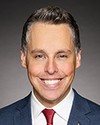
The Chair Liberal Peter Schiefke

Thank you very much, Ms. Abou-Dib.

We'll begin our line of questioning today with Mr. Lewis.

The floor is yours. You have six minutes.

9:45 a.m.

Conservative

Chris Lewis Conservative Essex, ON

Thank you, Mr. Chair.

Thank you to all the witnesses for this morning's testimony. I appreciate it.

Ms. Abou-Dib, down in the Windsor-Essex area, we have Teamsters Local Union 879. I'm sure you're aware of them. They're excellent folks. What types of commodities do they pull? Which companies do they pull for?

9:45 a.m.

Executive Director, Government Affairs, Teamsters Canada

Mariam Abou-Dib

I will not be able to tell you what the companies are, but I can tell you that the freight pulled in southern Ontario varies. It is quite diverse and pretty much goes from the very heavy to the freight we were discussing this morning, with the general freight and the refrigerated freight. I would concur that if you're going to be doing inspections, you should definitely focus on the companies in those areas.

We also work in the ports in southern Ontario.

9:50 a.m.

Conservative

Chris Lewis Conservative Essex, ON

That's good to know. Thank you.

What about in the auto industry?

9:50 a.m.

Executive Director, Government Affairs, Teamsters Canada

Mariam Abou-Dib

We work with various companies that move automobiles from one place to another, as well as parts.

9:50 a.m.

Conservative

Chris Lewis Conservative Essex, ON

I bring that up because we know that about 150 jobs have been lost at Stellantis. We now have 700 jobs out of Oshawa at General Motors that have been lost and 900 out of the CAMI plant in Ingersoll. It's very concerning. You mentioned that it's not a new issue and you've been dealing with it for just under a decade, which is 10 years with the Liberals at the helm. Ironically, that's what the CTA president said yesterday.

At the very end of your testimony, you talked about the TFW program and how employees don't know their rights. Can you expand on that, please, and on how the immigration side of this file is hurting your members?

9:50 a.m.

Executive Director, Government Affairs, Teamsters Canada

Mariam Abou-Dib

First of all, on the decade, this phenomenon has been raised officially since about 2018, but it has been going on for longer than a decade. It was in 2018 that we realized it was going to surface in ways that are extremely dangerous.

To be fair, in 2021, the government began to take various actions. I'm saying this is a new thing and more needs to be done because the government has been engaging in various actions since at least 2021. I can tell you what they are, but I'll go to the temporary foreign worker program for the sake of time.

9:50 a.m.

Conservative

Chris Lewis Conservative Essex, ON

Thank you for that.

9:50 a.m.

Executive Director, Government Affairs, Teamsters Canada

Mariam Abou-Dib

There's a lot I can tell you that could be very wrong with the temporary foreign worker program in the way it is used and abused, but for the purpose of the truck drivers, one of the major problems is that a lot of carriers are sponsoring workers from other countries to come here and drive and they require them to incorporate. First and foremost, that should not happen. Someone who is coming from another country should not be in a position where they suddenly own their own company.

The second problem is closed permits. It's an even more important problem. These companies end up completely controlling the fate of the worker. This one company controls them, and the worker can no longer move from one company to another. These workers—

9:50 a.m.

Conservative

Chris Lewis Conservative Essex, ON

I get it. I apologize for cutting you off, but my time is limited and I want to ask you one more question, which I think is incredibly important.

On Tuesday, the president of the CTA gave his testimony. He said there are 103.5 hours of training under MELT. That's what the government mandates. He mentioned that the CTA does a minimum of 200 hours.

Who do your members train with or under? How many hours do they have to spend in the classroom and in the cab with a trainer?

9:50 a.m.

Executive Director, Government Affairs, Teamsters Canada

Mariam Abou-Dib

The training varies, but on average, the training work falls in line with the Canadian Trucking Alliance hours you have. That goes for most of our members as well.

9:50 a.m.

Conservative

Chris Lewis Conservative Essex, ON

Thank you so very much. I appreciate it.

The Chair Liberal Peter Schiefke

Thank you, Mr. Lewis.

Mr. Lauzon, you have the floor for six minutes.

Stéphane Lauzon Liberal Argenteuil—La Petite-Nation, QC

Thank you, Mr. Chair.

I would like to thank the witnesses for being here.

Mr. Daignault, I'm very pleased that you're with us today. Thank you for your testimony.

All of the witnesses, both today and at the last meeting, have spoken to us about fraud and illegal conduct.

You have shared your recommendations with us and clearly demonstrated that you have few options for enforcing existing legislation.

I would like to better understand the extent to which you can conduct checks. If an individual has potentially obtained their licence illegally, how can you ascertain its validity?

9:55 a.m.

President, Fraternité des constables du contrôle routier du Québec

Jean-Claude Daignault

Are you talking about their driver's licence?

Stéphane Lauzon Liberal Argenteuil—La Petite-Nation, QC

Yes.

9:55 a.m.

President, Fraternité des constables du contrôle routier du Québec

Jean-Claude Daignault

We are unable to go that far.

Stéphane Lauzon Liberal Argenteuil—La Petite-Nation, QC

A representative from the Toronto Police Service is here, and you represent all highway controllers.

With regard to access to information, could better collaboration between the police, the Société de l'assurance automobile du Québec and the highway controllers help you in your work and solve part of the problem?

9:55 a.m.

President, Fraternité des constables du contrôle routier du Québec

Jean-Claude Daignault

That could help us. However, when someone who has been stopped has a valid driver's licence, we still have to check everything else. And it's “everything else” that is the most problematic.

If someone has tampered with their driving hours, there's not much we can do. However, if their vehicle has a lot of mechanical defects, then we can intervene.

When we stop a driver and their truck, we can do something about certain things, but when it comes to investigating companies, investigators hit a wall really quickly.

When it comes to driver's licences, there's fraud, and there always will be. That's nothing new. A person we stopped the day before yesterday had two valid Ontario driver's licences.

So we have some leeway in that regard, but we can't trace it back to the source. I've been doing this job for 34 years, and I can tell you that there is fraud in every province, and there always will be. However, that's not the biggest issue.

Stéphane Lauzon Liberal Argenteuil—La Petite-Nation, QC

Let's talk about the challenges. You have the authority to inspect the general condition of the truck and tires. However, witnesses have told us that some drivers speak neither French nor English.

Does the law require you to communicate with truck drivers in Canada in either English or French?

9:55 a.m.

President, Fraternité des constables du contrôle routier du Québec

Jean-Claude Daignault

There is no law or regulation that requires a driver to speak French or English.

Most members of my organization speak both languages. If a driver speaks neither French nor English, we try to work it out. The driver can call their boss and let the constable talk to them. It's not normal, but it's a situation that comes up more and more.

Stéphane Lauzon Liberal Argenteuil—La Petite-Nation, QC

It must be a problem when reading signs and directions.

9:55 a.m.

President, Fraternité des constables du contrôle routier du Québec

Stéphane Lauzon Liberal Argenteuil—La Petite-Nation, QC

On behalf of the committee, I want to tell all the witnesses that members of Parliament, whether Liberal, Conservative or Bloc Québécois, are deeply concerned about this situation. As you know, our government has taken a number of measures to address this issue. We have introduced legislation to improve communication between the Canada Revenue Agency and the Department of Employment and Social Development in order to facilitate the sharing of information. I believe that the key to success is communication between the federal government, the provinces, the police and traffic enforcement officers.

That said, this committee will draft a report containing recommendations to the federal government. We want to be able to act quickly and help you. To that end, what recommendations would you like us to make?