Wharf 18 would actually add capacity. My understanding is that you're actually operating at about 40% capacity now.
In your view, what is the likelihood of wharf 18 being recommissioned in the next five years?

Evidence of meeting #27 for Transport, Infrastructure and Communities in the 45th Parliament, 1st session. (The original version is on Parliament’s site, as are the minutes.) The winning word was project.
A video is available from Parliament.
Conservative

Fred Davies Conservative Niagara South, ON
Wharf 18 would actually add capacity. My understanding is that you're actually operating at about 40% capacity now.
In your view, what is the likelihood of wharf 18 being recommissioned in the next five years?
Vice-President, Engineering & Technology, St. Lawrence Seaway Management Corporation
I cannot answer that.
Liberal
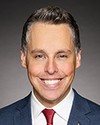
The Chair Liberal Peter Schiefke
Thank you very much, Mr. Davies.
Thank you, Mr. Boisclair.
Next we'll go to Ms. Nguyen. The floor is yours for six minutes, please.
Liberal

Chi Nguyen Liberal Spadina—Harbourfront, ON
Thank you to both witnesses for joining us today to talk about the opportunities for ports at this time when we're thinking about economic renewal and making sure that we are investing for our future.
I want to ask both of you this.
Mr. Fracassi, I appreciate your team Canada approach on these efforts here. Could you talk about the opportunities you see in terms of opening up new markets and how the trade diversification corridors fund that has been announced through budget 2025 will create opportunities for you to grow new markets?
President and Chief Executive Officer, Halifax Port Authority
Yes, we're very supportive of the trade diversification corridors fund. Indeed, we believe it opens up opportunities for us. As I mentioned in my opening remarks, one of our key priorities is to invest in infrastructure to provide a greater capacity and to help improve efficiency and fluidity.
In terms of the trends in the container industry, the ships are getting larger. At the Port of Halifax, we've already received and serviced ships of 16,000 TEUs. There's a real opportunity to expand our infrastructure to make sure that we can receive and deal with two mega ships simultaneously. That provides opportunities in terms of competitiveness and pursuing additional cargo.
The Port of Halifax is strategically positioned on the great circle route in that it's the closest port to Europe and it's one day closer than the rest of the east coast American ports to southeast Asia via the Suez Canal. These kinds of investments that make us more competitive and more efficient will allow us to better leverage some of the infrastructure and services that we have in place.
For example, the Port of Halifax has 17 services that connect Canada to over 150 countries globally. The capacity to invest and improve services really does open the door for us to position ourselves to contribute to trade diversification, especially in terms of emerging markets such as India, for example.
Vice-President, Engineering & Technology, St. Lawrence Seaway Management Corporation
I'm going to use my colleague's analogy of team Canada. It is a team sport, so the investment is not only, for example, in our locks and bridges infrastructure. It has to be through multiple actors working as a system. I'll name a few.
For containers, we need customs clearing with CBSA. For navigation along the seaway, we need icebreaking capabilities for winter operation with the pilotage service. There are other services that are provided to the vessels. Terminals need to have the proper stevedoring and all other services.
Liberal
Chi Nguyen Liberal Spadina—Harbourfront, ON
Thank you very much.
As I learn more about ports and how they function in this country, I'm wondering if you could talk to me about how we're doing in terms of collaboration between different government departments, on the CBSA side and Transport Canada side; how the two departments work together; and how that's working for both your organizations.
Vice-President, Engineering & Technology, St. Lawrence Seaway Management Corporation
I'm going to say that the operational collaboration is very good, but all these actors have some limitations. They either cannot do 24-7 around the clock or they have limited assets. The collaboration is very good, but every actor has their own set of limitations—staffing, for instance, or some collective agreements in place that are not fully supporting what we are trying to do.
President and Chief Executive Officer, Halifax Port Authority
The collaboration is good. I think we can always do better. The team Canada approach I mentioned I think is key to success and to ensuring that each player within the system, each port, has its strengths to bring to the table. It's our belief that through a coordinated approach we'll be able to achieve our trade diversification objectives and drive economic development.
From a Port of Halifax perspective, we're focused on what we call our “big ship” strategy. We're the only port in eastern Canada that can receive those larger ships. That's where we can make our biggest contribution in terms of having capacity and being able to receive those ships so that they do not bypass Canada for U.S. east coast ports. Other players within the system can bring their strengths to the system.
Thank you.
Liberal
The Chair Liberal Peter Schiefke
Thank you very much, Ms. Nguyen.
Thank you, Mr. Fracassi.
Colleagues, as you see, a vote has been called. The bells are ringing. I would need unanimous consent to continue.
I believe we have unanimous consent to go perhaps one more round. That would include six-minute remarks by Mr. Barsalou-Duval, followed by Mr. Davies, followed by Ms. Miedema and then Mr. Barsalou-Duval again for two and a half minutes.
Do I have unanimous consent?
Liberal
Bloc

Xavier Barsalou-Duval Bloc Pierre-Boucher—Les Patriotes—Verchères, QC
Thank you, Mr. Chair.
Thank you to the witnesses for being here today.
At the last meeting of the Standing Committee on Transport, Infrastructure and Communities, we had the opportunity to hear from the president and chief executive officer of the Desgagnés group, who told us about an unfair practice put in place by the federal government when it comes to steel transportation. The government decided to subsidize steel transportation by rail and to abandon transportation by boat. That led to the volumes that transited through the seaway being redirected to the rail network.
Earlier, Mr. Boisclair, you mentioned that there were many advantages to shipping by boat, particularly in terms of reducing greenhouse gases. It is also more efficient, because large quantities of goods can be shipped more easily by boat than by rail.
How do you perceive the government's decision to fund one mode of transportation at the expense of another, when it harms companies that use your facilities?
Vice-President, Engineering & Technology, St. Lawrence Seaway Management Corporation
Unfortunately, I won't be able to comment on that, as it's outside my area of expertise.
Bloc
Xavier Barsalou-Duval Bloc Pierre-Boucher—Les Patriotes—Verchères, QC
Do you expect this to have an impact on goods that will transit through the seaway?
Vice-President, Engineering & Technology, St. Lawrence Seaway Management Corporation
Our forecast for next year is similar. We don't anticipate a significant increase in the volume of goods.
Bloc
Xavier Barsalou-Duval Bloc Pierre-Boucher—Les Patriotes—Verchères, QC
Did you take those subsidies into account in the forecasts you made, or are they too recent?
Vice-President, Engineering & Technology, St. Lawrence Seaway Management Corporation
I couldn't tell you. They're probably too recent.
Bloc
Xavier Barsalou-Duval Bloc Pierre-Boucher—Les Patriotes—Verchères, QC
Okay.
Do you not think that such a political decision will have an impact?
Vice-President, Engineering & Technology, St. Lawrence Seaway Management Corporation
I'm not privy to the negotiations.
Bloc
Xavier Barsalou-Duval Bloc Pierre-Boucher—Les Patriotes—Verchères, QC
Okay.
I have another question for you.
Last summer, a bunch of boats were stuck in the St. Lawrence. The Port of Montreal had to impose restrictions requiring a number of them to lighten their load. I would like to know what your role is and how you see the future in terms of water levels.
Whether we like it or not, it seems that declining water levels are an increasingly frequent occurrence. Is this an effect of climate change?
Can we expect the carrying capacity of the St. Lawrence River and the Great Lakes to be reduced in the next few years?
Vice-President, Engineering & Technology, St. Lawrence Seaway Management Corporation
That is, in fact, a major problem. The examples you gave are downstream from the seaway, but we were also at risk. We've had a couple of weeks of draft reduction.
What we do is represent the industry at the International Joint Commission, which manages the water flows coming from Lake Ontario. Our role as a waterway operator is to represent the marine industry at that forum.
Bloc
Xavier Barsalou-Duval Bloc Pierre-Boucher—Les Patriotes—Verchères, QC
Do you have any forecasts or an idea of the future impact this could have on port capacity?