Thank you, Mr. Duguay.
The Canada Investment Bank was aware that the president and the chairman of the board and the two directors were Liberal insiders. What enhanced due diligence did you do?

Evidence of meeting #27 for Transport, Infrastructure and Communities in the 45th Parliament, 1st session. (The original version is on Parliament’s site, as are the minutes.) The winning word was project.
A video is available from Parliament.
Conservative

Philip Lawrence Conservative Northumberland—Clarke, ON
Thank you, Mr. Duguay.
The Canada Investment Bank was aware that the president and the chairman of the board and the two directors were Liberal insiders. What enhanced due diligence did you do?
General Counsel and Corporate Secretary, Canada Infrastructure Bank
Generally, when you do due diligence on counterparties, you do an open-source search. You would essentially review any material that's publicly available with respect to these individuals. That would include doing a media check and identifying whether there's been any adverse media with respect to the individuals.
When you do enhanced due diligence, you'll generally go a bit further. You'll want to identify any situations where there's been either past litigation with respect to any individual or the company, any past regulatory findings or any current court filings.
In this case—
Conservative
Philip Lawrence Conservative Northumberland—Clarke, ON
If there were five Liberal members of Parliament who were members of the board of directors, would that be okay with you?
General Counsel and Corporate Secretary, Canada Infrastructure Bank
If there were five current members of Parliament...?
Mr. Chair, I'm just trying to understand the question because that wasn't the case here.
Conservative
Philip Lawrence Conservative Northumberland—Clarke, ON
If they were current or previous members, would you be okay with that?
I'm just trying to see where the line is because, obviously, having connected Liberal insiders controlling an organization that's getting $200 million is just fine with the CIB.
Where is the line here?
General Counsel and Corporate Secretary, Canada Infrastructure Bank
Mr. Chair, we adopt and follow guidelines that are provided by FINTRAC, which are adopted across the financial sector—
Conservative
Philip Lawrence Conservative Northumberland—Clarke, ON
That has to do with money laundering; it doesn't have to do with conflict of interest, sir.
General Counsel and Corporate Secretary, Canada Infrastructure Bank
The principles are the same.
Conservative
Philip Lawrence Conservative Northumberland—Clarke, ON
Is that the only standard you have to adopt? You don't have to do anything better than the bare minimum when you're giving out tens of millions of dollars?
Liberal
General Counsel and Corporate Secretary, Canada Infrastructure Bank
Mr. Chair, we follow our guidelines in respect of best practices across the financial sector and we do that voluntarily.
I would invite all members to go to our website and read our integrity due diligence policy that outlines what our standards are.
Liberal
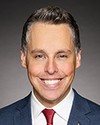
The Chair Liberal Peter Schiefke
Thank you very much, Mr. Duguay and Mr. Lawrence.
Finally, for this panel, I'll turn the floor over once again to Ms. Fancy.
The floor is yours for four minutes, please.
Liberal

Jessica Fancy-Landry Liberal South Shore—St. Margarets, NS
Thank you very much.
Through you, Chair, let's talk about affordability gaps.
I know that if you ran it through whatever ChatGPT the Conservatives have going on over there, "affordability" is one of those words they keep talking about. Within my riding, this is an affordability gap.
We have people living in energy poverty in my constituency, in my province, and this is our way out. Just this morning, because of what we have with Nova Scotia Power and Emera, they released an 8.1% rate increase. Based on the 1992 agreement, the monopoly that we have, every year this company, Nova Scotia Power, can increase its power rates.
This morning, at 8 a.m., that rate increased again for Nova Scotians by 8.1%. At the basis of this whole project, based on the criteria we're talking about today, they had to have a certain number of people signed up. They needed 35,000 people signed up and they got 50,000 signed up. I've got constituents calling all the time saying, “Oh my gosh, we have competition. Can I sign up?”
What the Conservatives are doing right now is creating affordability gaps for Nova Scotians. Our Conservative premier has been boasting about this time and time again throughout this whole project.
Mr. Cory, let's talk about differentiation between projects. What differentiated the Mersey River wind project from other potential investments when it came to delivering value for Canadians?
Chief Executive Officer, Canada Infrastructure Bank
Thank you, Mr. Chair, for the question. I really appreciate it.
For us, the differentiator is the creation of choice and competition in the market and about creating, in an innovative way, what does not exist in many markets: the ability for consumers to buy power directly from a renewable source.
As I mentioned earlier, there are people in what is often called the “MUSH sector” of municipalities, hospitals and universities who want to be able to buy clean power. There are businesses and industries where it's part of their competitive play to actually be able to get clean power, and there are consumers who want to be able to get clean power.
That option and choice does two things. It allows them to make choices about getting clean power, and it drives down prices over time. That's what differentiates this project, and it's part of why we're proud of it.
Liberal
Jessica Fancy-Landry Liberal South Shore—St. Margarets, NS
Thank you very much, Mr. Cory.
I'm the vice-chair of our national rural caucus, so let's talk about rural ridings for a second here.
With a project of this scale in a rural region, how does the Canada Infrastructure Bank ensure that local businesses and communities are meaningfully included in the economic opportunity that it creates? I ask because it sounds like the Conservatives are now trying to make it so that rural economic development is not allowed to happen.
Chief Executive Officer, Canada Infrastructure Bank
I think the good news about infrastructure projects—and this speaks to a comment that was made earlier—is that they happen in physical places across our country, in big cities, small towns, and rural and remote communities. Most of the economic value accrues in those places.
As we heard earlier in this session, the jobs that will be created in the local community, both in the construction and operation of this plant, are significant. They're part of what the Infrastructure Bank does for our country by helping to build local economies. We're really proud of that.
We measure that across all of our investments. We estimate that the total job creation, just to give you a sense of the scale of this, of the 108 projects we're investing in, is over 300,000 jobs in total across Canada. As I said, that's in communities big and small. It's in first nations and Inuit and Métis communities. It's in large cities and small towns. It's in northern Ontario, where I'm from, and Nova Scotia, where you're from.
Liberal
The Chair Liberal Peter Schiefke
Thank you very much, Ms. Fancy.
I would like to thank the witnesses, on behalf of all members of this committee, for their appearance before us today and for answering the members' questions.
Colleagues, I am going to suspend for a couple of minutes to allow our clerk to transition over to the second round of witnesses.
The meeting is suspended.
Liberal
The Chair Liberal Peter Schiefke
I call this meeting back to order.
Colleagues, appearing before us for the second half of today's meeting, we have, from the Halifax Port Authority, Mr. Fulvio Fracassi, president and chief executive officer, who is joining us by video conference.
Welcome to you, sir.
From the St. Lawrence Seaway Management Corporation, we have Mr. Luc Boisclair, vice-president, engineering and technology.
Welcome to you.
Colleagues, we hope to have online very soon Mr. Atul Sharma, senior director of government and stakeholder relations at the Toronto Port Authority, but we are having some difficulties connecting him.
I'll turn the floor over to Mr. Fracassi for his opening remarks.
Mr. Fracassi, the floor is yours. You have five minutes, please.
Fulvio Fracassi President and Chief Executive Officer, Halifax Port Authority
Thank you, Mr. Chair.
I'm grateful for the opportunity to share how the Port of Halifax supports the Atlantic trade corridor and contributes to Canada's trade diversification efforts.
The Port of Halifax generates $4.87 billion in annual economic output, including $3 billion directly, and supports over 25,000 jobs. We are a deepwater, big-ship port receiving the largest container ships calling at any Canadian port. Halifax is serviced by a diverse range of container shipping lines, including major global carriers such as MSC, CMA CGM and ONE, to name a few. We have a total of 17 container services connecting Canada to more than 150 countries globally.
Our deep waters and big-ship infrastructure make us the only Canadian port that can receive the ultra-sized ships of over 12,000 TEUs. These mega ships represent almost 40% of the world container fleet and are expected to reach 50% by 2030.
In terms of our overall volume of about 500,000 TEUs in 2025, the percentage of our trade with Asia grew by about 4% last year, representing approximately 45% of our overall volume. Our growth countries in the region were India and China. Trade with Europe and the U.K. also remains strong, representing about 36% of overall volume for the port, with noticeable increases with Italy, France and Portugal.
Our global connectivity, our ultra-sized ship capacity and our strategic position along the great circle route as the closest full-service port to Europe and Southeast Asia through the Suez Canal uniquely positions the Port of Halifax to contribute to Canada’s trade diversification objectives.
We are also supported by distinguished partners, including PSA, the world's largest terminal operator, and TiL, which holds a 49% investment stake in PSA Halifax and is a division of MSC, the leading container company globally. In addition, our partnership with CN Rail plays a crucial role in accessing major inland markets within one to three days.
Through these strategic partnerships, major public and private investments at the port, and close collaboration, we have worked to maintain and grow our service offerings, including a new direct service with India, the only direct service to Canada. We continue to leverage our deepwater and big-ship infrastructure to competitive advantage. This includes discussions with carriers to potentially receive ships in Halifax of 18,000 TEUs and 400 metres in length by 2028.
Continuing to invest in Canada’s ports is key to achieving our trade diversification objectives. The HPA strongly supports the trade diversification corridors fund and welcomes the federal government's efforts to create more resilient and competitive supply chains.
As eastern Canada’s only port that can receive ultra-sized ships, it is essential that we increase our capacity to berth two ultra-large vessels simultaneously. Our expansion project for the south end container terminal will achieve this objective while also increasing our terminal capacity to 1.3 million TEUs. This project is scalable to two million TEUs when required. Work has already commenced.
This project leverages Halifax’s strengths with an already existing ecosystem and supports other port initiatives undertaken in eastern Canada. This also avoids a scenario whereby ultra-sized vessels are forced to bypass Canada to call at U.S. east coast ports due to lack of capacity.
It is important that we enhance the Atlantic trade corridor in a way that complements the central trade corridor by adding capacity, resilience and fluidity to the entire network, supporting importers and exporters across eastern and Atlantic Canada. As we continue to build out our world-class infrastructure and existing ecosystem, collaboration will be key to developing a national port network that delivers improved supply chain resilience, lower congestion pressures and more dependable end-to-end service in a cost-effective manner.
It is through a team Canada approach, leaning on each other's strengths, that we will be successful in expanding trade and driving economic development for the benefit of the entire country.
Thank you.
Liberal
The Chair Liberal Peter Schiefke
Thank you very much, Mr. Fracassi.
I now give the floor to Mr. Boisclair for five minutes.
Luc Boisclair Vice-President, Engineering & Technology, St. Lawrence Seaway Management Corporation
Thank you, Mr. Chair.
Good afternoon, everyone.
The St. Lawrence Seaway Management Corporation is a non-profit organization that operates and maintains Canada's seaway infrastructure.
The seaway is a network of locks and canals linking Montreal to Lake Erie, under a long-term agreement with the Government of Canada. The network includes 13 Canadian locks, located in Quebec and Ontario, and two U.S. locks, located in New York State.
While the seaway is not a port, it is part of a larger Great Lakes St. Lawrence Seaway system that includes ports. Altogether, the system generates $66 billion in economic activity by moving 252 million tonnes of cargo worth $157 billion. It supports more than 350,000 jobs and creates $23.2 billion in wages.
At the wharves of the St. Lawrence Seaway, along the Welland Canal, and in Sainte-Catherine, Quebec, ships load and unload cargo, supplies and fuel, and undergo crew and pilot changes. Our multi-user wharf in Sainte-Catherine is fully leased and supports the berthing of four vessels. Of the more than 13 wharves along the Welland Canal, the majority are leased and in service.
We have recently completed dredging at wharf 10 in the city of Welland and have dredged and rehabilitated wharf 7 near the multimodal connection in the city of Thorold. We are moving ahead with private partners, and commodities will soon be moving at both locations.
Wharf 18, located at Port Colborne, is a shovel-ready, multimodal infrastructure project. It will add one million tonnes of cargo-handling capacity and open new cruise ship berthing to boost regional tourism.
The project received $22.6 million from the national trade corridors fund, but requires additional funding to begin construction. We are advocating for complementary support from the Province of Ontario, along with contributions from private partners and operators.
In 2025, 37 million tonnes of goods passed through our locks and canals to domestic and international markets. Key commodities include grain, fertilizer, iron ore, steel, aluminum, cement, project cargo, road salt and liquid bulk, including petroleum products.
The St. Lawrence Seaway has the capacity to immediately double its volume. Moving more goods by sea can help relieve congestion on already busy roads and rail systems. A Seawaymax vessel can carry the equivalent of 300 freight cars or close to 1,000 trucks.
To capitalize on this corridor, we propose a project called the “inland advantage”. There is a clear opportunity to scale the impact of the seaway and expand the strategic value of the infrastructure already in place.
What we offer is divided into three parts. First, reintroduce containerized short-sea shipping between Halifax, Montreal and the Great Lakes via the seaway. Second, move energy via the seaway to domestic and international markets to strengthen Canada's global competitiveness and support climate-aligned infrastructure by diversifying export routes. Third, make the seaway an even more resilient marine corridor for winter operations.
We welcome the new trade diversification corridors fund and its approach. The recent closure of the navigation season last January reminded us that investments are essential not only to extend the navigation season, but also to ensure reliable operations in the months of December, March and April.
The seaway is one of the original nation-building projects. We have a deep history and a future filled with possibilities. By maximizing active wharf capacity on the seaway, increasing resiliency to extend the navigation season and expanding container and energy movements, the St. Lawrence Seaway will help diversify and modernize Quebec's and Canada's broader coastal and inland port network.
As the federal Minister of Transport mentioned earlier this week at the official opening of our 68th navigation season, “a modern, dependable seaway strengthens Canada's position as a reliable trading nation.”
Thank you.
Liberal
The Chair Liberal Peter Schiefke
Thank you, Mr. Boisclair.
We'll begin our line of questioning in the second round with Mr. Davies.
Mr. Davies, the floor is yours. You have six minutes, please.
Conservative

Fred Davies Conservative Niagara South, ON
Thank you, Mr. Chair.
Welcome to everybody.
Mr. Boisclair, I recall that you, at one point, were in charge of the Welland Canal. You were in St. Catharines and Welland for a while. It's my home turf. The Welland Canal goes right through the middle of my riding, through Port Colborne, Welland and Thorold.
I want to talk about a couple of things, and I want to thank the St. Lawrence Seaway for the work it did on lock 8 this past winter. It really was a sight to see the improvements, including the hands-free mooring technology that was installed. I think about $6 million was put into bridge 21. Correct me if I'm wrong, but isn't that just the first phase of the infrastructure renewal at that bridge?
Vice-President, Engineering & Technology, St. Lawrence Seaway Management Corporation
That repair is actually happening over two winters, so there will be similar work next winter.
Conservative
Fred Davies Conservative Niagara South, ON
Okay. That's great. That's good to know.
I want to dig into wharf 18. I'm sure that you expected to get some questions from somebody in my area. First of all, is that wharf considered decommissioned or abandoned?