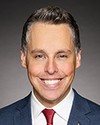
Evidence of meeting #8 for Transport, Infrastructure and Communities in the 45th Parliament, 1st session. (The original version is on Parliament’s site, as are the minutes.) The winning word was vessels.

A recording is available from Parliament.

On the agenda

Members speaking

Before the committee

McNeely  President, BC Ferry and Marine Workers' Union
Warren  National Director, United Steelworkers Union
Gingrich  Assistant to the National Director, United Steelworkers Union
Skidmore  President, BC Federation of Labour
Bourke  Executive Director, British Columbia and Yukon Territory Building and Construction Trades Council
MacPherson  President, Shipyard General Workers' Federation

Mike Kelloway Liberal Sydney—Glace Bay, NS

In essence, in terms of planning on BC Ferries' part, I think there are six vessels that need to be replaced, four immediately, and this shouldn't have been news to British Columbia or BC Ferries. That's what you're saying. The planning was lacking here on BC Ferries' part.

8:40 a.m.

President, BC Ferry and Marine Workers' Union

Eric McNeely

That's correct. In terms of the execution of the planning, if we look back to 2017-18, there was a vessel replacement plan that included beginning in 2023-24. We looked to reports that were done by large shipyards, and they were saying that if they began the projects in 2025, they could have the first major vessel produced and in the water for 2029. That's the same timeline as we're getting from China, starting now.

Clearly there was an opportunity. There was an ability to do this, and to brother Marty Warren's point, those are hundreds and potentially thousands of good-paying jobs and part of a process that would maintain our ability to plan and procure further vessels in addition to the ones we're talking about today.

Mike Kelloway Liberal Sydney—Glace Bay, NS

Thank you, Mr. McNeely, for that because I think we need to dig deep as to why this happened on BC Ferries' part and how we prevent it from happening, even though it's a provincial entity.

I want to go to Mr. Warren.

Thanks for your testimony, sir. I really appreciate it. As you mentioned, the steel industry is under attack. There's no two ways to talk about it. We're under attack from U.S. tariffs, and I think you did allude to this but we see the federal government putting initiatives in place, making investments to protect the industry. More needs to be done clearly, but I'm wondering what all levels of government can do. In particular, when we look at this example—we need to do more on the federal side and we're doing more—on the provincial side, when we look at the anatomy of this issue, it is predominantly BC Ferries, their planning perhaps.

What could we be doing in terms of protecting steelworkers, not just federally but also provincially?

8:40 a.m.

National Director, United Steelworkers Union

Marty Warren

That's a good question. Thank you.

Just so you understand and so folks understand, a nation without a steel industry is.... I'm not sure you can call it a nation, quite frankly, but just so you're aware, this is how important this kind of stuff and procurement are. Right now, a lot of our products are being shut out of the U.S. market. Sixty-five per cent used to go down there. We're being shut out. We have access to only 35% of the domestic market right now because of the foreign steel that's being shipped into Canada.

How do we do this? How do we support it?

First of all, we have to take action with bigger and more quotas to support industries that are under attack, where they can't get a footing in the domestic market. Most important, to your question, for the same federal procurement that we're excited about, that we like, we have to drill that down. We have to do a good job with our provincial leaders and make sure that they're doing procurement in the provinces as well.

Mike Kelloway Liberal Sydney—Glace Bay, NS

Thank you, Mr. Warren.

The Chair Liberal Peter Schiefke

That's all, Mr. Kelloway.

Mike Kelloway Liberal Sydney—Glace Bay, NS

I assumed the colour red was not a good sign.

Voices

Oh, oh!

The Chair Liberal Peter Schiefke

Thank you very much, Mr. Warren.

Thank you, Mr. Kelloway.

Mr. Barsalou‑Duval for six minutes.

Xavier Barsalou-Duval Bloc Pierre-Boucher—Les Patriotes—Verchères, QC

Thank you, Mr. Chair.

I want to thank the witnesses for joining us.

There's a steel mill in my riding, specifically in Contrecœur, where the workers are members of the United Steelworkers Union. It employs almost 1,000 people.

BC Ferries awarded the government-funded contract to build boats to a Chinese company. I've heard a lot about it, because these workers in my region see their industry struggling and they're aware of the tariffs imposed by the United States. At the same time, the government is making promises but ultimately does something else, which is creating significant disappointment and concern.

Mr. Warren, I was wondering whether you'd heard similar comments from members of the union you represent to those I heard.

8:45 a.m.

National Director, United Steelworkers Union

Marty Warren

I'll jump on that and leave some time for Eric as well.

Absolutely, and it's not only steelworkers who are wondering what is going on, even everyday workers are. We're being attacked by the U.S. in many sectors. Let's not forget auto, aluminum and forestry. Now more than ever, we need the government to stand up and protect our domestic industries.

We know that we have to diversify. We know that we have to invest in technology in certain parts of these sectors. For example, we don't build a bit of I-beam steel in Canada. It looks like some of the producers—Algoma specifically—are going to start to produce I-beams in Canada so that we never have to import another one, or very few, from foreign countries or the U.S.

The answer is yes. We're all very outraged and very upset that this type of project was sent overseas.

Eric, I hope I've left you some time.

8:45 a.m.

President, BC Ferry and Marine Workers' Union

Eric McNeely

Thanks.

That's a great point. Our members still maintain these ferries, and we know what happens when supply trains stretch across oceans. This reduction means that we're paying for these ferries twice: once when we buy them and once again in lost jobs, lost training and lost taxes and capacity. That's a frustration for our members, and that's a frustration for people across Canada, I think, not just on the west coast.

Xavier Barsalou-Duval Bloc Pierre-Boucher—Les Patriotes—Verchères, QC

Approximately two weeks ago, I had the opportunity to visit the Davie shipyard, in the Lévis region, whose representatives told me they would've liked to get the contract to build these boats.

According to them, the problem had something to do with how the request for proposals was done, which made it extremely difficult to be competitive. They mentioned in particular that cost was the sole criterion. Furthermore, they said it happened at the last minute, which gave them insufficient time to adjust their production schedule, among other things. However, they would've had the space to execute the contract and they would've been able to create or increase production capacity and hire people. So it wouldn't have been a problem. However, they feel it's unfortunate the government has no long-term vision. That seems to echo the comments you and Mr. Warren got.

They also told me that China currently holds approximately 65% of the world's shipbuilding capacity, compared to just 5% about 10 years ago. What's your reaction, given that Canada is somewhat of an accomplice to China's cornering almost the entire global shipbuilding market?

8:45 a.m.

President, BC Ferry and Marine Workers' Union

Eric McNeely

It's not lost on me that today is World Maritime Day, and here were are talking about things that impact the maritime industry.

To your point about the shipyards, the only thing the lack of bids proves is that the process was stacked against domestic yards. It's time for our government to invest in our workers, because no yard in Canada is going to scale up if work keeps going overseas, and 65% of commercial shipbuilding is done in China. Unless we invest in the industry at home and we stop sending contracts overseas, we're not going to have an industry. To Marty's point, if we don't have an industry for shipbuilding, we're going to lose reasons to use our steel. If we lose our steel, we lose our domestic capacity and our sovereignty and independence in that field.

We need to provide a process that makes it so that future builds can put value on supporting local jobs, using local materials and continuing to reinforce local supply chains, because that's how we build a country that works. If we want to talk about large national projects, I can't think of a larger national project in a country with a massive coastline than shipbuilding.

Xavier Barsalou-Duval Bloc Pierre-Boucher—Les Patriotes—Verchères, QC

I don't know whether I have much time left, but I'd like to ask representatives of both organizations a quick question.

If I understand correctly, you both agree that any federally funded shipbuilding project, meaning funded by taxpayers, should be built here, in Canada. Do you agree on that? It seems quite logical, but I would still like it on record.

8:50 a.m.

National Director, United Steelworkers Union

Marty Warren

I fully agree with that. If there are taxpayers' dollars involved, quite frankly, federally or provincially, the best domestic procurement should be taking place.

8:50 a.m.

President, BC Ferry and Marine Workers' Union

Eric McNeely

Yes, I agree, 100%: public money, public projects.

Xavier Barsalou-Duval Bloc Pierre-Boucher—Les Patriotes—Verchères, QC

Thank you very much.

The Chair Liberal Peter Schiefke

Thank you, Mr. Barsalou‑Duval.

Now we go to our second round of questions, and for that I'll turn the floor over to Mr. Muys.

Mr. Muys, you have five minutes, please.

8:50 a.m.

Conservative

Dan Muys Conservative Flamborough—Glanbrook—Brant North, ON

Thank you, Mr. Chair.

Thank you to the witnesses, especially those who were up well before the crack of dawn. As a morning person, I appreciate it.

Let me just note up front that the Canada Infrastructure Bank's approval of the loan on March 5, 2025, took place at a time when we already had the looming threat of tariffs on Canadian steel. That was already evident at that time, yet it went ahead. The government was not straight with Canadians about the process and the timeline for what happened, and it really didn't come to light until June.

The question that should be asked is what all levels of government can do. Yes, this was a provincial procurement, but there's a role in it that's being fleshed out here in the testimony for a Canadian industrial strategy. That is something the federal government has a direct role in.

I would note that, in the early part of September, there was a summit in Hamilton. I'm a Hamilton-area MP and have been to Stelco many times. This summer I was at Dofasco summit, and it was entitled “Made in Canada: Ferries and Rail Summit”. How ironic it is that this would be the title of the summit taking place after a billion dollars in taxpayer funds went to subsidizing the construction of ferries in China.

I'll ask the United Steelworkers this: Were you invited to that summit?

8:50 a.m.

National Director, United Steelworkers Union

Marty Warren

Yes, we were invited, and I did attend virtually.

That's just another example of federal and provincial governments, through consultation, bringing industries together to talk about big projects, to talk about how they may have to invest or change their process a little bit to be involved. What I saw there was a lot of connecting the dots in terms of different industries connecting.

We talk about procurement, and that is so important, but the step after procurement is to work with sectors and industries to get them in the room to talk about the process and who can do what. I thought the summit was good in terms of just seeing a lot of businesses, quite frankly, connect the dots.

8:50 a.m.

Conservative

Dan Muys Conservative Flamborough—Glanbrook—Brant North, ON

That's not new. I've met with the USW before, and they've talked often, as you did today, about the essential role of the steel industry in the Canadian economy—in any economy—and that investment in infrastructure in Canada should be using Canadian steel.

Similar to Mr. Barsalou-Duval, I actually had the opportunity to visit a shipyard recently. Ontario Shipyards is located on the Hamilton port, as well as in Port Weller, in St. Catharines. It was also at that summit.

Here we have a local shipbuilder that has capabilities that could be part of that industrial strategy, that could be part of building this out, and it was out of the loop. It's actually not part of the national shipbuilding strategy, so that's an oversight for sure. Do you have any comments on that? This shipbuilder uses local labour. It uses local steel in what it does.

Mr. Warren and Mr. McNeely, do you have any comments on that?

8:55 a.m.

President, BC Ferry and Marine Workers' Union

Eric McNeely

Sure.

We get the industry we plan for, and no one planned to keep this work in Canada. Two Canadian shipyards did look at the bid for the new major vessels, and they walked away because it was clear that the lowest price would win. Domestic yards can't compete with state-subsidized shipyards offering rock-bottom labour costs. If the system rewards the cheapest option, that's exactly what we're going to get. We should be proud that Canadian jobs and Canadian quality are high. That's not a detriment; it's a positive. It's something that we have worked for, together as a country, for more than 100 years, and it should encompass all the yards. I think there's an opportunity for big yards and small yards to work together if there's a national approach to building ferries.

8:55 a.m.

Conservative

Dan Muys Conservative Flamborough—Glanbrook—Brant North, ON

Let me jump in with one last question because I see I have the yellow card.

You mentioned, Mr Warren, that only 35% of domestic steel is used. Obviously, one of the existential threats—other than the U.S. tariffs—is the dumping. China is, of course, one of the biggest, most egregious offenders in that. Maybe just elaborate a little bit more on the fact that here we have a Chinese company getting Canadian taxpayers' dollars, using Chinese steel as opposed to Canadian steel.

September 25th, 2025 / 8:55 a.m.

National Director, United Steelworkers Union

Marty Warren

Yes. It's just outrageous, especially during these....

There's the red card.