
Evidence of meeting #4 for Veterans Affairs in the 45th Parliament, 1st session. (The original version is on Parliament’s site, as are the minutes.) The winning word was family.

A video is available from Parliament.

On the agenda

Members speaking

Before the committee

Harris  Senior Assistant Deputy Minister, Service Delivery, Department of Veterans Affairs
Courchesne  Director General, Health Professionals and Chief Medical Officer, Department of Veterans Affairs
Scott Malcolm  Surgeon General, Canadian Armed Forces, Department of National Defence
Hall  Senior Epidemiologist, Department of Veterans Affairs
Serge Ménard  Commander, Canadian Armed Forces Transition Group, Canadian Armed Forces, Department of National Defence

The Chair Liberal Marie-France Lalonde

Good morning, everyone. I call this meeting to order.

Welcome to meeting number four of the House of Commons Standing Committee on Veterans Affairs.

Pursuant to Standing Order 108 and the motion adopted on September 18, 2025, the committee is meeting as part of its study on suicide prevention among veterans.

Today's meeting is taking place in a hybrid format pursuant to the Standing Orders. Members are attending in person in the room and remotely using the Zoom application.

Before we continue, I would ask all in-person participants to consult the guidelines written on the cards on the table. These measures are in place to help prevent audio and feedback incidents and to protect the health and safety of all participants, including the interpreters.

It's always a pleasure to have you with us, our esteemed interpreters.

You will also notice a QR code on the card, which links to a short awareness video.

I would like to outline a few rules for witnesses and members to ensure that the meeting runs smoothly.

Before speaking, please wait for me to recognize you by name. If you're participating by video conference, please click on the microphone icon to turn on your microphone. Please mute your microphone when you aren't speaking.

As for interpretation, Zoom users can choose floor, English or French at the bottom of their screen. People in the room can use their earpiece and select the desired channel.

Remember that all comments from members and witnesses should be addressed through the chair.

As always, the members in the room must raise their hand if they wish to speak. The members on Zoom must use the “raise hand” function. The clerk and I will manage the speaking order as well as we can. We would like to thank the members for their patience and understanding.

I would now like to welcome the witnesses.

With us from the Department of National Defence is Major-General Scott Malcolm, surgeon general, Canadian Armed Forces; and Brigadier-General Serge Ménard, commander, Canadian Armed Forces transition group, Canadian Armed Forces.

From the Department of Veterans Affairs we have Steven Harris, senior assistant deputy minister, service delivery; Cyd Courchesne, director general, health professionals and chief medical officer; and Dr. Amy Hall, senior epidemiologist, who is joining us virtually.

Thank you very much for being here. We look forward to hearing your comments.

We'll start with Mr. Harris.

Mr. Harris, you have the floor.
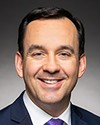
Steven Harris Senior Assistant Deputy Minister, Service Delivery, Department of Veterans Affairs

Madam Chair and members of the committee, thank you for the invitation to appear today as you launch your study of suicide prevention among veterans.

I would like to begin by acknowledging the veterans, service members and families who join us today, and express condolences to those who have lost a loved one.

Suicide among veterans is not just a statistic; it is a tragedy that is felt through families, our communities and our country.

However, it should be noted that Canadian veterans, particularly younger veterans and women, face a much higher risk of suicide than the general population.

The 2024 report on suicide mortality in the Canadian Armed Forces showed that 65% of people who died by suicide had at least one mental health condition, and many had more than one. The most common conditions were addiction or substance use disorders, depressive disorders and trauma and stress‑related disorders.

The research also confirmed that veterans experience significantly higher rates of mental health issues compared to the general population. Approximately 17% of regular force veterans reported mood disorders, compared to only 6% of civilians.

What are often called operational stress injuries, or OSIs, capture the persistent challenges resulting from service. OSIs can include PTSD, depression, anxiety, trauma and moral injury, and they can disrupt daily functioning, work and social relationships.

PTSD is particularly prevalent among the veterans receiving disability benefits. More than 48,000 veterans currently receive a pension for PTSD. Since the end of Canada's mission in Afghanistan in 2014, we have observed a steady rise in these claims. Approximately 29% of veterans receiving a disability benefit for PTSD—

The Chair Liberal Marie-France Lalonde

Sorry to interrupt you, Mr. Harris.

8:20 a.m.

Senior Assistant Deputy Minister, Service Delivery, Department of Veterans Affairs

Steven Harris

Am I speaking too quickly?

The Chair Liberal Marie-France Lalonde

Mr. Harris, you're trop rapide, s'il vous plaît.

Our interpreters are trying hard to interpret your remarks. Please slow down a bit.

8:20 a.m.

Senior Assistant Deputy Minister, Service Delivery, Department of Veterans Affairs

Steven Harris

No problem. I'll slow down.

The Chair Liberal Marie-France Lalonde

Thank you.

8:20 a.m.

Senior Assistant Deputy Minister, Service Delivery, Department of Veterans Affairs

Steven Harris

Since the end of Canada's mission in Afghanistan in 2014, we have observed a steady rise in these claims. Approximately 29% of veterans receiving a disability benefit for PTSD served in Afghanistan, underscoring the lasting impact of the mission.

Veterans Affairs Canada, or VAC, understands the impact of service on physical and mental health and provides a range of support measures designed to address these challenges.

These include treatment and care options, financial support, rehabilitation support and support measures to provide assistance throughout a veteran's transition process.

For example, since April 2022, a new mental health benefits program has been in place. This program automatically covers treatment costs for veterans with mental health issues while their application for disability benefits is being reviewed.

VAC also offers access to a network of 21 operational stress injury clinics and satellite locations as well as to thousands of registered mental health professionals across Canada. Veterans can take advantage of in-person, virtual one-on-one supports and online options.

Families play a central role in supporting mental health outcomes. The operational stress injury social support program provides confidential support to military members, veterans and their families through trained peers who have lived through similar experiences.

Leaving the military is not as simple as changing jobs. It is a complete shift in identity, structure and community. Service members may lose their daily routine and missions that have defined their lives for years. They move from a close-knit team environment to a civilian world that often may not understand their military culture.

Our national client survey shows that 33% of clients transitioning out of the military have reported difficulty transitioning to life after service. Of these, 64% attributed this difficulty to health challenges, while 60% felt as though they lost their sense of purpose.

To provide support during this critical period, VAC is working closely with the Canadian Armed Forces to ensure continuity of care and mental health support during the transition from service to post-service life.

It is thanks to this collaboration that the Joint Suicide Prevention Strategy was launched in 2017. The strategy builds on VAC's seven domains of well-being and the strong foundation of existing programs. More psychologists and psychiatrists have been added to health care teams, and improvements now allow for remote consultations.

Ultimately, preventing suicide is not only about programs and policies but also about building a culture of care that values our veterans and their families, recognizing the warning signs of mental health challenges and providing the support and connection that can save lives.

Families, peers and communities are essential to this work, ensuring that veterans are not navigating these challenges alone. It is through this collective effort that we honour the service of our veterans, protect their well-being and uphold our commitment to those who have given us so much.

Thank you, Madam Chair and members.

We are happy to take your questions.

The Chair Liberal Marie-France Lalonde

Thank you very much, Mr. Harris.

We will now begin the first round of questions and answers.

Mr. Richards is the first to start, for six minutes.

8:25 a.m.

Conservative

Blake Richards Conservative Airdrie—Cochrane, AB

Thanks, Chair.

I appreciate the presentation.

One thing that I think can often lead to poor outcomes for veterans and therefore down the road sometimes lead to things such as mental health challenges, addictions or, unfortunately, in some cases, suicidal thoughts or actually the act itself, is what many refer to as sanctuary trauma. That's when the trauma comes from those they expect to care for them.

In the case of VAC, it's something we, unfortunately, hear too often. Veterans come for support and then they face outrageous wait times. They face piles of forms and paperwork, constant changes in their case managers, denials of care and on and on. Often it leaves veterans feeling betrayed and uncared for.

Do you believe that sanctuary trauma is a real concern and something you need to take into account when you're considering your processes and changes at Veterans Affairs?

8:25 a.m.

Senior Assistant Deputy Minister, Service Delivery, Department of Veterans Affairs

Steven Harris

Madam Chair, the thoughts, the feelings and the perspectives of veterans always need to be taken into consideration by our department as well as the services and all of the staff who work to deliver services to veterans and our colleagues in every area. I accept that sanctuary trauma is absolutely something that veterans feel and has an effect on whether or not they want to come forward and work with Veterans Affairs to obtain the services that they need.

8:25 a.m.

Conservative

Blake Richards Conservative Airdrie—Cochrane, AB

Taking that into consideration, what sorts of things have you done to improve? We often hear about the lengthy wait times, the delays, the denials, the massive amount of paperwork. There's even the fact that family doctors refuse to take veterans on in many cases because the VAC paperwork is so burdensome that they can't navigate it. You can only imagine how the veterans themselves feel.

What sorts of improvements are you working towards to try to make sure that veterans aren't experiencing that sanctuary trauma? It's great to recognize it, but something has to be done to make sure it doesn't happen.

8:25 a.m.

Senior Assistant Deputy Minister, Service Delivery, Department of Veterans Affairs

Steven Harris

I would agree 100%. What we have done and what we are continuing to do is identify and work on the things that members have suggested here. These are things such as cutting wait times in half over the course of the last four years; cutting the amount of time it takes to get approvals on a whole range of programs from Veterans Affairs; working directly with veterans through case management and our veterans service agents to make sure they understand what might be necessary to go through a process, while also reducing the amount of paperwork to go through that process, whether that's reapprovals or other services that veterans might come back for; and going to the veteran with another service that might be of benefit to them as opposed to the veteran having to identify something or a need that may be unaddressed.

Those are all parts of the kinds of things we have been trying to do and succeeding at over the last number of years.

8:30 a.m.

Conservative

Blake Richards Conservative Airdrie—Cochrane, AB

I appreciate the efforts. I'm not certain that I hear the same kind of sentiment from veterans about succeeding at it, unfortunately. Hopefully you can continue your efforts, and we'll see better results as a result of that.

Along the same lines, we often hear veterans report how much they struggle when they watch Veterans Affairs fail at some of the really simple and basic things. I'll give you an example. We're going to talk about commemoration in this case, although it's not the only area.

When the 10th anniversary of the withdrawal from Afghanistan came around in 2024, there were a lot of veterans who reported not receiving invites or that they were only invited 24 hours before. It seemed like the ceremony was really thrown together and was even criticized by the CBC because it appeared rushed. Also, when they look at the Afghanistan monument announced 11 years ago, nothing has been done on the site at all. I think it's been three years since there was an announcement of a contractor being chosen. We'll put aside all of the controversy around that, of course, but for three years it has sat there and nothing has happened.

Veterans often watch things like that and say, “If they can't even do that, how can I expect them to properly care for my injuries and the needs that I have?” What would you say to veterans who are feeling that way?

8:30 a.m.

Senior Assistant Deputy Minister, Service Delivery, Department of Veterans Affairs

Steven Harris

It's more than efforts; we've actually cut wait times in half. We have cut the backlog in half as well. It's more than just efforts on that front.

With respect to commemoration, that's not entirely my area of responsibility in the department. I know the team that works on commemoration. It works very diligently to make sure it's inclusive and moving forward on all of the projects in terms of inviting folks to attend commemoration ceremonies. On the Afghan monument, I know recently the NCC announced their approval for going forward in the next stage of the project. It's a multi-stage project. I know that was just done recently as part of moving ahead with the construction of the monument. I would just offer that.

8:30 a.m.

Conservative

Blake Richards Conservative Airdrie—Cochrane, AB

I guess it's one thing to say we're moving [Technical difficulty—Editor].

The Chair Liberal Marie-France Lalonde

Mr. Blake, I'm going to be very diligent this time.

Thank you very much.

I will now give MP Sidhu the floor.

Sonia Sidhu Liberal Brampton South, ON

Thank you, Madam Chair.

I'm pleased to join this committee today for the important study regarding suicide prevention among veterans.

First, I would like to thank the officials from the Department of National Defence and Veterans Affairs Canada for appearing at this committee today to share their important insights with Canadians. This month is also Women’s History Month, and I would like to use this opportunity to thank all women members of the Canadian Armed Forces and servicewomen, past and present, for their sacrifice and for safeguarding Canada and its interests.

In the last Parliament, I had the honour to serve on the Standing Committee on the Status of Women. I was pleased to see the report, “Invisible No More. The Experiences of Canadian Women Veterans.”

I have a question for the officials from both departments.

Can you share with the committee what existing programs there are for women veterans in terms of suicide prevention?

Cyd Courchesne Director General, Health Professionals and Chief Medical Officer, Department of Veterans Affairs

Madam Chair, we really appreciated the report of the study on women veterans. That came out after we had considered our suicide prevention plan. As my ADM mentioned in his opening remarks, we have known since we've looked at the numbers that women veterans have a higher rate of suicide than male veterans and women in the Canadian general population. We had that knowledge when we created the suicide prevention plan.

Since then, we've established a unit of women veterans, looking at their issues and listening to women. We've had several forums where we've heard their particular issues. Based on that information, we've looked at our business processes, looked at our criteria for looking at applications from women veterans, taken that into consideration and made changes. Through going back and looking, we knew that applications from women veterans were more frequently turned down and took more time. We've made efforts to look at our table of disabilities and our entitlement eligibility guidelines, taking into account differences between men and women.

I like to say that women are not small men. They're different physiologically. They present differently clinically. We've taken all that into account to bring changes.

Sonia Sidhu Liberal Brampton South, ON

Thank you.

Can you share with this committee what Veterans Affairs Canada's plan is with respect to suicide prevention especially for women veterans?

8:35 a.m.

Director General, Health Professionals and Chief Medical Officer, Department of Veterans Affairs

Cyd Courchesne

We continue to look into our numbers and to research. The veteran suicide mortality study, as I said, has shown that the rates are higher. What it doesn't tell us is why. We know that male veterans are at higher risk within five years of leaving the military. For women, it's 20 years.

Because all veterans are not clients of the department, it's difficult for us to predict who's at risk, which is why we focus on programs and offering mental health services that are accessible for women at any point after they leave the military, whether they're our clients or not. For example, there's our VAC assistance line. You don't need to be a client of the department to access those services. Making our services known is very important to promote that anybody can come to the department any time after they leave the military.

Sonia Sidhu Liberal Brampton South, ON

Mr. Harris, you referred to a “culture of care”. Could you elaborate on that?

8:35 a.m.

Senior Assistant Deputy Minister, Service Delivery, Department of Veterans Affairs

Steven Harris

Throughout the organization it is making sure that everybody is focused on the well-being of the veteran and their family. That includes things like trauma-informed training.

Madam Chair, the committee had an opportunity to have a session on trauma-informed training. That's something that is front and centre for us. All our frontline staff go through trauma-informed training. It's care throughout. It's looking for opportunities to help serve and support veterans, when they come to us and when we're working with them.

The Chair Liberal Marie-France Lalonde

Thank you.

I have the great but also very sad role of making sure that our time is respected, so I apologize in advance to all of our witnesses and also to my colleagues.

I would now like to invite Ms. Gaudreau to take the floor for six minutes.

Marie-Hélène Gaudreau Bloc Laurentides—Labelle, QC

Thank you, Madam Chair.

I would like to thank the witnesses for being here to answer our questions.

It's not easy, because you deal with all kinds of situations on a daily basis.

As members of the Standing Committee on Veterans Affairs, we are studying the issue of suicide prevention among veterans. First and foremost, it is important to demystify the facts. Here on the committee, we must have immense respect for veterans.

I have an important question about the consideration we give to our veterans, and I also have a very specific question about statistics.

Over the past 10 years, has there been an increase in the number of suicide attempts or suicides? Do you have any data on that?