The House resumed from October 22 consideration of the motion, and of the amendment.
House of Commons Hansard #59 of the 45th Parliament, 1st session. (The original version is on Parliament's site.) The word of the day was investments.

House of Commons Hansard #59 of the 45th Parliament, 1st session. (The original version is on Parliament's site.) The word of the day was investments.

This summary is computer-generated. Usually it’s accurate, but every now and then it’ll contain inaccuracies or total fabrications.
Canada's International Development Assistance Members debate a motion to strengthen Canada's international development assistance by improving accountability and effectiveness. The motion proposes integrating reciprocal economic benefits for Canadian small businesses and innovators, establishing a dedicated economic partnerships window leveraging Canadian strengths like agriculture and digital technology, and requiring annual reports to Parliament on aid effectiveness and Canadian participation. The Bloc Québécois emphasizes ensuring regional organizations outside major urban centers can access federal funding. 6800 words, 1 hour.
Budget 2025 Implementation Act, No. 1 Second reading of Bill C-15. The bill implements Budget 2025, which the Liberal government calls an "investment budget" making "historic investments" in productivity, housing, defence, and clean energy. Opposition parties criticize it as the "costliest budget" leading to "generational debt" and higher inflation. Concerns include "creative accounting," "arbitrary firearms policy," and the "Prime Minister's nonchalance" on trade, while the Bloc highlights insufficient funding for provinces. 42800 words, 5 hours in 2 segments: 1 2.
The House resumed from October 22 consideration of the motion, and of the amendment.
Canada's International Development AssistancePrivate Members' Business
Winnipeg North Manitoba
Liberal

Kevin Lamoureux LiberalParliamentary Secretary to the Leader of the Government in the House of Commons
Mr. Speaker, it is a pleasure to rise and speak to the motion from my colleague and friend. The member for York South—Weston—Etobicoke has introduced a substantial motion that all of us should get behind. The experience he brings to the table as a former minister who has dealt with the issue first-hand and who has had the opportunity to experience the benefits of Canada's contribution to foreign aid speaks volumes.
I would like to reflect a bit on a couple of things. One is the important role that Canada plays as a G7 country. Much like other G7 countries, we have a leadership role to play in the world in how we can make the world a better place in which to live. Canada has a moral and, I would ultimately argue, legal obligation to financially support other areas of the world.
Through our aid, we have been very generous over the years, and we have been effective with the dollars we contribute. There is a high sense of accountability, and we have to look at ways to do this in a smart fashion, in a strategic and innovative way, so we can contribute to the betterment of other countries and their development. The motion we have before us highlights three ways in which we can do that.
We can talk about how important it is for us to integrate opportunities for reciprocal economic benefits where we provide some form of assistance to small and medium-sized businesses and non-profits so they are able to benefit from the foreign aid that has been provided. I am going to use the Philippines in a couple of examples.
Not that long ago, I was in the Philippines with the former minister of agriculture. People may be be surprised to know that Canada leads the world in potato production in many ways, with good-quality potatoes. Our expertise and technology were being used in the Philippines, where we saw potatoes being produced from seeds from Prince Edward Island. Those potato seeds ultimately increased the production of potatoes in the Philippines. I would ultimately argue that there are many different ways in which we can contribute and that there is a great benefit not only to the people who receive assistance, but also to Canada.
Just recently, the Secretary of State for International Development came back from the Philippines. There was a commitment of multiple millions of dollars to support 12 different types of projects in the Philippines. The Red Cross has been supported to help support the Philippines in dealing with climate disasters, as have the areas in which we promote economic development for a more stable community. That project, as I recall, is from a few years ago, and we provided, I believe, $1 million. That provided an educational program to promote peace and tolerance, human rights and anti-racism in the Mindanao area of the country to ensure there is more tolerance, if I can put it that way. We saw a substantial decrease in racist behaviour, or more tolerance among children. The program affected thousands of students and the hundreds of teachers who provided the programming, and that was with $1 million.
When we take a look at the overall numbers, we find that through a relatively small investment, Canada can have a profoundly positive impact in the country where we made that investment. When I say small investments versus large impact, I am talking about, for a few million dollars, impacting literally millions and millions of children in particular. That is where my interest is when I think of foreign investment to support international assistance. It is how we help children and women in particular in our society. I take great pride in the manner in which Canada, in many ways, leads the world on that as a G7 country.
Going back to the Philippines, I would suggest, using a tangible example that comes out of the motion, that Canada has a long history with the Philippines of supporting initiatives to support the people of the Philippines. Earlier this year, five or six weeks ago, the Prime Minister was in Malaysia, where he met with President Marcos. They had a wonderful discussion, which ultimately led to a commitment to trying to get a free trade agreement between Canada and the Philippines in 2026.
When I have had discussions with members of Congress from the Philippines in the past, or just with individuals in general from the business community and others, they often talk about the special relationship between the two countries. Canada cares about what is taking place in the Philippines, and as a direct result, this has had an impact, as the Philippines has elevated its middle class, which has grown expeditiously over the last number of years. Its GDP continues to increase. Its place in Asia continues to grow. Because of Canada's relationship with the Philippines over the last number of years, not only have we been able to help many people in the Philippines, but we are now seeing the dividends here in Canada.
I think of the former minister and the efforts that he put toward the continent of Africa and toward the many countries to which we have contributed international development assistance over the years, covering a wide area of support, with emphasis on children, hunger, education, women, human rights and climate change. These are the types of values that we often tie to our foreign assistance. I believe that builds a healthier and stronger relationship.
When we take a look at the motion that has been brought forward by my friend from York South—Weston—Etobicoke, we see the three points that are amplified: integrating reciprocal economic opportunities for small businesses, non-profits and the like so there is a benefit for Canadians; having a dedicated economic partnership window, especially for larger projects, which I suspect will make a huge difference; and ultimately having a report to Parliament on an annual basis dealing with outcomes, ensuring more accountability.
These are the types of things with which we can build more public confidence within Canada and that show why it is so important that we continue to support international development and aid. Here at home, at times there can be resistance to it. If we provide a sense of accountability and explain to Canadians why it is so important that Canada plays this role, I believe it will be better received all round.
I believe we have a moral obligation to continue on the path that we started many years ago. I appreciate that this motion was brought forward by my colleague.

Mike Lake Conservative Leduc—Wetaskiwin, AB
Madam Speaker, it is a pleasure to rise to discuss this important motion from the member for York South—Weston—Etobicoke.
I will start by commending the member. We get one shot to move a motion or a private member's bill if we are lucky to be drawn early enough to have it debated in the House. It can be tempting to put something forth that is partisan and that makes it difficult for other parties to support, but as I read this motion, I think the member used his opportunity to move something that can bring the House together. I thank him for that.
There are some particular things I would like to note. As I mentioned, the language is drawn to find consensus in the House. On the language around accountability and effectiveness, I think back to what got me interested in international development in the first place, which was the Muskoka initiative back in 2010, when the Harper government of the day was hosting the G8 and had the opportunity to have a signature initiative. Stakeholders like Save the Children, UNICEF, CARE, World Vision and others came together and had the idea of tackling two particular targets that were behind: the target to save the lives of kids under five, and the target to save the lives of mothers in and around childbirth. Of course, those were things that all Canadians could support when they really understood what was going on.
One thing that was hard-wired into the Muskoka initiative was the steps around accountability and transparency. On the accountability side, one thing that was hard-wired in was that when G8 countries came to Canada and made a promise on the Muskoka initiative, they were expected to keep that promise. Second to that, on the transparency piece, was working with the international community. In fact, Prime Minister Harper co-chaired a group that was focused on making sure that we knew where the money was going, that there was some transparency around where the money was being spent and that the money was being spent to accomplish the goals that it set out. I remember talking to the CEO of one of the international development organizations in Canada who said the Muskoka initiative was probably one of two G7 or G8 initiatives that had a meaningful impact. Probably the most powerful two were the Make Poverty History campaign and the Muskoka initiative.
It is important with these types of initiatives, when we are talking about accountability and transparency, to focus on the outcomes. When we look at the outcomes, we can look at the two millennium development goals, or MDGs, which were set out in 2000 with a timeline to finish them by 2015: MDG 4 and MDG 5 around saving the lives of kids and saving the lives of mothers. In 2000, nine million kids were dying every year from things that nobody in North America would die from, like diarrhea, things that were completely preventable. We were way behind on our targets, but By 2015, in large part because of efforts that Canadians led, we went from nine million kids under five dying to under six million kids under five dying every year from completely preventable causes. The momentum really picked up after the Muskoka initiative.
In the area of moms dying in and around childbirth, in 2000, the number of moms dying every year in and around childbirth around the world, again from completely preventable causes, was 500,000. By 2015, in large part due to the efforts of all countries, but organized through the Muskoka initiative led by Canada, we went from 500,000 moms dying every year to under 300,000 moms dying. There are over 200,000 more mothers living every single year in part because Canada marshalled support from the international community to support the Muskoka initiative.
With respect to these types of impacts, I have seen the birthing kits that organizations use and that they handed out on the ground; organizations like World Vision, Plan International, Save the Children, CARE and UNICEF have been a big part of that. In those birthing kits might be something like a plastic sheet to lay on a dirt floor so a mom can give birth on the sheet instead of on a dirt floor, or an X-acto knife, a box cutter-type knife, to cut the umbilical cord. Again, it would probably take pennies to produce those, and someone would not have to chew the umbilical cord to break it when a baby is born.
I am not allowed to use props, but if I were, I would hold up a little bottle like an eye drop bottle for people with contact lenses, which holds a clean saline-type solution that could be put on the end of the umbilical cord to keep a baby alive. In the absence of that, oftentimes folks in some parts of the world would put mud on the end of the umbilical cord as a way to seal it off. Members can imagine the impact that would have. Birthing kits were, for pennies, saving people's lives, women's lives and the lives of kids, and having a huge impact around the world.
I do not often stand here in support of a Liberal member's motion or bill, but one of the reasons I am standing here in support of this particular one is that it is designed to bring us together and to find some common ground. One of the key things from Muskoka at the time was that the organizations that came together ahead of time to work with the government and the Prime Minister's Office were really focused on finding the things that 95% of Canadians probably could support at that time. They set aside some things that may have been more wedge issues, to really focus on something that brought people together. That had an enormous impact.
However, we are in a different time than we were in then. When we consider the challenging budget situation we have right now, there are a few reasons why it is hard to get Canadians to bring up, at their doorsteps, international development. I think number one is addressed in the bill; I think there is a feeling that there is no accountability for the money being spent. I think there is a feeling that the money being spent is not effective. As well, I think there is a feeling that the money is going into the pockets of folks who are not spending it the way it is supposed to be spent, and there is a lack of transparency around it. I think the motion seeks to deal with some of those things.
I also think that sometimes the language that gets used is sort of inner circle language or echo chamber language that Canadians have a hard time understanding. I will not get into the terminology. I have had lots of conversations about the terminology with people who work in the sector, but if I talk to my constituents in my incredible riding of Leduc—Wetaskiwin and use the language that the international development world uses, they do not really know what I am talking about.
However, I noticed that the first part of the motion talks about reciprocal economic benefit, about harnessing Canadian innovators and small business and about Canadian economic strengths around clean energy, agriculture, digital tech and education. If I talk to my constituents about harnessing Alberta expertise in agriculture so we can deal with the food crisis around the world, it is easy to get them on board. If I talk about Albertans' expertise in drilling and energy, which is probably the most dedicated to being as clean as we can be in terms of energy production, and if I talk about harnessing that expertise to work with countries that have energy resources that are not being used to their economic benefit, I think I can win my constituents over on those conversations.
Edmonton is a centre for AI through AMII, the Alberta Machine Intelligence Institute. If we talk about harnessing that expertise and putting it to work, working in partnership with people around the world who have the expertise though maybe not quite the same resources, that is a conversation that is really easy to have with my constituents if we just speak in the language that those constituents are using.
I will just close by again thanking the hon. member for moving the motion. I look forward to hearing the rest of the debate.

Sébastien Lemire Bloc Abitibi—Témiscamingue, QC
Madam Speaker, I would be remiss if I did not start my speech by wishing a very happy birthday to my dear colleague from Laurentides—Labelle, who is kicking off her 50th year with her usual poise.
I am pleased to rise today to speak to this motion, which proposes a new international assistance framework in Canada. The Bloc Québécois supports the spirit of this motion, but, as is often the case in the House, it also believes that the motion can and should be improved. That is why we moved an amendment, which is essential for making this motion fair, balanced and representative of the realities in Quebec and in small communities in Canada.
I want to thank my Bloc colleague from Lac-Saint-Jean for presenting his amendment. His work reflects our party's long-standing commitment to regional equity and the leadership that Quebec organizations have shown in international co-operation for decades. This amendment is not symbolic; it addresses a very real and persistent problem.
Too often, federal programs focus their funding on large urban centres, ignoring the expertise found in remote regions like Abitibi‑Témiscamingue, the north shore, Quebec's northern regions, Saguenay—Lac‑Saint‑Jean, the Lower St. Lawrence, the Gaspé region, the Magdalen Islands and other communities, such as Mont‑Laurier. Small international co-operation centres, many of which have been established in their communities since the 1970s and 1980s, play a key role. They promote sustainable, community-based development abroad and maintain strong and lasting partnerships. However, they are often sidelined when federal funding is distributed, not because they lack expertise but because they are not close to Ottawa or to the major centralized networks.
Our amendment seeks to correct this imbalance by ensuring that non-profit organizations and small co-operation centres located outside major urban areas have the same opportunities for federal funding as larger organizations. It is about fairness as well as results. These regional organizations carry out high-impact and high-transparency projects abroad and deserve to be included in the system.
I would like to highlight the work of the Centre de solidarité internationale Corcovado, located in my riding of Rouyn-Noranda. It is a perfect example of what I have been talking about. This organization has been supporting international co-operation projects for over 40 years. Its mission is simple but essential: to help develop projects abroad, raise awareness of global solidarity and promote responsible consumption here at home. Since 1984, Corcovado has had deep roots in Abitibi—Témiscamingue, where it works to improve living conditions and build a better future for communities in Latin America, Africa, the Caribbean and Asia. It maintains long-standing partnerships based on trust and genuine community engagement.
However, despite their history and the quality of their work, organizations like Corcovado still struggle to access federal funding because they operate outside major urban centres. Corcovado has to fund its mission by operating a bookstore, where it sells donated books at affordable prices. International aid can also support development abroad while bolstering the economies of different countries. When it is done responsibly, both sides benefit.
Let me give another concrete example. Let us say that Canada is providing assistance to a partner country in South America for the construction of a hydroelectric dam. Instead of paying the entire amount to companies located abroad, Canada could use part of this assistance to enlist the expertise of Hydro-Québec or any Quebec company operating in this sector. The partner country would receive sustainable infrastructure and Canada would be investing in a climate-friendly project. Quebec companies would be contributing their world-class expertise in hydroelectricity. This kind of co-operation would create real value for both parties.
We have already seen how the expertise available in our region of Abitibi—Témiscamingue can change things abroad. When two miners were trapped underground in the Dominican Republic back in 2022, it was Machines Roger International, a Val‑d'Or company, that provided the drilling equipment needed for the rescue operation. These machines were flown in by the Canadian Forces and used on site to reach the workers. People back home followed the story closely and with immense pride. This shows that a company from our region that is not a huge multinational is capable of responding and helping save lives.
Small and medium-sized businesses already have the expertise needed to contribute internationally, and they are being contacted directly. What they need is a federal system that does not put obstacles in the way.
Even in its own national calls for tenders, Ottawa designs processes that exclude SMEs by default because the administrative burdens and eligibility requirements are tailored to large institutions and urban centres. If the government really wants small players to be included in international aid, it needs to start by simplifying its own processes. This is another reason why the Bloc Québécois amendment is so important. It ensures that the motion's intentions translate into real access for organizations in the regions.
We also see this international commitment in our academic institutions. The Université du Québec en Abitibi—Témiscamingue, or UQAT, offers a master's degree and a graduate diploma in global health, and the Abitibi—Témiscamingue CEGEP has long offered international internships, giving students the opportunity to work in health, global development and community development programs abroad. This is in addition to the many high schools in the region that also participate in exchange programs and solidarity initiatives.
I would like to recognize the remarkable work of people in our region who have made history in this field. I am thinking, for example, of former professor Mario Brulé and current professor Johanne Toupin from UQAT, who co-founded Nurses Without Borders. Over the years, they have made it possible for nursing students from our region to participate in internships in Africa and South America, experiences that shaped their careers and connected Abitibi—Témiscamingue to the rest of the world in a very real way. Thanks to their leadership, many young people from Abitibi—Témiscamingue have had the opportunity to participate in projects that have helped them expand their skill set and deepen their understanding of global health issues. I sincerely thank them for their commitment.
The second section of the motion calls for the creation of a new dedicated economic partnerships window for projects that align poverty reduction with Canada's economic security. Again, this is not an idea we are opposed to. A dedicated tool or portal could help to streamline project development.
However, we cannot ignore Ottawa's track record. Every time the federal government announces a new administrative system, it ends up outsourcing the design to an external consultant, often at an eye-watering cost. The COVID Alert app, the ArriveCAN app, the Phoenix pay system, and the Canada Border Services Agency's assessment and revenue management system are just a few examples. All were supposed to simplify federal operations, but all turned into costly failures.
Let us be very clear on this point. The federal public service already has the necessary staff and expertise to design its programs and manage its tools. Our public servants know their stuff. They understand how international assistance works. They do not need to farm this work out to some big consulting firm. We are going to be watching. If a new portal is created, it must be simple, transparent and affordable. It must not morph into another multimillion-dollar contract that gets awarded to international consultants instead of being developed within the government, where it belongs.
The third element of the motion is the one the Bloc Québécois supports most strongly, requiring the Minister of International Development to report to Parliament annually on the effectiveness of our international assistance and how it benefits Canada. In 2023, the Auditor General brought to light an utter failure at Global Affairs Canada, when the minister was unable to demonstrate how the department's $3.5 billion in annual development funding had improved the lives of women and girls under Canada's feminist international assistance policies.
Even more worrying is the fact that only half of the projects funded were in fact reported to Parliament. Canadians cannot effectively evaluate our international assistance initiatives if the government itself does not have any information. Annual reports would strengthen transparency and restore trust, and would enable Parliament to properly assess the impact of Canadian projects abroad.
The Bloc Québécois continues to support the international objective of investing 0.7% of gross national income in official development assistance. This objective was set by the United Nations in 1970. More than half a century later, Canada still has no plan to achieve it. Its focus is on the short term only.
Climate change, conflicts and forced displacements all reach our borders eventually. Investing in prevention abroad means fewer humanitarian crises. Development assistance policies are not just charity, they represent foresight. International assistance also contributes to relieving the pressures that drive populations to leave their home. When we support local economies, we help small businesses get off the ground and we strengthen education systems.

Stephanie Kusie Conservative Calgary Midnapore, AB
Madam Speaker, it is always a pleasure to rise in the House to speak on behalf of the incredible citizens of Calgary Midnapore, who I am so incredibly proud to represent.
Motion No. 14 is, of course, regarding Canada's international development assistance. As I am a former diplomat for Canada, this is of special interest to me. I have had the opportunity to serve abroad and to be just a small part of the implementation of Canadian development programming. Coming from this diplomatic background, I have had a bit of time to experience this and to consider my thoughts on the reasoning for foreign aid and the reasoning for international development.
For me, it is primarily two things. The first thing is the hope that all of humanity could have the incredible historic standard of living we had in Canada, which is something absolutely wonderful. The second reason is that we, as a nation, could be investing against future problems for Canada. I think these are both very solid reasons and considerations for foreign aid. I will expand on each of these ideas.
The first one, as I said, is the hope that all of humanity could have the incredible historic standard of living we had in Canada. I would go so far to say, as a developed democratic nation, it is our obligation to help other nations on the road to democracy. Nothing feels better than helping other people. I know my colleagues in the House would most certainly agree with that since we get the opportunity to do this as members of Parliament.
When I was consul and chargé for Canada in El Salvador, I really enjoyed implementing the Canada fund. This was at a very special time in the history of El Salvador, certainly not the El Salvador we see now under Bukele, but a time where there was still much insecurity and instability within El Salvador. Our funding through the Canada fund was for children's organized sports. This gave me a lot of joy because I knew that, with Canada investing in this, we were investing in the security and the safety of Salvadorans and of the nation of El Salvador.
To be raised in Calgary Midnapore is to have the best standard of living in the world. Calgary is consistently ranked as one of the world's most livable cities, and Midnapore itself was recently ranked as the third-best community in the city of Calgary. My favourite thing about this is that citizens of Calgary Midnapore have historically recognized that energy is the reason we have had this amazing standard of living. It is the reason I got to swim in Lake Bonavista every summer with my school friends and then skate on it in the winter. As I said, this was until recently. Things have changed in Canada, and they do not allow for the standard of living we once had.
These are some of those things. Canada has fallen to 27th place in the global quality of life index, dropping from ninth place, where it was a decade ago. It is the largest decline among the world's top 30 countries. There were 2.2 million visits to food banks in March 2025, the highest number in Canadian history, and 700,000 of those food bank visitors were children. Food bank usage has doubled since March 2019. GDP per person has decreased by 2% from 2020 to 2024, the worst five-year decline since the Great Depression. Things are not what they were once upon a time in Canada, but my hope is that all citizens of the world would experience the standard of living that we once had in Canada.
My second major thought about the purpose of foreign aid and international development is that aid is an investment against future problems Canada might possibly incur. I will expand upon this. I am always stunned by the short-sightedness of those who do not understand this. Strong nations can trade with Canada. Once again, when I was the consul and chargé for Canada in El Salvador, I worked on the CA4 agreement, which I believe ended up just being between Canada and Honduras. Nonetheless, I had the opportunity to work on that and present that to the Salvadoran government at the time.
As well, there is former prime minister Harper's incredible work in the Asia-Pacific. Our side has always recognized that more trade means more prosperity for Canada.
Having strong nations means that people will not be displaced, that they can live and thrive in their homelands, and that there is not the necessity for other developed nations to absorb these people because they have been given the opportunity to succeed as a result of foreign aid. Having strong nations means that there are fewer wars and that we do not have to send our sons and daughters into conflict. The thought of my son going off to war keeps me awake at night. I pray for every parent who has to send their son or daughter into conflict.
Foreign aid promotes stability. However, if we are going to do international development, we have to do it right. For me, this means three things. Number one, it should align with our shared values. Former prime minister Stephen Harper did this perfectly, as opposed to the other side, from which we just saw this conflict this weekend when the Prime Minister said that upholding Canadian values will occur but dropped talk of feminist foreign policy, yet the women and gender equality minister is still working to make sure that Ottawa is tackling gender-based violence. Which is it? Is it one or the other?
Former prime minister Stephen Harper had a crystal clear vision for foreign policy. I will give three examples. The first one is the Muskoka initiative, which went on to significantly decrease mortality for those under the age of five. I had the opportunity to experience this on an incredible trip to Kenya with Results Canada. I want to thank them again for that. I had the opportunity to see, first-hand, mothers and children thriving. I had an opportunity to see these incredible facilities that exist as a result of former prime minister Stephen Harper's vision.
Another example I will give is that of the Americas strategy. When I worked as policy adviser for former minister Kent at that time, these principles were firmly founded upon democracy, justice and prosperity. Do members know what else I really liked about the Americas strategy? No money was given to dictators. No money was given to terrorist organizations, something that the government has a serious problem with. There was no money for Cuba and there was no money for Venezuela. There was only money to promote democracy abroad.
Finally, my third example is the monitoring of elections in Ukraine—
Canada's International Development AssistancePrivate Members' Business
An hon. member
Scheer is half American.
Stephanie Kusie Conservative Calgary Midnapore, AB
Madam Speaker, I am hearing from the other side that the hon. member for Regina—Qu'Appelle is American. The Prime Minister himself actually has three passports: United Kingdom, Ireland and Canada. It is very interesting that they would bring this up. If we are going to talk about that, the Prime Minister has three passports. As I said, his loyalty is not to Canada, and the government cannot seem to get over this.
We need serious oversight of the $8.4 billion in foreign aid. We need the Secretary of State for International Development to come and report to the House, because we have a $70-billion deficit, $50 billion of interest on the debt and $414 billion in expenditures this year alone. This is a government that really requires oversight in its expenditures. If we are going to do this foreign aid, this international development, as I have mentioned, we absolutely need the oversight.
Finally, with regard to economic partnership, if Canada can benefit from these disbursements, then why not? We should actually be doing things that help the Canadian economy as well. Canada has an incredible non-profit sector. I pointed to Results Canada as one example. If we can benefit Canadian prosperity, then we should be doing that as well.
In conclusion, we should be supporting the motion. I remind the government of the greatest gift that we could possibly have given it, and that is Bill C-5. Bill C-5 is a free pass to create incredible prosperity for Canadians, which we need at this time, given the incredible numbers concerning debt, deficit and expenditure I have shared.
I will point out that, since taking office in 2015, the Liberals have never once delivered a surplus. The Parliamentary Budget Officer said that their new operational versus capital spending framework does not actually provide an operational surplus in 2028-29 as the government projected in budget 2025. Instead, it is an $18-billion deficit. If we are able to get to a place of prosperity, this prosperity—
Canada's International Development AssistancePrivate Members' Business

The Assistant Deputy Speaker (Alexandra Mendès) Alexandra Mendes
Resuming debate, the hon. member for Prince Albert.

Randy Hoback Conservative Prince Albert, SK
Madam Speaker, it is an honour to get up this morning to talk about this motion. I can get behind it because there are lots of common-sense things within the motion.
Who would not want to “strengthen the accountability, effectiveness, and mutual benefits of Canada's international development assistance”? I think that is common sense. I think everybody would get behind that. We always want to do things better. We want to deliver programs more efficiently. If we can do that more effectively with more accountability in the process, then that is a good thing. I think that is proper.
The motion states it would do this by “implementing new policies to ensure that Canadian international assistance programming integrates opportunities for reciprocal economic benefit, including through the participation of Canadian small and medium-sized enterprises, innovators, and workers”. Why would we not want to include our SMEs in this process? They have so much to offer. They have so much to contribute in foreign aid.
Foreign aid does actually give us soft power. It creates a Canadian environment in different countries around the world, and that is a positive environment. Our businesses that export in these regions do it with integrity and honour. Why would we not include them in foreign aid? I think that is a good way for them to participate. If there is a little economic benefit for them, there is nothing wrong with that. I think that is a positive thing.
The motion would do this by “establishing a dedicated Economic Partnerships Window to support projects that align poverty reduction abroad with economic security at home, and that utilize Canadian economic strengths such as clean energy, agriculture, digital technology, and education”. Again, these types of things make sense. We have lots of knowledge in all these areas.
When I think of agriculture in my province of Saskatchewan, I think that part of our foreign aid could be teaching farmers around the world how to use things that conserve soil and conserve fertilizer. When I look at the province of Saskatchewan, the potash, I see that we have things that can help increase yields, allow people to be self-sufficient and provide food security.
On digital technology and education, Canada is becoming a leader in that, and it will be a leader in that. Why would we not help other countries around the world in developing those types of technologies? Why would they not come to Canada? Canada is a great place for AI work. It is a great place to store data. A lot of people do not want to store their data in China or the U.S.
Why not store it in Canada? There is a natural advantage. Of course, these storage facilities take a lot of power to cool. It just so happens, where I live in Saskatchewan, it is cold six months out of the year, so we do not need nearly as much power to cool that data and keep it in place. Again, that is a common-sense approach where Canada could really help people around the world.
The motion would do this by “requiring the Minister of International Development to report to Parliament annually on the extent of Canadian participation in international assistance projects, the measurable benefits for partner countries, and the economic opportunities created for Canadians”. Again, that is part of the accountability.
I do not want to see this become something where there is red tape, where it gets over-regulated and becomes a cumbersome process. To come back to a committee to show what was done this year, show the benchmarks for next year, give a five-year goal and show that the 10-year goal can be flexible and change would be very proper and proactive management of our foreign aid and how we distribute our foreign aid.
Canada should have a common, consistent approach around the world. We need the commonality where we stand up for the values we strongly believe in and show those values around the world through foreign aid and through the way we conduct ourselves in the business community. I think that is something Canada could really do well in, and I think it would be appreciated by countries all over the world.
The Canadian flag still means something. I wear it proudly whenever I go abroad, and people often tap me on the shoulder to ask where I am from in Canada, because a lot of people have friends and relatives who live here in Canada. There are things we have done right in the past, which has created a country that is respected around the world. If we do foreign aid properly, we can maintain that respect, be more efficient and more effective, build that soft power and have that influence to make the world a better place.
This motion has some good ideas, and I can see the Conservative Party getting strongly behind it.
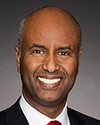
Ahmed Hussen Liberal York South—Weston—Etobicoke, ON
Madam Speaker, Motion No. 14 embodies the simple but powerful idea that Canada's generosity abroad should also help build opportunity at home. That is what it is about. For decades, we have seen Canadians lead with compassion, building schools, strengthening ecosystems and food systems, empowering women and saving lives right around the world. We have done so not because of recognition but because it is simply who we are. However, as the world changes, our development approach must change with it. We can continue to be generous, but we must also be strategic, accountable and mutually beneficial. That is what Motion No. 14 is all about. It aims to make international assistance more accountable, effective and results-driven. It aligns with ongoing efforts to strengthen transparency and ensures that development investments deliver measurable impacts to those who need them.
The motion underlines the link between global development and Canada's own prosperity. Stable, self-reliant partners with strong institutions and the rule of law contribute to a safer, more predictable world, benefit Canadians and support long-term economic security for all of us. By proposing to support the greater involvement of Canadian small and medium-sized enterprises, and innovators and workers in international development, Motion No. 14 highlights how Canada can maximize global impact while also creating jobs, fostering innovation and building expertise right here at home. The motion encourages innovative projects that leverage our unique strengths, such as clean energy, digital technology, education and health, while maintaining a clear focus on poverty reduction and inclusive economic growth. By fostering collaboration among development partners, local actors and the private sector, the motion would promote sustainable outcomes that align with both Canada's international commitments and its domestic economic and social priorities.
Our government has presented a budget of generational investments to empower Canadians, strengthen our economy and secure a stronger, more resilient future for our country. We are living through a time of global change. This means that we must act decisively to ensure that we lay the groundwork for long-term strength and prosperity for our people. Across government, that means making disciplined and sometimes difficult decisions to keep our spending targeted and to make sure that every dollar delivers results, impacts and help for people. As we refocus our international footprint, we remain firmly committed to international assistance and delivering help where it is needed, so the motion is actually in line with the aims of the budget as well.
I have seen first-hand how Canada's international development partnerships change lives, from access to education to providing clean water and enabling people to pursue entrepreneurship and find hope in their lives. Motion No. 14 builds on that proud tradition and propels it into the future. It would ensure that aid remains generous, effective and accountable while also being smart, strategic and sustainable.
When we help others rise, we rise with them. Let us pass Motion No. 14 and make Canada's international development policy a model of shared progress for a changing world.
Canada's International Development AssistancePrivate Members' Business
The Assistant Deputy Speaker (Alexandra Mendès) Alexandra Mendes
Is the House ready for the question?
Canada's International Development AssistancePrivate Members' Business
Some hon. members
Question.
Canada's International Development AssistancePrivate Members' Business
The Assistant Deputy Speaker (Alexandra Mendès) Alexandra Mendes
The question is on the amendment.
If a member participating in person wishes that the amendment be carried or carried on division, or if a member of a recognized party participating in person wishes to request a recorded division, I would invite them to rise and indicate it to the Chair.
Kevin Lamoureux Liberal Winnipeg North, MB
Madam Speaker, I would suggest we pass it on division.
(Motion agreed to)
Canada's International Development AssistancePrivate Members' Business
The Assistant Deputy Speaker (Alexandra Mendès) Alexandra Mendes
The next question is on the main motion, as amended.
If a member participating in person wishes that the motion, as amended, be carried or carried on division, or if a member of a recognized party participating in person wishes to request a recorded division, I would invite them to rise and indicate it to the Chair.
Kevin Lamoureux Liberal Winnipeg North, MB
Madam Speaker, again, we would ask that it pass on division.
(Motion agreed to)
Sitting SuspendedCanada's International Development AssistancePrivate Members' Business
The Assistant Deputy Speaker (Alexandra Mendès) Alexandra Mendes
The House will now suspend for seven minutes.
(The sitting of the House was suspended at 11:53 a.m.)
(The House resumed at 12 p.m.)
The House resumed from November 21 consideration of the motion that Bill C-15, An Act to implement certain provisions of the budget tabled in Parliament on November 4, 2025, be read the second time and referred to a committee, and of the amendment.
Bill C-15 Budget 2025 Implementation Act, No. 1Government Orders
Calgary Confederation Alberta
Liberal

Corey Hogan LiberalParliamentary Secretary to the Minister of Energy and Natural Resources
Madam Speaker, the budget implementation act would allow us to put into action budget 2025, which is a budget built for the moment in which we find ourselves.
Much has been said about this moment, but it is worth recapping. Our largest trade partner and the world's largest economy has turned its back on free trade; global conflicts are on the rise, and, of course, the world is now dealing with the effects of climate change, which are dangerous effects that will only grow over time and that threaten prosperity, lives and the well-being of this planet. It is this context that budget 2025 meets.
I have said elsewhere, and I will say again, that this is an economist's budget in the very best sense. It methodically addresses the challenges in front of us. It asks and provides answers to three questions: What are we trying to do? What do we have available? What course will get us there?
First, what are we trying to do? We are trying to increase productivity. That is how we make sure our economy grows and wages rise. We are trying to make life more affordable, especially housing, and we are giving ourselves the tools to chart our own course in an increasingly dangerous world. We must do that while staying true to Canadian values by protecting our environment, advancing reconciliation and making sure that everybody can access opportunity.
What do we have available? We have resources, both natural and human. We also have the fiscal strength to invest in our own success. The opposition likes to talk about government finances using the language of credit cards to suggest that any investment is reckless, any borrowing irresponsible and any ambition unaffordable, but Canadians know better. Every family that has ever bought a home knows better. Every entrepreneur who has ever grown a business knows better. It would be foolish to put a house on a credit card, but it is not foolish to take out a mortgage to own one. Households thrive through smart borrowing; companies grow through smart debt, and opportunities vanish when we insist on waiting until we have the cash on hand.
Budget 2025 shifts government borrowing from spending on operations to investments in capital and productivity, and that distinction matters. The reality is this: Canada is one of the wealthiest countries in the world. We enjoy the lowest net debt-to-GDP ratio in the G7 and one of the lowest deficit-to-GDPs, and we are recognized internationally for the strength of our fiscal framework and our ability to invest ambitiously while protecting our long-term sustainability.
Kristalina Georgieva, the managing director of the IMF, recently said that Canada stands out in the G7: “the Canadian authorities have been very decisive to take action” by separating operating spending from investment and focusing strategically on progrowth investments in such areas as housing, infrastructure and energy.
That brings us to the course that budget 2025 sets. We are making historic investments in productivity, housing, defence and infrastructure. The budget commits $280 billion over five years. On a cash basis, it represents $450 billion, which is almost half a trillion dollars of investment in the foundations that support our country. The budget implementation act would tackle productivity head-on through the productivity superdeduction, enhancements to SR&ED, investments in advanced research and researchers, financial sector modernization and targeted incentives for major nation-building projects that will expand our economic capacity. Budget 2025 also introduces an expanded suite of investment tax credits. These are instruments designed to crowd in private capital.
The budget makes generational investments in housing by committing $25 billion over five years, including the creation of Build Canada Homes, eliminating the GST for first-time homebuyers up to $1 million and mainstreaming advanced construction methods that can cut building timelines by up to 50%.
The budget makes generational investments in defence by providing $30 billion over five years to rebuild and rearm the Canadian Armed Forces; meeting NATO's 2% target this year, climbing from a low of under 1% in 2014 under Prime Minister Harper; and launching a new defence industry strategy and defence investment agency.
The budget makes generational investments in infrastructure by providing $115 billion over five years for core public infrastructure, trade and transportation corridors, and indigenous and municipal infrastructure and investments to accelerate clean power, ports and economic corridors across the country.
The budget helps families directly, with tax cuts and programs that make life more affordable and jobs more available while preserving the services people count on. It also preserves essential climate action. As the Prime Minister reiterated in the House last week, we remain committed to our Paris goals and net zero 2050. It does this in a simplified way by focusing on the tools that have the biggest impact on emissions, that have the smallest impact on day-to-day life and that are most likely to support and build the clean-technology industries that already capture two out of every three dollars invested in energy globally.
The government's new carbon competitiveness framework, which is outlined in the budget and would be made real by this budget implementation act, has many effective tools to reduce emissions and increase economic opportunity. I would like to focus on three.
The first is industrial carbon pricing, which was brought into effect in Alberta in 2008 by Progressive Conservative Premier Ed Stelmach's government. This made-in-Alberta solution drives meaningful emissions reductions through economic incentives and the polluter pays principle.
The second is a focus on methane. This is the low-hanging fruit of emissions reductions. A focus on methane, which is a potent greenhouse gas, offers some of the most meaningful and lower-cost emissions reductions.
The third is carbon capture and sequestration. Investment tax credits and other policy levers would encourage the creation at scale of an industry that will meaningfully change the emissions profile of the oil and gas sector and take carbon out of production. Not only would this reduce Canada's emissions, but it would be an essential, exportable technology that increases our prosperity while reducing and even removing emissions across the globe.
In total, budget 2025 sets the foundation for long-term growth. It would shift from short-term spending to smart investment, it would invest public dollars to attract even bigger private dollars and it would make Canada more prosperous, more resilient and more ready for the future.
I want to speak to what budget 2025 would mean for Calgary, because the city I proudly represent stands to benefit greatly. Calgary is home to engineers, builders, energy workers, tech innovators, students, researchers and many more. It is a diverse workplace. Budget 2025's emphasis on productivity and investment directly aligns with Calgary's economic strengths. The investment tax credits would be a direct accelerator for Calgary and would help unlock billions in private investment in Alberta.
Budget 2025 would support exactly the kinds of projects Calgary is best suited to build. It would strengthen Canada as a conventional and renewable energy superpower and support the infrastructure needed to export energy in all forms. It would provide clarity around long-term GHG regulations, which is essential for supporting Alberta's energy sector as it invests in decarbonization and competes globally.
Budget 2025 would introduce community infrastructure funding that would also benefit Calgary directly. I have already had the privilege of announcing new investments in housing and cultural spaces, and more will follow as a consequence of this budget's unprecedented investment. Calgary is an ambitious city, and this is an ambitious budget.
Budget 2025 would invest in productivity so that we can grow the economy, in infrastructure so that we can build the economy and in people so that every Canadian can participate in the economy. It would do so within a fiscal framework built on responsibility and sustainability that shifts from spending on operations to financing growth. The budget implementation act would put this into law—
Bill C-15 Budget 2025 Implementation Act, No. 1Government Orders
The Assistant Deputy Speaker (Alexandra Mendès) Alexandra Mendes
Can I interrupt? There is a member with a phone that is buzzing. It is very disturbing for the interpreters.
The hon. parliamentary secretary.
Corey Hogan Liberal Calgary Confederation, AB
Madam Speaker, the budget implementation act would put this into law. It would enable the investments, the tax changes, the housing measures and the competitiveness strategy that budget 2025 lays out.
We often talk in this chamber about the future, what kind of country we want to build, what kinds of opportunities we want to leave our children and how we can ensure that Canada remains strong, prosperous and secure in an unpredictable world. This budget is the answer to those questions. It is a plan to build Canada strong economically, socially, environmentally and in our sovereignty.
Let us pass the budget implementation act, let us implement this budget and let us get to work building the future Canadians deserve.

Dan Muys Conservative Flamborough—Glanbrook—Brant North, ON
Madam Speaker, I would agree with the member opposite that Calgary is indeed an ambitious city, having lived there for 10 years of my life and having a wife from Calgary.
Will the parliamentary secretary say on behalf of his government when an energy pipeline will be built to tidewater, whether it is an oil pipeline to the B.C. coast or something like the former energy east program to the Atlantic provinces? If we want to increase the GDP significantly, the fastest, best and most significant way is through private sector investment in an energy pipeline.
Corey Hogan Liberal Calgary Confederation, AB
Madam Speaker, it is true that pipelines are the safest, most environmentally responsible way to move oil products, and they are also the cheapest way. There are a lot of benefits to them.
Of course, if we are going to continue to build oil infrastructure, we need to do it in a way that is still consistent with our goals to be net zero in 2050, which is exactly what the Prime Minister has said. He has said that if we can make progress on things such as the Pathways project to sequester carbon, there are lots of opportunities for additional take-away capacity. That is oil sector speak for additional pipelines, which would allow us to increase our export opportunities.
Sébastien Lemire Bloc Abitibi—Témiscamingue, QC
Madam Speaker, I thank my colleague from Calgary Confederation for his speech. Obviously, we have heard a lot about his concern for the oil and gas industry, and that is reflected in the budget.
That is not the problem. The oil industry has virtually unlimited financial resources. The people who need help are in the forestry industry. Since last fall, 600 jobs in Abitibi—Témiscamingue have been affected by the forestry crisis, yet Ottawa is not making any investments in that area.
Last week, Arbec Forest Products announced that 100 people in Amos would be laid off just before Christmas. One hundred families will be affected. I am also thinking about the entire ecosystem, about the ordinary workers who invested tens or even hundreds of thousands of dollars in machinery and equipment thinking that there would be a thriving industry, but Ottawa is not delivering.
What is the parliamentary secretary actually going to do to help the people in the forestry industry, who are the ones who need it most?
Corey Hogan Liberal Calgary Confederation, AB
Madam Speaker, of course, the situation the forestry sector faces is absolutely untenable and unjustified, and it is based on long-standing trade disputes with the United States.
Budget 2025 offers a number of supports for the forestry sector, including a new biomass ITC that would now be retroactive to 2023, which would allow investments in plants that use residuals, making sawmills more economical. It also very firmly plants a flag that we will buy Canadian and that Canadian products will be first and foremost when we are building Canadian homes. Very explicitly, that is also Canadian lumber.
These are no silver bullets. They are part of an overall plan that would increase access to markets, which is good for forestry; increase tax credits for the forest sector, which is good for forestry; and increase the size of the domestic market, which is good for forestry.