
House of Commons Hansard #64 of the 45th Parliament, 1st session. (The original version is on Parliament's site.) The word of the day was c-4.

Topics

line drawing of robot

This summary is computer-generated. Usually it’s accurate, but every now and then it’ll contain inaccuracies or total fabrications.

Criminal Code Second reading of Bill C-225. The bill seeks to amend the Criminal Code to address intimate partner violence, classifying intimate partner murder as first-degree and creating specific offences. It also proposes stricter bail conditions for repeat offenders and enhanced risk assessments. While supporters see it as a vital step to combat an "epidemic" of violence, some members raise concerns about potential unintended consequences for victims acting in self-defence and propose amendments. 8200 words, 1 hour.

Making Life More Affordable for Canadians Act Third reading of Bill C-4. The bill proposes measures to make life more affordable for Canadians. It includes lowering the lowest federal income tax bracket, eliminating GST on new homes for first-time homebuyers, and permanently removing the consumer carbon tax. Conservatives argue the measures are insufficient and criticize the industrial carbon tax's retention. The Bloc Québécois opposes it, citing negative impacts on vulnerable taxpayers and demanding compensation for Quebec's carbon tax contributions. Liberals emphasize the bill's direct tax relief and housing support, attributing some affordability challenges to global factors. 39900 words, 5 hours in 2 segments: 1 2.

Statements by Members

Question Period

The Conservatives condemn the Liberal government for escalating food insecurity and record food bank usage due to high taxes and inflation. They highlight job losses and declining housing affordability, exacerbated by the industrial carbon tax. The party also questions the government's commitment to pipeline projects and Indigenous consultations, while accusing the Prime Minister of using tax havens.
The Liberals highlight their support for Canadian families through initiatives like the Canada child benefit, school meal programs, and affordable housing investments. They address unjustified US tariffs affecting Canadian jobs, emphasize climate action with the Canada-Alberta energy agreement, and champion AI innovation. The party criticizes the Conservatives for opposing these crucial measures and advancing border security.
The Bloc condemns the Liberal-Alberta oil deal as a "climate betrayal," claiming it makes Canada a worse environmental offender. They accuse the government of scrapping 2030 targets and abandoning environmental policies, increasing oil production, and betraying Quebeckers' interests.
The NDP calls for a coordinated system for marine debris spills, funded by an ecosystem service fee to protect coasts.

Petitions

Admissibility of Committee Amendments to Bill C‑12 Luc Berthold argues that committee-adopted Conservative amendments to Bill C-12 are admissible, contending they are relevant to the bill's purpose despite a Liberal challenge based on the "parent act rule." 1200 words, 10 minutes.

Adjournment Debate - Border Security Jacob Mantle raises concerns about frequent CBSA system outages, disrupting trade and border operations, criticizing the CBSA's response to his inquiry. Jacques Ramsay acknowledges the issue with the new CARM software, stating the minister has requested an investigation and the government is investing in border security. 1100 words.

Was this summary helpful and accurate?

The EconomyOral Questions

2:15 p.m.

Battle River—Crowfoot Alberta

Conservative

Pierre Poilievre ConservativeLeader of the Opposition

Mr. Speaker, we vote against measures that feed bureaucracy rather than children and families.

Since the school food program was created, the number of young children who need to use food banks has doubled, and 90% of children receive nothing from this program, even if we believe the government's own figures. Every time the government spends more, it costs people more in food inflation, on top of the taxes on food.

Why is the government forcing Canadians to pay more for bureaucracy instead of paying for food?
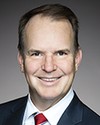
The EconomyOral Questions

December 1st, 2025 / 2:20 p.m.

Gatineau Québec

Liberal

Steven MacKinnon LiberalMinister of Transport and Leader of the Government in the House of Commons

Mr. Speaker, my colleague just mentioned Canada's national school food program. We could also mention the Canada child benefit and automatic benefits. There is no bureaucracy in these programs, but they provide direct assistance to moms and dads who are experiencing food insecurity, which, yes, is all too widespread in our society.

Why are this leader and his party so bent on voting against measures that help people experiencing food insecurity?

Carbon PricingOral Questions

2:20 p.m.

Battle River—Crowfoot Alberta

Conservative

Pierre Poilievre ConservativeLeader of the Opposition

Mr. Speaker, today Algoma announced it is laying off 1,000 steelworkers, nearly a third of its workforce, in the Soo. Our thoughts are with them. The Prime Minister looked them in the eye and promised he would protect their jobs, negotiate a win and have a deal by July 21, but it was a bait and switch that is costing people their livelihoods. On top of that, the Liberals are hammering the steel mill with a higher industrial carbon tax.

Is it not bad enough that the Prime Minister broke his promise on trade? Why is he going ahead with an industrial carbon tax that will kill even more steel jobs?

Carbon PricingOral Questions

2:20 p.m.

Ahuntsic-Cartierville Québec

Liberal

Mélanie Joly LiberalMinister of Industry and Minister responsible for Canada Economic Development for Quebec Regions

Mr. Speaker, obviously, our thoughts are with the workers affected by the unjustified and unjustifiable tariffs imposed by the White House.

We will continue to work with them as Algoma Steel goes through a difficult situation, to say the least. My team and I have been in contact with Algoma's leadership team. We absolutely have every confidence in the Algoma workers as they are going through this hardship. We will make sure we support them as they are developing new products and accessing new markets. We will fight for these jobs.

Carbon PricingOral Questions

2:20 p.m.

Battle River—Crowfoot Alberta

Conservative

Pierre Poilievre ConservativeLeader of the Opposition

Mr. Speaker, more promises and more Liberal thoughts will not put food on the tables of those out-of-work steelworkers.

They are not alone. The Liberal food cost crisis is growing, according to today's Feed Ontario report, which reveals that food bank use is up 13% in one year and 165% since the current Prime Minister became the economic adviser to the Liberal government. There have been 8.7 million visits in one year to Ontario food banks while the Prime Minister hikes carbon taxes on food production.

Why is he driving more people into hunger with higher taxes?

Carbon PricingOral Questions

2:20 p.m.

Thunder Bay—Superior North Ontario

Liberal

Patty Hajdu LiberalMinister of Jobs and Families and Minister responsible for the Federal Economic Development Agency for Northern Ontario

Mr. Speaker, every step of the way, the Conservatives fight against the supports Canadian families talk about needing. In fact, they just asked a question about workers who are facing job losses at Algoma Steel, yet when they had a chance to vote for the expansion of EI for easier access, longer duration and more generous benefits, they voted against it.

How do the Conservatives, in any way, have the right to stand up and talk about the needs of Canadians when they stand in the way of the supports those very Canadians need?

Carbon PricingOral Questions

2:20 p.m.

Battle River—Crowfoot Alberta

Conservative

Pierre Poilievre ConservativeLeader of the Opposition

Mr. Speaker, the support those Canadians want and need is a paycheque. They want to be able to afford food, and they should be able to. In a country with this much farmland and this much wealth, our people should be able to eat.

However, according to the latest report by Feed Ontario, there has been a 165% increase in food bank use in Ontario alone since the Prime Minister joined the government, yet he wants to go ahead with an industrial carbon tax on farm equipment, food processors and fertilizer, which will drive up the cost of food.

Why does the Prime Minister get fat on his tax havens while he taxes people's food?

Carbon PricingOral Questions

2:20 p.m.

Saint-Maurice—Champlain Québec

Liberal

François-Philippe Champagne LiberalMinister of Finance and National Revenue

Mr. Speaker, it is amazing to hear the Leader of the Opposition, because the first thing we did was make sure Canadians could have more money in their pockets. We, in fact, reduced taxes for 22 million Canadians. What is most disturbing for Canadians watching at home is that, at every step of the way, when we were there for families, for workers and for Canadians, Conservatives stood in the way. He is the leader who voted against Canadians.

On this side of the House, we believe in Canada. We are going to grow this country. We are going to work for families. We are going to protect our workers. We are going to build Canada.

HousingOral Questions

2:20 p.m.

Battle River—Crowfoot Alberta

Conservative

Pierre Poilievre ConservativeLeader of the Opposition

Mr. Speaker, the Prime Minister did not just break his promises on food. He also did on housing. He said he would double homebuilding, but, today, a report out from the Missing Middle Initiative shows that housing starts are down 34% across 34 Ontario municipalities, and condo starts are down 51%. However, the Prime Minister is going ahead with a Liberal industrial carbon tax on the steel, aluminum, glass and other inputs required to build homes. It is a tax on homes, all while he hides his millions of dollars in a Bermuda tax haven.

Why does the Prime Minister hide his money abroad while taxing homes here in Canada?

HousingOral Questions

2:25 p.m.

Vancouver Fraserview—South Burnaby B.C.

Liberal

Gregor Robertson LiberalMinister of Housing and Infrastructure and Minister responsible for Pacific Economic Development Canada

Mr. Speaker, if the Leader of the Opposition and the Conservatives actually cared about affordable housing, they would have voted for a budget with $13 billion for affordable housing. They could have voted for $1 billion to fight homelessness and build supportive housing. The Conservatives have stalled the first-time homebuyers' GST break since June. They have no credibility on affordable housing.

Climate ChangeOral Questions

2:25 p.m.

Bloc

Christine Normandin Bloc Saint-Jean, QC

Mr. Speaker, the oil deal between the Liberals and Alberta is climate betrayal. Canada is walking away from the global fight for the environment. The Liberal member for Laurier—Sainte-Marie confirmed this yesterday on Tout le monde en parle. He said, “If we are being honest with Canadians, we can no longer meet our 2030 targets. With the recent announcements, it's not possible”.

Will the Liberals be as honest as that member and admit to the public that they have no intention of meeting their targets?

Climate ChangeOral Questions

2:25 p.m.

Gatineau Québec

Liberal

Steven MacKinnon LiberalMinister of Transport and Leader of the Government in the House of Commons

Mr. Speaker, the agreement reached last week is a major step forward for climate change and the environment in Canada. The deal includes carbon capture. It includes renewable energy intertie projects across western Canada. It includes nuclear energy, and it also includes a clear process and clear conditions for the Province of Alberta to meet.

This is a major step forward for our environment. The rules are clear, and Alberta has committed to implementing its environmental plan.

Climate ChangeOral Questions

2:25 p.m.

Bloc

Christine Normandin Bloc Saint-Jean, QC

Mr. Speaker, it pains me to see the Liberals compromising their values like this. The oil deal with Alberta will position Canada as one of the world's worst environmental offenders for decades to come. It confirms that the Liberals have sold out all of their principles to the same oil companies that are the majority shareholders of the Conservative Party.

Ultimately, it is not surprising that members are defecting from the Conservative Party to the Liberal Party, since they are both pursuing the same policies. The real question is this: Why are there not more Liberals following the example of the member for Laurier—Sainte-Marie and resigning?

Climate ChangeOral Questions

2:25 p.m.

Gatineau Québec

Liberal

Steven MacKinnon LiberalMinister of Transport and Leader of the Government in the House of Commons

Mr. Speaker, does the Bloc Québécois know what the people in British Columbia are not saying? They are not saying that they need the Bloc Québécois to stand up for them.

We have a clear path in British Columbia. We are creating jobs and opportunities. We are ensuring that we work collaboratively with B.C. first nations. We are creating renewable energy and electricity grids. B.C. is the big winner when it comes to creating opportunities, jobs and major projects in Canada. We were elected to build Canada. That is what we are doing.

Climate ChangeOral Questions

2:25 p.m.

Bloc

Mario Simard Bloc Jonquière, QC

Mr. Speaker, he is calling oil a renewable energy source.

Quebeckers did not vote for a climate betrayal. Many of them even voted Liberal out of fear of the Conservatives. Today, the Liberals are betraying them with a conservative oil deal with Alberta. Quebeckers elected 44 Liberal MPs and got betrayed. Alberta elected two, and all its wildest oil dreams are coming true.

What is the point of electing members from Quebec who do not stand up for the interests of Quebeckers?

Climate ChangeOral Questions

2:25 p.m.

Ahuntsic-Cartierville Québec

Liberal

Mélanie Joly LiberalMinister of Industry and Minister responsible for Canada Economic Development for Quebec Regions

Mr. Speaker, the 44 members from Quebec are very proud to defend this government and to stand up for the interests of Quebeckers because, during the last election, Quebeckers told us that they wanted us to be able to protect them from what was happening in the United States.

Given the changing geopolitical context and given that the United States is also making its own decisions regarding energy policy, we need to be able to be our own sovereign nation. That is why we decided to sign such an important agreement with Alberta.

HousingOral Questions

2:25 p.m.

Conservative

Melissa Lantsman Conservative Thornhill, ON

Mr. Speaker, once upon a time in Canada, one could work hard, earn a decent living and build a better life. In the decade of Liberal policy, that bargain has been blown to pieces.

A CTV report this weekend showed that even families earning $200,000 are being driven out of Toronto because they cannot afford a basement rental, a home or anything else. Last year, 35,000 households fled the GTA, not because they wanted to, but because they had to.

Is “move somewhere cheaper” the new official government slogan of the Liberals for Canadians who cannot afford to stay in their homes?

HousingOral Questions

2:30 p.m.

Vancouver Fraserview—South Burnaby B.C.

Liberal

Gregor Robertson LiberalMinister of Housing and Infrastructure and Minister responsible for Pacific Economic Development Canada

Mr. Speaker, it is hypocrisy to hear this from the Conservatives. All of a sudden they are concerned about affordable housing.

Building starts are up across Canada this year versus last year. If we look at year to year, we are moving up. We are investing $13 billion in Build Canada Homes, which is focused on non-market housing and market housing that leverages it.

We are getting no support from the Conservatives to scale up affordable housing at an unprecedented rate, and we would expect that if they are going to speak out here about it.

Public SafetyOral Questions

2:30 p.m.

Conservative

Melissa Lantsman Conservative Thornhill, ON

Mr. Speaker, it is clear that we would never support any of the policies that doubled home prices over the last decade.

However, families are not just leaving Toronto because it is expensive. They are leaving because it is dangerous. We have needles in parks and crack pipes on the subway, and everybody is just supposed to pretend that all of this is normal.

Does the government understand that public safety failures, the cost of housing, the cost of food and the cost of everything else are pushing Canadians out of their own communities after 10 years of Liberal failures?

Public SafetyOral Questions

2:30 p.m.

Thunder Bay—Superior North Ontario

Liberal

Patty Hajdu LiberalMinister of Jobs and Families and Minister responsible for the Federal Economic Development Agency for Northern Ontario

Mr. Speaker, it would be really nice if the Conservatives would read the reports that they quote in the House of Commons. Food banks Ontario talks about the importance of increasing base rates for social assistance, making sure that people living in poverty have sufficient social supports and investing in income supports for Canadians, like we have done through the Canada disability support payment. The kinds of recommendations coming out of these reports fly in the face of the individualism we hear from over on the other side.

What Canadians know is that sometimes people face hard times, and when they do, they want their country to be there for them.

The EconomyOral Questions

2:30 p.m.

Conservative

Luc Berthold Conservative Mégantic—L’Érable—Lotbinière, QC

Mr. Speaker, while the Prime Minister shelters his personal profits in Bermuda without paying taxes, he is forcing the Canadian middle class to pay hidden taxes every time they buy groceries.

The Observatoire québécois des inégalités reports that 20% of workers are experiencing food insecurity. That figure has doubled in four years. Even people with a job can no longer afford food and rent.

Why is this Prime Minister so proud of running up a record deficit and imposing historic spending that makes life even more expensive for Canadians? It is even harder for people to put food on the table.

The EconomyOral Questions

2:30 p.m.

Notre-Dame-de-Grâce—Westmount Québec

Liberal

Anna Gainey LiberalSecretary of State (Children and Youth)

Mr. Speaker, once again, I would like to emphasize that no parent should struggle to feed their children.

I was in Nova Scotia this weekend. I had the opportunity to meet with mothers, with women who run day care centres and take care of our children. They told me just how much our investments are doing for their families, whether it is because of lower day care costs or because they are receiving the Canada child benefit. They are very happy with these investments, which opposition members vote against every single time.

The EconomyOral Questions

2:30 p.m.

Conservative

Luc Berthold Conservative Mégantic—L’Érable—Lotbinière, QC

Mr. Speaker, I will give an example of what 10 years of Liberal governance is doing. Thousands of Quebeckers are choosing to eat less in order to keep a roof over their heads.

The Observatoire québécois des inégalités also reported today that food insecurity has nearly doubled in four years under this Liberal government. This is affecting one in three renters. Severe food insecurity has jumped 63% in three years. That means people are skipping meals, losing weight and suffering from extreme deprivation. Meanwhile, the Prime Minister is asking young people to make sacrifices.

How many young people will this Prime Minister sacrifice to keep making Brookfield richer at Canadians' expense?

The EconomyOral Questions

2:30 p.m.

Saint-Maurice—Champlain Québec

Liberal

François-Philippe Champagne LiberalMinister of Finance and National Revenue

Mr. Speaker, this is a serious issue.

My colleague forgot to mention that the first thing we did as a government was to lower taxes for Canadians. Twenty-two million Canadians are now paying less tax.

The second thing that the Conservatives voted against—and it is important that people tuning in watch when these Conservatives ask questions—is measures to build housing. Affordable housing is the foundation of affordability.

If they were serious and genuinely concerned, each and every one of them would rise to support budget 2025.

Carbon PricingOral Questions

2:35 p.m.

Conservative

Shelby Kramp-Neuman Conservative Hastings—Lennox and Addington—Tyendinaga, ON

Mr. Speaker, at a time when families are under unprecedented financial pressures, Canadians expect their government to put them first. While the Prime Minister travels abroad, meeting with dictators and autocrats, Canadians here at home are struggling to make ends meet. In parts of Ontario, food bank visits have increased by over 250%.

This budget was an opportunity for the government to lower the cost of living by eliminating the industrial carbon tax. Instead, it callously increased it. Why?