House of Commons Hansard #73 of the 45th Parliament, 1st session. (The original version is on Parliament's site.) The word of the day was c-16.

Topics

line drawing of robot

This summary is computer-generated. Usually it’s accurate, but every now and then it’ll contain inaccuracies or total fabrications.

Department of Foreign Affairs, Trade and Development Act Second reading of Bill C-228. The bill aims to increase parliamentary scrutiny and transparency for international treaties. Proponents, like the Bloc Québécois, argue it ensures a democratic ratification process by requiring systematic tabling, a 21-day waiting period, and committee review for major treaties. Opponents, including the Liberals and Conservatives, contend it would burden Parliament, create gridlock, and hinder the government's ability to respond to global developments, viewing it as a "burden without benefit". 8100 words, 1 hour.

Protecting Victims Act Second reading of Bill C-16. The bill Bill C-16 amends criminal and correctional matters to enhance public safety. It addresses gender-based violence by criminalizing coercive control and elevating femicide to first-degree murder. The bill also protects children from exploitation, strengthens victims' rights, and tackles justice system delays. A key debate point is the bill's approach to mandatory minimum penalties, which includes a judicial safety valve to address constitutional concerns, drawing criticism from Conservatives. 40600 words, 5 hours in 2 segments: 1 2.

Statements by Members

Question Period

The Conservatives criticize the Liberal government for Canada's highest food inflation in the G7, which has doubled since the Prime Minister took office. They demand the government scrap inflationary taxes and deficits, including the industrial carbon tax and fuel standards tax. They also address rising extortion cases, forestry job losses, and propose a Canadian sovereignty act to boost the economy.
The Liberals focus on affordability for Canadians, championing the new Canada groceries and essentials benefit which provides up to $1,900 for families to help with living expenses. They highlight their investments in social programs like childcare and dental care, and seek support for the Budget Implementation Act to attract a trillion dollars in investment. They also discuss public safety and support for forestry workers.
The Bloc criticizes the Prime Minister for rewriting Quebec history, specifically his characterization of the Plains of Abraham as a "great partnership" rather than a conquest. They demand he learn Quebec's true history and stop presenting alternative facts.
The NDP demands immediate help for Canadians facing high grocery costs, proposing to remove GST, impose price caps, and tax excess profits.

Petitions

Adjournment Debates

Youth unemployment and training Garnett Genuis cites rising youth unemployment and criticizes the government's plan to limit grant access for career college students. Annie Koutrakis defends the government's investments in youth employment skills, student grants and loans, and apprenticeship programs, arguing that these measures support young people.
Canada-China relations Jacob Mantle questions why the government is pursuing a strategic partnership with China, which he describes as Canada's greatest security threat. Ali Ehsassi responds that Canada is building stronger ties with a range of trading partners and defending key industries, while still seeking solutions with the U.S.
Canada's international trade and pipelines Tamara Jansen questions the Prime Minister's statements at Davos versus his actions at home, particularly regarding pipelines and trade relations with the U.S. Corey Hogan defends the government's energy policies and trade efforts, citing increases in oil production and ongoing negotiations to diversify trade, noting a new MOU with Alberta.
Was this summary helpful and accurate?

Bill C-16 Protecting Victims ActGovernment Orders

6:15 p.m.

Liberal

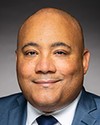
Michael Coteau Liberal Scarborough—Woburn, ON

Mr. Speaker, there is no question that crime and violence are changing all the time with the introduction of technology. We know that this bill embeds pieces around deepfakes and different online protections.

Has the member had conversations with people in her community about any of the provisions within this bill, and what were those conversations like?

Bill C-16 Protecting Victims ActGovernment Orders

6:15 p.m.

Liberal

Arielle Kayabaga Liberal London West, ON

Mr. Speaker, this is something that a lot of people are talking about, especially parents. I am a mother. I have a teenage son who is navigating online. Many people want to talk about how this affects younger women and the conversations and education that are needed when we have our kids online.

One of the questions the member asked was about what our stakeholders were saying. As I mentioned earlier, there is a bit of a divide. We can never have a bill where all parties agree, but the life of this bill is that we want to make sure we are dealing with the important issues that harm our communities and harm our children and, as was mentioned, deepfakes. We saw recently on X that it is unable to address the issues that are affecting young women on the platform. This is an important issue that we continue to have in our communities.

Maybe the House can pass Bill C-16 and Bill C-14 quickly, things that Canadians sent us here to do.

Bill C-16 Protecting Victims ActGovernment Orders

6:20 p.m.

Conservative

Tako Van Popta Conservative Langley Township—Fraser Heights, BC

Mr. Speaker, I thank the member for asking me a question, and I am going to answer it now.

What would I do? We are talking about mandatory minimum sentences and a judge's inclination to conjure up hypothetical fact situations. I was reading section 63 of the proposed act, which would introduce proposed section 718.4 to the Criminal Code. It says that courts may steer around a minimum sentence if the minimum punishment would “amount to cruel and unusual punishment for that offender.”

I was optimistic and thinking that “for that offender” would rule out hypotheticals. Is that what that section means, just for clarification?

Bill C-16 Protecting Victims ActGovernment Orders

6:20 p.m.

Liberal

Arielle Kayabaga Liberal London West, ON

Mr. Speaker, I do not know the specific member's riding name, but the member does have a colleague who agrees with the scenario where mandatory minimum penalties, or MMPs, would be unconstitutional. That member said, “Conservatives have faced push-back because we want mandatory minimums for an offence for which the victim is serving a psychological life sentence. People will say that it failed in the Harper era. It failed in the Harper era because all we needed was a safety valve to say 'except in exceptional circumstances'. That is what one of the member's colleagues said. They agreed with this bill, and I hope the member also gets on board.

Bill C-16 Protecting Victims ActGovernment Orders

6:20 p.m.

Conservative

Arnold Viersen Conservative Peace River—Westlock, AB

Mr. Speaker, I too join my voice to the debate around Bill C-16. This bill comes in the wake of a decade of the Liberal soft-on-crime agenda. Now the Liberals seem to want to be the solution to the problems they have caused.

Over the last decade, we have seen crime across the country. If violent crime in Canada were to be plotted on a graph, we would see that it was steadily going up until about 2010. Then it declined until about 2014, when it started to go up again. It is interesting to lay over that the elections and the election results of that time.

That is entirely what this comes down to, which is the enforcement of the law and the general sentiment the Liberals project when it comes to law enforcement. A number of years back we heard of some tacit support from the Liberal Party for the movement to defund the police. We have seen legalized drugs across the country. We have seen exemptions to the Criminal Code in certain jurisdictions. Over the last decade, we have watched crime climb clear across the country.

I remember when I came to Ottawa back in 2007. The people of Ottawa were very proud of how clean their city was. That is no longer the case. Crime and chaos have come to Ottawa. Drug use is a big problem, particularly in the downtown core. As well, murders are up 45% this year. This is right here in Ottawa, our capital city. That speaks to the challenges of our country.

I will be sharing my time with the member for Niagara South, although I am certain that will be on another day.

In my neck of the woods, auto theft has been a major challenge for a long time. I am pleased the Liberal government seems to have taken action on that, but that was only after Toronto and Montreal started to complain about it aggressively.

Now, the other thing I wanted to talk about with this bill is how we got here. We got here after a decade of Liberals being soft on crime. We also got here because of a specific Supreme Court decision. My colleague from Langley Township—Fraser Heights touched on this just before I spoke, and this is the kind of thing that really galls me.

The court did not deal with the case that was in front of them. It dealt with a hypothetical situation, and I highly doubt that particular hypothetical situation would ever make it to court. The police would never lay charges in that case. Even if the police did lay charges, the prosecutor would say there was not really a case. Even if the prosecutor said that they probably did have a case, his supervisor would say that it was crazy.

The hypothetical case the Supreme Court judged a mandatory minimum sentence to be too egregious for was not the case that was in front of the court. It was a totally made-up case. The individuals in that case do not even exist. Here we are, with the Supreme Court striking down the law based on a severely hypothetical case.

It comes down to the fact that these courts do not like mandatory minimum sentences, and these are political decisions. Whether we like them or not is a political decision. The court wants to run around and say that it does not get involved in politics and that the government cannot interfere with the court's decisions. The courts are making a political decision by saying that they do not like mandatory minimum sentences, after mandatory minimum sentences have been duly debated and passed in this place. It should not be the judges' opinions on these things that matter. That goes to the hypothetical situation that it struck down.

We could have gotten around this mandatory minimum sentence challenge had the government just invoked the notwithstanding clause. The Liberals say that is an undermining of the Constitution. They say that all the time, that using the notwithstanding clause undermines the Constitution.

The reality is that the notwithstanding clause is in the Constitution. It is the Constitution. There is no undermining of the Constitution by using the notwithstanding clause. The Constitution would never have become the Constitution had the notwithstanding clause been put into it.

The other thing is that the court can get it wrong sometimes, and that this place gets to then be the arbiter of whether the court got it wrong. That is why the notwithstanding clause exists, and particularly in this case, I think the court got it wrong in terms of whether mandatory minimums for heinous crimes, such as they are, should stand. They got it wrong in the fact that they used a hypothetical situation to strike down the mandatory minimum sentence. If they were prepared to strike down the mandatory minimum sentence, they should have done it on the merits of the case that was before them and on the merits of the individuals who were standing there before them to be tried.

However, they did not do that. They knew that the public would never stand for the striking down of that mandatory minimum sentence given the heinous crimes of these individuals, so they came up with another hypothetical situation, and that is not appropriate. That is beyond the scope of our entire system.

A constituent came by the other day, and he pointed out to me an interesting thing. I think I will leave it here today. He said that it feels to him like the system no longer defends the interests of the citizen. He said that when his stuff goes missing, there is a half-hearted attempt to find it and charge somebody, but on the flip side, the system is very keen to defend itself and to defend the interests of the system.

We see this over and over again. When the system is under threat, suddenly the Liberals spring into action and say to not use the notwithstanding clause, to arrest that protester or to go after an organized group of folks. When the interests of the system are being threatened, suddenly there is action taking place, but when a private individual citizen's stuff goes missing, then the system seems unable to find the stolen stuff, to bring the perpetrator to justice, to go after a trespasser, or any of these kinds of things. The system seems quite lethargic, but when it comes to the interest of defending the system, suddenly the system seems to be able to spring into action.

I thought that was a profound insight. When we go forward to the next bill that we deal with, I am going to see if it is a defence of the system or a defence of the interests of the citizen that we are debating here today. I think we are debating the defence of the system.


A motion to adjourn the House under Standing Order 38 deemed to have been moved.

EmploymentAdjournment Proceedings

6:30 p.m.

Conservative

Garnett Genuis Conservative Sherwood Park—Fort Saskatchewan, AB

Mr. Speaker, it is a pleasure to be back in the House. I missed all my colleagues. I trust that feeling is mutual. It is good to be back here to address the business of the nation.

I want to offer my condolences to the family of Kirsty Duncan, with whom many of us served.

I also want to take this opportunity to express my solidarity with the brave people of Iran, who have endured unspeakable violence and are struggling for their freedom and for respect for their fundamental human rights. As others have said, I believe the lion and the sun will rise again, and we must do all we can to support the brave people of Iran.

Tonight I am following up on a question that I asked previously about youth unemployment. Meanwhile there are new figures out on unemployment in this country, and we see the continuance of the youth unemployment crisis. The latest numbers show a 0.3% increase in the unemployment rate and a 0.5% increase in youth unemployment, from 12.8 % to 13.3%. Those are very high recession levels of youth unemployment, with 73,000 more unemployed, an increase in the number of unemployment of 73,000 people in that month. Meanwhile, while there are employment struggles in the private sector, we have the biggest public sector ever.

Those numbers were reflected in the conversations I have been having with young people and people of all ages across the country. In January I visited five different university campuses; I was at U of A, two universities in the Toronto area and two in Nova Scotia. The question I have been asking students is whether they are better off or worse off than their parents' generation. I will report back to members of the House, and I think it is important to recognize this, that young people overwhelmingly say they are worse off than their parents' generation.

Key reasons for that are the employment situation and the housing crisis. The struggle for homes and for jobs is top of mind for today's young people, who are concerned that they do not and will not have the same standard of living as their parents, in particular because of the struggle to afford a home and find a job. Compounding that are general affordability concerns, especially the high cost of food. That is what young people are dealing with in this country.

I think that to solve this problem we have to look squarely on the reality that the problem exists, to magnify the voices of young people who are concerned, and to talk about concrete solutions. That is why, in the fall, the Conservatives announced the Conservative youth jobs plan. We took a very constructive approach.

Sadly, the Liberals have moved in the opposite direction in many respects. For instance, we have proposed fixes to training that would support and recognize instances where young people are seeking skills that would make them job-ready. In fact the government is going in the opposite direction by its proposal to pull grant funding from students who are studying at career colleges. We are concerned about the present situation and about the direction of the government that is actually making things worse for young people looking for jobs, homes and hope.

In this new year, is the government prepared to change direction and take seriously the constructive proposals the Conservatives have put forward?

EmploymentAdjournment Proceedings

6:30 p.m.

Vimy Québec

Liberal

Annie Koutrakis LiberalParliamentary Secretary to the Minister of Jobs and Families

Mr. Speaker, I too would like to take this opportunity to offer my sincere condolences to the family of my dear colleague, Kirsty Duncan, who was a great source of inspiration and comfort for me when my mom passed away five short months after my first election in 2019.

Young people across the country are asking the same question: How do we make sure opportunity keeps pace with a changing economy? That is why supporting youth employment is not abstract for our government; it is a priority we are acting on with real investments and real results.

Through budget 2025, we are creating more pathways into good jobs and making education more affordable. We announced $307.9 million over two years, starting in 2026-27, for the youth employment skills strategy, supporting employment, training and wraparound services for roughly 20,000 youth facing barriers each year. We also committed $26.1 million to six national projects under the YESS strategic collaboration stream. These projects are focused on solving real challenges young people face, bringing together youth, service providers, employers and researchers to develop solutions that can scale. That includes better tools for employers to support youth with disabilities, and stronger data to guide evidence-based decisions.

The labour market is changing quickly, with new technologies, new industries and new skills. Our approach reflects that reality. That is why we continue to invest in students and apprentices as they prepare for the workforce. For the 2025-26 academic year, we extended the temporary increases to Canada student grants and loans. That includes the 40% increase for full-time and part-time students, students with disabilities and students with dependents, as well as the higher weekly student loan limit of $300. We have also expanded Canada student loan forgiveness for health care and social service professionals working in rural and remote communities, which is now covering 10 additional occupations from early childhood educators and social workers to personal support workers and physiotherapists. These measures recognize the pressures students are facing today, and they help ensure that cost is not a barrier to building a future.

We are also delivering results through programs that directly connect young people to work. A recent evaluation of the youth employment and skills strategy program found that 76% of participants were employed or back in school after completing the program. For summer 2025, Canada summer jobs created up to 76,000 opportunities. Budget 2025 will increase that to around 100,000 summer jobs in 2026. Through the student work placement program, we expect to support roughly 55,000 placements in 2026. Taken together, these programs will create more than 175,000 job opportunities for young Canadians in 2026-27 alone.

This is how we make sure young people are not left behind: by investing in their skills, lowering the cost of education and opening doors to real opportunity.

EmploymentAdjournment Proceedings

6:35 p.m.

Conservative

Garnett Genuis Conservative Sherwood Park—Fort Saskatchewan, AB

Mr. Speaker, there are many different parts of that response that I could pick up on, but let us talk about what is in the budget, very concretely.

Page 217 of the budget states:

Budget 2025 announces the government’s intention to propose legislative and regulatory amendments to address integrity issues related to private educational institutions by generally limiting access to the Canada Student Grant for Full-time Students to students attending public educational institutions and not-for-profit private institutions within Canada.

In effect, that excludes career colleges.

As the economy changes in different ways, career colleges are often very nimble, developing new programs to meet new challenges and providing students with very practical vocational skills. The government's approach is to say that anyone who studies anything at a university can have access to these grants, yet, for students in those kinds of institutions who study for specific career-oriented skills that likely are skills that they can train for only in the career college institutions, the government is saying “no dice”. Why is the government attacking these kinds of institutions and students?

EmploymentAdjournment Proceedings

6:35 p.m.

Liberal

Annie Koutrakis Liberal Vimy, QC

Mr. Speaker, young people want to know that there is a real future waiting for them, whether the future is in a classroom, a workplace or the skilled trades. That is why our government is acting, not with talk but with concrete support.

Budget 2025 proposes $75 million to expand the union training and innovation program, strengthening union-based apprenticeship training in Red Seal trades and opening more doors for young Canadians. This builds on nearly $1 billion we already invest every year to make trades training more affordable through loans, tax credits and employment insurance supports. Through the Canadian apprenticeship strategy, apprentices get the help they need to complete training and earn certification. While they are in technical training, employment insurance provides income support, and through the Canada apprentice loan, apprentices can access up to $20,000 in interest-free loans.

This is what action looks like: backing young people with real support on every path to work, including the skilled trades.

International TradeAdjournment Proceedings

6:40 p.m.

Conservative

Jacob Mantle Conservative York—Durham, ON

Mr. Speaker, this week is the anniversary of the final report of the Public Inquiry into Foreign Interference. I want to quote two conclusions from that report. First, the report states, “the People’s Republic of China (PRC) is the most active perpetrator of foreign interference targeting Canada’s democratic institutions. The PRC views Canada as a high-priority target.” The report goes on to say, “The PRC targets members of Chinese Canadian diaspora communities for the purposes of repression, influence and forced return of targeted individuals to the PRC.”

In its own country, China's repression of its own people is well documented, and, until recently, the Prime Minister agreed. During the election, when asked the question about the greatest security threat to Canada, the Prime Minister responded, “I think the biggest security threat to Canada is China”. However, just nine months later, the Prime Minister says he is forging a “new strategic partnership” with our greatest security threat.

Trade with China is necessary. A positive diplomatic relationship with China is necessary. Forging a “new strategic partnership” with China, however, is a choice. Declaring that we are setting ourselves up for a Chinese-led new world order is a choice. Doing these things with great fanfare and media attention is a choice, and choices made by governments have consequences. Attempting to trade American unpredictability for Chinese dependence is not the answer.

When Lithuania opened an office in Taiwan, China blocked the majority of their imports within months. When Norway awarded the Nobel Peace Prize to a Chinese dissident, relations froze for years. When Korea accepted THAAD missile deployment, it endured state-sanctioned tourism embargoes, costing its economy billions. Deals with China have consequences. The government owes Canadians an explanation for why it has reversed course and has moved from a position of declaring China our greatest security threat to a position of strategic partnership and ever-growing alignment.

Can the parliamentary secretary provide Canadians that explanation?

International TradeAdjournment Proceedings

6:40 p.m.

Willowdale Ontario

Liberal

Ali Ehsassi LiberalParliamentary Secretary to the President of the King’s Privy Council for Canada and Minister responsible for Canada-U.S. Trade

Mr. Speaker, allow me to join my colleagues in extending my condolences to the family of the Hon. Kirsty Duncan. She was a brilliant and passionate member of the chamber, and she will very much be missed.

I am thankful for the opportunity to address the House on a matter of critical importance to Canada's economy.

Canada's prosperity has always been tied to strong, reliable trade relationships, and none, I would add, is more important than the one we share with the United States. In 2024 the United States remained Canada's top merchandise trading partner, receiving $595.9 billion of Canada's merchandise exports. Over 75% of Canadian exports were destined for the United States in 2024. Every day, over 3.4 billion dollars' worth of goods and services cross our shared border, supporting jobs and driving innovation on both sides of the border.

For decades this fundamental trade relationship has been anchored in rules, predictability and mutual benefit. Together we have fostered a North American economy that is competitive, resilient and innovative. However, as we know, the United States is fundamentally reshaping all its trade relationships, causing major disruption and upheaval for its trading partners, including Canada. The U.S. administration's imposition of tariffs of up to 50% on Canadian steel, aluminum and other critical exports is not just economically harmful; the tariffs also disrupt supply chains, inflate costs and erode the trust that has sustained our partnership for generations.

Our industries, including the steel, aluminum, forestry and automotive sectors, are the backbone of our Canadian communities. The steel sector alone contributes over $4 billion to our GDP and sustains more than 23,000 jobs, with tens of thousands more in related sectors. These industries are critical for building homes, infrastructure and the clean energy future Canadians expect.

That is why, on November 26, Canada's new government moved quickly to protect and strengthen the sectors most affected by the U.S. tariffs, introducing new measures to help workers gain new skills, support businesses as they modernize and diversify, and boost domestic demand for Canadian goods. However, we recognize that our priority and the government's focus must be to find a long-term solution to the harmful tariffs with the U.S. administration.

Where do these negotiations stand? Before President Trump abruptly paused discussions last month, our teams were making progress, exploring pathways toward a sectoral deal that could restore stability in our bilateral trade. Canada remains ready and open to re-engage. We are also preparing for the CUSMA review scheduled to begin this year.

Our message to the United States is clear: Canada will always defend its interests, but we will do so as a constructive partner committed to stability, prosperity and growth.

International TradeAdjournment Proceedings

6:45 p.m.

Conservative

Jacob Mantle Conservative York—Durham, ON

Mr. Speaker, I do not say this often, but unfortunately this is the problem when parliamentary secretaries come and simply read prepared remarks. Nothing in the response addressed my question about why the government has decided to move from considering China as a geopolitical adversary and our greatest threat to now forging a new strategic partnership.

I will generously interpret the member's response as saying that Canada had some trouble with its best friend, the United States, and therefore the response to that is we are going to jump in bed with a geopolitical adversary, which is China. Let me reiterate that trading American unpredictability for Chinese dependence is not the answer.

The parliamentary secretary suggested he is looking for a long-term solution. Is his long-term solution partnerships over time and greater alignment with China?

International TradeAdjournment Proceedings

6:45 p.m.

Liberal

Ali Ehsassi Liberal Willowdale, ON

Mr. Speaker, what I have been trying to emphasize to the member is that we are forging stronger ties with a range of trading partners, and we are building a stronger domestic economy, one economy that works for all Canadians.

As I listen to the member, I would say the opposition can criticize all it likes, but Canadians expect action, not slogans.

Our government is standing up for workers, defending key industries and doing the hard work of diplomacy, whether it comes to the United States or to other countries. We are working to negotiate with all these countries. We are protecting jobs, stabilizing sectors under attack and keeping the door open to a negotiated solution with the U.S. while we diversify our relationship with other countries.

Walking away or posturing might make for good politics, but I would say that Canadians—

International TradeAdjournment Proceedings

6:45 p.m.

The Assistant Deputy Speaker John Nater

Order, please.

The hon. member for Cloverdale—Langley City.

Natural ResourcesAdjournment Proceedings

6:45 p.m.

Conservative

Tamara Jansen Conservative Cloverdale—Langley City, BC

Mr. Speaker, the Prime Minister said something at Davos that sounded like pure common sense. He said, “A country that cannot feed itself, fuel itself or defend itself has few options.” Most Canadians heard that and thought, “Well, of course,” and yet the Prime Minister does the exact opposite here at home. He talks about fuelling ourselves, and then his government blocks energy projects. He talks about prosperity, and then investment gets buried under years of red tape. He talks about independence, and then Canada becomes more dependent, not less. Canadians are left scratching their heads because the words make sense but the actions do not.

When a government keeps saying the right things while doing the opposite, people stop listening to speeches and start paying attention to their bills, their jobs and their future. That is the gap Canadians are feeling right now, between what is said abroad and what is actually happening at home.

At Davos, the Prime Minister told the world that the rules-based order is ruptured. He warned countries to stop living within a lie and to be honest about the gap between rhetoric and reality.

However, here is the reality that Canadians are living with. The rules-based order has not been thrown out the window, especially when it comes to our most important trading relationship. Despite tough rhetoric coming out of Washington, the vast majority of Canadian goods are still flowing into the U.S. under CUSMA, with minimal tariffs and established rules still in place. There are thousands of businesses that rely on CUSMA. They cannot afford anything that puts that relationship at risk. The system is under strain, but it is still functioning. A strong negotiator would have brought stability, not uncertainty, for Canadian businesses.

At Davos, the Prime Minister also warned against nostalgia. He said we should not hanker after things that no longer are. He told the world that the old order is finished and is not coming back, yet the moment he returned home and reality set in, his tune changed. Faced with pressure from the U.S., our largest trading partner, he suddenly began talking about a reset, about rebuilding the relationship and returning to something closer to what we had before.

Members can take note of the irony here. Abroad, the Prime Minister tells global leaders that nostalgia is foolish. At home, he asks Canadians to believe he can restore the very relationship he said no longer exists. This is where Canadians bring the conversation back to the basics. If we do not have a pipeline to the Pacific, then we do not really have access to the world. We have one main customer, the U.S., and that means we do not have leverage when things get tense; we have dependence.

We can talk all we like about diversification and resilience, but until Canadian oil can reach global buyers through a reliable Pacific corridor, those words do not change our reality. This is not about who has the power to act. The federal government has the authority to move projects like this forward. It does not require another announcement or another overseas speech. It requires decisions, permits and a clear timeline.

Instead, what we keep seeing are press conferences, consultations and promises that remain stubbornly in the future. The result is that Canadians stay stuck, rich in resources and short on results. Canada has everything it needs: the resources, the workers and the global demand. What is missing is not vision but the willingness to act. Until the government is prepared to approve projects and turn speeches into action, Canadians will keep living with a gap between what is said abroad and what is done at home.

If the Prime Minister truly believes what he said at Davos, when will he remove the laws that make pipelines to tidewater impossible?

Natural ResourcesAdjournment Proceedings

6:50 p.m.

Calgary Confederation Alberta

Liberal

Corey Hogan LiberalParliamentary Secretary to the Minister of Energy and Natural Resources

Mr. Speaker, I am going to follow through on the general thread of my colleague's questions because it provides a pretty good framework to go through them bit by bit.

The Prime Minister did, in fact, talk about feed, fuel and defend, things that Canada does very well. We are an energy superpower. Our oil and gas production from 2015 to 2024 went up 34% when, across the globe, it only went up 6%. We grow more food than most nations could even dream of. We are increasing our NATO spending to 2%, moving on to 5% in the years to come.

When we talk about dependence, yes, it is true that Canada does have a challenge with dependence. Currently, 71% of our exports go to the United States of America. The next closest G7 country is Japan at 19%. When she talked about the issues at home that Canadians talk about, such as affordability, this is also true, which is why I hope members opposite will support us in passing very promptly the groceries and essentials benefit that was announced by the Prime Minister today.

There is a rupture, and that rupture caused goods under CUSMA at first to not even be eligible to move forward. When President Trump decided that those would be allowed to go forward, it provided us a great deal of benefit as a country. In fact, Canada has the lowest effective tariff rate in the world at about 8%, the next closest being Mexico. We understand now that when we talk about negotiations with Donald Trump and the United States, we also have to measure that sometimes those deals can change as they go forward, as we saw with Europe being threatened with tariffs over Greenland recently. Talking about outcomes, the outcome is that we currently have the best deal, and we will sustain the best deal as we do the hard work to reset and diversify.

That brings us to the pipeline. The pipeline we currently have, Trans Mountain and the Trans Mountain expansion, has allowed Canada to diversify some away from the United States. Currently, 90% of our oil goes to the United States. The 10% that does not is because of the Trans Mountain pipeline that a previous Liberal government managed to get over the line. We have to do more, and that is why we have an MOU with Alberta, which is getting us another pipeline to the west coast.

However, I will say this. Bulldozing will not work. We get things done in this country by working together. The Government of Alberta understands that. The Government of Alberta is working toward a submission in June for a pipeline project. There is no pipeline project right now for the government to approve. Just as the Prime Minister said that nostalgia is not a strategy, neither is wishful thinking.

We will do the hard work as the government, and we will get things built.

Natural ResourcesAdjournment Proceedings

6:55 p.m.

Conservative

Tamara Jansen Conservative Cloverdale—Langley City, BC

Mr. Speaker, the Prime Minister sold himself as a master negotiator. People elected him to get a deal with the U.S., and now he is telling everyone that our old relationship with it is finished.

I have spoken to local business owners, manufacturers, exporters and family-run companies. They are scared to death about what happens if CUSMA negotiations fail. These are not abstract fears. These are payrolls, contracts and livelihoods hanging in the balance, with no backup plan and no margin for error. If this deal fails, the damage will not be theoretical. It will tear straight through communities, with jobs lost, investments frozen, businesses destroyed and families left picking up the pieces.

Will the Prime Minister stop posturing and start thinking about the people who will pay the price here at home, or will Canadians be left carrying the cost of his miscalculations?

Natural ResourcesAdjournment Proceedings

6:55 p.m.

Liberal

Corey Hogan Liberal Calgary Confederation, AB

Mr. Speaker, the member is quite right that this is not abstract. This is livelihoods, which is why we cannot get into sound bites. We need to do the hard work and maintain the best deals possible, which is what Canada has right now.

The CUSMA negotiations will be difficult. We know that, but we also know that Canadians are anticipating and expecting government to work with opposition and get the best deal possible by working with provinces, indigenous peoples and all shareholders and stakeholders across Canada, and that is going to require us to come together.

We have to put aside the rhetoric and get the job done. That is what Canadians expect.

Natural ResourcesAdjournment Proceedings

6:55 p.m.

The Assistant Deputy Speaker John Nater

The motion to adjourn the House is now deemed to have been adopted. Accordingly, the House stands adjourned until tomorrow at 10 a.m., pursuant to Standing Order 24 (1).

(The House adjourned at 6:57 p.m.)