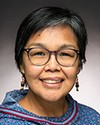
Mr. Speaker, kwe, kwe. Ulaakut. Tansi. Waajiye. Bonjour. Hello.
Before I begin, I would like to acknowledge that we are gathered on the unceded, unsurrendered territory of the Algonquin Anishinabe people.
The Indian Act of 1876 is a remnant of our colonial history and an attempt to completely assimilate first nations peoples. It sought to absorb our languages, cultures, governance structures and, ultimately, our identity as first nations.
Through a process called “enfranchisement”, first nations individuals were told that they would gain the basic rights that other Canadians already had. They simply had to give up who they were. They would have the capacity to vote, to own property, to practise law and to become a doctor. Imagine having to make that choice. I recognize that for many individuals who did choose enfranchisement, it was truly not a choice at all. Imagine someone being told that their education, profession or ambition would cost them everything: their identity and their children's identity.
I stand here to speak to Bill S-2, a vital step towards addressing inequities in the Indian Act. It is worth remembering that before 1960, a first nations woman like me would never have had the opportunity to sit in this chamber as a member of Parliament unless she first gave up her status. To serve in Canada's democracy, she would have been required to renounce legal recognition of who she was. That was the price of enfranchisement: participation in exchange for erasure.
Now, for the first time, the indigenous Minister of Indigenous Services is standing before members to advance reform on the very injustices of enfranchisement.
It is an honour for me to help move forward Bill S-2, which specifically addresses these inequalities.
This legislation would restore entitlement to approximately 3,500 first nations individuals and their descendants who gave it up or lost it. These are not just numbers on a page. There are more than 3,500 mothers, fathers, children, aunties and grandparents who are all looking for the restoration of identity, dignity and recognition, what they should have always had and what belongs to them.
Across this country, thousands of first nations individuals are waiting for enfranchisement decisions, waiting for their identity to be restored, waiting for their children to be recognized and waiting to be told by Canada what they have always known: that they belong.
I have heard first-hand the impacts of enfranchisement on individuals, on their families and on their communities. They have been clear that it is imperative to avoid delay and that changes are needed in the Indian Act. Their message is that they cannot, will not and should not continue to be deterred or denied their rightful entitlement any longer.
This bill gives first nations peoples back the power to have their name removed from the Indian register and take back control of their identity.
It also amends the act to remove outdated and offensive language related to dependent persons, language that is a legacy of colonial mindsets. In addition, it makes it easier to reaffiliate individuals, particularly women, with their natal first nations band.
These changes matter because they correct real harms and bring people home. Bill S-2 is a step in the right direction.
I want to share and state clearly that I recognize that it does not address all inequities in the Indian Act. The second-generation cut-off rule continues to harmfully erode entitlement over generations. Under the rule, if an entitled person marries someone who is not entitled, their children hold entitlement, but their future children, the second generation, do not.
This is a critical issue that must be addressed the right way. I want to reiterate today that the question is not how we will do it, but when we will do it. We need to follow the lead of the community to ensure that the solutions we bring forward are not only supported by the community but have the consensus of rights holders.
That is why we launched the collaborative process in November 2023 to address the second-generation cut-off and section 10 voting thresholds.
Many first nations and organizations have developed proposals for solutions to these very issues, and through the advisory council, the proposals are presently being studied and evaluated based on legal viability. This work is grounded in lived experience, community knowledge and the realities of administering membership systems. Broad consultation, the second phase, will focus on these solutions and be quickly launched in the coming weeks.
Advancing these amendments to Bill S-2 without meeting the legal duty to consult would repeat outdated processes that unilaterally impose a legislative solution, not to mention further jeopardizing the status of thousands of individuals who have been waiting in limbo for the bill to pass, to address enfranchisement.
I am firmly committed to addressing the second-generation cut-off, but we must respect this fundamental principle or we risk repeating the very wrongs we are seeking to right.
Getting this next step right is important. Legislative change without implementation readiness is not reconciliation. That is why addressing the second-generation cut-off requires a distinct legislative path forward, one that allows space for meaningful engagement with partners and also for government and communities to be prepared to support the changes that need to be made.
While we are engaging in the collaboration process with first nations on broader reforms, we cannot ignore the urgent need to help people who are waiting right now, people who have applied to register and been denied because of enfranchisement, people whose parents or grandparents were forced to choose between their identity and their children's safety.
People have lived in this system without recognition, because the system was designed to erase their rights. The court decision in the Nicholas case found that certain registration provisions in the Indian Act violated the equality rights guaranteed under the Canadian Charter of Rights and Freedoms. The court gave Parliament a deadline to act. That April 2026 deadline is fast approaching.
If we fail to pass the bill in this time, we risk leaving 3,500 people behind. We risk creating uncertainty for families who have already endured too much. Further, we risk unequal application of the Indian Act across the country, and we risk allowing unconstitutional provisions to remain in force. This cannot happen. While I know and address this as a colonial policy, I want to ensure that the solutions that we bring forward are going to be based in further protecting the implementation process of what they are designed to do to ensure that we bring forward equality. We want to also make sure that we are fighting to protect community, and that they are leading the solutions, the true message of reconciliation.
Experience grounds me and reminds me that this work is deeply personal, including for me and for my own family. I carry that with me every time I stand in this place. We have the opportunity before us to correct a painful legacy, to restore the rights that were unjustly taken from thousands of people asked to make a simple choice that perpetuated further harm.
Bill S-2 is necessary, it is urgent, and it is a meaningful step towards justice. I urge for the passing of the bill as it was originally introduced to Parliament, so those who have waited far too long do not have to wait any longer.