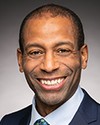
House of Commons Hansard #91 of the 45th Parliament, 1st session. (The original version is on Parliament's site.) The word of the day was s-2.

Topics

line drawing of robot

This summary is computer-generated. Usually it’s accurate, but every now and then it’ll contain inaccuracies or total fabrications.

Indian Act Second reading of Bill S-2. The bill aims to amend the Indian Act to correct inequities from enfranchisement, restoring status for thousands. While the Liberal government seeks to pass the original bill and then consult on the second-generation cut-off rule, opposition parties like the Conservatives and NDP support Senate amendments to address both issues immediately, arguing further consultation is a delay tactic given decades of advocacy against discrimination. 11100 words, 1 hour in 2 segments: 1 2.

Statements by Members

Question Period

The Conservatives criticize the government's economic policies, citing Canada's shrinking economy as the weakest in the G7. They highlight rising child poverty, food insecurity, and call for lower costs. Concerns are raised about unjustified tariffs and the $6.6-billion Cúram software disaster causing senior benefit delays.
The Liberals emphasize Canada's strong economic performance with job growth, increased exports, and significant foreign investment, despite global trade challenges. They highlight their commitment to social programs like affordable childcare, dental care, and the national school food program to combat poverty. They also defend the modernization of benefit systems and their efforts in cancer prevention research and housing initiatives.
The Bloc demands an independent public inquiry into the Cúram software disaster and issues with federal computer programs. They also urge federal investment to prevent the Lithion acquisition by Americans and call for the inclusion of marine transportation in steel subsidies.
The NDP criticizes the Liberals' anti-worker stance, citing their undermining of the CUPE flight attendants' strike and calling for the repeal of section 107.
The Greens urge the federal government to fund shovel-ready housing projects in British Columbia after a provincial fund was cancelled.

Petitions

Corrections and Conditional Release Act Second reading of Bill C-221. The bill amends the Corrections and Conditional Release Act to ensure victims receive clear explanations for how an offender's eligibility and review dates for temporary absences, release, or parole are determined. Members from all parties support the measure, which aims to provide greater transparency and accountability for victims within the justice system, a goal also addressed by the government's Bill C-16. 4900 words, 40 minutes.

Was this summary helpful and accurate?

Bill S-2 Indian ActGovernment Orders

10:30 a.m.

Conservative

Billy Morin Conservative Edmonton Northwest, AB

Mr. Speaker, just yesterday I was proud to sit in the House and witness my Conservative colleague from Haliburton—Kawartha Lakes be supported with the unanimous consent of all parties to amend the Criminal Code to end coerced and forced sterilization, which unfortunately disproportionately affects indigenous women and girls. It was a powerful moment between all parties that will bring justice and hope for the future.

Furthermore, the 45th Parliament is unique. In 2025, Canada helped elect the first indigenous woman to become Minister of Indigenous Services, and I am proud to have been asked by our Conservative leader to sit as the shadow ISC minister. I respectfully challenge the minister and offer my help and advice for the work necessary to help end discrimination against women and children and end the second-generation cut-off in that work.

I give thanks to my fellow Conservatives for giving me the ability to issue that challenge, which is rooted in aligning first nation and Conservative values to end discrimination. It is also rooted in aligning values, such as self-determination and self-responsibility, lower government control of the people, the protection of traditions and the transmitting of those traditions down through generations, and the protection of the institution of family to keep families together. Conservative values and indigenous values can align.

This is ultimately about keeping families together. Since the Senate initiated this challenge, I have heard some of the toughest stories. If the government is truly about nation-to-nation relationships and reconciliation, it will have to act to respond to these stories by getting rid of the second-generation cut-off and honouring the Nicholas decision.

There are stories such as that of a chief from Manitoba who raised her daughter with language, culture and ceremony, but because of the second-generation cut-off, the chief's daughter is systematically not a first nations person. Who is the government to uphold the law in telling the chief that her daughter is less than others in her own family? This is certainly not reconciliation, and it is not nation to nation.

We have heard from an uncle who signed a nephew's birth certificate so that the child did not have to be ostracized from their own community and from a kokum who lives on reserve and is transitioning to her spirit journey who is not able to pass on her life's belongings and her home to her children and grandchildren. We heard from first nations entrepreneurs, including an owner who will be forced to sell his business to a band in order to keep it indigenous-owned because his daughter is non-status. We listened to the AFN youth council speak to how they are not leaders of tomorrow, but leaders of today, who are there to address the government on this issue because they will ultimately not be a part of seeing whole first nations communities and families go extinct in their lifetime.

There is a longer-term, principled fix here. The ISC minister and my own community have found it. Membership and families should be defined by the first nations themselves, not by Ottawa. Nearly half of first nations have found the solution, and the government should focus its efforts on the capacity to facilitate first nations to move from section 11 to section 10 bands, or modern, self-government, self-determining agreements with the federal government.

The first nations need to meet Canada halfway and make this a priority by putting in the work to define their own membership laws. That was my attitude when I was chief, and it is the attitude I still carry to this day as a Conservative member of Parliament. First nations are the masters of their own destiny, not Ottawa.

Ottawa needs to focus less on political ISC programs and more on the systematic empowering of indigenous peoples. I am proud to say that this is also the guiding principle of our Conservative leader and the Conservative team when it comes to indigenous-Canada relationships. I think all members of the House know that to be true, but the House has to be better at acting on that principle.

I am finding the balance of being an MP and a person with first nation status. When my time here is done, I cannot look back and say that I did nothing to speak to and act against the extinction of first nations people, which by some accounts will peak in approximately 30 years. I am here to honour the principle of treaty that Canadians and first nations people will work together as long as the sun shines, the grass grows and the rivers flow.

I challenge the Liberals to not use delay tactics when it is politically convenient, to show leadership and to put in the work to pass Bill S-2, which honours the Nicholas decision and gets rid of the second-generation cut-off, expediently during this Parliament.


Bill S-2 Indian ActGovernment Orders

10:40 a.m.

Abitibi—Baie-James—Nunavik—Eeyou Québec

Liberal

Mandy Gull-Masty LiberalMinister of Indigenous Services

Mr. Speaker, I want to also acknowledge and echo the challenges of being a first nation person doing this critical work.

We know this bill has been put forward as something to address enfranchisement as part of the Indian Act. If we are truly going to support the process of community having jurisdiction and authority over defining membership and status, will my colleague support and create the space needed for community to do that work internally and have authority over choosing procedure, or will my colleague support amendments that would eliminate the opportunity for them to do so?

Bill S-2 Indian ActGovernment Orders

10:40 a.m.

Conservative

Billy Morin Conservative Edmonton Northwest, AB

Mr. Speaker, ultimately, as I said, the decisions and the destiny of first nations and indigenous people lie in their own communities. I agree with that principle, but I also think that this is a delay tactic from the Liberals. Quite frankly, it is not consistent with their position when it came to not consulting on Bill C-5 and on Alberta's MOU.

Right now, I think that first nations have that opportunity. The amendments contemplate a one-year transition period, but there is more than ample opportunity and resources for first nations to do the right thing, which they want to do, to move their own membership definitions.

Bill S-2 Indian ActGovernment Orders

10:40 a.m.

Bloc

Claude DeBellefeuille Bloc Beauharnois—Salaberry—Soulanges—Huntingdon, QC

Mr. Speaker, I want to congratulate my colleague and tell him that the House is fairly unanimous in supporting Bill S‑2.

However, I am curious to know whether he thinks it might be time to go a little further and carry out a more in-depth overhaul of the Indian Act. My Bloc colleague said that the name of the act itself is repulsive.

Is it not time to take things to the next level and go even further in our relationship with first nations?

Bill S-2 Indian ActGovernment Orders

10:40 a.m.

Conservative

Billy Morin Conservative Edmonton Northwest, AB

Mr. Speaker, ultimately, the Indian Act needs to be dispelled, but it is first nations that have to be the primary driver of that. I agree with my colleague in that regard.

For this legislation, I accept the amendments the Senate made. Again, we cannot let perfect get in the way of progress. The Indian Act is still going to be generations and decades ahead at different paces for first nations communities, but ultimately what we are talking about here today is the federal government's relationship specifically to status individuals, and government being able to lead on that to get rid of it today and get rid of discrimination.

Bill S-2 Indian ActGovernment Orders

10:40 a.m.

Conservative

Dane Lloyd Conservative Parkland, AB

Mr. Speaker, I thank my hon. colleague, who is in my neighbouring riding. He will be well aware of the history of the Michel band in Sturgeon County, one of the only first nations in Canada that was forcibly enfranchised.

I am wondering if he can talk about the impact this legislation would have on first nations peoples like those in the Michel band and how we can do a better job of creating reconciliation to recognize first nations' status in this country.

Bill S-2 Indian ActGovernment Orders

10:40 a.m.

Conservative

Billy Morin Conservative Edmonton Northwest, AB

Mr. Speaker, ultimately, the original version of the bill is Bill C-38 through the Nicholas decision, and it affects primarily the Michel band in particular, of over 3,000 people approximately. I think the Liberals are phrasing this as one or the other. We can have both, and we can make history today. The government has traditionally gone through litigation to change the Indian Act. This time it can redefine reconciliation and be proactive to stay out of long, costly court cases and do both to honour the Michel band but also get rid of the second-generation cut-off for generations to come, today.

Bill S-2 Indian ActGovernment Orders

10:40 a.m.

NDP

Lori Idlout NDP Nunavut, NU

Uqaqtittiji, very quickly, could the member share with us whether the Conservatives will support the amendments that were made by the Senate?

Bill S-2 Indian ActGovernment Orders

10:40 a.m.

Conservative

Billy Morin Conservative Edmonton Northwest, AB

Mr. Speaker, the Conservatives support the amendments made by the Senate.

Bill S-2 Indian ActGovernment Orders

10:40 a.m.

Conservative

Jamie Schmale Conservative Haliburton—Kawartha Lakes, ON

Mr. Speaker, it is a pleasure, as always, to rise to speak in the House. Today, it is on Bill S-2, an act to amend the Indian Act, legislation that would make an important step toward correcting long-standing discrimination in the registration provisions of the Indian Act.

Before I get into the meat of my speech, I would like to thank and congratulate my colleague, the member for Edmonton Northwest, on his inspiring words today. He gave a great speech, and he provides great leadership in our caucus on many issues, including the indigenous file. It is a pleasure to work with him and many others as we move forward.

At its heart, Bill S-2 is about justice. It is about equality. It is about ensuring that first nations families are no longer divided by outdated rules that have no place in a modern, charter-compliant Canada.

It is important to note that Bill S-2 has two main parts. The first deals with enfranchisement. In the past, first nations women have been less able than first nations men to pass on their status to their children and grandchildren. That has meant that families have been separated, unfortunately, by bureaucracy. It has meant that parents are unable to pass on their identity, their rights, their homes and their traditions.

The bill would also work to correct wrongs in terms of the people having to give up their status to avoid such things as fighting for Canada in a conflict or avoiding the horrors that Canada has inflicted, such as the sixties scoop, among many, many others. It would move us toward a simple and fair principle, that first nations women and men have the same ability to pass on their status to their children. Conservatives supported that main piece of legislation in a previous Parliament, and we still support it to this day.

As for the second part, there are the amendments made in the Senate, which talk about eliminating the second-generation cut-off, because quality under the law is not negotiable. We have heard from many first nations families that have spent years and even decades navigating complex registration rules and that feel their line is coming to an end, not because of their choices but because of a technical formula imposed by the government.

The second-generation cut-off was introduced in 1985 through Bill C-31. It applied only to people born after April of that year, but over time, its effect has been clear. It does not simply manage registration; it also legislates the gradual disappearance of status Indians. Some have called this an administrative policy, but for families facing the end of their legal identity, it is not administrative; it is existential.

Bill S-2 is not a one-drop rule. It would not open the door to distant or speculative claims. It would apply to the children and grandchildren of current status holders, people whose connection to their community is real, recent and meaningful. Removing the cut-off would also allow families to pass on homes on reserve, family businesses and traditional rights. It would allow parents to pass on not only legal recognition but also culture, language and livelihood. This is about survival, not expansion.

The bill would also align the transmission of first nation status with a principle that Canadians already understand. In Canada, citizenship is passed on through one parent. Inuit and Métis recognition follows a similar logic. The one-parent rule reflects how identity is carried forward in families. Bill S-2 would restore that same principle for first nations, fairly and equally for both men and women. It would go beyond what the courts have required.

The Nicholas decision addressed only individuals who enfranchised personally. Bill S-2 and its predecessor extend fairness to people whose entire bands were enfranchised, ensuring that no community is left behind. Let us also remember what enfranchisement meant. First nations people were forced to give up their status simply to vote, to own property or to access basic rights. Today we are still repairing the consequences of those policies.

Some people have raised concerns about numbers and costs, so let us look at the facts. Stats Canada estimates that between 200,000 and 320,000 people may become entitled over the next forty years. That is roughly 5,000 to 7,500 people per year after the initial phase. Spread across more than 630 first nations, that is about a dozen people per community per year. This is not a flood. It is a gradual and manageable restoration of rights.

We also know from previous legislation that the projected uptake is rarely reached. Past reforms saw far fewer registrations than were expected. In some cases, fewer than 12% of eligible individuals actually registered. Most new registrants will live in urban areas and continue their existing lives. The Parliamentary Budget Officer previously found that virtually none moved onto reserve after earlier reforms.

The estimated cost is about $2,000 per registrant per year, which would represent only about 2.5% of the operating budget of Indigenous Services Canada over time. To put this into perspective, Canada welcomes more than 300,000 newcomers each year, and records hundreds of thousands of births annually. Compared to that, the number of new registrants under Bill S-2 would be modest. Most importantly, cost cannot be used to justify denying charter equality rights.

There are no misconceptions about tax advantages and benefits. The reality is that tax exemptions apply largely on reserve and are rooted in pre-Confederation protections to preserve first nations' economic capacity. Income tax exemptions apply only to the people who live and work on reserve. Many commonly cited benefits are limited or do not apply in urban settings. This legislation is not about special treatment. It is about equal treatment.

Others have raised concerns about fishing rights or community resources, but food, social and ceremonial fisheries are collective rights administered by first nations governments. The modest increase in membership expected under the bill would not create sudden or disruptive changes. What would be disruptive would be allowing the current rules to continue, because if the second-generation cut-off remains, the long-term outcome is clear: fewer and fewer status Indians in each generation. In some regions, legal status could disappear entirely within decades. This is not reconciliation. This is legislated extinction.

This legislation also reflects the long tradition of expanding rights in Canada. Conservative governments have supported major equality measures, including the restoration of status through Bill C-31 and Bill C-3, the extension of voting rights to first nations peoples in 1960, the Canadian Bill of Rights, the Employment Equity Act and the Canadian Multiculturalism Act. Time and again when Canada has faced a choice between maintaining outdated systems and improving equality and expanding it, we have chosen to expand and improve equality. Bill S-2, of course, would continue that tradition.

There is also a practical consideration. Passing the legislation would now keeps the Indian Act compliant with the charter and reduce the need for ongoing litigation. Instead of waiting to be taken to court again and again, Parliament could now act proactively to fix discrimination where it exists.

The proposed one-year implementation period, I and many on this side believe, is reasonable. It would allow Indigenous Services Canada to address technical issues and improve processing capacity, including reducing the current backlog of more than 12,000 applications.

At the same time, we support first nations' authority to develop and manage their own membership codes. Status under the Indian Act and band membership are distinct, and communities must retain the ability to define their own belonging.

At its core, Bill S-2 is not about numbers, budgets or administrative systems. It is about families. It is about a mother who is unable to pass along the status to her child. It is about an angler who cannot take their child onto the boat because that child lacks status. It is about grandparents who fear their legal identity would end with the next generation. For those families, the legislation matters deeply and is the difference between disappearance and continuity.

Status Indians represent less than 5% of Canada's total population, but equality is not determined by numbers. Rights are not reserved for majorities. Justice does not depend on scale. If we believe in reconciliation and in equality between men and women, and if we believe that first nations identity should not be legislated out of existence, then the path forward is clear.

Bill S-2 would restore fairness, strengthen families, align the law with the charter and help to ensure that first nations identity can be carried forward to future generations. I urge all members of the House to support it and take this important step toward justice, equality and reconciliation.

Bill S-2 Indian ActGovernment Orders

10:50 a.m.

Abitibi—Baie-James—Nunavik—Eeyou Québec

Liberal

Mandy Gull-Masty LiberalMinister of Indigenous Services

Mr. Speaker, I must admit that I am quite surprised that my colleague is willing to support the bill only if members remain in urban areas, and that this is equal treatment of first nations people. Therefore I am not sure I can truly support the position and reasoning he is bringing forward.

If communities accept this process, are they not continuing to support the further discrimination of the Indian Act because their members remain out of territory or out of community? I want to understand how the Conservatives intend to provide the opportunity to first nations communities to develop status, membership and authority of their members who reside off community, which the bill would not offer.

Bill S-2 Indian ActGovernment Orders

10:55 a.m.

Conservative

Jamie Schmale Conservative Haliburton—Kawartha Lakes, ON

Mr. Speaker, I do not think the minister heard exactly what I said because that is not exactly what I said. That is not even close to what I said. That description was in the context that in the vast majority of cases, status Indians, as they are called in the act, live off-reserve. I was making the link that some choose to return home, but in the scale that it could happen in a manageable fashion, the nations themselves would have time and capacity to prepare for those wanting to move home. I think that is something we all consent to. I think the minister clearly misheard me, because that is not what I said at all.

Bill S-2 Indian ActGovernment Orders

10:55 a.m.

Bloc

Marilène Gill Bloc Côte-Nord—Kawawachikamach—Nitassinan, QC

Mr. Speaker, I thank my colleague for his speech. I have the pleasure of serving alongside him on the Standing Committee on Indigenous and Northern Affairs.

I have a question for him. The committee is currently conducting a study that deals broadly with the right to registration, as well as the consultations the government would hold to address the gaps that remain in this bill regarding registration. I have a theory, but I am not sure about it, which is why I want to ask my colleague a question. I am concerned that this could result in a delay or that the Supreme Court could even be asked to postpone the passage of such a bill in order to deal with the other provisions.

Does my colleague share my fear that Bill S-2 will not be passed with the proposed amendments and that the adoption of such provisions could be put off indefinitely?

Bill S-2 Indian ActGovernment Orders

10:55 a.m.

Conservative

Jamie Schmale Conservative Haliburton—Kawartha Lakes, ON

Mr. Speaker, it is good to see the member for the Bloc on the indigenous and northern affairs committee once again. It is always a pleasure to work with her and to have her knowledge and leadership on the file. As my colleague from Edmonton Northwest pointed out, the government likes to choose when consultation works, and when it does not, as the member for Edmonton pointed out, there is a path forward. Nations that are ready are willing to step up and take this on.

I know the government seems to want to buy more time for the department of indigenous services to figure all this out. There is capacity within the department, but there has to be leadership on the political level. We hope the Liberal government takes that.

Bill S-2 Indian ActGovernment Orders

10:55 a.m.

Conservative

Billy Morin Conservative Edmonton Northwest, AB

Mr. Speaker, since I have come here as a new member of Parliament, I have witnessed ISC over the last number of years go from 4,000 to 8,000 employees. I have seen ISC programs double and the results for first nations and indigenous peoples come down.

Can the member reflect on how focusing on empowerment through root causes is better than focusing on expanding budgets for government bureaucracy and bloated programs?

Bill S-2 Indian ActGovernment Orders

10:55 a.m.

Conservative

Jamie Schmale Conservative Haliburton—Kawartha Lakes, ON

Mr. Speaker, I thank my friend from Edmonton Northwest for his leadership on the file. That is absolutely correct. We have brought up many times in committee and in the House the expansive role ISC has. It was taken from a mere, although I cannot say “mere”, 4,000 or so employees when the split happened between ISC and CIRNAC all the way to 8,000 employees and still counting, yet the actual results in community have gotten worse.

Something we continue to press on this side of the House is that if the increase in spending is happening, which we support, we want to see results equal to that spending, and right now the government has not done that.

Bill S-2 Indian ActGovernment Orders

10:55 a.m.

NDP

Leah Gazan NDP Winnipeg Centre, MB

Mr. Speaker, I am so happy to hear that the Conservatives will be supporting the amendments coming out of the Senate, and I am shocked that the Liberals are so adamant to keep sexism in the Indian Act. That is going to result in the extinction of first nations people. As a first nations woman, I am very offended. I am wondering what led the Conservatives to take the right position in this instance, to ensure respect for first nations people and our rights.

Bill S-2 Indian ActGovernment Orders

10:55 a.m.

Conservative

Jamie Schmale Conservative Haliburton—Kawartha Lakes, ON

Mr. Speaker, there is a long history of Conservatives supporting progress with indigenous people and repairing that relationship that has been broken for over 100 years. It was John Diefenbaker, a Conservative prime minister, who returned voting, which was wrongly taken by a Liberal government under Laurier. As such, there are many instances of Conservatives showing leadership.

Black History MonthStatements by Members

11 a.m.

Liberal

Greg Fergus Liberal Hull—Aylmer, QC

Mr. Speaker, I wish everyone a happy Black History Month. Earlier this week, I spoke with a fabulous group of high school students. One of them asked me if I had ever encountered racism myself and how I overcame it.

Of course I have. On more than one occasion, I have been confronted with the N-word, and in the moment, I find it bewildering. After all, what does a racist want me to do? My skin is brown. I cannot change that. I do not want to change that.

To a racist, I say this is not my problem but their problem. They do not like Black people? I say good luck with that. They might want to seek some help because their life is going to be needlessly painful if they cannot accept the reality of my skin or that the sky is blue or that the sun always rises in the east.

February is a month for celebrating our identity, our presence and our ongoing contributions. I wish all my colleagues here in the House a happy Black History Month.

Linda PaceStatements by Members

11 a.m.

Conservative

Philip Lawrence Conservative Northumberland—Clarke, ON

Mr. Speaker, I rise today to recognize a very special member of our community, Linda Jean Lorraine Pace. On January 3, God welcomed Linda home. She leaves behind three loving children and a legacy of service, love and a true example of what it means to be a Proverbs 31 woman.

Linda's mark on our community will never be forgotten. She was heavily involved with the Mission Thrift Store in Cobourg and volunteered at the Church on the Hill, the Coventry Relief Kitchen in Colborne and the Salvation Army.

I know Linda's family will not be the only ones who miss her. Her impact on the community was deep and profound. We send our best wishes to the Pace family, and we remember Linda, who exemplified what Proverbs said: “clothed with strength and dignity, and she laughs without fear of the future.”

Arctic Winter GamesStatements by Members

11 a.m.

Liberal

Brendan Hanley Liberal Yukon, YT

Mr. Speaker, the countdown is on. In just over a week, the Arctic Winter Games are returning to Whitehorse. For over 50 years, this event has been the premier athletic stage for circumpolar youth. With over 4,000 athletes, coaches, support staff and volunteers already gearing up, the Yukon is set to continue this proud legacy.

The games are not just about medals. They are about competing together, trading pins and gear and showcasing northern grit. In Arctic sports, athletes will test their limits in traditional events like the one-foot high kick and the knuckle hop, feats of incredible endurance passed down through generations.

Also, do not miss the cultural gala. Here, youth from Nunavut to Alaska to Sápmi will share performances from traditional drumming and throat singing to modern dance. Whether on wrestling mats or on the gala stage, our young ambassadors will proudly show off the north.

I invite members of the House to join me in cheering on what promises to be a fantastic Arctic Winter Games and in thanking all the volunteers and organizers who are showing the world what we are made of. Go, team Yukon, go!

4-H in AlbertaStatements by Members

11 a.m.

Conservative

David Bexte Conservative Bow River, AB

Mr. Speaker, head, heart, health and hands is the 4-H pledge. On March 14, I will be attending the 4-H south region's annual communications event in Alberta, which will host approximately 100 young speakers.

I joined 4-H when I was nine years old, and it was there that I learned to stand on my own two feet, speak with confidence and work hard for my neighbours. It was there that I first lived the motto that still guides me today: Learn to do by doing.

4-H provides youth with a structured, hands-on environment where character is built the old-fashioned way. Young people roll up their sleeves and take on real responsibility. Each year, they develop a project that may focus on life skills or raising livestock. They develop skills in the trades, public speaking, leadership, teamwork, parliamentary procedure and community service. They serve their communities and take pride in a job well done. 4-H prepares young people for whatever path they choose.

I encourage all members of the House to recognize and celebrate the tremendous work of 4-H and the volunteers who make it possible in Alberta, Canada and around the world.

Scouting Week 2026Statements by Members

11 a.m.

Liberal

Marie-France Lalonde Liberal Orléans, ON

Mr. Speaker, last week, from February 16 to 22, we celebrated scouting week 2026 with the theme “Proud and United in Scouting”.

In Canada, the francophone scouting movement brings together some 10,000 youths and 3,700 volunteers in an active community that brings adventure to life. In my riding, the 24th Orléans scout troop includes 104 outstanding youths who are known for their bravery, team spirit and exemplary commitment. I want to thank everyone who is keeping this francophone movement alive.

I cannot close without applauding the Canadian athletes who proudly represented us in Milan and Cortina, Italy, from February 6 to 22. I congratulate our national capital region athletes, especially Ivanie Blondin, the pride of Orléans, who took home two speed skating medals.

As our Prime Minister personally shared with Ivanie, we are so proud of her victory.

Ron RussellStatements by Members

11:05 a.m.

Conservative

Branden Leslie Conservative Portage—Lisgar, MB

Mr. Speaker, I rise today to honour the life of a great man, Ron Russell.

Ron was a farmer and a founder of AgWest equipment in Portage la Prairie, building a brand and reputation across western Canada for quality products and great service. He loved agriculture, making deals and supporting his community. More importantly, Ron was a husband, father, grandfather, friend, mentor and a man whose presence left a lasting impression on everyone fortunate enough to know him. He was always quick with a smile, and that booming laugh of his was always just a split second away. People could not help but smile when they were around Ron.

Ron saw every interaction as a chance to make a friend, of which he collected an uncountable number across North America who will miss him dearly. May his wife Joan, son Murray, daughter Denise and her husband Yuri, his sisters, nieces and nephews, and his grandchildren whom he adored, be blessed with strength from the memories of the way he lived and grateful for the many years they had with him, even through his long battle with cancer. We will miss him.

Rest easy, Uncle Ron.

RamadanStatements by Members

February 27th, 2026 / 11:05 a.m.

Liberal

Salma Zahid Liberal Scarborough Centre—Don Valley East, ON

Mr. Speaker, as we observe the blessed month of Ramadan, I rise to reflect on its enduring values of compassion, self-discipline and service to others. Ramadan is a time when Muslims recommit to justice, generosity and care for the vulnerable, principles that speak to the best of our shared humanity.

This month also arrives as millions around the world endure profound hardship. We cannot ignore the suffering of the Palestinian people who continue to face violence, displacement and persecution in the West Bank and Gaza. As families there struggle for safety, dignity and hope, Ramadan reminds us that indifference is not an option. At its heart, Ramadan calls us to reflection, empathy and moral responsibility. It urges us to listen to the oppressed, stand with those in pain and renew our commitment to human dignity.

May this holy month inspire compassion in our words and conscience in our actions.