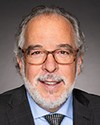
Mr. Speaker, I have the great privilege of representing the people of Louis-Saint-Laurent—Akiawenhrahk, who put their trust in me for the seventh time almost a year ago. I am very proud to have represented Wendake as part of my riding for 18 years, including my time in provincial politics.
I have the privilege of representing the Wendat community in the House of Commons, and I had the privilege of representing them in the National Assembly before that. I am particularly proud because I am rising today to speak to a bill that directly concerns first nations. Later on in my speech, we will see that Max Gros-Louis, the Wendat Grand Chief of the 1960s and 1970s, played a key role in what we are talking about today.
We are here to talk about the creation of a commissioner for modern treaties. Modern treaties are agreements that have been in place for about 50 years between first nations and government authorities at the provincial and federal levels. I want to reassure everyone, particularly first nations, that we fully support modern treaties.
Moreover, when the Right Hon. Stephen Harper led Canada with a majority government, he signed five modern treaties. However, in the 10 years that followed, under a government that claimed there was nothing more important than relations with first nations, not a single modern treaty was concluded. Is this not a crystal-clear demonstration of the fact that Mr. Trudeau's Liberal government talked a good game but failed to deliver on concrete projects? There is no example more obvious than this. Modern treaties are about economic development with first nations. None were signed during the Trudeau era, but there were five during the Harper era.
We Conservatives have very serious reservations about creating a commissioner position. I cannot mention that he is behind me, because I am not allowed to say whether members are in the House, but the member for Montmorency—Charlevoix already pointed out very clearly last November, at the start of the debate on the bill, that we have enough bureaucracy in Canada and we do not need to add to it.
It is worth noting that over the past 10 years, 100,000 new government employees have been hired. In addition, $20 billion was spent annually on consultations. Why add a further burden to the management of the federal government and relations with first nations when there are already several mechanisms in place to evaluate and monitor treaties? There is no need to create a new layer of red tape and administrative burden. For us Conservatives, first nations are partners in prosperity. That is why we must promote modern treaty agreements for first nations, for their development and for the development of Canada as a whole.
Let us take a moment to look back on how modern treaties got their start. I believe Quebec truly served as a testing ground for modern treaties. In the 1950s, there was a major expansion of hydroelectric potential in Canada and Quebec. Under the leadership of the government of the time, large dams, such as Bersimis-1 and Bersimis-2, were built from scratch in 1953 and 1956.
Then, in 1956, Hydro‑Québec was tasked with exploiting the hydroelectric potential of two big rivers: Rivière aux Outardes and Rivière Manicouagan. In 1958, Hydro‑Québec broke ground on what would become, for all time, an iconic manifestation of Quebeckers' national pride: the Manic-5 generating station. That started in 1958.
Of course, Manic-5, Manicouagan, Bersimis and so on were on indigenous land, but, at the time, there was nothing at all, no agreement with first nations. People showed up, they dug, they brought in machinery and they built a dam, thanks very much, good night. Nothing was offered to first nations. It was not until 1965 that Premier Jean Lesage offered compensation to the nation located near Manic-5. He offered compensation in the amount of $150,000, and that was that. That was how things were handled back then.
Then, in 1971, Liberal Premier Robert Bourassa came on the scene with his project of the century. During the Liberal Party's April 1971 convention, which took place at the Colisée de Québec, he marked his government's first election victory by launching the project of the century: developing James Bay. The plan was to literally double Quebec's hydroelectric potential with a $5‑billion project. Everything was fine and dandy, full steam ahead and, once again, first nations were not consulted. Nobody talked to them.
That is when a young Cree indigenous leader, Billy Diamond, raised the issue and succeeded in uniting the Cree people from across the territory. He did so with the support and assistance of the Indians of Quebec Association, whose spokesperson at the time was Max Gros-Louis, the Grand Chief of the Wendat, or the Huron, as they were known at the time. He took the case to court and on November 15—a very important day in Quebec history, and I am not talking about November 15, 1976, but rather November 15, 1973—Judge Malouf of the Superior Court of Quebec ruled in favour of the Cree. He declared that work on James Bay had to stop immediately. For the first time, a judge ruled in a specific case, regarding a specific project and a specific construction site, that first nations must be respected before breaking ground.
A week later, the Quebec Court of Appeal overturned that decision, noting that negotiations between the government and first nations are absolutely essential. It was then that the serious discussions got under way, though not without drawing widespread criticism.
Some people went so far as to say that it was not true that indigenous peoples were going to hold back Quebec's economic development, but that was not the issue at all. It was not a matter of holding back development, but rather of creating wealth together so that everyone could contribute to and benefit from it, while respecting the inherent rights, dating back a century, if not millennia, of the first nations who lived on this land. The James Bay and Northern Quebec Agreement was signed in 1975. According to some records, it was signed on November 11, 1975. Other sources say it was November 15, 1976. In any case, November is a significant month for what we are discussing today. It was the first agreement, the first modern treaty, and others followed.
It is also clear that this first agreement is being celebrated 50 years on, as this was when the government acknowledged the importance of first nations. It offered $225 million for the following 20 years, but it also gave the people living in that territory the tools they needed to develop their social and educational capacities, as well as their capacity for wealth creation, job creation and economic activity. That is why we now see a much stronger entrepreneurial spirit in many indigenous communities than we have seen in the past. Modern treaties have provided that impetus.
As I was saying, 26 treaties have been signed since the James Bay agreement. Five were signed under the Harper government and, unfortunately, none were signed in the following 10 years. I believe we need to sign more treaties. Yes, we need to do more to develop as partners in prosperity with first nations.
In closing, I want to remind members that I am very proud to represent the people of Wendake. Let us not forget that, historically speaking, the Wendat people have always been traders, even before the arrival of Europeans, but also after. The Wendat people have always made a name for themselves for their entrepreneurial spirit. Today, I am very proud to say that there are 150 businesses operating in Wendake. This nation is also involved with other private partners, like Structure SBL, Immostar, Wendake Construction and the Hôtel-Musée Premières Nations.
The Wendat people are a proud people that I am honoured to represent. They are an inspiration to all first nations and all Canadians. Indeed, we can and must work together closely for the prosperity of our country and for the prosperity of first nations. That can and must be done through modern treaties. Let us continue to do things right and, above all, let us empower first nations to achieve their full potential in terms of their heritage and the economy.