House of Commons Hansard #107 of the 45th Parliament, 1st session. (The original version is on Parliament's site.) The word of the day was students.

Topics

line drawing of robot

This summary is computer-generated. Usually it’s accurate, but every now and then it’ll contain inaccuracies or total fabrications.

Human Resources, Skills and Social Development and the Status of Persons with Disabilities Conservative Members and Bloc Québécois members debate the government's recent budgetary policy excluding students at private vocational institutions from federal student grants. Conservatives argue this policy is discriminatory and ignores the vital role private colleges play in addressing critical labour shortages in rural and underserved areas. Liberals defend their broader investments in youth employment, while Bloc members criticize federal overreach in education, advocating for provincial jurisdiction over such decisions. 25200 words, 3 hours.

Petitions

Statements by Members

Question Period

The Conservatives highlight record food inflation and doubled rent prices, disputing claims that affordability has improved. They call for suspending fuel taxes and criticize the government’s failure to secure U.S. tariff deals or progress on CUSMA negotiations. Finally, they point to uninvestigated immigration fraud and cases of lenient sentencing for non-citizens.
The Liberals highlight Canada as a leading G7 economy, where wages outpace inflation and rents are falling. They emphasize affordability measures like suspending fuel taxes and the groceries benefit. They also focus on diversifying international trade, managing U.S. relations, military recruitment, and maintaining integrity in immigration and criminal sentencing.
The Bloc demands transitional measures for businesses affected by U.S. tariffs and consultation on the upcoming economic update. They also call for an independent investigation into the PCVRS program’s detrimental health impacts.
The NDP demand a windfall profit tax and gas price caps to combat greedflation and support struggling Canadians.

Admissibility of Committee Amendments to Bill C-11—Speaker's Ruling The Speaker rules on a point of order regarding Bill C-11, an act to reform the military justice system. After reviewing six amendments adopted by the Standing Committee on National Defence, the Speaker declares them inadmissible because they violate either the parent act principle or exceed the scope of the bill as approved at second reading. Consequently, these amendments are declared null and void, and the bill is reprinted. 1500 words.

Commissioner for Modern Treaty Implementation Act Report stage of Bill C-10. The bill proposes establishing an independent commissioner to oversee the implementation of modern treaties with Indigenous peoples. Proponents argue this body provides necessary accountability and transparency regarding federal commitments. However, Conservative members oppose the legislation, characterizing it as unnecessary bureaucracy that duplicates existing oversight mechanisms. They argue that the government should prioritize fulfilling its obligations through current departmental structures rather than incurring additional costs to address persistent implementation failures. 15300 words, 2 hours.

Use of Federal Lands for Veterans Members debate a motion from the Liberal Party instructing the Standing Committee on Government Operations and Estimates to study repurposing surplus federal property to support veterans. While Liberals argue this planned study will create a necessary road map for better services, Conservatives and the Bloc Québécois oppose the motion, labeling it an inefficient use of legislative time that interferes with committee independence and misuses private members’ opportunities. 6500 words, 1 hour.

Adjournment Debates

Pipeline MOU and fossil fuel subsidies Gord Johns criticizes a Liberal government MOU with Alberta regarding a potential oil pipeline, arguing it ignores Indigenous consent, violates environmental goals, and risks taxpayer funds. Maggie Chi responds that no project is proposed, emphasizing that any future development requires meaningful Indigenous consultation, rigorous regulatory review, and provincial collaboration.
International development assistance cuts Elizabeth May criticizes the Liberal government for breaking its campaign promise by cutting $2.8 billion from international development assistance. Maggie Chi defends the budget decision as a shift toward more sustainable, strategic spending, emphasizing that the government remains committed to supporting global stability and essential humanitarian needs through effective results.
Was this summary helpful and accurate?

TaxationOral Questions

2:45 p.m.

Louis-Hébert Québec

Liberal

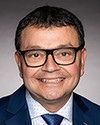
Joël Lightbound LiberalMinister of Government Transformation

Mr. Speaker, the fundamental difference between that side of the House and this side is that there is absolutely no vision for the Canadian economy on that side. Our side has implemented immediate support measures such as suspending the excise tax, cutting taxes for 22 million Canadians and providing the Canada groceries and essentials benefit, the Canadian dental care plan and the Canada child benefit.

That is immediate support, but the vision is a bridge to the future, a springboard to the future. It is about building one Canadian economy. It is about major projects, such as the port in Contrecoeur and the Nouveau Monde Graphite project. It is about thousands of jobs spread across the country. It is about expanding trade corridors. It is about signing trade agreements. That is the economic vision on this side of the House.
The EconomyOral Questions

2:45 p.m.

Conservative

Jacques Gourde Conservative Lévis—Lotbinière, QC

Mr. Speaker, the Prime Minister keeps telling Canadians that affordability is the best it has been in a decade. It seems that Brookfield's elite rarely go out to buy groceries. Over the past Liberal decade, food prices have risen by 42%. Potatoes have gone up by 60%, and beef has gone up by 69%. Those are the facts, and the list goes on.

Can the Prime Minister take responsibility for the Liberals' poor record and stop lecturing Canadians?

The EconomyOral Questions

2:45 p.m.

Châteauguay—Les Jardins-de-Napierville Québec

Liberal

Nathalie Provost LiberalSecretary of State (Nature)

Mr. Speaker, it is important to be able to walk while chewing gum, answering a cellphone or doing other things. We need to be able to work on all fronts. We are working on the gas tax. We are working on essential needs. We are also working hard to give Canadians more purchasing power over the long term. We are working on the Canadian economy, we are creating jobs, we are bringing trade home and we are becoming independent. That is what needs to be done.

Walking while chewing gum and working for Canadians: That is what we do.

The EconomyOral Questions

2:45 p.m.

Conservative

Jacques Gourde Conservative Lévis—Lotbinière, QC

Mr. Speaker, we know that the Liberals like to chew gum, but here are the facts. Just yesterday, data confirmed that Canada has the worst record in the G7 when it comes to food inflation.

Canadians are unhappy under Liberal rule. We have fallen from fifth place to 25th place in the global happiness rankings. Even without a track record to speak of, the Liberals are outdoing themselves in arrogance.

When will this Prime Minister stop peddling false hope and finally start delivering results for all Canadians?

The EconomyOral Questions

2:45 p.m.

Châteauguay—Les Jardins-de-Napierville Québec

Liberal

Nathalie Provost LiberalSecretary of State (Nature)

Mr. Speaker, I think we are working for all Canadians. When we work for children, when we work for seniors and when we work on groceries and essentials, we are working for all Canadians. That is what is important for all Canadians. That is what we are doing and what we do here every day.

Unfortunately, the opposition often blocks the strategies that would help grow the economy, restore our independence, and boost our long-term capacity.

TaxationOral Questions

2:45 p.m.

Conservative

Bernard Généreux Conservative Côte-du-Sud—Rivière-du-Loup—Kataskomiq—Témiscouata, QC

Mr. Speaker, cutting 10¢ from a litre of gas right now is like trying to put out a fire with a glass of water. Canadians need a lot more relief than 10¢ a litre.

The Liberals asked us if we had any good ideas. Well, eliminating all federal taxes on gas and diesel by the end of the year would be a relief measure for families, farmers and businesses, not only in Côte‑du‑Sud—Rivière‑du‑Loup—Kataskomiq—Témiscouata, but for all Canadians and Quebeckers.

When will the Liberals listen to us and take 25¢ off a litre of gas, like we are calling for?

TaxationOral Questions

2:50 p.m.

Marc-Aurèle-Fortin Québec

Liberal

Carlos Leitão LiberalParliamentary Secretary to the Minister of Industry

Mr. Speaker, let us put that to the smell test. Does anyone know what a smell test is? I will give some examples.

There is a war going on right now. The price of crude oil has gone from $60 a barrel to almost $100 a barrel, leading to a sharp increase in the price of fuel. Those are not Liberal taxes. Come on. It has to do with the international context.

In the meantime, we are doing what we can, which is to relieve the pressure on Canadians' wallets with—

TaxationOral Questions

2:50 p.m.

The Speaker Francis Scarpaleggia

The hon. member for Hamilton Centre.

TaxationOral Questions

2:50 p.m.

Liberal

Aslam Rana Liberal Hamilton Centre, ON

Mr. Speaker, when folks in my riding of Hamilton Centre go to the gas station to fill up their cars, they will notice a difference at the pump. Yesterday, the temporary suspension of the federal fuel excise tax came into effect, saving the average Canadian family 10¢ per litre on regular gasoline. This is just one way Canada's new government is making life more affordable.

Can the secretary of state update us on this and other measures designed to put more money in the pockets of Canadians?

TaxationOral Questions

April 21st, 2026 / 2:50 p.m.

Saint John—Kennebecasis New Brunswick

Liberal

Wayne Long LiberalSecretary of State (Canada Revenue Agency and Financial Institutions)

Mr. Speaker, I want to thank the member for Hamilton Centre for the great work he is doing in this House and in his riding.

If Canadians go fill up right now, they are going to save 10¢ a litre. Last week, we paused the federal excise tax on fuel. If we add the cut to the consumer carbon tax of 18¢, that is 28¢ in savings when Canadians fill up. On this side of the House, we are going to continue to be focused on building the strongest economy in the G7. It is time for the Conservative Party to join us and build a strong Canada.

International TradeOral Questions

2:50 p.m.

Conservative

Shelby Kramp-Neuman Conservative Hastings—Lennox and Addington—Tyendinaga, ON

Mr. Speaker, there are only 10 weeks left until the CUSMA review and there is still no plan from the Prime Minister. Reports suggest there have been no serious negotiations with D.C. since October, while Mexico is actively engaging in informal CUSMA talks with the U.S.

We are at a critical juncture for North American trade and I raise a very straightforward concern. We have 2.6 million Canadian jobs that depend on this negotiation. They need certainty. They need predictability.

Why is Canada not actively at the table?

International TradeOral Questions

2:50 p.m.

Beauséjour New Brunswick

Liberal

Dominic LeBlanc LiberalPresident of the King’s Privy Council for Canada and Minister responsible for Canada-U.S. Trade

Mr. Speaker, it will not surprise anyone that the premise of the question, that Canada is not actively engaged with the United States or at a negotiating table, is not accurate. I have had a number of conversations, on a weekly basis, with senior members of the American administration. The Prime Minister is also communicating directly with President Trump. Our chief negotiator Madam Charette and Ambassador Wiseman are also having conversations.

We are doing the important work that Canadians expect us to do, but we are also focusing on what we can control here at home.

International TradeOral Questions

2:50 p.m.

Conservative

Shelby Kramp-Neuman Conservative Hastings—Lennox and Addington—Tyendinaga, ON

Mr. Speaker, the Prime Minister was elected on the promise of being able to negotiate a deal with the United States. He has not delivered and instead, he is walking away. With 76% of our exports bound for the U.S., that reality will not change quickly, certainly not for Canadians already bearing the costs of tariffs. Diversification takes time, especially when negotiations yield no results.

When will the Liberal government commit to prioritizing Canada-U.S. trade, return to Washington and secure a deal with a nation that we trade nearly a trillion dollars a year with? What is the plan?

International TradeOral Questions

2:50 p.m.

Beauséjour New Brunswick

Liberal

Dominic LeBlanc LiberalPresident of the King’s Privy Council for Canada and Minister responsible for Canada-U.S. Trade

Mr. Speaker, the question gives me an opportunity to share the good news with all members of this House that this morning, the Prime Minister announced an important advisory council of women and men who represent businesses. There are elected union leaders and community leaders. In fact, there is the former leader of the Conservative Party, the former premier of Quebec, the former premier of Nunavut and a former minister of public safety in this House.

Business leaders, union leaders and representatives of associations are working with this government to make sure we have a deal for Canadian workers.

International TradeOral Questions

2:55 p.m.

Conservative

Michael Chong Conservative Wellington—Halton Hills North, ON

Mr. Speaker, Reuters reports that Mexican President Sheinbaum is eyeing an early deal, ahead of the completion of the review of CUSMA, on autos, aluminum and steel.

Is the government working in coordination with Mexico to secure an early deal on autos, aluminum and steel? If not, why not?

International TradeOral Questions

2:55 p.m.

Beauséjour New Brunswick

Liberal

Dominic LeBlanc LiberalPresident of the King’s Privy Council for Canada and Minister responsible for Canada-U.S. Trade

Mr. Speaker, of course we are working with our Mexican counterparts as we do the work necessary to prepare for the CUSMA review. I am in regular contact with Secretary of Economy Ebrard. The Prime Minister, of course, talks to President Sheinbaum.

The good news is Secretary Ebrard will be in Canada with an important delegation of Mexican business leaders, a return of the successful visit we did. We will continue those conversations with the Mexicans and the Americans to ensure that we get the best deal for Canadian workers and Canadian businesses.

International TradeOral Questions

2:55 p.m.

Conservative

Michael Chong Conservative Wellington—Halton Hills North, ON

Mr. Speaker, Mexico is clearly at the negotiating table, providing formal updates.

Yesterday, President Sheinbaum and U.S. Trade Representative Greer formally met in Mexico City. The joint statement said that Mexico and the U.S. will hold talks this week on resolving trade irritants, and that Mexico and the United States will begin the first official negotiating round for the review of CUSMA the week of May 25.

When will talks between Canada and the U.S. take place to resolve irritants? When will the first official Canada-U.S. negotiating round for the review of CUSMA take place?

International TradeOral Questions

2:55 p.m.

Brampton East Ontario

Liberal

Maninder Sidhu LiberalMinister of International Trade

Mr. Speaker, of course the U.S. is an important trading partner, but there are also many trading partners around the world that we are engaging with.

We signed a trade agreement with Indonesia, destined to be the fifth-largest economy in the world, overtaking Germany. The UAE investment agreement brought back $70 billion of investments to this country. We have a trade agreement with Ecuador. Also, there is what we are doing with the European Union.

Our defence exporters have asked us to unlock opportunities, and that agreement alone has unlocked hundreds of millions of dollars of opportunities for our defence export community. This is what it takes to unlock jobs in Canada.

International TradeOral Questions

2:55 p.m.

Conservative

Randy Hoback Conservative Prince Albert, SK

Mr. Speaker, on April 2, the United States announced substantial changes to how they will collect steel and aluminum tariffs.

Now applied to the full value of products, this change will result in higher costs for Canadian manufacturers and reduce business activity across this country. Workers and businesses are looking for leadership, but instead they are getting silence.

Was the Prime Minister aware of these changes? What is he doing to have these tariffs removed?

International TradeOral Questions

2:55 p.m.

Taiaiako'n—Parkdale—High Park Ontario

Liberal

Karim Bardeesy LiberalParliamentary Secretary to the Minister of Industry

Mr. Speaker, the U.S. trade relationship remains key, and that is why this government is working hard every day to make sure we get the best possible deal and not just any deal.

At the same time, we are supporting trade diversification. In the last year, our exports to Europe are up 31%. Our foreign direct investment is at an 18-year high. We are working very attentively at the industry committee. We are working very attentively to listen to what the steel and the mould-makers are telling us, and we will be there with the supports that are needed.

International TradeOral Questions

2:55 p.m.

Conservative

Randy Hoback Conservative Prince Albert, SK

Mr. Speaker, Canadians are being left in the dark on the CUSMA review.

We are forced to rely on media reports and the occasional committee appearance, hearing only vague talk of challenges faced. My constituents are calling me, concerned for their families and their businesses as a resolution to these disputes continues to grind on. In fact, many of us know more about the status of the U.S.-Mexico negotiations than those of our own country.

When will the Prime Minister provide a clear update to this House on the deal that he promised to secure over a year ago?

International TradeOral Questions

2:55 p.m.

Taiaiako'n—Parkdale—High Park Ontario

Liberal

Karim Bardeesy LiberalParliamentary Secretary to the Minister of Industry

Mr. Speaker, on this side of the House, we are controlling what we can control. We cannot control what is happening on the other side.

We are in regular contact, both with U.S. administration officials and with the companies, the steel makers, the mould-makers, the aluminum providers, all those companies that are key to this trade relationship, not just with the U.S. but increasingly across the world. We will continue to be in regular contact. We will be there to support this sector.

International TradeOral Questions

2:55 p.m.

Conservative

Adam Chambers Conservative Simcoe North, ON

Mr. Speaker, yesterday we learned that Mexico is anticipating a deal on autos, steel and aluminum. In fact, it appears that Mexico and the U.S. have been at the negotiating table, having ongoing formal and substantive discussions.

Here, there are reports that there have been no substantial or ongoing formal discussions between Canada and the United States since October.

Why is it that Mexico seems to be at the table with the United States, and Canada is on the outside looking in?

International TradeOral Questions

3 p.m.

Oakville East Ontario

Liberal

Anita Anand LiberalMinister of Foreign Affairs

Mr. Speaker, as the Minister responsible for Canada-U.S. Trade has indicated, our talks with the United States continue, as they do with Mexico.

In the meantime, we will continue to diversify our trade relationships, with over a dozen new deals signed in the past six months, combined with FDI, foreign direct investment. We are also looking to conclude additional FTAs this year, including with ASEAN in 2026, looking ahead to Mercosur.

We can control our own destiny, and we are doing that by diversifying our—

International TradeOral Questions

3 p.m.

The Speaker Francis Scarpaleggia

The hon. member for Charlesbourg—Haute-Saint-Charles.