Mr. Speaker, as I listened to my colleague across the way the first thought that came to mind was whether he agreed with closing tax loopholes.

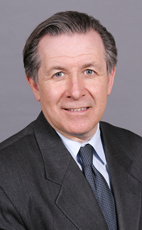 House of Commons photo
Lost his last election, in 2008, with 33% of the vote.
Income Tax Conventions Implementation Act, 1997 October 20th, 1997
Mr. Speaker, as I listened to my colleague across the way the first thought that came to mind was whether he agreed with closing tax loopholes.
Income Tax Conventions Implementation Act, 1997 October 20th, 1997
Mr. Speaker, it would be presumptuous of me or any member to try to speak for the entire government.
If we look at the performance of the government since first being elected in the fall of 1993 we would have to conclude the taxpayers are in very good hands. It has not increased personal income taxes one iota since being elected. If we project that into the future I would say to my colleague across the way that his bets are best with us.
The fact that persons work outside the country and we have been able to repatriate them into the domestic tax system so that they will be better off is a sign that the government cares.
We had an alternative method in the previous system. The U.S. government was the taxer and our citizens were inadvertently the victims. We have corrected that. In most cases the citizens affected by the bill will pay less taxes.
If my colleague across the way looks carefully at the record, he can presume the taxpayers are in very good hands and will be for a long time.
Income Tax Conventions Implementation Act, 1997 October 20th, 1997
Mr. Speaker, it is a privilege for me to join the debate, especially after listening to the comments of my colleague, the Parliamentary Secretary to the Minister of Public Works. As usual he is correct in what he says. He makes it easier for me to pursue this subject.
Bill C-10 is another example of the government's caring about Canadians, not only for our young people and future generations but for Canadian taxpayers who are out working every day, paying taxes and supporting a country that is unquestionably the best country in the world. According to recent new reports, Canada is also the best country in the world in which to invest.
A government which puts people first is a government that will ultimately provide Canadians with the services they deserve in exchange for the payment of taxes, which at all times taxpayers begrudge. However, when the services are good and when government leadership is good they will accept paying taxes in the knowledge that they are contributing to ensuring the safety of our social safety net for the future, our pension system, our employment insurance system and our health system.
Bill C-10 is an example of the government continuing to be a caring government. When the amendment to the treaty was passed a couple of years ago it is acknowledged that there was an oversight or a mistake. I had a number of constituents who were adversely affected by the measure which allowed their U.S. pension income to be taxed at source, but did not provide them with any means to get a deduction through the tax system because they could not file in the U.S.
One of my colleagues from Windsor said earlier that the Liberal MPs in the Windsor area got together and talked to the finance minister. I applaud their efforts in bringing this issue to his attention. For my part, I also brought the matter to the attention of the finance minister, as I expect did many Liberal members. Being the kind of finance minister he is, being the kind of government that we have, the response was “Let us acknowledge that we have a difficulty here. Let us do something about it”. This is an example of a government which listens. This government cares about the people it serves.
Even though, in terms of numbers, there may only be a few thousand Canadians who are adversely affected, it does not matter that there are only a few thousand. There could be a million or there could be ten. The problem is that these seniors have been adversely affected and if as a government we can do something about it, that is what we have set out to do.
I applaud the efforts of the finance minister in responding to the appeals from his colleagues on this side of the House to do something about the oversight. Canadians can expect that the government will listen to them in future sessions of this Parliament and hopefully beyond.
In recognition of the oversight, the new rules provide for the change to be retroactive to January 1996, so that no one who found themselves caught in this unfortunate trap will at the end of the day pay a penalty. In fact, I understand that Revenue Canada will make every effort to automatically correct this problem for Canadians who have been adversely affected.
Let me use this opportunity to say a bit more about why the government is caring and why it has taken the measure which it has in Bill C-10.
Not so long ago we had the Speech from the Throne. It contained numerous initiatives which, as we head into the next millennium, indicate nothing else but that we want all citizens to benefit from the turning tide, from the growing economy and from the social safety net which past governments and all Canadians have worked so hard over the decades to create. It is in getting the financial matters on a strong footing that we can most effectively take measures to protect valuable programs, such as the health care system, the pension system and the employment insurance system.
Let me speak for a moment about the health care system because it is the very client group, the very citizens who have been helped through this protocol in Bill C-10. In most cases this group has been worried about the health care system. I believe they can find in the leadership of the government, the health minister and the Prime Minister the very best of intentions, the very best of plans to ensure that the health care system continues to be the finest in the world.
I had the chance to visit an Asian country a couple of years ago. While there I discovered that as its economy was growing, its citizens came to a point where they wanted to institute a national health plan. They looked to Canada's plan and implemented a health care system for their country that is modelled after Canada's.
Even though we have our detractors, mostly those from south of the border who do not want to see the U.S. move into a national universal health care system, when they really get down to it these detractors have to admit that the system in Canada costs less per capita on the basis of a percentage of GDP than the U.S. system and covers everybody from coast to coast.
It is a system that Canadians have come to value. They may even take it for granted. It is wonderful that you can take for granted a system that will take care of you and a system that does not require that you pull out your Visa card or chequebook when you go to the doctor or to the hospital. The very citizens who were adversely affected initially by this protocol will now be favourably impacted by Bill C-10. We want to get the message to them that they should not be worried about the health care system.
Yes, changes are taking place at the provincial level. Provinces are for their own and different reasons taking measures to rationalize the health care system and its delivery in their provinces. I believe there is a universal commitment from coast to coast to maintain the five principles even though there may be some debate between the federal government and certain provinces from time to time on the interpretation of those principles. Very few Canadians would want us to step back to decades past with one system for the rich and another for everybody else.
As an extension of the concept of a caring government taking this initiative with Bill C-10, I take as an example the pharmacare system we talked about in the campaign. I grant this is not something that will happen overnight. Maybe it will take five or ten years, maybe longer, to implement a national pharmacare system. If we do not start talking about it now we will never get there. A national drug plan, a plan which would provide all Canadians with equal access to medically necessary drugs is a plan that is typically Canadian, a plan that reflects the values of sharing our wealth and of sharing our vision for a country that cares about its individual citizens.
Along with the pharmacare plan I know there have been some discussions about a universal home care plan. I see it as simply a mechanism to allow our health care system to extend into our neighbourhoods and into the homes of Canadians. That too is a logical extension of the kind of thinking we see from this government consistently.
In my riding of Algoma—Manitoulin in northern Ontario, which is quite a large, beautiful Great Lakes riding, I have about 18 First Nations communities. Very few Canadians would disagree that our First Nations add so much to the culture of our society. At the same time there needs to be a change in the relationship between the federal government and our First Nations which would allow our First Nations to more readily achieve their full potential.
What we heard in the throne speech and what is exemplified by Bill C-10 is the willingness to work with first nations so they can benefit, using their own leadership and their own resources in partnership with the federal government and with the province where appropriate, as can all Canadian communities from the vast riches of the nation.
As we approach the next millennium no Canadian will be left totally behind. We want a society where perhaps there are some who are richer than others but the gap is not a widening gap but a narrowing one. No Canadian will ever complain about being left behind due to illiteracy, health problems or the fact that they live in one area of the country or another.
Even though some critics have said that we have been too focused on deficit reduction, those critics are few and far between. Last Friday a constituent, a leader of a community on Manitoulin Island with its own challenges that is doing very well, who might have had reason to say otherwise told me very sincerely that the government and finance minister were doing a terrific job with the deficit.
They started with fundamentals such as managing their own books the way they would want their own family books to be kept. That starts a domino effect that can do nothing but favourably impact on all other segments of society.
In getting our deficit under control and balancing the books as we will in the next year or so, the government is not out there competing for borrowings with the private sector, which helps keep interest rates down. If there is any better economic development tool than low interest rates, I challenge my colleagues opposite to tell me.
Most of us remember the days of high inflation and high interest rates not only in our country but around the world. Nobody would ever choose to go back to those times. The combination of low interest rates and low inflation has provided an environment of confidence that I have not felt for a long time. I appreciate the opportunity to be part of a government that has a vision, a plan and the will to carry out its agenda.
In 20 minutes it is difficult to say all the things we want to say, but I will pick out the most important ones as I go along. As I listened to some of my opposition colleagues, particularly those in the Reform Party, I heard them use Bill C-10 as a vehicle to talk about their alleged grief over the CPP and Bill C-2. They are rolling that issue under the umbrella of Bill C-10. They have had ample opportunity to say their piece about very necessary changes to the CPP Canadians want us to make but they repeatedly talk about a tax grab.
As I have said earlier, when workers put money toward their CPP and the employer does likewise, it is an investment in a plan that is the envy of industrialized nations around the world. We are one of the few industrialized nations that has taken hold of the pension problem and has taken steps to correct it.
We heard much particularly from the official opposition, the Reform Party, about this 9% plus rate. It will not acknowledge that a private super RRSP plan may require 13% to 15% contributions by Canadian workers without the necessary protection we need for workers who become disabled.
Many constituents have come to see me because they look toward the Canada pension disability program to assist them at a time of great need because of a heart attack or some other medical condition that has rendered them unable to work.
When we put all this together it states that the government cares about the people who have worked so hard to build the country: seniors and the people of my generation and the generations after who will take the baton and continue to build the country. No country anywhere should stop its effort to build. This country is no different. We must continue to contribute in whatever fashion we can to make the country stronger and stronger.
The actions of the government clearly are actions that will make the country stronger. If we have to put up with a bit of criticism along the way, it comes with the territory. It comes with being responsible for governing the country. If it were not for our willingness to take up that challenge and make some tough decisions from time to time, the country would be in a very sorry state.
As I attempt to wind up, let me reiterate the people we are attempting to assist through Bill C-10 are our neighbours, our grandparents and our parents. These people got caught inadvertently in a trap. Our colleagues across the way can look to the government and honestly admit that it has listened.
It is not the first time and it certainly will not be the last time. It is incumbent upon us as a government to continue to listen to the people. My colleagues are regularly in their ridings listening to their constituents either in travelling office hours like I do or at town hall meetings. By that process we know what people are saying. I know my colleagues' doors are always open to their constituents as are the doors to my riding office and to the travelling office I maintain on a regular basis.
The citizens of the Algoma—Manitoulin riding are looking to the government to continue its leadership. I certainly get complaints from time to time which are justified. No government is perfect. I would be the last one ever to say that. I can say with honesty that there is no alternative for the country at this time than the kind of government we are capable of offering to the people. I am proud to be part of the government.
Canada Pension Plan Investment Board Act October 7th, 1997
Madam Speaker, I congratulate you on your new office. This is the first chance I have had to speak with you in the chair.
As I listen to members opposite, particularly members of the Reform Party, it becomes more clear that we are dealing with two very fundamentally different visions not only of the Canada pension plan but of the country.
History would make it clear that Liberal governments have put people and their communities first. I suggest the Reform Party would take us back decades when it was not so important that people and communities worked together for the good of all.
The Reform Party attempts to make an issue of sustainability with regard to the changes to the CPP and the program being in place in the future. I think it has much more to do with the kind of society we want for ourselves, our children and our grandchildren.
Throughout the last term of office and through the election campaign I did not hear much from the constituents in my riding of Algoma—Manitoulin calling for a privatized super RRSP for the future. If I heard concerns about the pension plan for the future they were to make sure that what Canada has such as the CPP and OAS will be there for us when we retire and for our children and our grandchildren. Their worry centred around the sustainability of the program and that it be available in the years to come.
While Reformers can argue that a super RRSP, according to their arithmetic, will be better for Canadians, when we get to fine details it is a much different story.
I will cite a couple of examples. The Reform Party claims to be the party of families, a fact which is quite disputable. Its proposal would not cover workers who take leave to look after children, which runs contrary to the fact that CPP does. Working poor families would have difficulty paying mandatory RRSPs and the extra insurance to replace the disability and death benefits provided by the CPP.
In a society where there is a general consensus to move toward a national drug plan, a pharmacare plan, and society is moving toward sharing the wealth in a reasonable way, Reform would have us go back to the beginning of the century when it was quite the opposite. In its plan we would forget the working poor family, the spouse who for one reason or another had to stay home to take of children. I use this as only one example of where the Reform plan would break down and the CPP would be there for spouses who stay home for children.
Reformers also neglect to point out that in a super RRSP plan a tremendous public subsidy is required. As we all know, when you invest in an RRSP, as all Canadians are able to do if they choose to and have the funds to do so, there is a commensurate tax reduction to reflect that investment.
The current system costs billions of dollars per year. It is a system whereby Canadians are redistributing their wealth. In a system totally dependent on RRSPs those with most of the wealth would be benefiting from most of the tax loss as a result of the tax deduction. In the current system which is a balance of RRSPs, Canada pension plan, OAS and the supplement, there is a broader range of pension options available to people. If we provide a pension plan based solely on the RRSP system there will be a much greater demand on the tax system than what we see right now.
It is incumbent on the Reform Party to make it clear that its system does not come without tremendous cost. I submit to the House that the cost will be much greater than what we are seeing right now. The CPP is not intended to be the only source of income for seniors, although by necessity it is for many. The overall pension system in Canada is designed to provide Canadians with a chance to blend several vehicles as they prepare for their retirement.
Much is made about the fact that premiums are going up. The Reform Party uses the word tax. Tax is not the correct word. The correct word is investment. When an employer through a payroll deduction makes a contribution to the CPP he is making an investment in the country for sure but also in the workers who work for him. When the employee makes a contribution to the CPP he too is making an investment.
The previous speaker from British Columbia mentioned his construction firm and the number of houses he made per year. If he asked his employees they would not see it unreasonable that 10 employees would see their premiums matched by the profit, just the profit on one of eight homes. They might see that simply as sharing the benefits that come with a capitalist society.
If we were to move in the direction that is proposed by the official opposition we would see a deterioration in a significant way of Canada's social safety net which is made up not only of our pension system but of the employment insurance system and the health care system.
The pension system is one of the very important three pillars that make up the social safety net. It is in the nature of our society and the reason we are envied throughout the world, it is in our nature to be compassionate to one another. That compassion is reflected in the fact that our pension system makes sure that in every reasonable case Canadians can provide some income for their pension.
When it comes to the cost of administering the Canada pension plan versus millions of private super RRSPs I do not think it takes rocket science to figure out that administration costs would be approximately $20 per person through the CPP versus $150 or $200 per person in a private RRSP plan. When it is all added up, a 10:1 ratio in favour of the CPP makes a lot more sense.
Why should we be spending pension dollars unnecessarily on the administration of a pension plan? The fact that these amendments include the creation of a board to ensure the CPP fund is invested in the most appropriate way for Canadians makes a lot of sense.
To distribute the administration of these funds to hundreds or thousands of fund administrators across the country makes very little sense at a time when we should be looking at better ways of spending our money. We have made changes that will ensure the sustainability of the CPP into the 21st century.
Canada's current government has seen fit to take charge of this issue and to move us forward in a way that most industrialized nations have not yet be able to do. I am pleased and proud to support the government's initiatives. To do contrary would be very irresponsible.
Petitions October 7th, 1997
Mr. Speaker, I am pleased to present petitions today from hundreds of people from the St. Joseph Island and Desbarats area of my riding.
The petitioners are concerned with the court decision in Ontario last year overturning a conviction of a women who went topless in public. They ask that the federal government do something about this matter.
Throne Speech September 29th, 1997
Mr. Speaker, last week's throne speech has once again proven to Canadians that this government is a caring and responsible government.
Thanks to the government's efforts and to the sacrifices of Canadians over the last four years, a balanced budget is within sight for the first time in decades. A balanced budget not only provides economic stability for our nation's finances but peace of mind for all our citizens regarding the future of our valued social programs.
Canada's economy is producing impressive employment growth. Interest rates and inflation remain low but more needs to be done to ensure that all Canadians in all parts of our country are able to fully participate in this economic renewal. This is particularly true for rural Canada.
To this end, our government has committed half of future budget surpluses to the reinvestment in strengthening our society, families and communities. Our government will continue to focus resources wisely in key areas of the economy creating a better environment for our children and ensuring that our health care and public pension systems continue to be among our country's greatest assets.
Our government has demonstrated its commitment to responsible economic management. It has also shown care and compassion for ensuring that all Canadians are able to share in the economic benefits of a growing economy with healthy public finances.
Speech From The Throne September 25th, 1997
Mr. Speaker, I appreciate what I think was a question from the member for Kelowna.
If he can check the blues, I believe he will appreciate my clarification on the people in our society who are being left behind. None of us in the House wants anyone to be left behind.
I believe I said that this government in the last Parliament and again in this Parliament will take steps to ensure that as much as possible no one is left behind. It is a sad fact in the real world of life that some people for one reason or another find themselves lagging behind the bulk of society and it is necessary for society at large to reach back and make sure that no one is left behind. But sadly we do not live in a perfect world. I doubt that we will ever live in a perfect world, but we can all work together to make it a better world and a better country.
I know that opposition members of all parties will work with us to make Canada a better and better place in which to live where no one will be left behind. That is not a fantasy nor is it a dream. It is a very high goal that will take a lot of effort and time to achieve.
I believe the programs that we have and will put in place will provide our citizens with the very best possibility to achieve their own individual successes in life. Take for example the scholarship fund that the Prime Minister referred to yesterday in his speech, the details of which will no doubt come out over the days and weeks ahead. It is a scholarship fund designed specifically for post-secondary aspirants who find themselves in low and modest income family situations. That among many initiatives is an indication of the government's commitment to those who might otherwise be left behind. While he might want to say that I said we were there, he knows full well it is an objective that will be best achieved through the efforts of this government no doubt with the co-operation of the opposition parties.
Speech From The Throne September 25th, 1997
Mr. Speaker, I appreciate the remarks of the hon. member for Saint John.
I admire the member for Saint John. She was very effective in the last Parliament and I expect that she will be in this Parliament. However, I believe she is missing the point.
In the last Parliament the government had to make some tough decisions. You can care about the people and still make tough decisions knowing that what you are doing will be better for all the regions of the country.
In my home town of Elliot Lake, starting in 1990 we experienced a job loss of some 5,000 in the uranium mining industry. There was a lot of adjustment, but in the long run the changes which took place have shown that Elliot Lake and that region will survive and do very well.
I know that the spirit of the citizens of the Atlantic provinces is very much the same. They will respond to change and they will deal with the challenges that face them in a very creative way. I have every confidence in the citizens of Saint John and the other ridings of the Atlantic provinces. They will take up the flag and march into the next millennium with all of us. All of our regions will be better off with the changes and improvements that we have made in the governance of this country.
Speech From The Throne September 25th, 1997
Mr. Speaker, first let me offer my congratulations to you on your new office. We are all confident you will do a great job.
Let me also say that I am sharing my time with the hon. member for St. Catharines.
I am very pleased to participate in this debate. There is no question the Speech from the Throne we heard this past Tuesday speaks for itself. Nonetheless we are here, opposition members from one point of view and government members from another, to debate the merits or demerits of the throne speech.
The fact I am here as the member for Algoma—Manitoulin is due to the voters of my riding who expressed their support in me. I appreciate that. We all had supporters among our volunteers and our loved ones. On behalf of all of us may I thank many people across the country who participated in the political process, in the democratic process. They are helping to make this country the greatest country in the world with a parliament that at times seems to be raucous and noisy but a parliament that works, a parliament in which we can all have confidence.
I never cease to be in awe of this place even though this is my second term. I say to first time members of the House that they can make of this job what their efforts produce. If they serve their constituents and their country well, they will feel the reward of knowing that the country is bit by bit moving positively into the next millennium.
It is appropriate that a Liberal government will lead the country into the next millennium. Our Prime Minister is the right person to lead the government into the next thousand years.
The throne speech has shown in many ways the caring and nurturing side of government. Too often our citizens are cynical about government at all levels and the processes which seem to take place behind closed doors and in faraway places. We demonstrated in the last Parliament—and we will show it again—that this is an open, transparent government, a government that will listen to the people and will make decisions, often tough decisions, that are needed to continue keeping the country the best country in the world.
I will quote one sentence from the Prime Minister's speech of yesterday which sums up for me the theme of my remarks. He said “Canada will remain the best country to live in because it cares about people”.
In my time around here as the member of Parliament for Algoma—Manitoulin I have learned that ultimately voters want to know their governments and representatives care about them and their communities. The less we express and show that, the more distant they feel.
My riding in northern Ontario stretches from Manitouwadge in the northwest to Chapleau in the northeast and south to the north shore of Lake Huron including Manitoulin Island. Whether we represent a downtown city core or urban riding or a large rural riding, we are representing Canadians. They are Canadians who all feel the same way about their country.
The throne speech expresses the caring nature of the government. We can find no greater evidence than in the words of the throne speech.
Let us start with the issue of the economy. In the last Parliament a tremendous challenge was facing us with the deficit at record levels. Let us imagine newspaper headlines screaming aloud that the government has brought our country into the black. Over the next year and a half, if not sooner, we will be in a surplus position. What greater thing can we do for preserving our health care programs, our pension programs, programs for youth and so on, than by ensuring our economy is strong and vibrant based on a set of books we can all be proud of whether a member of the opposition or not.
That essence of caring has given Canadians for the first time in a long time a real sense of hope, optimism and confidence about the future. We are certainly not there yet when it comes to solving all the problems of the country. There will always be challenges and problems to face. It has been a long time since this country has been at such a tremendous juncture in its history. In fact there is so much confidence as we approach the next millennium that the Prime Minister in the throne speech announced that we are going to have a tremendous millennium party in two and a half years, a party which I believe the world will come to because people around the world know that we have a country that cares about people.
Even though we hear complaints from different parts of the country it is only because people know that the government will listen when they speak and cry out for help. They know we will respond.
A caring government must look at the first and most important group in our society, our children. We have recognized that children must get a good start in life, be it through proper nutrition or through proper education. We have made tremendous strides, in co-operation with all the provinces, in developing a national child benefit system. It is not completed yet but I believe it will evolve into a model for the world.
When it comes to the young people of our society, people who we worry a lot about because of their concerns of future employment, this government in the last Parliament, and even more this Parliament, stands ready to make sure that in co-operation with the provinces through an enhanced scholarship program, through initiatives with industry it can make sure that they have a chance at that first job, at starting life on the right foot.
If, for some reason, they get off on the wrong foot we are there to make sure they have a second and a third chance if necessary.
We are also looking out for those in our society who find themselves in the middle ages, sometimes victims of structural change. With changing societies and economies, we will see jobs lost here and jobs created somewhere else. That is the nature of our modern society. We have the sadness which comes with losing a job maybe at the age of 40 or 50 years of age. Many of my constituents have faced that challenge, particularly in Elliot Lake. It is incumbent on us to continue to assist people caught in this way with retraining or appropriate early retirement programs.
For the final age category, that being our elderly, what more can a government do but to make sure that the pension systems are secure and that seniors do not have to worry about the future.
I heard from the seniors. They were worried about the future. When they understood through our campaign that we were committed to securing the Canada pension plan for the future and that we were developing the seniors benefit plan, they knew that the government would be watching out for them.
This does not say that some people don't get lost in the cracks. It is incumbent on the government to close those cracks, to make sure that nobody is left behind. It is an absolute feature of a caring government that no one gets left behind.
Mr. Speaker, again I wish you the very best in your new office over this next Parliament. I wish the best for all my colleagues as we look forward to an exciting and vigorous Parliament over this next few years.
Winnie The Pooh April 24th, 1997
Mr. Speaker, in 1914 a black bear cub was acquired by Dr. Goulbourn from a trapper in White River, Ontario, a community located in the new riding of Algoma-Manitoulin. The bear was named Winnie and eventually made its home in the zoo in London, England where it went on to become the inspiration for the much loved character Winnie the Pooh.
The connection between White River and Winnie the Pooh is not well known. Fortunately, this is about to change. A group of 15 hardworking grade 8 students from St. Basil's School in White River are about to embark on a journey to England to visit the London Zoo in order to raise awareness of the real origins of this world famous bear and to take in the sights as well.
The residents of White River have rallied behind the students and have supported their ambitious fund raising efforts to make this trip possible.
I salute the students and organizers of this school trip for their determination to promote the history of their community. I wish them a very safe, enjoyable and educational voyage.
In closing, I invite all hon. members to visit the beautiful community of White River, Ontario to discover for themselves the place where the Winnie the Pooh story really began.