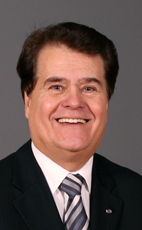
House of Commons photo

Crucial Fact

  • His favourite word was health.

Last in Parliament March 2011, as Liberal MP for Pierrefonds—Dollard (Québec)

Lost his last election, in 2011, with 31% of the vote.

Statements in the House

New Information Technologies October 28th, 1998

Mr. Speaker, last Friday, the Canadian government announced $10.5 million in comprehensive financial assistance to implement approximately 20 projects related to new information technologies and new media in the greater Montreal area.

A first financial contribution was made to Behaviour Communications Inc. This $9 million contribution will generate investments totaling $30 million and the creation of 200 new jobs.

Eighteen businesses sponsored by the multimedia consortium CESAM were granted $1.5 million out of the multimedia experimentation fund. This government support is provided as seed money for new businesses.

It goes without saying that governments and their private sector partners must work together to create conditions conducive to attracting highly skilled labour to Montreal and curbing the drain of talents and skilled resources.

The Canadian government encourages Quebec initiatives and ensures that our businesses can assume their rightful place.

Julie Payette October 19th, 1998

Mr. Speaker, last night, in Montreal, astronaut Julie Payette was chosen Person of the Year at the 15th Gala Excellence organized by the newspaper La Presse .

We want to salute the courage shown by this young astronaut determined to succeed in a career that requires a lot of strength, where “you can never fail, never make a mistake”, as she put it herself. She has every reason to be proud of this honour bestowed upon her.

I also want to congratulate all the other recipients who receive similar encouragement in various areas, from the arts to literature, business and sports.

We hope these awards will inspire our young people to follow in the footsteps of the people who were honoured last night.

The Late Pauline Julien October 1st, 1998

Mr. Speaker, we just heard that renowned Quebec singer Pauline Julien passed away.

While we knew she was very ill, her death caught us all by surprise. Pauline Julien was a greatly admired performing artist. We are saddened by her death, especially on this International Music Day.

Everyone in Quebec mourns her loss. She will be remembered as an artist and a woman who loved the French language and Quebec popular song. Pauline Julien personified Quebec, as a dynamic, generous woman who shared her enthusiasm for the development of the francophone and Quebec culture.

I want to extend our condolences and sympathy to all members of her family and all her friends. We share their pain and sorrow over the loss of this great lady.

Indian Affairs June 11th, 1998

Mr. Speaker, the Canadian government is actively involved in an important project for aboriginal people, namely self-government.

I find it unfortunate, however, that the opposition parties are calling on the government to rush such a complex issue through.

That is exactly what we do not want to do, for rushed solutions to aboriginal issues might well compromise all the groundwork that has been done so far.

We are trying to work together to find solutions that are appropriate and in accordance with the wishes of those who will have to live with the new reality.

To put it succinctly, respect for culture and ancestral conditions involve, first and foremost, dialogue and concerted efforts.

Mi'Kmaq Education Act June 10th, 1998

Mr. Speaker, I am pleased to address Bill C-30, an act respecting the powers of the Mi'kmaq of Nova Scotia in relation to education, at third and final reading.

This is truly a historic piece of legislation. Indeed, it is the first time since Confederation that jurisdiction over education is transferred from the federal government to First Nations, where it belongs.

First, I want to thank the hon. members for supporting Bill C-30 at second reading. Education may be the single most important investment a society can make, and members from all parties recognized the need for young First Nations members to gain the knowledge and skills required in the new economy.

It was also agreed that education should be the responsibility of the parents and communities whose children are going to school.

I also want to pay tribute to the Mi'kmaq of Nova Scotia for taking this unprecedented initiative, which could open the door to many similar agreements with First Nations throughout Canada.

Participating Mi'kmaq communities have been determined, patient and committed in negotiating the terms of the transfer. Their efforts were guided by a single goal, that of ensuring a better future for their children.

I also want to thank the Standing Committee on Aboriginal Affairs and Northern Development for its thorough study of Bill C-30. Many witnesses appeared before the committee and most of them supported the bill and advocated its speedy passage. After thoughtful discussion of it, the committee returned Bill C-30 to the House.

Passage of this bill is essential to the implementation of the final agreement on the transfer of education signed by Canada and nine Mi'kmaq First Nations in February 1997. I would like to describe for you the main points of the bill and indicate their importance for the Mi'kmaq of Nova Scotia and native peoples in other parts of Canada.

I found the comments of one witness who appeared before the standing committee to be particularly insightful in explaining the impact of the proposed legislation. Chief Lindsay Marshall spoke on behalf of the Mi'kmaq band that opted into the transfer agreement.

What struck me most about Chief Marshall's presentation was this simple statement:

For many years everyone except Aboriginal people themselves have been making decisions about Aboriginal education.

In a nutshell that is what we are trying to change with Bill C-30. We are paving the way for the Mi'kmaq and other aboriginal peoples to exercise real jurisdiction over education and not just administrative control.

Bill C-30 will begin to reverse the historic trend of taking local responsibility and accountability away from first nations. By supporting the legislation we can recognize the capacity of aboriginal people to take control over their own lives.

Through Bill C-30 the government will delegate jurisdiction for on reserve elementary and secondary education to the nine participating Mi'kmaq communities. These communities will also assume jurisdiction for post-secondary funding support for eligible residents living on and off reserve. Under the terms of the final agreement the Mi'kmaq must also provide equivalent education to non-members living on reserves. The level and quality of education must ensure that students can successfully transfer to any other education system in Canada.

To exercise this jurisdiction each Mi'kmaq first nation will establish its own education authority with a constitution that outlines its responsibilities, accountabilities and reporting structure or process for passing laws in a transparent appeals process.

Bill C-30 also provides for the establishment of a new Mi'kmaq corporation that will provide collective services to the nine first nations such as curriculum development, culture and language initiatives, and special education.

This transfer initiative was in response to a recommendation by the Royal Commission on Aboriginal Peoples that the First Nations be given greater control over education. It will consolidate the communities involved, in keeping with the objectives set out by the government in “Gathering Strength”, our response to the report by the royal commission.

With the delegation of this jurisdiction, those First Nations participating will be able to set up the school curriculum for their children. Courses and programs offered will reflect the customs and traditions of the Mi'kmaq, and, in some cases, will be available in the Mi'kmaq language.

The First Nations will preserve their history as they prepare their students for the future. The result will doubtless be better education for Mi'kmaq children and youth.

I would remind my fellow members of the broad public consultation that was held at each stage of the negotiation of the final agreement on the transfer of education. In fact, this transfer initiative was inspired by the public consultations.

Over the five years of negotiations required to achieve a final agreement, there has been a constant bilateral exchange of information with the Mi'kmaq of Nova Scotia. Literally dozens of public meetings were held in the 13 Mi'kmaq communities of Nova Scotia. Presentations were made in First Nations schools, in academic circles, at the Nova Scotia Association of School Boards and before provincial education officials.

Information sheets were distributed to Mi'kmaq households, and information booths were set up at annual pow-wows and other events. Several stories on the education transfer initiative were published in The Micmac-Maliseet Nations News , the Nova Scotia aboriginal newspaper.

At the conclusion of the consultations a community ratification process resulted in nine Mi'kmaq communities opting to proceed with the transfer at this time. Any of these first nations may opt out of the final agreement in the future. Similarly the other four nations may participate in the legislation by having their names added to the schedule of Bill C-30 subject to a similar ratification process.

The Government of Nova Scotia has been consulted extensively on the Mi'kmaq education initiative dating back to early 1994. The provincial government confirmed its support for the transfer by signing a tripartite agreement with Canada and the Mi'kmaq chiefs in December 1996. Provincial officials were also consulted during the drafting of Bill C-30 as were the Mi'kmaq chiefs. As a result the legislation before us today meets the needs and expectations of all parties to the transfer process.

The government has received numerous letters of support for Bill C-30. For example, the presidents of St. Francis Xavier University, Saint Mary's University, Mount Saint Vincent University and the University of King's College have all endorsed the transfer as have the Nova Scotia Agricultural College, the Nova Scotia School Boards Association and the Most Reverend Colin Campbell, Bishop of Antigonish.

The Assembly of First Nations has written to the Minister of Indian Affairs and Northern Development to express support for this historic transfer of jurisdiction. The AFN sees Bill C-30 as a significant step in restoring Mi'kmaq governance. Most recently a letter of support was received from Premier MacLellan of Nova Scotia. The premier reiterated his government's commitment to introduce companion provincial legislation to Bill C-30 as soon as possible.

The most important statements of support came at the standing committee's hearings on Bill C-30 from witnesses representing the Mi'kmaq people. Rick Simon, vice-chief of the Assembly of First Nations, noted that education was the key to opening many doors that have been closed to first nations people for far too long. I quote:

This bill sets out to change the course of education in a significant way—now is the time for change.

Sister Dorothy Moore, acting director of the Mi'kmaq services division of the provincial department of education, had this to say:

As we move towards the 21st century, we the Mi'kmaq people more than ever before realize that quality education for our children is the priority. In order for this to happen, Mi'kmaq people must take control of their own education.

The chairperson of the Nova Scotia School Boards Association also appeared before the standing committee to endorse Bill C-30. Marg Forbes told the committee:

Enabling the Mi'kmaq to be responsible and active participants in the education process should make it a very positive exercise for all.

The chiefs of the nine participating Mi'kmaq communities have passed a resolution asking the government to proceed with the legislation as expeditiously as possible. Quick passage of Bill C-30 is needed to begin the implementation of final agreements in advance of the 1998-99 school year.

With that in mind I ask hon. members to confirm their support for this historic transfer initiative by voting in favour of Bill C-30 so it can be sent quickly to the other place.

Interparliamentary Delegation June 10th, 1998

Mr. Speaker, pursuant to Standing Order 34, I have the honour to table, in both official languages, the reports of the Canadian section of the International Assembly of French-Speaking Parliamentarians, as well as the financial reports of the meeting of the IAFSP co-operation and development committee, held in Geneva, Switzerland, from March 23 to 25, 1998, and of the conference on the democratization effort in Africa, held in Libreville, Gabon, from March 30 to April 2, 1998.

Community Access Program June 5th, 1998

Mr. Speaker, on Monday, June 1, I was pleased to represent the hon. Minister of Industry at the opening of “L'@venue”, a pilot project of the community access program in an urban setting, in Montreal.

There were more than 150 people in attendance, including representatives from the media, municipal, provincial and federal governments, as well as key partners from the private sector, like Videotron and the Bank of Montreal.

I talked about the role of the federal government in the development of the information highway, through the community access program.

This pilot project is important, not only because it allows the community to profit from the socio-economic advantages of the knowledge-based economy, but also because disadvantaged young Montrealers will be able to acquire profitable skills and experience, and thereby improve their future job opportunities.

I would like to congratulate all the partners in this important project and to offer my best wishes of success to all CAP sites in Canada.

Nunavut Act May 28th, 1998

Madam Speaker, I am pleased to address the House today on Bill C-39, an act to amend the Nunavut Act and the Constitution Act, 1867. I have the privilege of starting the third and final reading debate on this bill following a comprehensive review by the Standing Committee on Aboriginal Affairs and Northern Development.

First off, I want to thank the standing committee for reviewing Bill C-39 carefully. Our government believes, and so do I, that members on both sides of the House have seen two very clear messages emerge from the committee proceedings.

First, there was overwhelming support for the proposed legislation in the North. Virtually everyone commended the bill for being balanced and thorough.

Second, time is of essence. Each day that goes by brings us closer to April 1, 1999, when the division will take place and Nunavut will be established.

If passed now, the amendments contained in Bill C-39 will provide for a climate of greater certainty in the early days of Nunavut. Elected leaders will be in office from the start, and the funding of essential services and programs will be secured. These amendments will also prevent any mix-up in the judicial system and administrative process.

Such a situation is unacceptable to this government, the people of Nunavut and all Canadians. By supporting Bill C-39 at third reading, this House can take the necessary steps to ensure that the early days of Nunavut will be characterized by a spirit of trust and celebration.

Creating Nunavut is a constitutional obligation of this government as the result of the Nunavut land claims agreement. For this reason alone, the bill warrants the support of this House.

However, honouring past commitments is only a small part of the importance of the creation of Nunavut to the Inuit of the eastern Arctic. Nunavut draws not on the past but on the future. Its creation is an expression of Canadians' recognition of the Inuit's right to self-government on their ancestral lands as true partners within the Canadian federation.

Nunavut will have a form of public government similar to those in Yukon and the Northwest Territories. Yet this government will be elected by a population that is 85% Inuit. In that sense, it will be a government unlike any other in Canada.

Anyone who had the opportunity to attend the standing committee hearings on April 29 will recall Alex Campbell's impassioned comments to the committee. Mr. Campbell is the executive director of Nunavut Tunngavik Incorporated, a non-profit corporation established to represent the Inuit under the land claims agreement. He had this to say about his vision of Nunavut:

In a mere 336 days, the most recent corner piece of the puzzle called Canada will be snugly set in place. Nunavut will have a long awaited representative government. Nunavut will have a growing representative workforce conducting territorial government business through a decentralized government across 11 of the Nunavut communities. Nunavut will promote, protect and preserve the language and culture in the workplace, in our laws and amongst our citizenship through the delivery of programs and services. As always, Nunavut will draw from previous lessons to make Nunavut a better place to live. That is the will and the desire of Inuit in Nunavut.

Making Nunavut a better place to live is a goal that can be shared by hon. members on both sides of the House. It is certainly a goal of this government, as stated very clearly in “Gathering Strength—Canada's Aboriginal Action Plan”, our response to the report of the Royal Commission on Aboriginal Peoples.

“Gathering Strength” reaffirmed our commitment to establish an effective decentralized government in Nunavut and to have Inuit fill 50% of the positions at all levels of Nunavut's public service. This will contribute to the government's broad goals of building strong northern communities, people and economies.

The main vehicle for establishing the new territory is the Nunavut Act which became law in June 1993. However, the task of creating a new territory is more complex than anyone imagined five years ago. As a result we are now faced with several transitional issues that need to be addressed through amendments to the Nunavut Act.

First and foremost is the need for an early election in Nunavut so that a duly elected territorial government can convene on April 1, 1999. This amendment was requested by political leaders in Nunavut. If a vote is to be held in early 1999, planning must begin in earnest within the next few weeks.

Bill C-39 also clarifies some existing provisions of the Nunavut Act. For example, it will provide greater legal certainty regarding the grandfathering of Northwest Territories laws and public institutions in Nunavut. It also ensures the creation of a court system that is similar to that of the Northwest Territories and clarifies how pending administrative and judicial actions will be dealt with.

The interim commissioner has to play a prominent role in the creation of Nunavut, but the powers conferred on him must be clear and strengthened. Bill C-39 accomplishes this. For example, the amendments in this bill will clarify the powers of the interim commissioner to negotiate agreements with the government of the Northwest Territories on the distribution of assets and liabilities.

This distribution of assets is a vital matter, because the government of Nunavut will have to have immediate access to financing and will soon have to acquire vehicles, office furniture, computers and other administrative equipment.

If the interim commissioner does not manage to negotiate agreements by April 1, 1999, Bill C-39 will give the Governor in Council the powers necessary to guarantee the new territorial government the assets it requires to carry on business.

Bill C-39 also introduces consequential amendments to other acts. The most important is an amendment to the Constitution Act, 1867, to give Nunavut representation in the House of Commons and the Senate.

A similar amendment was passed in 1975 to give Yukon and the Northwest Territories seats in parliament.

As I mentioned at the start, Bill C-39 enjoys huge support. Everyone agrees that it must achieve the objectives set for it and that we must act quickly.

Bill C-39 enjoys such support because it is the result of a process of consultation involving all the stakeholders.

Representatives of the governments of Canada and the Northwest Territories, of Nunavut Tunngavik Incorporated, of the Nunavut Implementation Commission and the office of the interim commissioner met more than 20 times to discuss the bill. The spirit of the discussions was conciliatory and one of mutual respect, and I would congratulate all the participants.

I believe John Amagoalik, chief commissioner of the Nunavut Implementation Commission expressed it best when he described the bill as “a workable and sensible compromise of competing interests”. In his appearance before the standing committee, Mr. Amagoalik praised what he called the spirit of frank disclosure and fulsome discussion that shaped Bill C-39. “The commission believes that this process of consultation has been a very useful one,” said Mr. Amagoalik, “and has contributed in no small way to the strength of the bill”.

Alex Campbell, who as I mentioned earlier is executive director of Nunavut Tunngavik Incorporated, has expressed his organization's unqualified support for the amendments. “We must ensure that the amendments are supported and passed as quickly as possible,” Mr. Campbell told the standing committee. “Nunavut's interim commissioner requires the direction and confirmation to proceed. This must happen for Nunavut to succeed”.

The executive director of the Inuit Tapirisat of Canada has also spoken in favour of the proposed amendments. Alan Braidek reminded the standing committee that the establishment of the territory of Nunavut was one of his organization's original goals. Again, I am quoting directly from his remarks to the committee. “We are very satisfied with the process and with the establishment of the territory, and we see it as a very positive thing for all Inuit of Canada to see the recognition of the Inuit of Nunavut in an appropriate place within Confederation”.

Deputy Premier Arlooktoo of the Northwest Territories also appeared before the standing committee. Mr. Arlooktoo acknowledged that the federal government had made many changes to Bill C-39 to address the concerns of the Northwest Territories government and expressed a willingness to move forward with the proposed amendments.

These comments to the standing committee serve to underline the strong support for this bill and the need for quick action. It now falls to this House to respond accordingly. The creation of a new territory in the eastern Arctic has been a goal of the Inuit for more than two decades. Division has also been endorsed by other residents of the current Northwest Territories.

Bill C-39 is the final piece of the legislative framework needed to achieve this goal. I urge hon. members to join me in supporting this legislation so that it can be sent quickly to the other place.

Aboriginal Affairs May 14th, 1998

Mr. Speaker, I thank the member for Saint-Jean for his question.

I would simply like to say that the amount to be invested by the province of Quebec with respect to the First Nations falls exactly in line with the strategy put forward following the response to the Royal Commission on Aboriginal People: let us share and work together.

The Department of Indian Affairs and Northern Development will definitely be working with the province of Quebec to promote the First Nations economy.

Gwich'In Land Claim Agreement May 8th, 1998

Mr. Speaker, pursuant to Standing Order 32(2), I have the honour to table, in both official languages, copies of the 1996-97 annual report of the implementation committee of the Gwich'in comprehensive land claim agreement.