
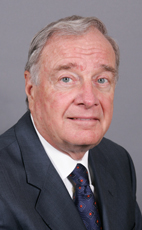
House of Commons photo

Crucial Fact

  • His favourite word was tax.

Last in Parliament September 2008, as Liberal MP for LaSalle—Émard (Québec)

Won his last election, in 2006, with 48% of the vote.

Statements in the House

Goods And Services Tax December 8th, 1995

Mr. Speaker, the government's undertaking in terms of the GST is to obviously have a system that is fairer to consumers and which is easier to administer.

The government has stated that following the desires of Canadians it is our wish to harmonize and to have a single tax, a single base. We are in the course of discussing this with the provinces. Undoubtedly it will come up at the meeting of the federal-provincial finance ministers next week.

I would have been prepared to have discussed it in the fiscal statement. The purpose of the fiscal statement was to give an economic update on the state of the economy since the last budget which is why I did not deal with it and I was not questioned on the matter.

Unemployment Insurance December 8th, 1995

Mr. Speaker, first, the Minister of Human Resources Development clearly said that it was our intention to build a reserve, so as to preserve jobs should an economic decline occur. Indeed, we are well aware that the worst thing that can happen in a period of economic decline is to be forced to raise UI premiums. This is why we are building up a reserve and why we put the UI fund back on its feet by pouring $6 billion into it, over a period of just two years.

The hon. member is absolutely right when he says that lowering UI premiums helps create jobs. This is why the minister lowered the rate, for a total amount of $1.25 billion. This is the way to create jobs.

Unemployment Insurance December 8th, 1995

Mr. Speaker, it is customary to do what we call a rounding off of these premiums. It is clearly the case here, given the minimal difference between $2.93 and $2.95.

Employment December 7th, 1995

Mr. Speaker, the member raises a question that is really one of the most difficult of the modern economy which is that because of globalization and because of new technologies a lot of companies are seen maintaining or increasing their profits, not as a result of increasing sales but because they are cutting costs. They are letting people go. Of course this sets in motion a vicious train of events where one company lays off and then others have to.

As a result of this, the government has embarked upon a series of fundamental reforms in its job creation activities. The unemployment insurance reform announced last week deals directly with that question as do a number of the measures in terms of the information highway by the Minister of Industry and of course the very important activities of my colleague, the Minister for International Trade.

At the same time the fact is we have to get a rising economy. That is why when we embark upon deficit reduction we do it in a balanced way. We do not slash and burn.

The Economy December 7th, 1995

Mr. Speaker, the most important kind of relief that this country should look to is a reduction in interest rates.

The member knows that if we were to proceed to a tax decrease right now that the net result would have an immediate impact on the budget. It would not lead to lower interest rates and might well lead to higher interest rates. In fact that is what is happening. That is what all the commentary is about now in those countries in Europe that are contemplating a tax decrease.

We are dealing in a very measured and deliberate way with a huge debt and a huge deficit which this government inherited. It inherited it from a previous government, the government that most of those people, the crypto-Tories over there, probably voted for 10 years ago.

The Economy December 7th, 1995

Mr. Speaker, because I have seen the alternative.

I would ask the members of the Reform Party to take a look at the consequences of their own budget. It is impossible for the Reformers to say that what they want to do is protect old age pensions by reducing the deficit, when their means of getting there are to virtually eliminate the basic foundation for old pensions.

It is impossible for the Reform Party to say that it wants to protect health care when it would erase the transfers that go to protect health care. It is impossible for the Reform Party to say that it wants to reduce taxes when it would pursue an industrial policy that would make it impossible for the country to create jobs.

The Deficit December 7th, 1995

Mr. Speaker, there is no doubt that lower deficits lead to lower interest rates and to more jobs, but it is simply a function of balance. If we go too far, we are going to cause a great deal more long term damage.

I thought it was expressed really quite well yesterday. The leader of the Reform Party, the member will remember, made an analogy to a fiscal drunk running down the highway. That is probably not a bad analogy to the differences between our two parties. What we

are going to do is sober that drunk up. What the Reform Party does is run him over.

The Deficit December 7th, 1995

The members of the Reform Party applaud, but let us look at what they are applauding. They are applauding the evisceration of the health care system. They are applauding the evisceration of old age pensions. They are applauding the evisceration of the program to help small business into exports.

What the Reform Party members are applauding are the basic programs that are going to enable this country to go into the next century far healthier than any other country in the G-7.

The Deficit December 7th, 1995

Mr. Speaker, I am sure that Clyde Wells and Frank McKenna would be delighted to be cited by the hon. member. I now look forward to the finance ministers' meeting next week.

The measures that we have taken are going to allow us to protect Canada's social fabric. If one looks at the budget that was brought in by the Reform Party, there is no doubt about how quickly it would get the deficit eliminated.

The Deficit December 7th, 1995

Mr. Speaker, perhaps the best way to answer the hon. member's question is to cite an economist of great reputation whom I am sure the hon. member knows, Carl Weinberg from High Frequency Economics.

In referring both to the IMF and to the kind of measures recommended by the hon. member, he says that the hon. member's advice is geared toward a country that cannot meet its bills or obligations, that is facing all kinds of international actions to try to withdraw money from it. He then goes on to say, showing far greater confidence than the members of the Reform Party, that Canada "is not in that case and therefore should not be subject to those kinds of measures. I think those measures would succeed in bringing the deficit down but with catastrophic economic consequences. I do not think it is warranted to take that kind of extreme action". That is his opinion, that is our opinion, and it is an intelligent opinion.