
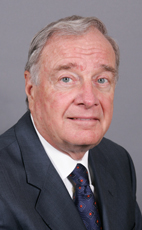
House of Commons photo

Crucial Fact

  • His favourite word was tax.

Last in Parliament September 2008, as Liberal MP for LaSalle—Émard (Québec)

Won his last election, in 2006, with 48% of the vote.

Statements in the House

Old Age Pensions December 7th, 1995

Mr. Speaker, it is possible to have a separate account and still have consolidated funds.

I understand the member's problem. He is an economist, and economists have a hard time understanding accounting. Perhaps the member for Roberval will explain it to him.

Furthermore, we were very clear on the pension funds. Our aim is to leave seniors untouched and to protect the system so it will be there for young people.

Old Age Pensions December 7th, 1995

Mr. Speaker, first, there is a separate account for unemployment insurance, now employment insurance. So there already is one. However, even with the separate account, the auditor general is insisting it be included with our figures.

Second, unemployment insurance premiums have been reduced by a billion and a quarter dollars, as announced by the Minister of Human Resources. This is a huge reduction, which will contribute to job creation.

Third, as regards the old age pensions, I said the exact opposite to what the member is saying. I said that the statements the Prime Minister has already made regarding old age pensions will certainly be foremost in our minds when we draw up the budget.

Unemployment Insurance Fund December 7th, 1995

Mr. Speaker, if the hon. member is capable of convincing the auditor general that we ought to change the accounting method because contributions now come only from employers and employees, we are prepared to examine the situation.

I understand the hon. member's questions but he is constantly quoting the auditor general as if he were quoting the Deity. Sometimes we have to accept that God does things that are not to our liking. Only the Pope is infallible.

Instead of making forecasts, let me point out what we have done to date. The government's operating balance has risen from a $4 billion deficit in 1993-94 to a $17.6 billion surplus this year, a $21.6 billion improvement. Within that amount, there was a $6 billion improvement in the U.I. fund deficit. This means that, looking at the cuts, the reorganization of public finances, less than 30 per cent has come from the unemployment insurance fund, and 70 per cent from government activities, cuts and other steps.

Unemployment Insurance Fund December 7th, 1995

Mr. Speaker, I have great respect for the hon. member for Roberval. I clearly understand where the confusion lies. What he is really recommending is an accounting process which was in place prior to 1986.

I would simply like to state that prior to 1986 the government did follow the procedure recommended by the hon. member and by the Bloc finance critic. But the auditor general came out with the following opinion in 1986. "In my opinion"-I am quoting the auditor general here-"the unemployment fund operations ought to be consolidated with the government financial statements, with employer and employee contributions added on the reported receipts side, and benefits and administrative costs included with reported expenditures".

Since this had not been done in 1986, the auditor general expressed reservations on the government's financial statements. That year, the government changed to the accounting process we are currently using. I would therefore suggest to the hon. member, if he does not like the way the government is accounting, and if he thinks he is better at figures than the auditor general-and perhaps he is-that he talk to the auditor general.

Unemployment Insurance Fund December 7th, 1995

Mr. Speaker, the hon. member ought not to confuse annual surpluses and cumulative surpluses.

To give an example, in 1993 when we became the government, the cumulative deficit of the unemployment insurance fund was $6 billion. In 1994, there was an annual surplus of $2.3 billion, which brought the cumulative deficit to $3.6 billion. In 1995, the annual surplus was approximately five billion dollars. This is the five billion the hon. member is referring to.

It will bring the cumulative surplus to only $1.4 billion. The two things must not be confused. We now have a surplus, not of $5 billion, but of $1.4 billion.

Our goal was not to reduce the deficit but to bolster the U.I. fund, which we have done, being good managers.

The Deficit November 30th, 1995

Mr. Speaker, we have been very consistent. We have said that we are going to operate on the basis of rolling two-year targets and that is what we are going to continue to do.

The hon. member talks about last year's budget target being an easy target. If that was true, then the allegation also would be true. It was a very difficult target to hit. In three years we will have taken the deficit from 6 per cent of GDP down to 3 per cent.

As far as proof that it was a very difficult target I would only cite the leader of the Reform Party and the hon. member who last year stood up and said that we would never hit that target, that the sky was falling and we had to have countless mini-budgets. We did not have mini-budgets. We beat the target that member said we could never hit.

The Deficit November 30th, 1995

Mr. Speaker, it is not enough to simply have a balanced budget plan which stretches years out. What is important is to have in place a process that will enable the government and any government to consistently hit its targets, to maintain a steady downward tract both in the deficit and the GDP ratio and that is what we have done.

That is why for the first time in over a decade a Canadian government was able to stand up and say that it had beat its deficit targets.

Canada Pension Plan November 24th, 1995

Mr. Speaker, the chief actuary did indeed raise a number of very important concerns relative to the Canada pension plan. The departmental officials from the federal government and from all the provincial governments, because this is a joint responsibility, are indeed meeting to address those plans.

The Canada pension plan is not in danger, but it does require modification, it does require change. We will bring those changes in to ensure that the Canada pension plan is there for young Canadians when their time comes to retire.

The fundamental flaw in the Reform plan is that while there are interesting things in the margin, it makes sure that the rich are richer in retirement and the poor are poorer in retirement. This government will never accept that.

Points Of Order November 23rd, 1995

Mr. Speaker, in an earlier statement in the House an answer that I gave was qualified as feeble. My point of order is that it was in fact incredibly decisive and strong. In any event, I withdraw the s .

Infrastructure November 23rd, 1995

Mr. Speaker, if one looks at the trend of interest rates since the last budget, one would see those interest rates have come down and will understand the very clear linkage between deficit reduction, lowering interest rates and job creation. That is more than likely one reason that over the course of the last year and half there have been over 500,000 new jobs created in Canada.

The President of the Treasury Board told me that the proof the infrastucture program has been such a great success is that the member for Simcoe Centre keeps writing to him for more money.