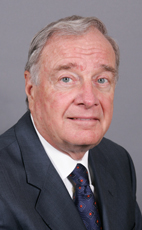
House of Commons photo

Crucial Fact

  • His favourite word was tax.

Last in Parliament September 2008, as Liberal MP for LaSalle—Émard (Québec)

Won his last election, in 2006, with 48% of the vote.

Statements in the House

Railway Transportation November 21st, 1995

Mr. Speaker, if one looks at the assistance to small and medium business provided by this government, if one looks at the federal policy on the pharmaceutical industry, if one looks at the assistance to the aeronautical industry located in Montreal, it is very clear that the federal government has the well-being of Montrealers at heart.

Now the time has come to address the economic agenda and drop the political agenda of the Bloc and the PQ.

Finance November 10th, 1995

Mr. Speaker, the member did not quote my words. He quoted his own words. He would have been better off to have quoted mine.

First, we follow the accounting principles established by the auditor general. Second, the member will understand the basic problem of the country is compound interest. While our spending may well go down in terms of programs, our interest costs continue to rise. That is the basic nut we have to deal with.

Over the course of the last two years we have engaged in more deficit reduction than any government, certainly over the course of the last decade. We have hit our targets and we will continue to hit our targets.

It may reflect Reform Party policy but he should not say that paying attention to job creation and job creation policies are drivel, because that is what Canadians want their government to do.

Finance November 10th, 1995

Mr. Speaker, the accounting principles we followed in reporting the state of the government's finances have been consistent and are ones determined by the auditor general.

If the hon. member is accusing the auditor general of massaging the numbers, I would suspect he should do so in another forum. Even if one accepts the premise of the member's question, which is obviously false, one would have to ask him to apply the same principles from one year to the next and he would find that his question does not stand up.

The Economy November 10th, 1995

Mr. Speaker, as set out in the last budget, program spending by the government by 1996-97 will be at its lowest level as a percentage of our gross domestic product since 1951. We will be the only government of the G-7 that will have put into place an absolute reduction in its expenditures.

The minister of agriculture has just listed what we have done in terms of job creation which is fundamental. If our only objective is to reduce the deficit, the fastest way to do it is to put Canadians back to work. The minister of agriculture has just set out what we have done.

We will reduce the deficit. Let there be no doubt about that. However we will do it in a balanced way, one that does not harm the Canadian economy, one that gives our children a chance.

If we want anything different, we can take a look at the budget set out by members of the Reform Party this year: scorch and burn, demolish the country. They are so ashamed of it that ever since it came out they have refused to bring it forth and talk about it because they know it was a dud.

The Economy November 10th, 1995

Mr. Speaker, there has never been a better expression of the difference that exists between the Reform Party and the government than the one just expressed by the member.

He in fact said that the end of government was to reduce the deficit, that the purpose of government was to make itself smaller. That is not true. The purpose of government is to make itself smarter. The purpose in reducing the deficit is to help in job creation. The fundamental role of the country is to give its citizens a better future.

Yes, we have done a great deal to reduce the deficit. We will continue to reduce the deficit and we will balance the budget, but that is not the end of this society. The purpose of society is to give citizens a better standard of living, to give children a better chance and to make sure we take children out of poverty. That is what we will do.

The Economy November 10th, 1995

Mr. Speaker, I am sure the member's estimate of our national debt is within a couple of pennies.

The problem is not only the size of the national debt, but that as a nation over the course of the last decade we did not face up to the fundamental problems of job creation, the preservation of our social programs and the preservation of the social fabric of this country. What is crucial is that we continue the course that has been set by this government. We must deal with the fundamental problems so that a subsequent government does not have to stand up and admit to the kind of heritage the member just described.

Interest Rates November 7th, 1995

Mr. Speaker, I think that Quebecers made a decision that will result in lower interest rates. Indeed, the day after the referendum, interest rates fell by 147 basis points, which is almost a record.

Interest Rates November 7th, 1995

Mr. Speaker, the Governor of the Bank of Canada said there were several reasons explaining high real interest rates, and he mentioned two of them. One is the need to put our fiscal house in order. In that regard, he said that the federal government and the provinces, except for one, had already started that process.

Second, the governor clearly mentioned the political uncertainty for which the BQ and the PQ are responsible.

Trade November 6th, 1995

Mr. Speaker, Bill C-102, designed to amend the Customs Act, has exactly that purpose in mind. It will encourage businesses to locate in Canada. It contains improvements that will streamline the duty deferral program and will make programs more user friendly and accessible. It will remove administrative restrictions and will ease cash flow pressures by providing as much up front duty relief as possible.

Regions, municipalities and businesses will be able to co-operate as a result in promoting their communities because a critical component of the bill encourages partnerships to encourage economic development.

I congratulate the member for St. Catharines because he has been a leading proponent of many of the initiatives in the bill.

Public Finances November 3rd, 1995

Mr. Speaker, the leader of the Progressive Conservative Party is entirely right to talk of a desire for change that is reflected right across the country, from Atlantic to Pacific. He should know that this very thing was discussed at the last two meetings of the country's finance ministers. I agree with him totally about what must be done, namely, drawing up a federal-provincial master plan with very clear objectives of consolidating public finances at both levels of government.

I can also tell him that the provinces have made a lot of progress, with one exception, perhaps, and that the federal government is now on the right track. We will have to continue in this vein, and I hope all the provinces will take part.