
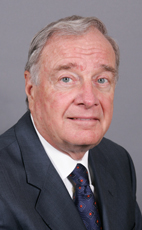
House of Commons photo

Crucial Fact

  • His favourite word was tax.

Last in Parliament September 2008, as Liberal MP for LaSalle—Émard (Québec)

Won his last election, in 2006, with 48% of the vote.

Statements in the House

The Economy October 24th, 1995

Mr. Speaker, I have been attending federal and provincial finance minister meetings over the course of two years. I can say that without any exception at every single one of those meetings,

every finance minister representing his or her province or territory has expressed fundamentally the need for change in the way in which governments relate to each other, the way in which our economy works and the way in which we approach the next century.

Right across the country, in Quebec most certainly but also in western Canada, Ontario and Atlantic Canada, there is a deep desire for change, progress and improvement. We have seen that in the way the government has acted. Every single government department has begun to change the way in which it operates focusing only on the most essential.

We are seeing it in our new trading relationships and in fact the minister is rarely here. Canada is in the process of opening new trading relationships right across the country. I take that back; the minister is always here in spirit.

It is seen in the way the government is working with small business and the great degree of flexibility.

One thing is very clear: we have a choice on October 30 between progress and change for our country or a backward step, as represented by the Yes side.

The Economy October 24th, 1995

However, there is a very clear way. It is the only way to reduce this uncertainty. There is only one way to reassure the markets and that is to unequivocally vote no on October 30.

The Economy October 24th, 1995

Mr. Speaker, fearmongering is the result of those who espouse an option and who are afraid to tell their people the consequences of the option they are espousing.

The Economy October 24th, 1995

To answer the member's question, it will lead directly to higher mortgage rates, lower job creation rates, lower retail sales and less money available to governments. In the case of the people of Quebec it also means tremendous uncertainty over the fate of the economic union and over the fate of their creating relationships with the United States.

The fact is that a country cannot be destroyed without grave consequences for its people and their lifestyle. Those who deny the consequences of separation deny the truth.

The Economy October 24th, 1995

Mr. Speaker, there is a direct correlation between lower interest rates and a higher quality of life. Lower interest rates mean higher retail sales, therefore a stronger domestic market. It means more construction. It means more job creation. It means heavily indebted governments will have more money to spend on the needed social programs.

Markets react very negatively to political uncertainty. I cannot think of greater political uncertainty than arises out of those who would threaten to break up a country.

Status Of Women October 23rd, 1995

Mr. Speaker, as indicated by the hon. member, the Secretary of State for the Status of Women unveiled a new policy on gender analysis which was very highly applauded by all of the countries that were there.

In the past, individual budget decisions have been studied for their impact on women. It is therefore a major step forward that now each and every government department must look within its own decision making process to make sure no decisions are taken that are hostile to women. It is the view of the government that all decisions taken should be to their benefit.

Candu Reactors October 23rd, 1995

Mr. Speaker, the hon. member ought to take pride in export sales of Canadian technologies. These sales are done on a basis that will provide the maximum amount of returns to the Canadian public. I can assure the hon. member this will be the case here.

The Chinese market, I do not need to remind anybody, is a very important market and is one that is growing at considerable length. It is important that this country establish itself.

On the first point regarding Petro-Canada, thanks to the minister of energy and mines we have completed the most successful privatization of almost any western country in the past decade.

Canadian Economy October 23rd, 1995

Ah, yes. No, I did not mention his name.

Mr. Speaker, as regards the use of the Canadian dollar, I think the Leader of the Opposition and the Premier of Quebec have deliberately created an ambiguity. They talk about using the Canadian dollar, and yet, on two occasions-in Ahuntsic, last week, and in Portneuf, six or eight months ago-the Leader of the Opposition said very clearly that the separatists intended giving up the certainty of the Canadian dollar for the uncertainty of the Quebec dollar.

When we ask ourselves where this double talk is coming from, we know very well. Mr. Parizeau wrote in L'Actualité that it was simply a ruse, that he intended to favour the Canadian dollar, but that, ultimately, he wanted a Quebec dollar.

Canadian Economy October 23rd, 1995

Mr. Speaker, first, I think the point is a valid one. The Leader of the Opposition will not be speaking for anyone in the event of separation; the Premier of Quebec is Mr. Parizeau. So, clearly, Mr. Bouchard will be out of things.

Canadian Economy October 23rd, 1995

Mr. Speaker, again the hon. member accurately reflects a citation by the current premier of Quebec that in the event of separation he felt Quebec's share of the national debt should be proportionate to its share of the population, i.e. 25 per cent. That is a position that has also been reflected by a number of the leading separatist leaders.

I think we all understand the tremendous negative consequences that would flow from any kind of break up of the country, in turn leading as well to negotiations over the debt. That is why I reaffirm that it is very clear that what we are dealing with here is not an offer of partnership. It is not some kind of an amiable separation. We are dealing with the rupture of the country.

The fact is this debate is about the future of Canada.